
16 Days
Daily Tour
10 people
___
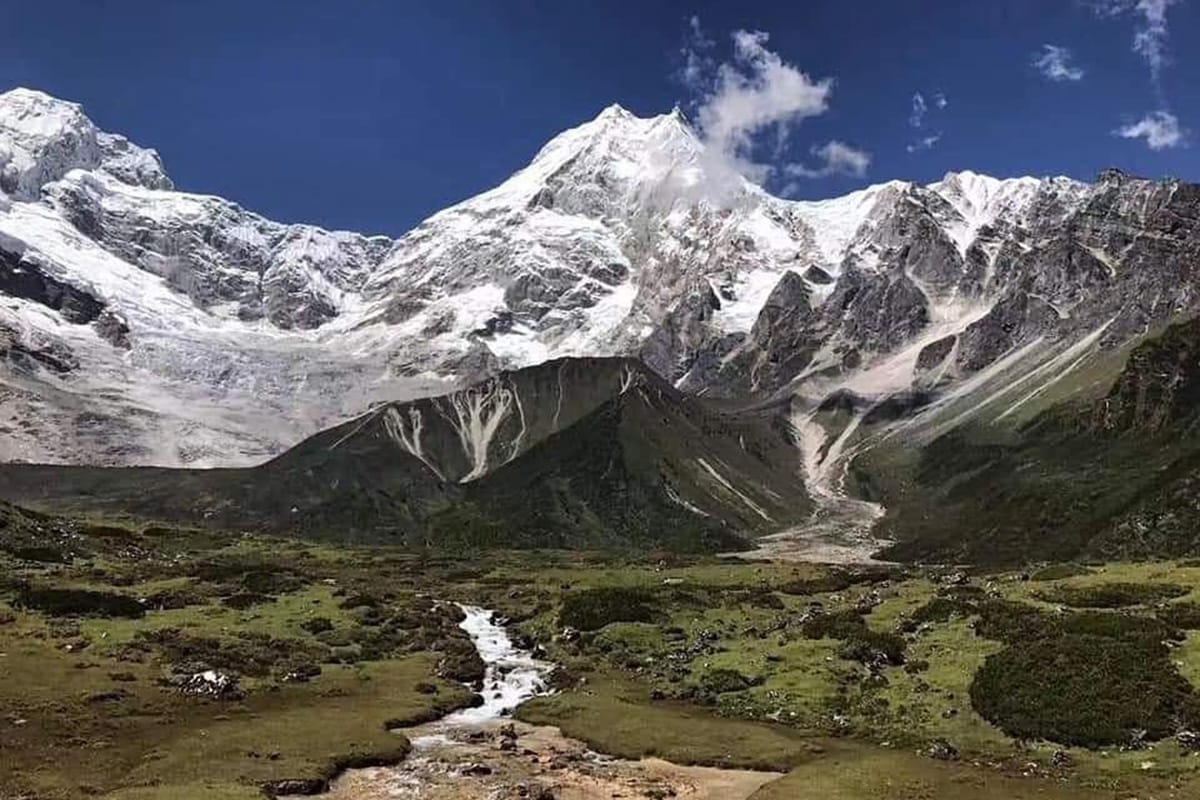
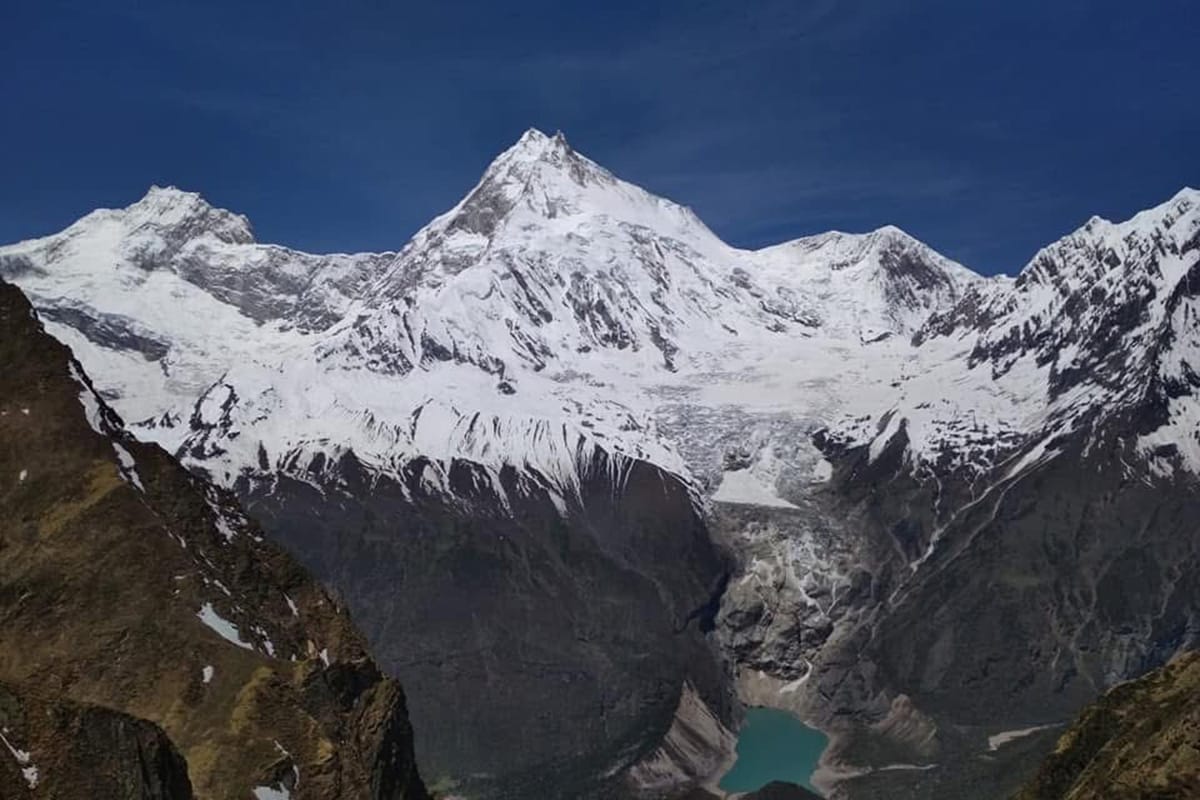
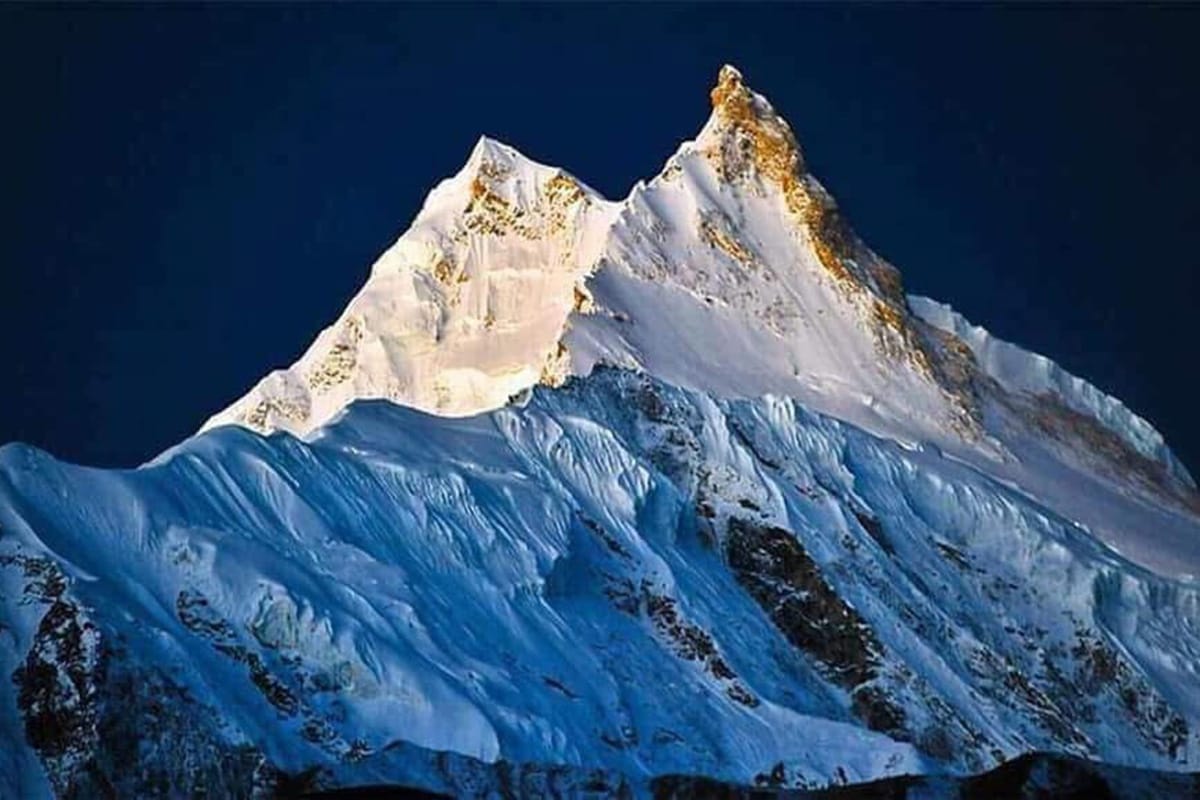
Mount Manaslu rises to 8,163 meters as the world’s eighth-highest peak, and this circuit takes you deep into the Gorkha District to walk its full loop. The route follows the Budhi Gandaki River through five distinct ecological zones before crossing Larkya La Pass at 5,160 meters, covering over 177 kilometers around the Manaslu massif. Government-designated restricted status keeps this region genuinely quiet, preserving both its ecology and the Tibetan Buddhist culture found in villages like Samagaun and Samdo.
This itinerary is built around two dedicated acclimatization days, daily health monitoring from a licensed guide, and carefully vetted teahouse stops at every stage of the circuit. The 16-day schedule favors safety and cultural immersion over speed, giving your body real time to adjust to altitude along the way.
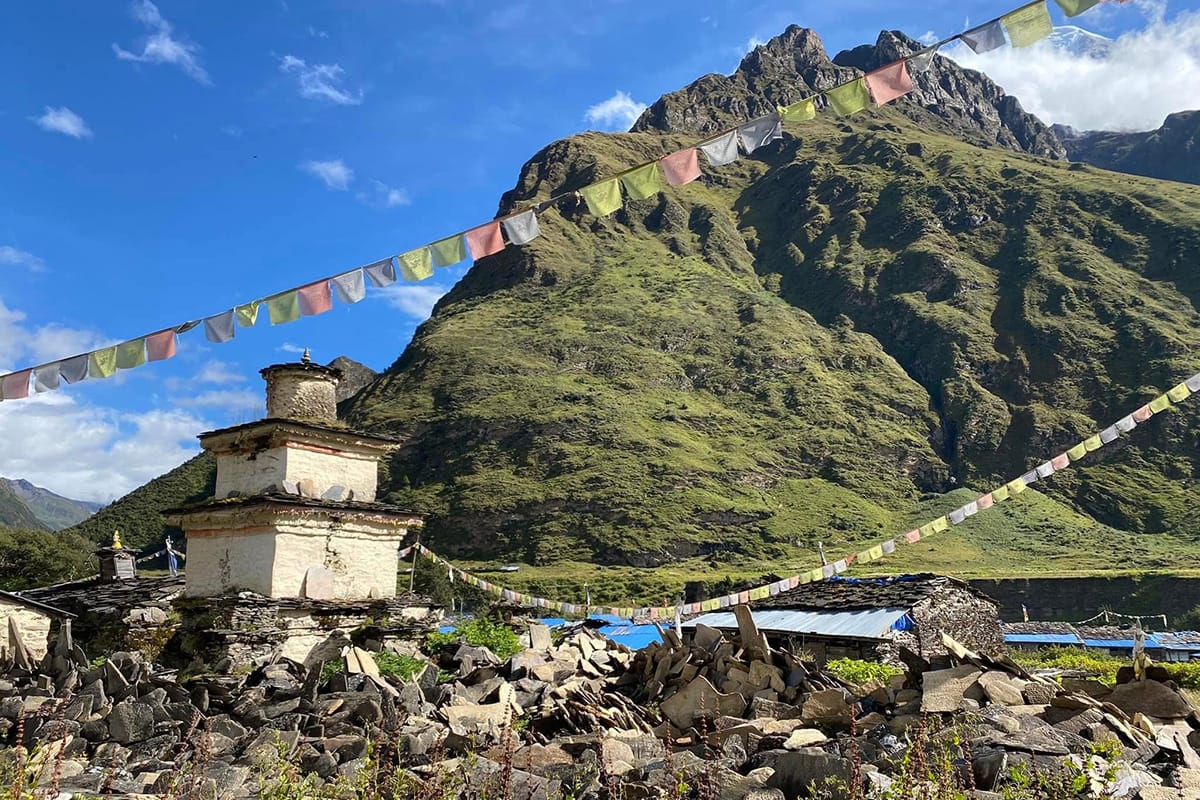
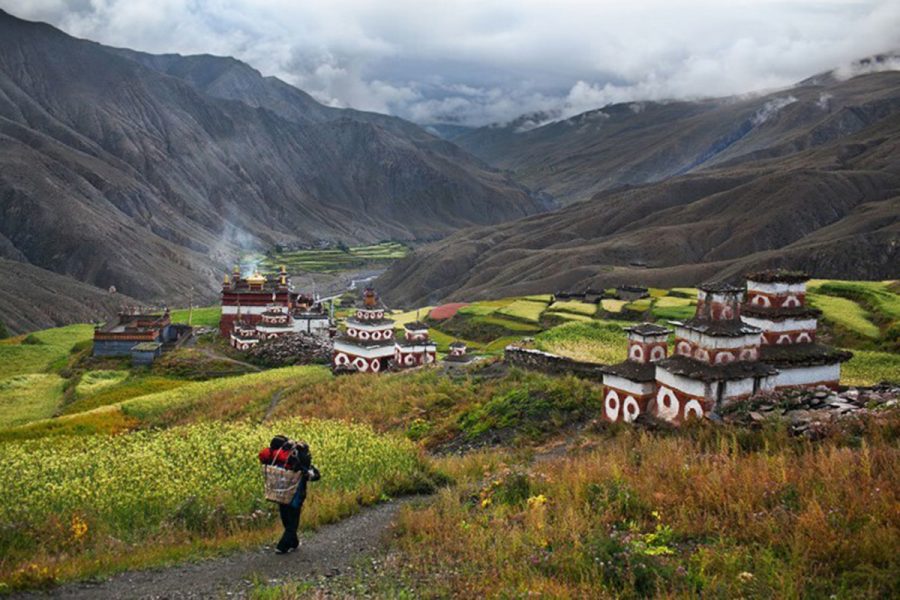
Ancient monasteries and carved mani walls define daily life in the upper valley, far removed from Nepal’s busier trekking routes. Since the region requires three separate permits and a licensed guide at all times, fewer than 5,000 trekkers complete this circuit each year, keeping the trail and its villages genuinely unhurried.
A drive from Kathmandu to Machha Khola opens the trek, followed by a gradual ascent through the Budhi Gandaki valley past Jagat, Deng, Namrung, Lho, Samagaun, and Samdo. Teahouse accommodation runs throughout, ranging from basic lodges in the upper valley to more comfortable guesthouses lower down.
The trail moves through five distinct ecological zones, from subtropical forest and bamboo groves to alpine scrub, glacial moraine, and permanent snowfields, with wildlife sightings including Himalayan tahr, blue sheep, and the elusive snow leopard in the upper reaches. Larkya La Pass marks the physical high point of the journey.
Beyond the pass, the trail descends toward Dharapani in the Annapurna Conservation Area, completing the full circuit and connecting two of Nepal’s most significant protected areas in a single continuous route.
Arrive at Tribhuvan International Airport and transfer to your hotel in Kathmandu with the Kalapatthar team. The evening includes a welcome dinner, team introduction, and a full trek briefing covering permits, safety, and health protocols. Your guide performs an initial wellness check, recording your baseline oxygen saturation, pulse rate, and temperature. Overnight at a hotel.
Your guide conducts a morning wellness check covering oxygen saturation, pulse rate, and temperature before breakfast. Day 2 is reserved for permit processing, gear checks, and any final equipment purchases in Thamel. Kalapatthar handles RAP, MCAP, and ACAP permit processing at the relevant government offices in Kathmandu. Optional guided visits to Boudhanath Stupa, Pashupatinath Temple, or Swayambhunath are available in the afternoon. Your guide conducts an evening wellness check covering oxygen saturation, pulse rate, and temperature. Early rest is recommended before the long drive to Machha Khola on Day 3. Overnight at a hotel.
Your guide conducts a morning wellness check covering oxygen saturation, pulse rate, and temperature before breakfast. Depart Kathmandu early by private vehicle for the 7 to 8-hour drive to Machha Khola via the Prithvi Highway. The route passes through Arughat Bazaar and drops into the Budhi Gandaki River valley. Arrive at Machha Khola in the late afternoon. Evening health check conducted by your guide. Overnight at a teahouse.
Your guide conducts a morning wellness check covering oxygen saturation, pulse rate, and temperature before breakfast. The first full trekking day follows the Budhi Gandaki River through subtropical forest, narrow gorges, and several suspension bridges. The trail passes through Khorlabesi, Tatopani with natural hot springs, and Doban before reaching the Manaslu Conservation Area checkpoint at Jagat. Register your MCAP and RAP permits at the checkpoint on arrival. Evening health check conducted. Overnight at a teahouse.
Your guide conducts a morning wellness check covering oxygen saturation, pulse rate, and temperature before breakfast. The trail narrows as the valley deepens, crossing several suspension bridges over the Budhi Gandaki River through increasingly remote terrain. Pass through Salleri and Sirdibas villages before arriving at Deng, a quiet settlement marking the edge of the deeper upper valley. Evening health check conducted. Overnight at a teahouse.
Your guide conducts a morning wellness check covering oxygen saturation, pulse rate, and temperature before breakfast. A longer day with steady climbing through pine and rhododendron forest, passing the restricted area checkpoint at Ghap (2,260 m). The first distant snow-capped peaks become visible above the tree line as the trail enters the upper Manaslu zone. Arrive at Namrung with clear views of peaks above 6,000 m opening to the north. Evening health check conducted. Overnight at a teahouse.
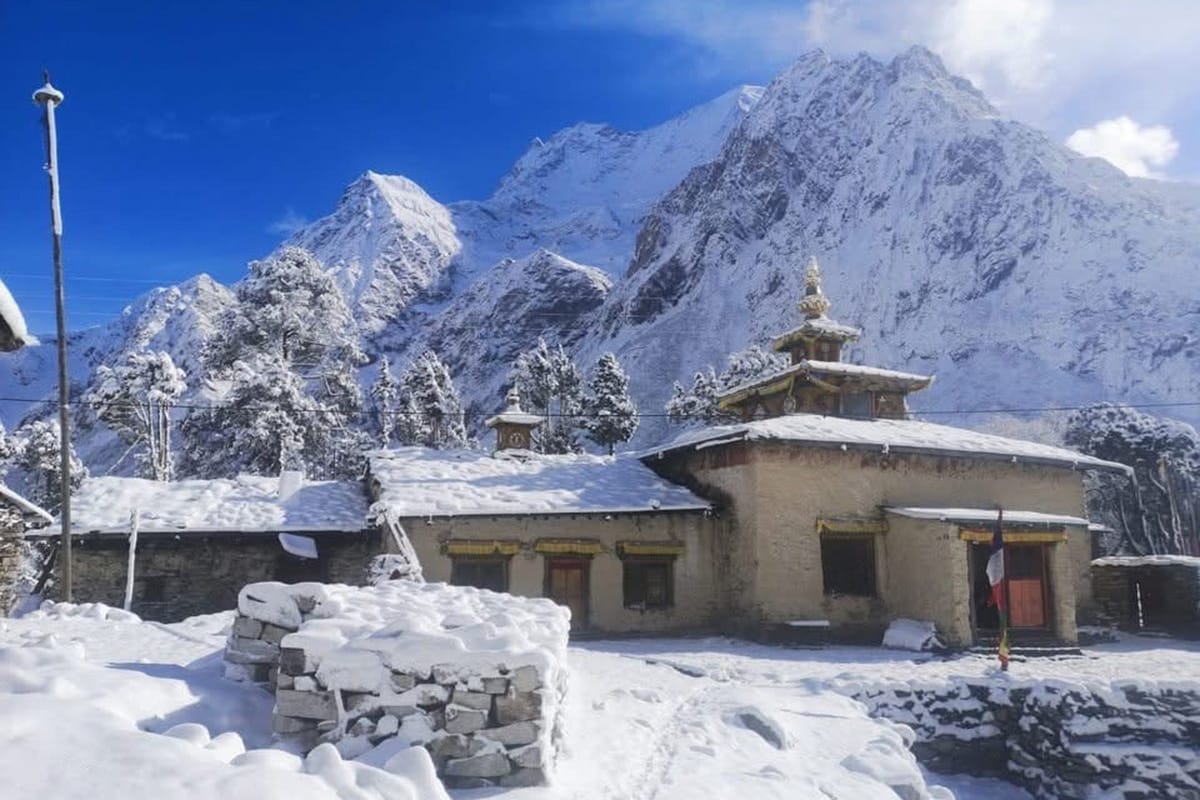
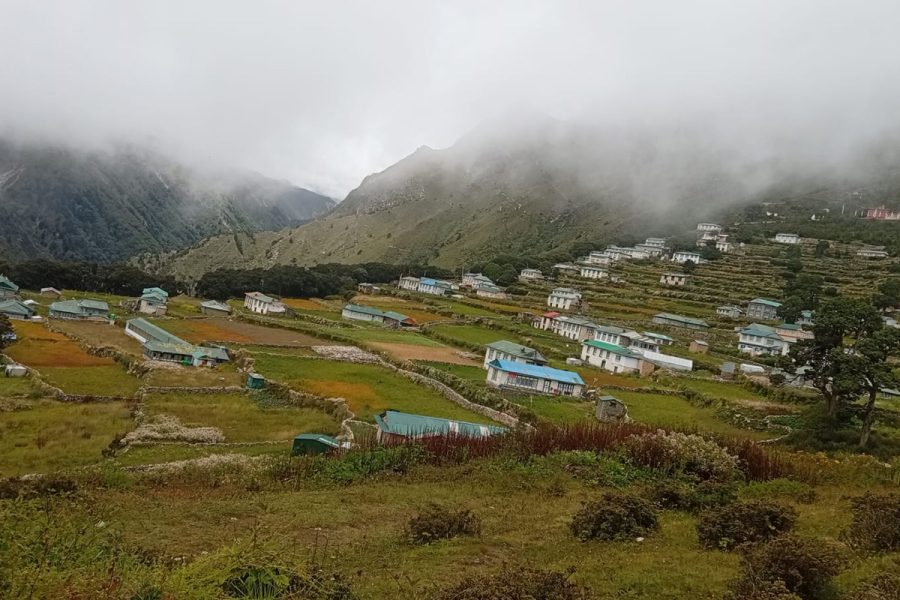
Your guide conducts a morning wellness check covering oxygen saturation, pulse rate, and temperature before breakfast. A shorter day allows time to visit the well-positioned monastery at Lho village, sitting directly below Manaslu's south face. The trail passes through Lihi and Sho, two traditional stone villages with Tibetan-influenced architecture. Afternoon is free for monastery exploration, rest, and altitude adjustment above 3,000 m. Evening health check conducted. Overnight at a teahouse.
Your guide conducts a morning wellness check covering oxygen saturation, pulse rate, and temperature before breakfast. The trail passes through Shyala village with open views of the Manaslu glacier before reaching Samagaun, the largest upper-valley settlement. Samagaun is a Tibetan-speaking community and the primary base for Manaslu summit expeditions, with a monastery and a small local market. Drink at least 3 litres of water throughout the day. Evening health check conducted. Overnight at a teahouse.
Your guide conducts a morning wellness check covering oxygen saturation, pulse rate, and temperature before breakfast. A full rest and acclimatisation day at Samagaun is essential preparation for the higher elevations ahead. Optional hike to Manaslu Base Camp at 4,400 m or the Pungen Glacier viewpoint for close views of Manaslu's north face. Visit Pungyen Monastery, a well-preserved gompa above the village with clear sightlines to Manaslu. Light activity supports acclimatisation; drink a minimum of 3 to 4 litres of water. Evening health check conducted. Overnight at a teahouse.
Your guide conducts a morning wellness check covering oxygen saturation, pulse rate, and temperature before breakfast. A short but higher trekking day follows the upper Budhi Gandaki valley toward the Nepal-Tibet border. Samdo is a small village at 3,875 meters with active trade connections to Tibet, sitting close to the border in a wide glacial valley. Afternoon is free for rest and an optional short walk to a nearby ridgeline viewpoint. Evening health check conducted. Overnight at a teahouse.
Your guide conducts a morning wellness check covering oxygen saturation, pulse rate, and temperature before breakfast. The second acclimatisation day at 3,875 m is the most critical preparation step before the Larkya La Pass crossing. Optional excursion toward the Nepal-Tibet border or along the Larkya Glacier moraine for high-altitude views. Explore Samdo's small monastery and speak with local community members about daily life. Full evening briefing on the Larkya La crossing: departure time, route, expected conditions, and safety protocols. Early dinner by 7 PM and lights out by 8 PM. Evening health check conducted. Overnight at a teahouse.
Your guide conducts a morning wellness check covering oxygen saturation, pulse rate, and temperature before breakfast. A short approach day to Dharamsala, the last teahouse settlement before Larkya La, at 4,460 m on the glacier moraine. The trail climbs steadily through rocky glacial terrain alongside the lower sections of the Larkya Glacier. Arrive early, rest fully, complete a final gear check, and sleep early ahead of the pre-dawn start. Evening health check conducted. Overnight at a teahouse.
Your guide conducts a morning wellness check covering oxygen saturation, pulse rate, and temperature before breakfast. Depart Dharamsala between 4 and 5 AM with headlamps and full cold-weather layers, as temperatures can reach minus 15 degrees Celsius. The ascent crosses glacial moraine and snowfields to Larkya La at 5,160 m, with views of Himlung Himal (7,126 m), Kang Guru, Cheo Himal, and Annapurna II. Descend steeply through snowfields to the open meadow of Bimthang at 3,720 m. Evening health check conducted after the demanding pass crossing day. Overnight at a teahouse.
Your guide conducts a morning wellness check covering oxygen saturation, pulse rate, and temperature before breakfast. A welcome descent through rhododendron and pine forest as altitude drops by over 1,400 m from Bimthang. The trail passes through Hampuk village and several river crossings before reaching Tilije, a lower-valley agricultural settlement. The significant altitude drop brings noticeably richer oxygen levels and warmer afternoon temperatures. Evening health check conducted. Overnight at a teahouse.
Your guide conducts a morning wellness check covering oxygen saturation, pulse rate, and temperature before breakfast. The final trekking section descends through Thonje village to Dharapani on the Annapurna Circuit trail at 1,960 m. A jeep or local vehicle covers the 2 to 3-hour drive from Dharapani down to Besisahar. An evening health check is conducted. Overnight at a teahouse.
Your guide conducts a morning wellness check covering oxygen saturation, pulse rate, and temperature before breakfast. Morning departure by private vehicle from Besisahar for the 5 to 6-hour drive to Kathmandu via Prithvi Highway. Arrive in Kathmandu in the early afternoon with time to rest, clean up, and arrange onward travel. The trek officially concludes on arrival in Kathmandu; a farewell dinner with the Kalapatthar team is available on request. Overnight at a hotel.
This Kalapatthar package runs for 16 days in total, including drive days to and from the trailhead at Machha Khola. The trekking section covers 14 days on trail with two full acclimatisation days built into the schedule.
The trek is rated Challenging, with daily walking times averaging 6 to 8 hours on mixed rocky and forested terrain. The Larkya La Pass crossing on Day 13 is the hardest section, requiring a 9 to 10-hour day starting before 5 AM.
Yes, a licensed guide is legally required to obtain the Restricted Area Permit for the Manaslu zone. Trekking without a registered guide in this area is not permitted and can result in fines at checkpoints.
Three permits are required: the Restricted Area Permit (RAP) at USD 100 per person per week in high season, the Manaslu Conservation Area Permit (MCAP) at NPR 3,000, and the Annapurna Conservation Area Permit (ACAP) at NPR 3,000. Kalapatthar processes all three permits before the trek departs from Kathmandu.
Autumn (September to November) is the most reliable season, with dry trails and clear mountain views across the full circuit. Spring (March to May) is also a strong option, with rhododendron blooms and active wildlife in the lower forest zones.
Yes, the circuit spends several days above 3,500 m, and altitude sickness is a genuine risk without proper acclimatisation. Kalapatthar schedules two rest days at Samagaun and Samdo and conducts daily oxygen and pulse checks throughout the journey.
Accommodation is in locally owned teahouses with basic twin-sharing rooms and shared bathroom facilities at most stops. Kalapatthar selects teahouses in advance based on cleanliness and food quality at each stage of the circuit.
Dal bhat (rice, lentils, and vegetables) is available at every teahouse and is the most nutritious option on the trail. Noodle soups, fried rice, pasta, and Tibetan bread are also widely available up to Samdo at 3,875 m.
Yes, travel insurance covering high-altitude trekking above 5,000 m and emergency helicopter evacuation is mandatory for this package. Kalapatthar guides are trained to coordinate helicopter rescue, but evacuation costs must be covered by your personal insurance policy.
Contact Kalapatthar Trek & Expedition Pvt. Ltd. directly to receive a personalised quote based on your group size and preferred departure date. Our team handles all permits, guide assignments, transport, and logistics from your arrival in Kathmandu to your final day.
The Restricted Area Permit costs USD 100 per person per week during autumn (September to November) and USD 75 per person per week for all other months.
Based on operator data from 2015 to 2025, approximately 85 to 90 per cent of well-acclimatised trekkers with good weather successfully cross Larkya La Pass at 5,160 m.
Prior high-altitude trekking experience above 4,000 m is strongly recommended, as the circuit spends 5 consecutive days above 3,500 m before crossing the pass.
Kalapatthar builds 2 reserve days into the schedule, allowing the crossing to shift to the next clear weather window without rushing your departure.

Member Since 2026

Leave a review