Ama Dablam Expedition

0 (0 Reviews)
From: ₹0.000
0
(0 review)
Check
Duration

24 Days

Tour Type

Daily Tour

Group Size

10 people

Languages

___

About this tour

Kalapatthar Trek & Expedition Pvt. Ltd.

24 Days | Max Altitude: 6,812 m | Extreme (Alpine AD/PD+)

Ama Dablam Expedition

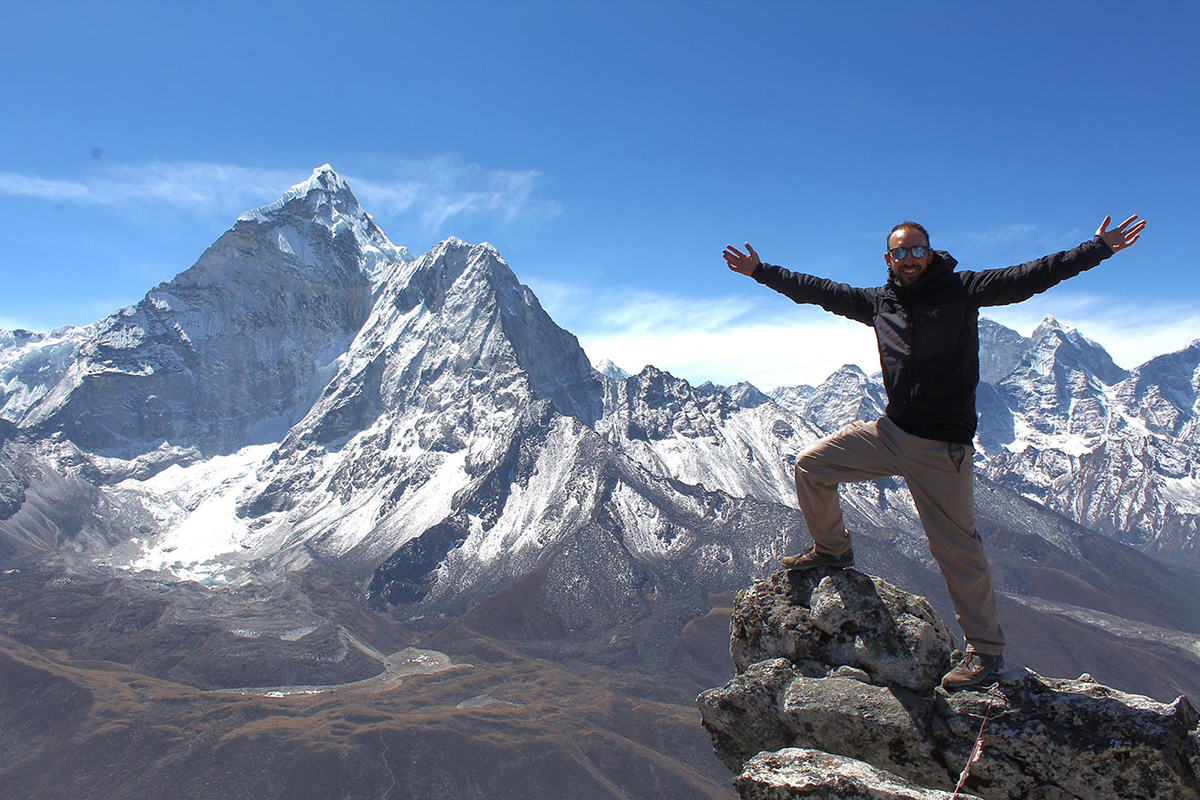
The Ama Dablam Expedition is a 24-day technical mountaineering expedition in the Khumbu region of eastern Nepal, reaching a maximum altitude of 6,812 m at the summit of Ama Dablam. The route follows the iconic Southwest Ridge through three high camps, climbing rock ridges, exposed tower sections, mixed snow and ice terrain, and a final steep summit ridge. Climbers experience a distinct progression from Sherpa villages and Buddhist monasteries to technical rock climbing at extreme altitude.

Ama Dablam stands at 6,812 m in the heart of the Everest region, located directly above Tengboche Monastery on the main trail to Everest Base Camp. The name means Mother’s Necklace in the Sherpa language, with the hanging glacier on the southwest face resembling the traditional Dablam ornament worn by Sherpa women. The first ascent of Ama Dablam was made on 13 March 1961 by Sir Edmund Hillary, Mike Gill, Barry Bishop, and Wally Romanes via the Southwest Ridge, which remains the standard route today.

Kalapatthar Trek & Expedition manages this high-altitude technical expedition with IFMGA/UIAGM-certified expedition leaders and a dedicated team of high-altitude Sherpas who have summited Everest and multiple 8,000 m peaks. The itinerary includes a dedicated pre-acclimatisation climb of Lobuche East at 6,119 m before the Ama Dablam summit push. A certified high-altitude doctor is stationed at Base Camp throughout the expedition with full medical facilities and 24-hour health monitoring for every climber.

This Ama Dablam Expedition package by Kalapatthar Trek & Expedition Pvt. Ltd. is a fully guided, permit-inclusive 24-day expedition in the Khumbu region of eastern Nepal. The route covers the classic trek from Lukla at 2,840 m through Namche Bazaar and Tengboche, a pre-acclimatisation climb of Lobuche East at 6,119 m, followed by technical climbing on Ama Dablam through Camps I (5,700 m), II (5,900 m), III (6,300 m), and the summit at 6,812 m. 

Three reserve days built into the schedule provide weather contingency and maximise summit success probability. This expedition combines the cultural richness of the Khumbu Valley with one of the most technically challenging and beautiful climbs in the Himalayas.

Interesting Facts About Ama Dablam Expedition

  • Ama Dablam stands at 6,812 m and is widely regarded as one of the most beautiful mountains in the Himalayas, often called the Matterhorn of the Himalayas due to its striking pyramid shape.
  • The name Ama Dablam means Mother’s Necklace in the Sherpa language, with the hanging glacier on the southwest face representing the Dablam ornament worn by Sherpa women.
  • The first ascent of Ama Dablam was made on 13 March 1961 by Sir Edmund Hillary, Mike Gill, Barry Bishop, and Wally Romanes via the Southwest Ridge.
  • The climbing permit for Ama Dablam costs USD 1,000 per person for both spring and autumn seasons, with winter and summer permits costing USD 500.
  • The climbing route involves the famous Yellow Tower, a 15-metre vertical rock pitch just below Camp II requiring jumar ascent on fixed ropes.
  • Above Camp III, climbers traverse the Mushroom Ridge, a narrow snow arete with exposure on both sides, before the final steep summit slopes.
  • Based on Himalayan Database records and expedition operator data from 2015 to 2025, the overall success rate for Ama Dablam is approximately 60 to 70 per cent on professionally guided expeditions.
  • Ama Dablam offers three distinct climbing disciplines in a single route: rock climbing on the lower ridge and Yellow Tower, mixed climbing in the middle section, and steep ice climbing on the upper summit slopes.
  • From the summit of Ama Dablam, climbers can see Everest at 8,848 m, Lhotse at 8,516 m, Makalu at 8,485 m, Cho Oyu at 8,188 m, and Baruntse at 7,129 m in a wide panoramic view.
  • The expedition requires three high camps above Base Camp, with Camp I at 5,700 m, Camp II at 5,900 m, and Camp III at 6,300 m before the summit push, plus a pre-acclimatisation climb of Lobuche East at 6,119 m.

Flora and Fauna of the Khumbu Region and Sagarmatha National Park

Forests of the Lower Valley (Below 3,000 m)

The trek from Lukla to Namche Bazaar winds through temperate forests where pine, oak, birch, and rhododendron create a dense green canopy. Orchids, ferns, and mosses carpet the ground near river crossings and waterfalls on the lower trail sections. Birdwatchers will spot the Himalayan monal, Nepal’s national bird, displaying iridescent green, red, and blue plumage on forested slopes during spring. Langur monkeys, with their distinctive grey fur and long tails, swing through the canopy between Lukla and Namche during early morning hours.

Mid-Altitude Forests (3,000 m to 4,500 m)

As you climb toward Namche Bazaar, Tengboche, and Pangboche, the forest changes character. Juniper, birch, and dwarf rhododendron replace the taller trees of the lower elevations. Himalayan tahr, goat-like animals with thick reddish-brown coats, graze on rocky slopes above the tree line near Tengboche and Pangboche. The elusive musk deer lives in these mid-elevation forests, though spotting one requires patience and quiet footsteps. Yellow-throated martens, sleek members of the weasel family, occasionally dash across the path near the rhododendron sections between Namche and Tengboche.

Alpine Zone (4,500 m to 5,500 m)

Above 4,500 m, the trees vanish completely. Alpine scrub, juniper bushes, and hardy grasses adapted to cold and wind take over near Ama Dablam Base Camp at 4,600 m and Lobuche Base Camp at 4,800 m. The Sagarmatha National Park protects 118 bird species and 26 mammal species across the Everest region, including the elusive snow leopard at higher elevations. Himalayan griffon vultures circle above the valleys, snow pigeons roost on rocky cliffs, and Tibetan snowcocks call from alpine meadows.

The High Altitude Zone (Above 5,500 m)

Above 5,500 m, nothing grows. The landscape becomes a barren world of rocky moraine, scree slopes, permanent snowfields, and the famous hanging glacier known as the Dablam. The Ama Dablam glacier system above Base Camp feeds into the Imja River valley below, a significant glacial feature of the Khumbu region. Birdlife is limited to the occasional Himalayan griffon vulture and alpine chough near the climbing route on summit day.

The Ama Dablam Expedition Difficulty

Overall Rating

The Ama Dablam Expedition is rated Extreme and requires prior high-altitude mountaineering experience above 6,000 m. Climbers must also have demonstrated rock and ice climbing proficiency before attempting this route. Daily climbing times average 5 to 8 hours on technical terrain throughout the expedition. The summit push is the most physically and technically demanding day of the entire climb. The maximum altitude of 6,812 m carries a serious risk of Acute Mountain Sickness that demands proper acclimatisation, careful health monitoring, and strict adherence to the descent protocol. The route is extremely exposed in places where a small mistake or fall could be fatal.

Most Demanding Sections

The Yellow Tower is the most technically demanding section on the entire route. This 15-metre vertical rock pitch sits just below Camp II at approximately 5,900 m. Climbers must use jumar ascent on fixed ropes to pass this exposed section safely. The traverse from Camp II to Camp III involves mixed rock and ice terrain with sections reaching up to 70 degrees. The summit push traverses the Mushroom Ridge, a narrow snow arete with exposure on both sides of the ridge. From there, steep ice slopes skirt the hanging glacier known as the Dablam before reaching the final summit ridge.

Recommended Training

Kalapatthar Trek & Expedition recommends at least four months of intensive preparatory training before departure. This training should include regular rock climbing practice to prepare for the Yellow Tower section. Ice climbing on steep terrain is also essential for the upper mountain slopes above Camp III. Cardiovascular training for 5 to 6 hours per week will build the endurance needed for long climbing days at altitude.

Best Time for Ama Dablam Expedition

Autumn (October to November)

Autumn is the primary and most recommended season for the Ama Dablam Expedition, with post-monsoon conditions creating stable weather windows and clear skies. October stands as the best single month for this expedition, as the weather is cold but predictable, and the route is less slippery underfoot than in spring. Daytime temperatures at Base Camp range from 5 to 10 degrees Celsius while temperatures at the summit drop to minus 15 to minus 20 degrees Celsius. Autumn offers the highest summit success rates at approximately 65 to 75 per cent, with fewer teams on the mountain than in spring.

Spring (April to May)

Spring is the secondary climbing season with milder daytime temperatures but less stable weather patterns due to jet stream activity remaining over the Khumbu region. Rhododendron forests bloom at lower elevations during the trekking approach through the Khumbu Valley, adding visual beauty to the journey. Daytime temperatures at Base Camp range from 8 to 12 degrees Celsius while temperatures at the summit drop to minus 10 to minus 15 degrees Celsius. Spring climbing permit costs are payable to the Nepal Mountaineering Association at the standard seasonal rate.

Monsoon (June to August)

The summer monsoon brings heavy daily rainfall, unstable snow conditions on the mountain, and significant risk of avalanche and rockfall on the technical sections. Cloud cover persistently obscures mountain views, and the fixed rope sections on the Yellow Tower and upper ridge become hazardous due to wet rock and poor visibility. Kalapatthar Trek & Expedition does not offer scheduled departures during the monsoon season for this expedition.

Winter (December to February)

Winter climbing is not recommended for this expedition due to extreme cold, deep unconsolidated snow, and sustained high winds on the exposed Southwest Ridge. Temperatures at Camp III drop to minus 25 to minus 35 degrees Celsius, making the technical rock sections dangerous and the risk of frostbite extremely high. The teahouses in the Khumbu Valley reduce services or close entirely during the coldest months of January and February. Winter climbing permit costs USD 500 per person, but Kalapatthar strongly advises against winter departures for this expedition.

Permits Required for Ama Dablam Expedition

The Ama Dablam Expedition requires five separate permits obtained through a registered agency like Kalapatthar Trek & Expedition. Independent climbing is not permitted on Ama Dablam, and all climbers must travel with a licensed climbing guide holding IFMGA or UIAGM certification. Kalapatthar processes all permits before departure from Kathmandu at official government rates with no handling fees added.

  • Ama Dablam Climbing Royalty costs USD 1,000 per person for both spring and autumn seasons, and USD 500 for winter and summer, payable to the Nepal Mountaineering Association.
  • Lobuche East Climbing Permit costs approximately USD 250 per person for the pre-acclimatisation climb, included in the package.
  • Sagarmatha National Park Entry Permit costs NPR 3,000 per person and supports environmental protection and trail maintenance in the Everest region.
  • Khumbu Pasang Lhamu Rural Municipality Permit costs approximately NPR 2,000 per person and is collected at the entrance to the Khumbu region near Lukla or Monjo.
  • A garbage deposit of USD 500 per team is required and refundable upon returning all waste from the mountain and Base Camp.
  • A licensed climbing guide with IFMGA or UIAGM certification is legally required for the Ama Dablam summit attempt.

Accommodation and Food on the Ama Dablam Expedition

Where You Sleep Along the Way

Your sleeping arrangements change four times as you move toward the summit of Ama Dablam. You begin in a 5-star hotel in Kathmandu and breakfast included each morning. The approach trek from Lukla to Pangboche uses teahouse accommodation with twin-sharing rooms and basic meals. At 4,600 m, a luxury Base Camp awaits with personal dome sleeping tents that come with heated bedding and full amenities. Above Base Camp, fully equipped expedition tents stand ready at Camp I (5,700 m), Camp II (5,900 m), and Camp III (6,300 m) on the upper mountain.

Life at Base Camp

Kalapatthar builds Base Camp to the same high standard used on our Everest expeditions. You will find spacious personal dome sleeping tents with heated bedding, a dedicated dining tent, a fully equipped kitchen tent, a toilet tent, and hot shower facilities. Power is never an issue with 24/7 solar and generator supply. Twenty-four-hour Wi-Fi keeps you connected with family and friends back home. A fully equipped medical facility staffed by a certified high-altitude doctor provides continuous health support throughout the expedition.

What You Will Eat

The Kalapatthar kitchen team prepares three fresh meals every day at Base Camp. Unlimited snacks, dry fruits, biscuits, fresh fruit, tea, and coffee are always available. During the approach trek, teahouses offer dal bhat, fried rice, noodle soups, pasta, Tibetan bread, pancakes, oatmeal, and egg-based meals. Full hygienic kitchen service operates at all high camps as well. Vegetarian requirements can be accommodated with advance notice to Kalapatthar Trek & Expedition.

Packing List for Ama Dablam Expedition

Clothing

  • One waterproof hardshell jacket and matching trousers rated to a minimum 20,000 mm water column for snow, wind, and rock abrasion.
  • One high-altitude down suit rated for minus 30 degrees Celsius for the summit push and extreme cold at Camp III, available as complimentary rental from Kalapatthar.
  • One insulated down jacket rated for minus 20 degrees Celsius for use at Base Camp and high camps below the down suit.
  • One fleece jacket or synthetic mid-layer for approach trekking and Base Camp use in moderate cold conditions.
  • Three moisture-wicking long-sleeved base layer tops in merino wool or synthetic fabric with no cotton permitted at any altitude.
  • Two pairs of softshell trekking trousers for the approach and two pairs of hardshell climbing pants for technical sections.
  • Two pairs of thermal base layer bottoms for cold nights at Base Camp, high camps, and summit day.
  • Five to six pairs of wool or synthetic trekking socks plus two pairs of summit-weight sock liners and outer socks.
  • One balaclava and one warm beanie covering the ears for summit day and cold camp nights above 5,000 m.
  • Three pairs of thin liner gloves, two pairs of insulated waterproof gloves, and one pair of expedition-grade overmitts for the summit push.

Footwear

  • One pair of technical climbing boots rated for mixed rock and ice terrain, compatible with step-in crampons, mandatory for Camp I and above.
  • One pair of waterproof trekking boots with ankle support broken in for at least 80 kilometres before arrival in Nepal for the approach trek.
  • One pair of lightweight camp shoes or sandals for Base Camp evenings and warm rest days.
  • One pair of gaiters for glacier sections and high-altitude snow terrain above Base Camp.

Climbing Equipment (Provided by Kalapatthar Trek & Expedition)

  • 12-point steel crampons compatible with your climbing boots for rock, ice, and mixed terrain on the Southwest Ridge.
  • Ice axe of 55 to 65 cm length for balance and self-arrest on steep snow and ice sections above Camp II.
  • Climbing harness with adjustable leg loops and gear loops for all technical sections from Camp I to the summit.
  • Jumar or ascender for climbing fixed ropes on the Yellow Tower and steep sections above Camp II.
  • Two locking carabiners and two non-locking carabiners for rope attachment and safety backups.
  • Climbing helmet for protection from falling ice and rock on the Yellow Tower, Grey Tower, and upper mountain.
  • 120 cm and 240 cm sewn slings for anchor connection and safety backups at high camps.
  • Prusik loops for emergency self-rescue on fixed ropes if required.
  • Fixed ropes, snow stakes, ice screws, and rock protection managed and installed by the Kalapatthar Sherpa team before the summit push.

Gear and Equipment

  • One four-season sleeping bag rated for minus 30 degrees Celsius available as complimentary rental from Kalapatthar.
  • Trekking poles with adjustable length and snow baskets for the approach trek and glacier terrain.
  • One headlamp with a minimum 300 lumens output and spare batteries for the early morning summit start.
  • Two-litre insulated water bottle plus a thermos for hot drinks on summit morning from Camp III.
  • Water purification tablets or filter bottle for teahouse water on the approach trek.
  • One power bank with at least 20,000 mAh capacity since charging outlets are limited above Namche Bazaar.
  • Glacier goggles with Category 4 UV protection and full side shields for snow glare on the upper glacier and summit.

Health and Hygiene

  • Sunscreen with SPF 50 or higher applied every morning to all exposed skin as UV intensity increases significantly above 4,000 m.
  • Lip balm with SPF protection for the dry and cold conditions at high altitude and summit day wind exposure.
  • A comprehensive first aid kit with bandages, blister plasters, pain relievers, and all personal prescription medications.
  • Diamox for altitude sickness prevention if recommended by your doctor, started at Namche Bazaar or Pangboche under medical team guidance.
  • Wet wipes and hand sanitiser for hygiene before meals throughout the expedition.
  • Toilet paper in sealed zip lock bags for use above teahouse facilities at high camps.

Safety and Important Notes

Altitude Sickness

Acute Mountain Sickness can affect any climber regardless of age, fitness level, or prior Himalayan experience at altitudes above 4,000 m, and this expedition reaches 6,812 m at the Ama Dablam summit. Kalapatthar Trek & Expedition guides and the expedition doctor conduct twice-daily oxygen saturation, pulse rate, and temperature checks for every climber from Namche Bazaar onward through the summit push and descent. If High Altitude Pulmonary Oedema or High Altitude Cerebral Oedema symptoms appear at any point on the mountain, immediate descent is mandatory with no exceptions under any circumstances. The pre-acclimatisation climb of Lobuche East at 6,119 m is specifically designed to enhance altitude adaptation before the Ama Dablam summit push.

Travel Insurance

Comprehensive travel insurance covering high-altitude mountaineering above 6,800 m, emergency helicopter evacuation, and medical treatment is mandatory for all climbers on this expedition. Proof of valid insurance covering these specific requirements must be presented to the expedition leader at the Day 1 briefing in Kathmandu. Participation is not permitted without confirmed coverage that includes helicopter rescue to a minimum of 7,000 m elevation and medical evacuation from the remote Khumbu region.

Physical and Technical Preparation

Climbers should begin a structured fitness programme a minimum of four months before departure with a focus on rock climbing proficiency, ice climbing skills, and cardiovascular endurance at altitude. A recommended training schedule includes rock climbing practice twice per week to prepare for the Yellow Tower and Grey Tower sections, ice climbing on steep terrain to prepare for the upper mountain slopes, and 5 to 6 hours of cardiovascular exercise four times per week. Prior high-altitude mountaineering experience above 6,000 m is mandatory, and previous rock climbing experience at a minimum of 5.8 grade is strongly recommended for the Yellow Tower section.

Responsible Mountaineering

The Sagarmatha National Park is a UNESCO World Heritage Site and protected zone where climbers must minimise waste and avoid single-use plastics throughout the 24-day journey. Use designated waste disposal facilities at teahouses and carry out all non-biodegradable waste from Base Camp and all high camps. Kalapatthar Trek & Expedition follows strict Leave No Trace principles on all expeditions and maintains a refundable garbage deposit system to ensure responsible and clean climbing practices on Ama Dablam.

Climbing Ama Dablam with Kalapatthar Trek & Expedition Pvt. Ltd.

You have the skills and the determination to stand on the summit of Ama Dablam at 6,812 m. What you need is a team that knows this mountain from base to peak and back down again. Kalapatthar brings IFMGA-certified guides, experienced high-altitude Sherpas, and a certified doctor to support you on every metre of the climb. Our team has successfully placed climbers on this beautiful peak through multiple seasons on the Southwest Ridge route.

We handle all the logistics so you can focus entirely on your climbing performance. Your safety and health are monitored twice daily from the moment you reach Namche Bazaar through the final summit push. Our job is to get you up the Yellow Tower, across the Mushroom Ridge, and safely back down to Base Camp. You bring your best physical and mental preparation to the mountain, and we bring everything else you need for a successful expedition.

Ready to take on one of the most beautiful and technically demanding peaks in the entire Himalayas? Contact Kalapatthar Trek & Expedition Pvt. Ltd. today to secure your place on this extraordinary Ama Dablam Expedition.

Highlights

  • Summit Ama Dablam at 6,812 m, one of the most beautiful and technically challenging mountains in the Himalayas, known as the Matterhorn of the Himalayas.
  • Climb the iconic Southwest Ridge route via three high camps, featuring rock climbing on the Yellow Tower (15m vertical pitch), mixed terrain, and steep ice slopes up to 70 degrees.
  • Complete a pre-acclimatisation climb of Lobuche East at 6,119 m, practising crampon technique and fixed rope ascent before the Ama Dablam summit push.
  • See Everest at 8,848 m, Lhotse at 8,516 m, Makalu at 8,485 m, Cho Oyu at 8,188 m, and Baruntse at 7,129 m in a 360-degree panorama from the summit.
  • Trek through the Khumbu Valley, visiting Namche Bazaar, Tengboche Monastery, and Pangboche village, with stunning views of Ama Dablam throughout the approach.
  • Stay at a luxury Base Camp at 4,600 m with heated dome tents, hot showers, 24/7 power, Wi-Fi, and a certified high-altitude doctor.
  • Train for three days at Base Camp with IFMGA-certified guides covering Yellow Tower strategy, fixed rope techniques, and high-altitude rock and ice climbing.
  • Cross the Mushroom Ridge at approximately 6,300 m, a narrow snow arete with exposure on both sides, before the final summit push.
  • Receive 24-hour medical support from a certified high-altitude doctor stationed at Base Camp with full medical facilities and twice-daily health monitoring.
  • Three reserve days built into the schedule give every climber a genuine summit opportunity regardless of short-term weather disruptions.

Included/Excluded

  • Airport transfers on arrival Day 1 and departure Day 24 by private luxury Land Cruiser between Tribhuvan International Airport and your Kathmandu hotel.
  • Five-star hotel accommodation in Kathmandu for four nights with twin-sharing rooms, attached bathrooms, and breakfast included each morning.
  • Traditional Nepali welcome dinner on Day 1 with cultural dance, live music, and full expedition briefing and team introduction.
  • Satellite phone access at Base Camp for emergency communication and scheduled calls with family.
  • All required permits including Ama Dablam climbing royalty (USD 1,000), Lobuche East climbing permit, Sagarmatha National Park permit, Khumbu Municipality permit, and garbage deposit processed at official government rates.
  • Comprehensive insurance coverage for all Nepali expedition staff including the IFMGA guide, high-altitude Sherpas, Base Camp team, and kitchen crew.
  • IFMGA/UIAGM-certified expedition leader with a minimum of eight years of Himalayan climbing experience and prior Ama Dablam expedition leadership.
  • 1:1 Sherpa support on summit day with additional assistant Sherpa available as required by conditions, maintained by experienced summit Sherpas.
  • Pre-acclimatisation climb of Lobuche East at 6,119 m including permits, guides, meals, and accommodation for the warm-up rotation.
  • Three-day technical training programme at Base Camp covering Yellow Tower strategy, fixed rope ascent, rappel descent, and high-altitude rock and ice climbing.
  • Full approach trek logistics including quality teahouse accommodation and three-course meals from Lukla to Base Camp and on the return to Lukla.
  • Luxury Base Camp establishment: personal dome sleeping tents with heated bedding, dedicated dining tent, kitchen tent, toilet tent, shower tent, and equipment storage.
  • All meals including breakfast, lunch, and dinner daily throughout the expedition with unlimited portions of dal bhat and all served meals, plus unlimited tea and coffee at every meal.
  • Hot shower facilities at Base Camp throughout the expedition.
  • 24/7 solar and generator power supply at Base Camp for device charging, medical equipment, and heating systems.
  • 24-hour Wi-Fi connectivity at Base Camp for communication, weather monitoring, and emergency coordination.
  • Fully equipped medical camp at Base Camp staffed by a certified high-altitude doctor with emergency treatment facilities, oxygen supply, and evacuation coordination.
  • Twice-daily health monitoring covering oxygen saturation, pulse rate, and temperature for every climber from Namche Bazaar through the summit push.
  • Daily professional Himalayan weather forecasting service for rotation and summit timing decisions throughout the expedition.
  • Full high camp support at Camp I (5,700 m), Camp II (5,900 m), and Camp III (6,300 m) including insulated expedition tents, hygienic meals from the kitchen team, and sleeping oxygen support.
  • Complete technical climbing equipment including crampons, ice axe, harness, jumar, carabiners, helmet, slings, fixed ropes, snow stakes, ice screws, and rock protection.
  • Complimentary high-altitude down suit rated for minus 30 degrees Celsius and four-season sleeping bag rated for minus 30 degrees Celsius, cleaned after each expedition use.
  • Three reserve days built into the schedule providing weather contingency and multiple summit attempt windows.
  • Emergency evacuation planning and helicopter rescue coordination included in every Kalapatthar expedition package.
  • Kalapatthar Trek & Expedition Ama Dablam Expedition completion certificate issued at the conclusion of the 24-day expedition.
  • International airfare to and from Kathmandu and all associated international airport taxes or departure fees.
  • Nepal visa fee obtainable on arrival at Tribhuvan International Airport for stays of 30 or 90 days.
  • Travel and mountaineering insurance covering high-altitude climbing above 6,800 m and emergency helicopter evacuation, mandatory and required before the Day 1 briefing.
  • Personal trekking and climbing gear beyond the complimentary down suit and sleeping bag rental, including technical climbing boots, trekking boots, and all personal clothing layers.
  • Meals in Kathmandu other than the breakfasts included at the 5-star hotel and the welcome dinner on Day 1.
  • Personal expenses including hot showers at teahouses on the approach, battery charging at teahouses, Wi-Fi access on trek, and laundry services.
  • Additional supplemental oxygen bottles beyond the standard emergency allocation included in the package, available at cost from Kalapatthar.
  • Any additional costs arising from weather-related delays, flight cancellations, personal itinerary changes, or early departure from the expedition.
  • Helicopter rescue and emergency evacuation costs which must be covered by the climber's personal travel insurance policy.
  • Tips for the expedition leader, climbing Sherpas, porters, kitchen staff, and Base Camp crew, customary at the conclusion of the expedition.
  • Summit bonus for the lead climbing Sherpa and expedition leader, optional and customary at the end of a successful summit.
  • Alcoholic beverages, bottled soft drinks, and personal snacks beyond the standard meal plan included in the package.

Itinerary

Arrive at Tribhuvan International Airport and transfer to your 5-star hotel in Thamel by private luxury Land Cruiser with the Kalapatthar team. The evening includes a traditional Nepali welcome dinner with cultural dance and live music, full expedition briefing covering permits, climbing safety protocols, and the gear checklist. Your guide conducts the first health check covering oxygen saturation, pulse rate, temperature, and general baseline condition.

Morning medical briefing and baseline health assessment conducted by the expedition doctor. Permit processing, equipment check, and final briefing with the full guide and Sherpa team. Gear distribution including complimentary high-altitude down suit and four-season sleeping bag rental. Free afternoon for rest or Kathmandu sightseeing. Evening health check and team meeting to review final preparations.

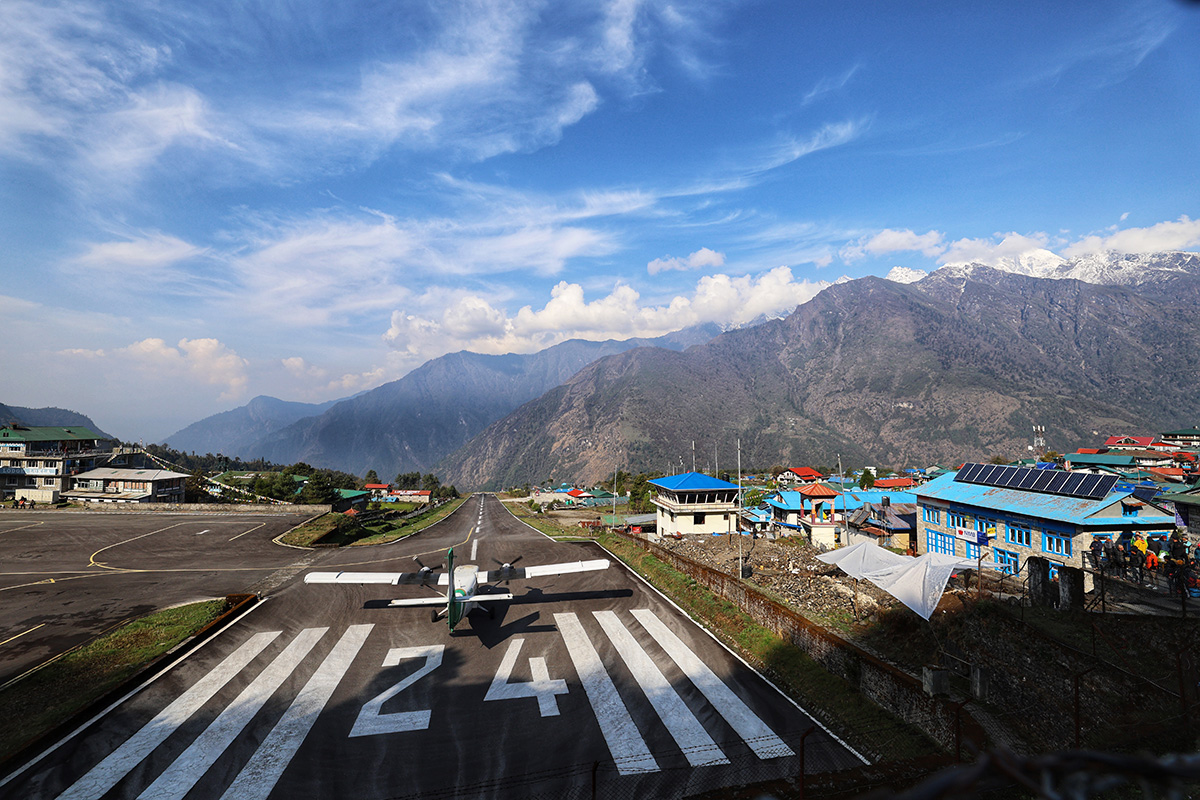
Morning health check and departure briefing before transferring to the airport. Take the early morning domestic flight from Kathmandu to Lukla at 2,840 m, a 35-minute flight with wide views of the Himalayan range on clear days. From Lukla, the trail descends gently along the Dudh Koshi River through pine forests and small Sherpa villages to Phakding at 2,610 m. Register your Sagarmatha National Park permit at the checkpoint near Phakding on arrival. Evening health check conducted by your guide. Overnight at teahouse.

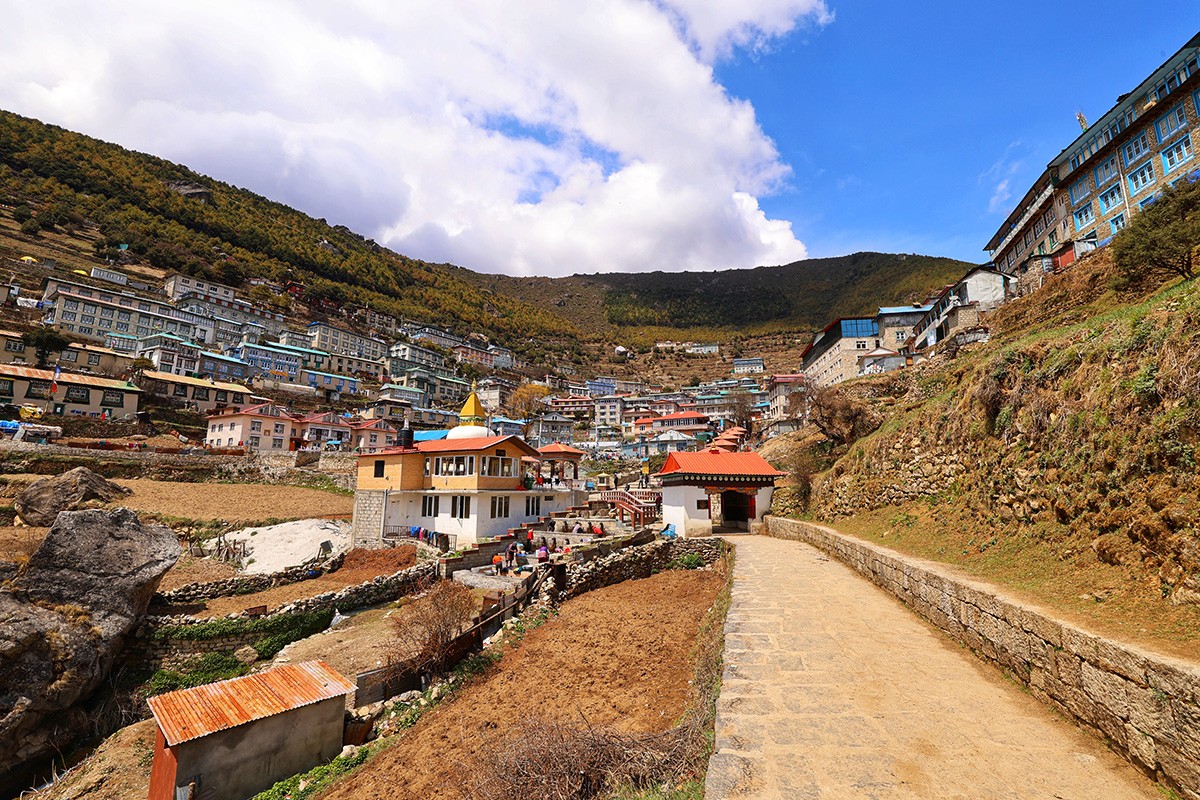
Morning health check and daily trek briefing before departure. The trail crosses the Dudh Koshi River multiple times on high suspension bridges before entering the Sagarmatha National Park gate at Monjo. A steep ascent of 2 to 3 hours brings you to Namche Bazaar at 3,440 m, the Sherpa capital of the Khumbu region. Namche offers markets, bakeries, gear shops, and wide views of Kongde Ri and Thamserku peaks. Evening health check with oxygen saturation recorded. Overnight at teahouse.

Morning health check and altitude lecture covering AMS symptoms, prevention, and treatment options. This rest day is essential for proper acclimatisation before the push toward higher elevations in the Khumbu Valley. Hike to the Everest View Hotel at 3,880 m for a direct view of Everest at 8,848 m, Lhotse at 8,516 m, and Ama Dablam at 6,812 m. Visit the Sherpa Museum and the local market to learn about Sherpa culture and mountaineering history. Rest and hydrate with 4 to 5 litres of water to prepare your body for the higher elevations ahead. Evening health check with careful attention to any AMS indicators. Overnight at teahouse.

Morning health check and trek briefing with route overview. The trail follows a relatively flat contour from Namche to Kyangjuma before descending to the Dudh Koshi River at Phunki Tenga. A steep ascent through rhododendron and pine forest brings you to Tengboche at 3,860 m, home to the famous Tengboche Monastery. Visit the monastery in the late afternoon to hear the monks chanting and see Ama Dablam at 6,812 m, Everest at 8,848 m, and Lhotse at 8,516 m from the monastery grounds. Evening health check conducted. Overnight at teahouse.

Morning health check and daily briefing focusing on Ama Dablam views ahead. The trail descends through rhododendron forest to Deboche before crossing the Imja River and climbing to Pangboche village at 3,985 m. Ama Dablam towers directly above the village, offering the first close views of the climbing route on the Southwest Ridge. Pangboche is home to the oldest monastery in the Khumbu region, containing what is believed to be a yeti scalp. Evening health check conducted. Overnight at teahouse.

Morning health check and final approach briefing before reaching Base Camp. The trail leaves Pangboche and climbs steadily toward Ama Dablam Base Camp at 4,600 m, with the entire Southwest Ridge and hanging glacier visible ahead. Arrival and complete establishment of Base Camp, including personal dome sleeping tents with heated bedding, dining tent, kitchen tent, medical facility, hot shower tent, toilet tent, solar and generator power, and Wi-Fi connectivity. Twice-daily health monitoring begins at this altitude. Evening health check marks the beginning of twice-daily monitoring. Overnight at Base Camp.

Morning health check and briefing on the Puja ceremony. Traditional Sherpa Puja ceremony performed by the expedition's lead Sherpa to bless the climb and seek safe passage on the mountain. The ceremony includes prayer flags, butter lamps, and offerings to the mountain gods. Climbers receive a khata, a white ceremonial scarf, as a symbol of good luck and protection. Rest and hydrate with 4 to 5 litres of water. Evening health check with oxygen saturation and pulse rate recorded. Overnight at Base Camp.

Morning health check and technical training briefing. First technical training day covering crampon technique for walking on snow and ice slopes, rock climbing practice on nearby formations, fixed rope ascent with a jumar device, and rappel descent on a practice slope near Base Camp. Practice walking on crampons, learning proper foot placement and balance techniques. Learn how to tie into the rope, ascend fixed lines using a jumar, and descend using a belay device. Evening health check with careful attention to fatigue and oxygen saturation. Overnight at Base Camp.

Morning health check and technical training briefing. Second technical training day focusing on Yellow Tower strategy, mixed terrain climbing combining rock and ice, and high-altitude safety procedures. Practice the specific techniques required for the Yellow Tower, a 15-metre vertical rock pitch that is the crux of the Ama Dablam route. The medical team clears all climbers for the Camp I move based on health assessment results. Three-day medical support active throughout. Evening health check with careful attention to oxygen saturation. Overnight at Base Camp.

Morning health check and briefing for the Lobuche pre-acclimatisation climb. The team leaves Ama Dablam Base Camp and treks toward Lobuche Base Camp at 4,800 m for the pre-acclimatisation climb of Lobuche East at 6,119 m. This warm-up climb provides essential altitude exposure and technical practice before the Ama Dablam summit push. Evening health check with oxygen saturation recorded. Overnight at Lobuche Base Camp.

Morning health check and technical training briefing. The trail leaves Lobuche Base Camp and climbs steeply along rocky moraine toward Lobuche High Camp at 5,400 m. This section allows climbers to practise crampon technique and fixed rope movement at altitude in a lower consequence environment than Ama Dablam. Evening health check with careful attention to oxygen saturation and fatigue levels. Overnight at High Camp.

Early morning health check and summit briefing at 2 AM. Wake at 3 AM for the summit push on Lobuche East at 6,119 m, following fixed ropes up a steep snow slope and ridge line to the summit. The pre-dawn climb offers a wide view of Everest, Lhotse, Nuptse, and the Khumbu Glacier below. Reach the summit at approximately 7 AM to 8 AM, with Ama Dablam visible across the valley as the main objective for later in the expedition. Descend to High Camp for a short rest, then continue down to Lobuche Base Camp by mid-afternoon. Evening health check conducted after the demanding summit day. Overnight at Lobuche Base Camp.

Morning health check and recovery briefing after the Lobuche summit. The team returns from Lobuche Base Camp to Ama Dablam Base Camp for final preparation before the Ama Dablam summit push. Rest day at Base Camp with final gear checks and oxygen system review. The pre-acclimatisation climb of Lobuche East has provided essential altitude adaptation and technical practice. Evening health check with careful attention to recovery markers. Overnight at Base Camp.

Morning health check and briefing for the Camp I move. First move up Ama Dablam from Base Camp at 4,600 m to Camp I at 5,700 m across rocky moraine, grassy slopes, and scree fields. The trail climbs steeply to a broad saddle with views of the Mingbo La pass before reaching Camp I on a narrow shelf with dramatic views of the surrounding peaks. Camp I is fully established on a rocky platform by the Sherpa team. Evening health check with careful attention to oxygen saturation. Overnight at Camp I.

Morning health check and acclimatisation briefing at Camp I. Rest and acclimatisation day allowing the body to adapt to altitude before the technical sections above. Short reconnaissance hike toward Camp II to assess route conditions and preview the Yellow Tower section. Medical monitoring continues with twice-daily checks. Evening health check with oxygen saturation and pulse rate recorded. Overnight at Camp I.

Morning health check and technical briefing for the Yellow Tower ascent. From Camp I, the route becomes significantly more technical, climbing along an exposed rocky ridge dotted with towering rock fingers. Fixed ropes are in place for all exposed sections. The Yellow Tower, a 15-metre vertical rock pitch requiring jumar ascent, is the crux of this section. Camp II at 5,900 m is extremely exposed with very limited tent space on a narrow ridge ledge just below the Grey Tower. Evening health check with careful attention to oxygen saturation. Overnight at Camp II.

Morning health check and briefing for the Camp III push. From Camp II to Camp III involves mixed rock and ice terrain with sections up to 70 degrees, following fixed ropes through steep and exposed ground. The route skirts the Grey Tower and traverses a snowy ridge before reaching the Mushroom Ridge at approximately 6,300 m. Camp III is set on a small plateau on the Mushroom Ridge, a cold and exposed position where tents must be secured against wind. Evening health check with careful attention to oxygen saturation and early rest for the summit push. Overnight at Camp III.

Late evening health check and summit briefing before departure. Wake at 1:00 AM for a light breakfast and final gear check before starting the climb from 1:30 AM to 2:00 AM. The route above Camp III traverses a short distance before ascending the icy face to the right of the hanging glacier known as the Dablam. After crossing a crevasse-laced section, climb through a narrow snowfield below the Bergschrund before reaching the upper glacier. The final section follows a sharp ice crest to the summit ridge, with steep exposed slopes on both sides. Reach the summit at approximately 7 AM to 8 AM, with Everest at 8,848 m, Lhotse at 8,516 m, Makalu at 8,485 m, Cho Oyu at 8,188 m, and Baruntse at 7,129 m visible in a wide 360-degree panorama. The summit is incredibly exposed but offers one of the finest summit panoramas in the Himalayas. Spend 15 to 20 minutes on the summit before beginning the careful descent down the fixed ropes, past the Mushroom Ridge, the Yellow Tower, and back to Camp II. Descend to Camp II for overnight depending on conditions and climber fatigue. Evening health check conducted after the demanding summit day. Overnight at Camp II.

Morning health check and return trek briefing. Begin the return trek from Ama Dablam Base Camp, descending through Pangboche and Tengboche to Namche Bazaar at 3,440 m. Physical recovery and improved oxygen saturation are noticeable at lower altitude after the days above 6,000 m. Pass by the famous Tengboche Monastery one final time before continuing down to Namche. Evening health check with recovery assessment. Overnight at teahouse.

Morning health check and final trek briefing. The final trekking day descends steeply from Namche Bazaar down to the Dudh Koshi River valley at Phakding. Continue along the river past Sherpa villages and suspension bridges to Lukla at 2,840 m. Celebrate the completion of the Ama Dablam Expedition with your guide and porter team in Lukla. Evening health check and final gear sorting for the flight to Kathmandu. Overnight at teahouse.

Morning health check and departure briefing. Take the early morning domestic flight from Lukla back to Kathmandu, a 35-minute flight with wide views of the Himalayan range on clear days. Arrive in Kathmandu by mid-morning. Your Kalapatthar completion certificate is issued, and the expedition officially concludes with a hotel night included for your final evening. Expedition celebration dinner with the guide team and Sherpa staff. Evening health check conducted. Overnight at a 5-star hotel.

Enjoy your last breakfast in Nepal at the 5-star hotel. Return your complimentary rental gear (high-altitude down suit and four-season sleeping bag) to the Kalapatthar representative. The Kalapatthar team arranges a private luxury Land Cruiser airport transfer to Tribhuvan International Airport. Your expedition leader accompanies you to the airport for a final farewell. Check in for your international flight and clear immigration. Board your flight home with the memories of summiting one of the most beautiful and technically challenging peaks in the Himalayas, Ama Dablam, at 6,812 meters.

Trip Grade

Extreme

Walking Per Day

4 - 5 Hours

Accommodation

Hotel + Lodge + Tent

Best Season

Autumn
Monsoon/Summer
Spring
Winter

Frequently asked questions

This Kalapatthar Trek & Expedition package runs for 24 days total, including arrival and preparation in Kathmandu, the approach trek, pre-acclimatisation climb of Lobuche East, technical climb of Ama Dablam with three reserve days, and return to Kathmandu with hotel nights at both ends.

The expedition is rated Extreme (Alpine AD/PD+) and requires prior high-altitude mountaineering experience above 6,000 m, as well as demonstrated rock and ice climbing proficiency. The route involves fixed ropes, exposed ridges, a 15-metre vertical rock pitch (Yellow Tower), and mixed terrain up to 70 degrees.

Yes, prior rock climbing experience at a minimum of 5.8 grade is strongly recommended for the Yellow Tower section, which is a 15-metre vertical pitch requiring jumar ascent on fixed ropes.

The highest point is the summit of Ama Dablam at 6,812 m, with Camp III at 6,300 m as the highest overnight camp on the expedition.

Yes, altitude sickness, including AMS, HAPE, and HACE, is a genuine risk at altitudes above 4,000 m on any expedition reaching 6,812 m. Kalapatthar provides a certified high-altitude doctor at Base Camp throughout the expedition, and guides conduct twice-daily health monitoring with immediate descent protocols for any serious symptoms.

Five permits are required: the Ama Dablam climbing royalty at USD 1,000, Lobuche East climbing permit, Sagarmatha National Park permit at NPR 3,000, Khumbu Municipality permit at NPR 2,000, and a garbage deposit of USD 500. All are processed by Kalapatthar at official rates.

Yes, a licensed climbing guide with IFMGA or UIAGM certification is legally required for any Ama Dablam summit attempt. Kalapatthar provides IFMGA/UIAGM-certified expedition leaders as standard on this package.

Accommodation is a 5-star hotel in Kathmandu for four nights, quality teahouses on the approach trek, luxury dome tents with heated bedding at Base Camp, and fully equipped insulated expedition tents at Camp I, Camp II, and Camp III.

Three-course freshly prepared meals are served daily at Base Camp with unlimited snacks, fruits, tea, and coffee. Full hygienic kitchen service is provided at all high camps. Dal bhat, pasta, fried rice, noodle soups, and Tibetan bread are available at teahouses on the approach. Vegetarian requirements are accommodated with advance notice.

Yes, comprehensive travel insurance covering high-altitude mountaineering above 6,800 m and emergency helicopter evacuation is mandatory for this expedition. Proof of valid insurance must be presented to the expedition leader at the Day 1 briefing. Participation is not permitted without confirmed coverage.

24-hour Wi-Fi is available at Base Camp throughout the expedition. Some teahouses on the approach offer Wi-Fi for a small fee, but connectivity is not available at Camp I, Camp II, or Camp III.

Himalayan tahr are commonly seen near Tengboche and Pangboche, musk deer live in mid-elevation forests, and snow leopards are documented but very rarely sighted in Sagarmatha National Park.

This expedition is not recommended for climbers without prior high-altitude experience above 6,000 m. Prior rock climbing proficiency and a 6,000 m peak ascent in the two years before the Ama Dablam attempt significantly improve success probability.

Booking four to six months in advance is strongly recommended for the autumn peak season when permits, IFMGA guides, Sherpa teams, and logistics must be arranged well ahead of departure.

Based on Himalayan Database records and expedition operator data from 2015 to 2025, the overall success rate for Ama Dablam on professionally guided expeditions is approximately 60 to 70 per cent. Proper acclimatisation, technical proficiency, rock climbing ability, and weather conditions are the primary factors.

Contact Kalapatthar Trek & Expedition Pvt. Ltd. directly with your preferred travel dates, group size, and any special requirements to receive a personalised quote and full pre-departure support from the expedition team.

Base Camp temperatures range from 5 to 12 degrees Celsius during the day. At Camp III, nighttime temperatures drop to minus 15 to minus 25 degrees Celsius. October and November offer the most stable weather for climbing.

The permit costs USD 1,000 for spring and autumn seasons. Winter and summer permits cost USD 500. The Nepal Mountaineering Association issues this permit. Kalapatthar processes it for you at official government rates.

Yes, you may use your own gear if it is in excellent condition. Kalapatthar provides complimentary rental of a down suit and sleeping bag for your use. You are welcome to bring your own ice axe, crampons, harness, helmet, and jumar.

Your safety is the first priority in this situation. You will descend with a guide to lower elevation. Your package includes support for this scenario. The expedition leader will discuss all options with you before any decision is made.

Mobile reception is not available above Namche Bazaar. There is no charging facility at any of the three high camps. Kalapatthar provides charging only at Base Camp. Bring a high-capacity power bank for the summit push.

Reviews

0/5
Not Rated
(0 Reviews)
Excellent
0
Very Good
0
Average
0
Poor
0
Terrible
0
0 reviews on this Tour - Showing 1 to 0

Write a review

From: ₹0.000
0 (0 Reviews)

Owner

Mishek Limbu

Member Since 2026

Information Contact

Email

info@kalapatthartrek.com

Website

https://kalapatthartrek.com/

Phone

‪+977 - 9843648522

Fax

‪+977 - 9843648522