

24 Days
Daily Tour
10 people
___
The Ama Dablam Expedition is a technical mountaineering expedition in the Khumbu region of eastern Nepal, reaching a summit altitude of 6,812 m. The route follows the iconic Southwest Ridge through three high camps, climbing rock ridges, exposed tower sections, mixed snow and ice terrain, and a final steep summit ridge. Climbers experience a distinct progression from Sherpa villages and Buddhist monasteries to technical rock climbing at extreme altitude.
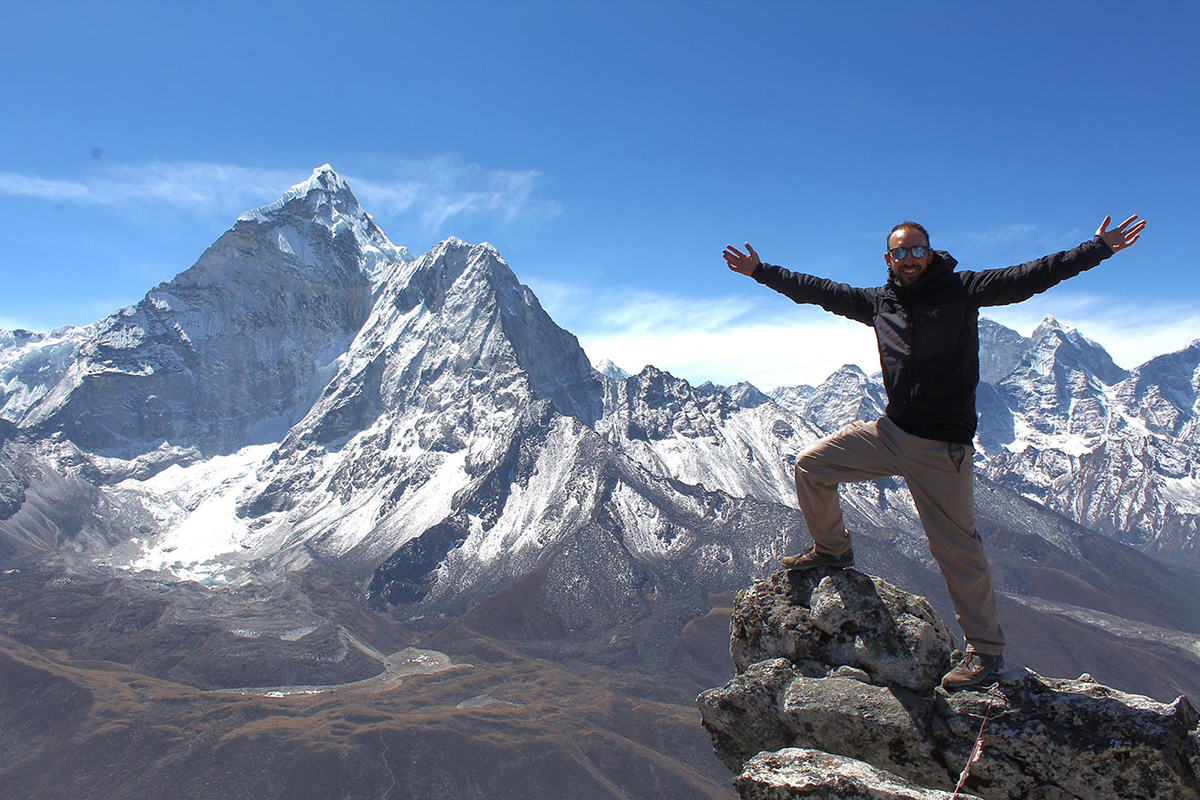
The name “Ama Dablam” means Mother’s Necklace in the Sherpa language, with the hanging glacier on the southwest face resembling the traditional Dablam ornament worn by Sherpa women. The first ascent of Ama Dablam was made on 13 March 1961 by Sir Edmund Hillary, Mike Gill, Barry Bishop, and Wally Romanes via the Southwest Ridge, which remains the standard route today.
We, at Kalapatthar Trek & Expedition, manage this high-altitude technical expedition with IFMGA/UIAGM-certified expedition leaders and a dedicated team of high-altitude Sherpas who have summited Everest and multiple 8,000 m peaks. The itinerary includes a dedicated pre-acclimatisation climb of Lobuche East at 6,119 m before the Ama Dablam summit push. A certified high-altitude doctor is stationed at Base Camp throughout the expedition with full medical facilities and 24-hour health monitoring for every climber.
This Ama Dablam Expedition package is a fully guided, permit-inclusive 24-day expedition in the Khumbu region of eastern Nepal. The route covers the classic trek from Lukla at 2,840 m through Namche Bazaar and Tengboche, a pre-acclimatisation climb of Lobuche East at 6,119 m, followed by technical climbing on Ama Dablam through Camps I (5,700 m), II (5,900 m), III (6,300 m), and the summit at 6,812 m.
Three reserve days built into the schedule provide weather contingency and maximise summit success probability. This expedition combines the cultural richness of the Khumbu Valley with one of the most technically challenging and beautiful climbs in the Himalayas.
Arrive at Tribhuvan International Airport and transfer to your 5-star hotel in Thamel by private luxury Land Cruiser with the Kalapatthar team. The evening includes a traditional Nepali welcome dinner with cultural dance and live music, full expedition briefing covering permits, climbing safety protocols, and the gear checklist. Your guide conducts the first health check covering oxygen saturation, pulse rate, temperature, and general baseline condition.
Morning medical briefing and baseline health assessment conducted by the expedition doctor. Permit processing, equipment check, and final briefing with the full guide and Sherpa team. Gear distribution including complimentary high-altitude down suit and four-season sleeping bag rental. Free afternoon for rest or Kathmandu sightseeing. Evening health check and team meeting to review final preparations.
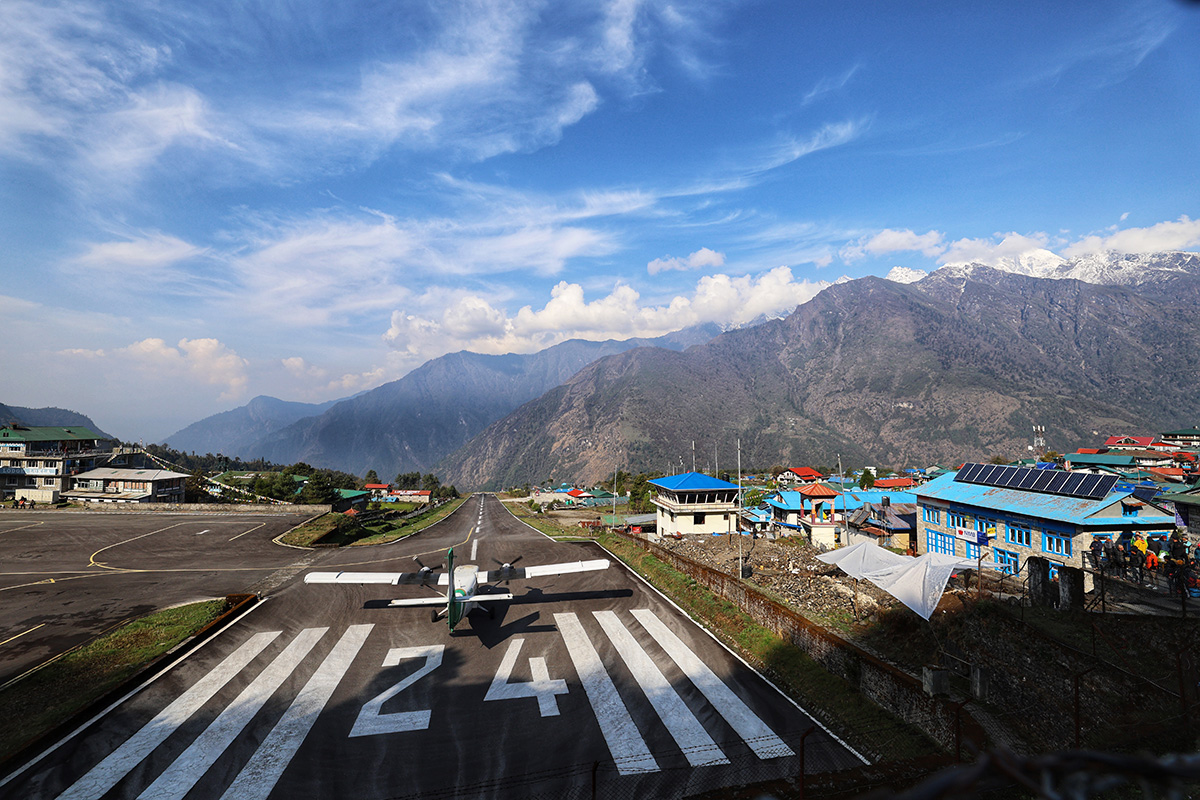
Morning health check and departure briefing before transferring to the airport. Take the early morning domestic flight from Kathmandu to Lukla at 2,840 m, a 35-minute flight with wide views of the Himalayan range on clear days. From Lukla, the trail descends gently along the Dudh Koshi River through pine forests and small Sherpa villages to Phakding at 2,610 m. Register your Sagarmatha National Park permit at the checkpoint near Phakding on arrival. Evening health check conducted by your guide. Overnight at teahouse.
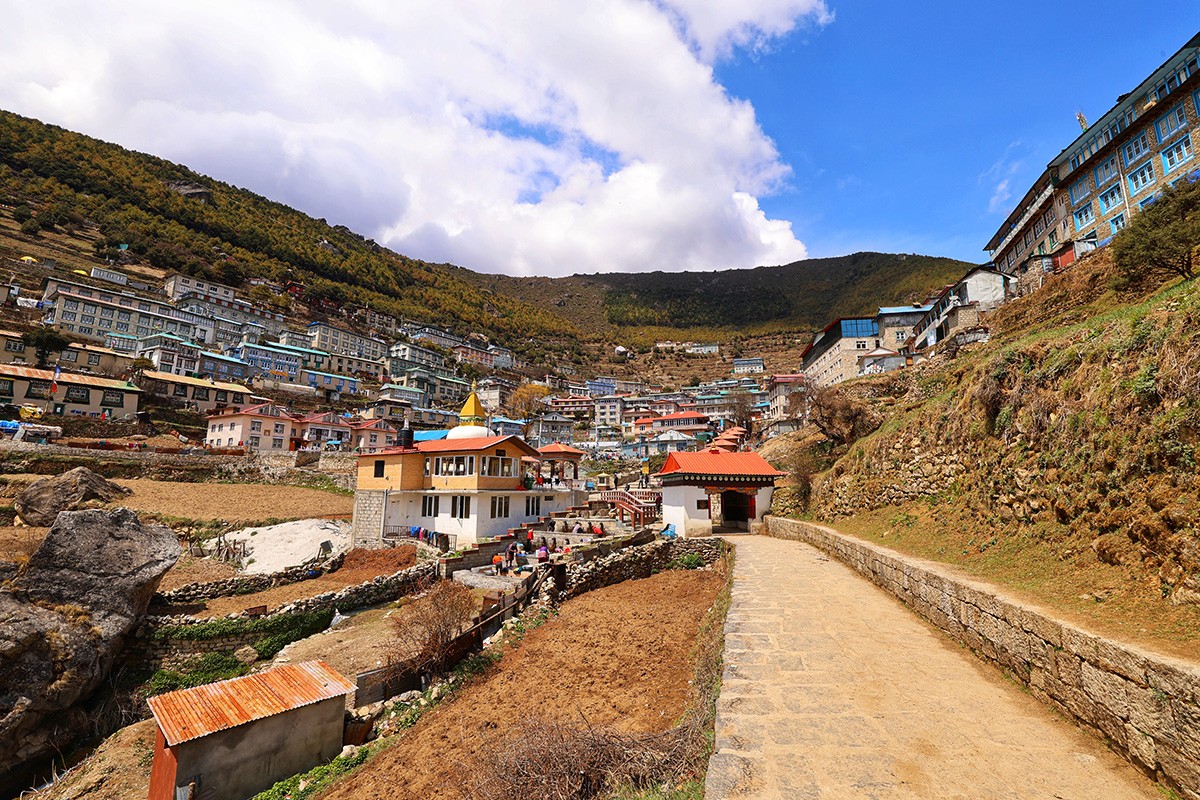
Morning health check and daily trek briefing before departure. The trail crosses the Dudh Koshi River multiple times on high suspension bridges before entering the Sagarmatha National Park gate at Monjo. A steep ascent of 2 to 3 hours brings you to Namche Bazaar at 3,440 m, the Sherpa capital of the Khumbu region. Namche offers markets, bakeries, gear shops, and wide views of Kongde Ri and Thamserku peaks. Evening health check with oxygen saturation recorded. Overnight at teahouse.
Morning health check and altitude lecture covering AMS symptoms, prevention, and treatment options. This rest day is essential for proper acclimatisation before the push toward higher elevations in the Khumbu Valley. Hike to the Everest View Hotel at 3,880 m for a direct view of Everest at 8,848 m, Lhotse at 8,516 m, and Ama Dablam at 6,812 m. Visit the Sherpa Museum and the local market to learn about Sherpa culture and mountaineering history. Rest and hydrate with 4 to 5 litres of water to prepare your body for the higher elevations ahead. Evening health check with careful attention to any AMS indicators. Overnight at teahouse.
Morning health check and trek briefing with route overview. The trail follows a relatively flat contour from Namche to Kyangjuma before descending to the Dudh Koshi River at Phunki Tenga. A steep ascent through rhododendron and pine forest brings you to Tengboche at 3,860 m, home to the famous Tengboche Monastery. Visit the monastery in the late afternoon to hear the monks chanting and see Ama Dablam at 6,812 m, Everest at 8,848 m, and Lhotse at 8,516 m from the monastery grounds. Evening health check conducted. Overnight at teahouse.
Morning health check and daily briefing focusing on Ama Dablam views ahead. The trail descends through rhododendron forest to Deboche before crossing the Imja River and climbing to Pangboche village at 3,985 m. Ama Dablam towers directly above the village, offering the first close views of the climbing route on the Southwest Ridge. Pangboche is home to the oldest monastery in the Khumbu region, containing what is believed to be a yeti scalp. Evening health check conducted. Overnight at teahouse.
Morning health check and final approach briefing before reaching Base Camp. The trail leaves Pangboche and climbs steadily toward Ama Dablam Base Camp at 4,600 m, with the entire Southwest Ridge and hanging glacier visible ahead. Arrival and complete establishment of Base Camp, including personal dome sleeping tents with heated bedding, dining tent, kitchen tent, medical facility, hot shower tent, toilet tent, solar and generator power, and Wi-Fi connectivity. Twice-daily health monitoring begins at this altitude. Evening health check marks the beginning of twice-daily monitoring. Overnight at Base Camp.
Morning health check and briefing on the Puja ceremony. Traditional Sherpa Puja ceremony performed by the expedition's lead Sherpa to bless the climb and seek safe passage on the mountain. The ceremony includes prayer flags, butter lamps, and offerings to the mountain gods. Climbers receive a khata, a white ceremonial scarf, as a symbol of good luck and protection. Rest and hydrate with 4 to 5 litres of water. Evening health check with oxygen saturation and pulse rate recorded. Overnight at Base Camp.
Morning health check and technical training briefing. First technical training day covering crampon technique for walking on snow and ice slopes, rock climbing practice on nearby formations, fixed rope ascent with a jumar device, and rappel descent on a practice slope near Base Camp. Practice walking on crampons, learning proper foot placement and balance techniques. Learn how to tie into the rope, ascend fixed lines using a jumar, and descend using a belay device. Evening health check with careful attention to fatigue and oxygen saturation. Overnight at Base Camp.
Morning health check and technical training briefing. Second technical training day focusing on Yellow Tower strategy, mixed terrain climbing combining rock and ice, and high-altitude safety procedures. Practice the specific techniques required for the Yellow Tower, a 15-metre vertical rock pitch that is the crux of the Ama Dablam route. The medical team clears all climbers for the Camp I move based on health assessment results. Three-day medical support active throughout. Evening health check with careful attention to oxygen saturation. Overnight at Base Camp.
Morning health check and briefing for the Lobuche pre-acclimatisation climb. The team leaves Ama Dablam Base Camp and treks toward Lobuche Base Camp at 4,800 m for the pre-acclimatisation climb of Lobuche East at 6,119 m. This warm-up climb provides essential altitude exposure and technical practice before the Ama Dablam summit push. Evening health check with oxygen saturation recorded. Overnight at Lobuche Base Camp.
Morning health check and technical training briefing. The trail leaves Lobuche Base Camp and climbs steeply along rocky moraine toward Lobuche High Camp at 5,400 m. This section allows climbers to practise crampon technique and fixed rope movement at altitude in a lower consequence environment than Ama Dablam. Evening health check with careful attention to oxygen saturation and fatigue levels. Overnight at High Camp.
Early morning health check and summit briefing at 2 AM. Wake at 3 AM for the summit push on Lobuche East at 6,119 m, following fixed ropes up a steep snow slope and ridge line to the summit. The pre-dawn climb offers a wide view of Everest, Lhotse, Nuptse, and the Khumbu Glacier below. Reach the summit at approximately 7 AM to 8 AM, with Ama Dablam visible across the valley as the main objective for later in the expedition. Descend to High Camp for a short rest, then continue down to Lobuche Base Camp by mid-afternoon. Evening health check conducted after the demanding summit day. Overnight at Lobuche Base Camp.
Morning health check and recovery briefing after the Lobuche summit. The team returns from Lobuche Base Camp to Ama Dablam Base Camp for final preparation before the Ama Dablam summit push. Rest day at Base Camp with final gear checks and oxygen system review. The pre-acclimatisation climb of Lobuche East has provided essential altitude adaptation and technical practice. Evening health check with careful attention to recovery markers. Overnight at Base Camp.
Morning health check and briefing for the Camp I move. First move up Ama Dablam from Base Camp at 4,600 m to Camp I at 5,700 m across rocky moraine, grassy slopes, and scree fields. The trail climbs steeply to a broad saddle with views of the Mingbo La pass before reaching Camp I on a narrow shelf with dramatic views of the surrounding peaks. Camp I is fully established on a rocky platform by the Sherpa team. Evening health check with careful attention to oxygen saturation. Overnight at Camp I.
Morning health check and acclimatisation briefing at Camp I. Rest and acclimatisation day allowing the body to adapt to altitude before the technical sections above. Short reconnaissance hike toward Camp II to assess route conditions and preview the Yellow Tower section. Medical monitoring continues with twice-daily checks. Evening health check with oxygen saturation and pulse rate recorded. Overnight at Camp I.
Morning health check and technical briefing for the Yellow Tower ascent. From Camp I, the route becomes significantly more technical, climbing along an exposed rocky ridge dotted with towering rock fingers. Fixed ropes are in place for all exposed sections. The Yellow Tower, a 15-metre vertical rock pitch requiring jumar ascent, is the crux of this section. Camp II at 5,900 m is extremely exposed with very limited tent space on a narrow ridge ledge just below the Grey Tower. Evening health check with careful attention to oxygen saturation. Overnight at Camp II.
Morning health check and briefing for the Camp III push. From Camp II to Camp III involves mixed rock and ice terrain with sections up to 70 degrees, following fixed ropes through steep and exposed ground. The route skirts the Grey Tower and traverses a snowy ridge before reaching the Mushroom Ridge at approximately 6,300 m. Camp III is set on a small plateau on the Mushroom Ridge, a cold and exposed position where tents must be secured against wind. Evening health check with careful attention to oxygen saturation and early rest for the summit push. Overnight at Camp III.
Late evening health check and summit briefing before departure. Wake at 1:00 AM for a light breakfast and final gear check before starting the climb from 1:30 AM to 2:00 AM. The route above Camp III traverses a short distance before ascending the icy face to the right of the hanging glacier known as the Dablam. After crossing a crevasse-laced section, climb through a narrow snowfield below the Bergschrund before reaching the upper glacier. The final section follows a sharp ice crest to the summit ridge, with steep exposed slopes on both sides. Reach the summit at approximately 7 AM to 8 AM, with Everest at 8,848 m, Lhotse at 8,516 m, Makalu at 8,485 m, Cho Oyu at 8,188 m, and Baruntse at 7,129 m visible in a wide 360-degree panorama. The summit is incredibly exposed but offers one of the finest summit panoramas in the Himalayas. Spend 15 to 20 minutes on the summit before beginning the careful descent down the fixed ropes, past the Mushroom Ridge, the Yellow Tower, and back to Camp II. Descend to Camp II for overnight depending on conditions and climber fatigue. Evening health check conducted after the demanding summit day. Overnight at Camp II.
Morning health check and return trek briefing. Begin the return trek from Ama Dablam Base Camp, descending through Pangboche and Tengboche to Namche Bazaar at 3,440 m. Physical recovery and improved oxygen saturation are noticeable at lower altitude after the days above 6,000 m. Pass by the famous Tengboche Monastery one final time before continuing down to Namche. Evening health check with recovery assessment. Overnight at teahouse.
Morning health check and final trek briefing. The final trekking day descends steeply from Namche Bazaar down to the Dudh Koshi River valley at Phakding. Continue along the river past Sherpa villages and suspension bridges to Lukla at 2,840 m. Celebrate the completion of the Ama Dablam Expedition with your guide and porter team in Lukla. Evening health check and final gear sorting for the flight to Kathmandu. Overnight at teahouse.
Morning health check and departure briefing. Take the early morning domestic flight from Lukla back to Kathmandu, a 35-minute flight with wide views of the Himalayan range on clear days. Arrive in Kathmandu by mid-morning. Your Kalapatthar completion certificate is issued, and the expedition officially concludes with a hotel night included for your final evening. Expedition celebration dinner with the guide team and Sherpa staff. Evening health check conducted. Overnight at a 5-star hotel.
Enjoy your last breakfast in Nepal at the 5-star hotel. Return your complimentary rental gear (high-altitude down suit and four-season sleeping bag) to the Kalapatthar representative. The Kalapatthar team arranges a private luxury Land Cruiser airport transfer to Tribhuvan International Airport. Your expedition leader accompanies you to the airport for a final farewell. Check in for your international flight and clear immigration. Board your flight home with the memories of summiting one of the most beautiful and technically challenging peaks in the Himalayas, Ama Dablam, at 6,812 meters.
This Kalapatthar Trek & Expedition package runs for 24 days total, including arrival and preparation in Kathmandu, the approach trek, pre-acclimatisation climb of Lobuche East, technical climb of Ama Dablam with three reserve days, and return to Kathmandu with hotel nights at both ends.
The expedition is rated Extreme (Alpine AD/PD+) and requires prior high-altitude mountaineering experience above 6,000 m, as well as demonstrated rock and ice climbing proficiency. The route involves fixed ropes, exposed ridges, a 15-metre vertical rock pitch (Yellow Tower), and mixed terrain up to 70 degrees.
Yes, prior rock climbing experience at a minimum of 5.8 grade is strongly recommended for the Yellow Tower section, which is a 15-metre vertical pitch requiring jumar ascent on fixed ropes.
The highest point is the summit of Ama Dablam at 6,812 m, with Camp III at 6,300 m as the highest overnight camp on the expedition.
Yes, altitude sickness, including AMS, HAPE, and HACE, is a genuine risk at altitudes above 4,000 m on any expedition reaching 6,812 m. Kalapatthar provides a certified high-altitude doctor at Base Camp throughout the expedition, and guides conduct twice-daily health monitoring with immediate descent protocols for any serious symptoms.
Five permits are required: the Ama Dablam climbing royalty at USD 1,000, Lobuche East climbing permit, Sagarmatha National Park permit at NPR 3,000, Khumbu Municipality permit at NPR 2,000, and a garbage deposit of USD 500. All are processed by Kalapatthar at official rates.
Yes, a licensed climbing guide with IFMGA or UIAGM certification is legally required for any Ama Dablam summit attempt. Kalapatthar provides IFMGA/UIAGM-certified expedition leaders as standard on this package.
Accommodation is a 5-star hotel in Kathmandu for four nights, quality teahouses on the approach trek, luxury dome tents with heated bedding at Base Camp, and fully equipped insulated expedition tents at Camp I, Camp II, and Camp III.
Three-course freshly prepared meals are served daily at Base Camp with unlimited snacks, fruits, tea, and coffee. Full hygienic kitchen service is provided at all high camps. Dal bhat, pasta, fried rice, noodle soups, and Tibetan bread are available at teahouses on the approach. Vegetarian requirements are accommodated with advance notice.
Yes, comprehensive travel insurance covering high-altitude mountaineering above 6,800 m and emergency helicopter evacuation is mandatory for this expedition. Proof of valid insurance must be presented to the expedition leader at the Day 1 briefing. Participation is not permitted without confirmed coverage.
24-hour Wi-Fi is available at Base Camp throughout the expedition. Some teahouses on the approach offer Wi-Fi for a small fee, but connectivity is not available at Camp I, Camp II, or Camp III.
Himalayan tahr are commonly seen near Tengboche and Pangboche, musk deer live in mid-elevation forests, and snow leopards are documented but very rarely sighted in Sagarmatha National Park.
This expedition is not recommended for climbers without prior high-altitude experience above 6,000 m. Prior rock climbing proficiency and a 6,000 m peak ascent in the two years before the Ama Dablam attempt significantly improve success probability.
Booking four to six months in advance is strongly recommended for the autumn peak season when permits, IFMGA guides, Sherpa teams, and logistics must be arranged well ahead of departure.
Based on Himalayan Database records and expedition operator data from 2015 to 2025, the overall success rate for Ama Dablam on professionally guided expeditions is approximately 60 to 70 per cent. Proper acclimatisation, technical proficiency, rock climbing ability, and weather conditions are the primary factors.
Contact Kalapatthar Trek & Expedition Pvt. Ltd. directly with your preferred travel dates, group size, and any special requirements to receive a personalised quote and full pre-departure support from the expedition team.
Base Camp temperatures range from 5 to 12 degrees Celsius during the day. At Camp III, nighttime temperatures drop to minus 15 to minus 25 degrees Celsius. October and November offer the most stable weather for climbing.
The permit costs USD 1,000 for spring and autumn seasons. Winter and summer permits cost USD 500. The Nepal Mountaineering Association issues this permit. Kalapatthar processes it for you at official government rates.
Yes, you may use your own gear if it is in excellent condition. Kalapatthar provides complimentary rental of a down suit and sleeping bag for your use. You are welcome to bring your own ice axe, crampons, harness, helmet, and jumar.
Your safety is the first priority in this situation. You will descend with a guide to lower elevation. Your package includes support for this scenario. The expedition leader will discuss all options with you before any decision is made.
Mobile reception is not available above Namche Bazaar. There is no charging facility at any of the three high camps. Kalapatthar provides charging only at Base Camp. Bring a high-capacity power bank for the summit push.

Member Since 2026

Leave a review