

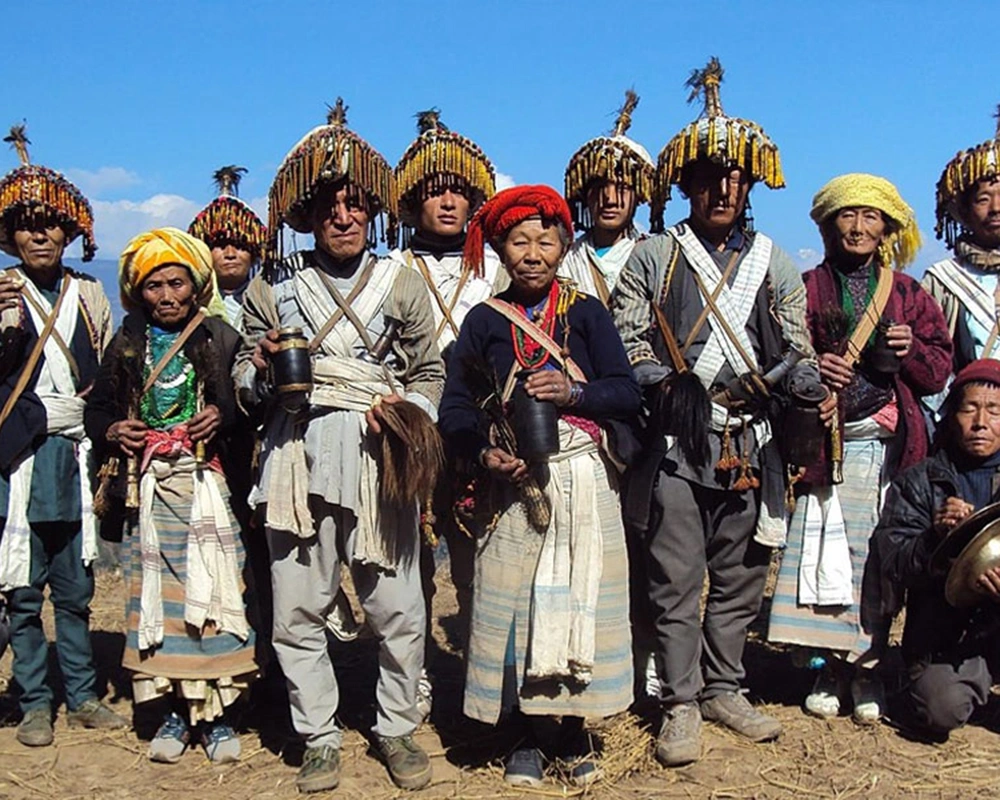

The Rai people, also known as Khambu or Jimee, are one of Nepal’s oldest indigenous ethnic groups. They primarily live in the eastern hills of Nepal, between the Dudh Koshi and Tamur rivers, and also in Sikkim, Darjeeling, Kalimpong, and southwestern Bhutan. The Rai speak Tibeto-Burman languages and maintain a rich cultural heritage, including terrace farming, nature worship, and ancestral rituals.
With over 620,000 Rai in Nepal, the community is divided into many subgroups or “Thars,” each with its own language and customs. Despite this diversity, they share common traditions such as animistic worship, ancestor reverence, and festivals like Sakela and Nwagi that celebrate farming and community life.
Historically, the Rai resisted the Gorkha expansion and preserved their cultural autonomy. Guided by the Mundhum oral tradition, they continue sacred rituals, perform Silli dances, and play traditional musical instruments, keeping their ancient heritage alive in the eastern Himalayan & Hilly region.
Who Are the Rai People of Nepal
The Rai are an Indigenous ethnolinguistic group belonging to the Kirati family. They are also known as Khambu in many regions, and their identity is closely linked to their language, clan, and cultural practices. Their languages fall under the Tibeto Burman branch of the Sino Tibetan family.
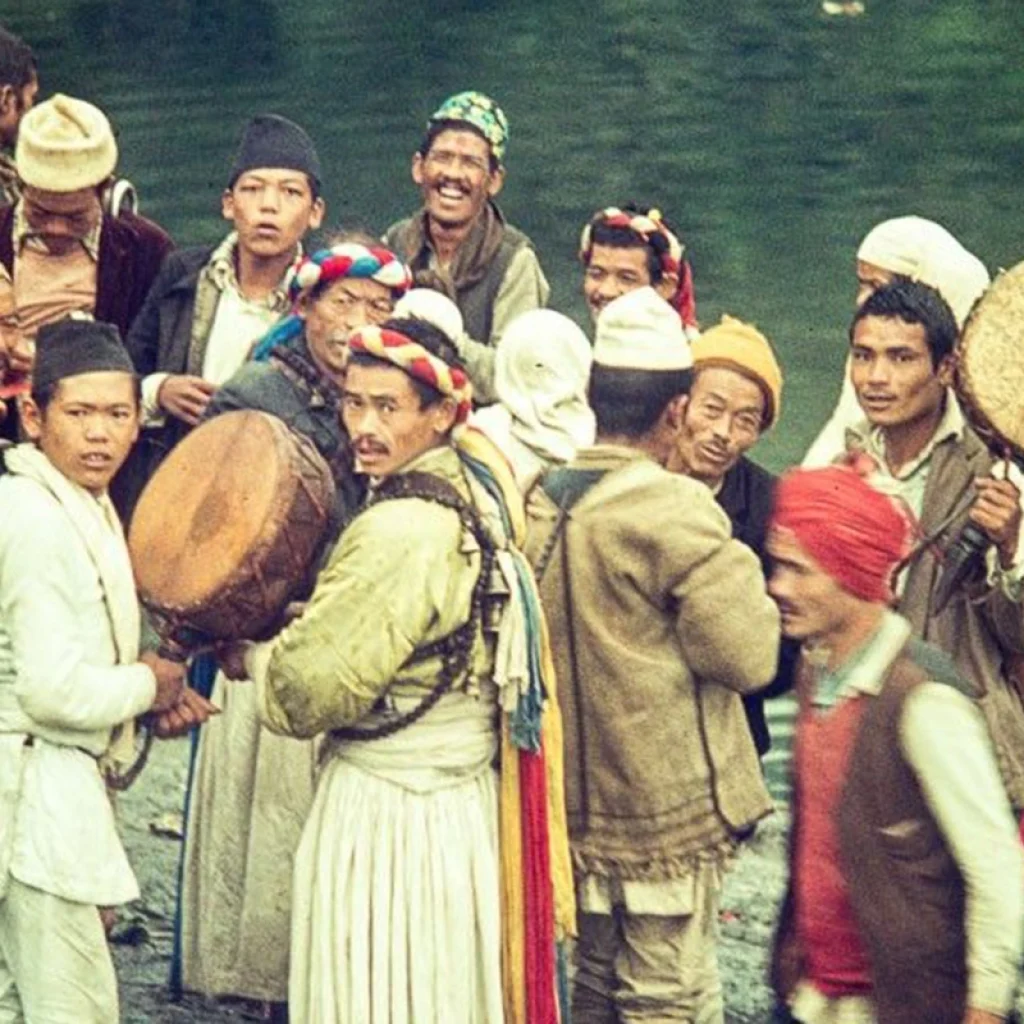
The community is divided into several subgroups such as Bantawa, Chamling, Kulung, Thulung, Yamphu, Lohorung, and Wambule. Each subgroup has its own dialect and variation in customs, but all share a common cultural foundation rooted in Kirati traditions. Their social identity is also shaped by clan systems such as Thar, Pacha, and Samet, which guide kinship and ritual roles.
Population and Distribution
The Rai people are mainly found in eastern Nepal, especially in districts like Khotang, Bhojpur, Solukhumbu, Dhankuta, Sankhuwasabha, Okhaldhunga, and Udayapur. In several of these districts, they form a large part of the population and play a major role in local culture and traditions.
Beyond Nepal, Rai communities are also found in Sikkim, Darjeeling, Kalimpong, Assam, Bhutan, and in countries such as the United Kingdom and the United States. This spread is mainly due to migration over time. Despite this, many Rai people continue to maintain strong cultural ties with their place of origin.
There are around 28 Rai languages identified by linguists. Many of these are not mutually understood, which shows the depth of diversity within the community.
Historical Background
The Rai trace their origin to the ancient Kirati civilization, one of the earliest known groups in Nepal. Their history is preserved mainly through oral traditions known as Mundum, which includes stories of migration, settlement, and belief systems. These traditions continue to guide cultural practices even today.
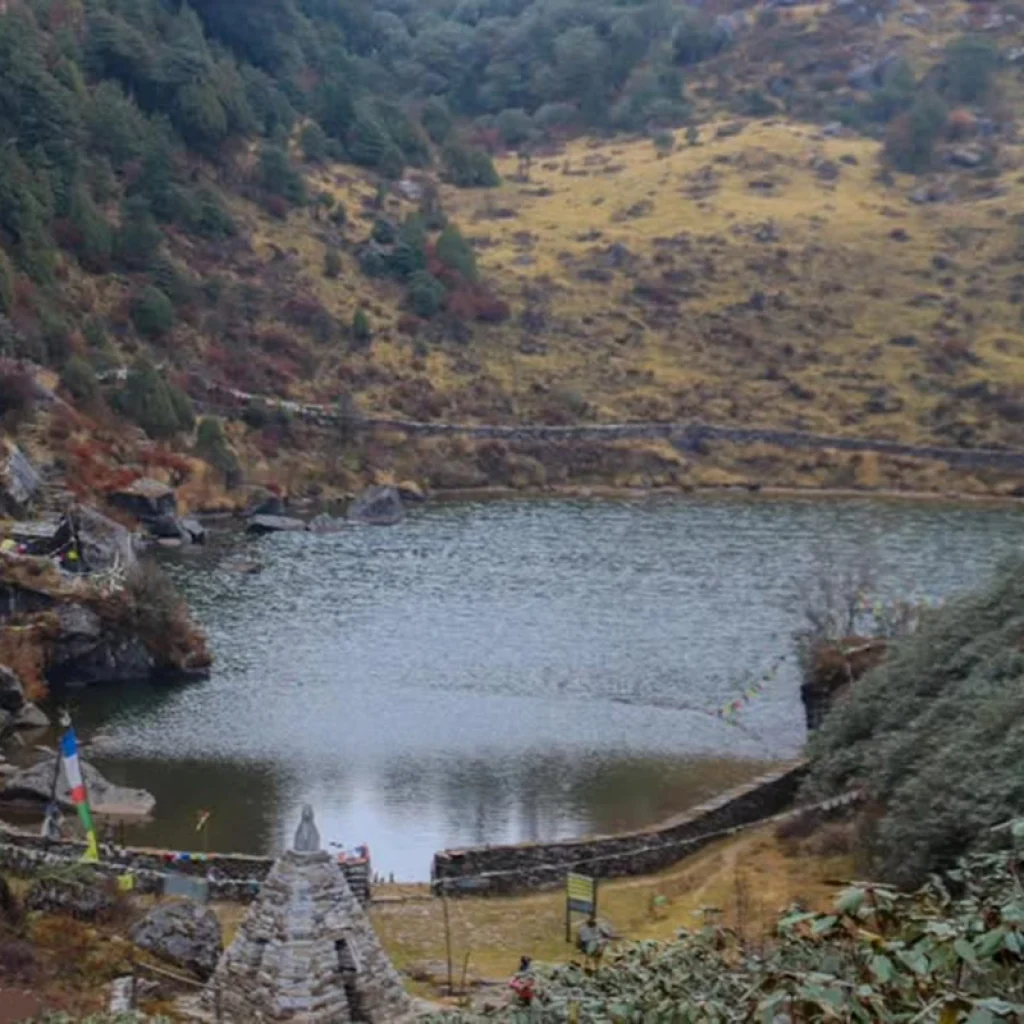
According to these traditions, their ancestors entered eastern Nepal through the Koshi region and settled along major river systems such as Arun, Dudh Koshi, and Tamakoshi. These river valleys provided fertile land and supported early settlements.
In ancient times, Kirati rulers governed parts of Nepal, including the Kathmandu Valley. After losing power there, they gradually moved east and established settlements across the hills. During the unification of Nepal in the 18th century, Rai and other Kirati groups resisted the expansion of the Gorkha kingdom before being incorporated into the state.
Culture and Traditions of Rai People in Nepal
Nature and Ancestor Worship
Rai culture is based on respect for nature and ancestors. Rivers, forests, land, and sky are considered sacred, and they are often included in rituals and daily practices. This belief system reflects a close relationship between people and their environment.
Their traditions focus on maintaining balance between the living and ancestral spirits. Ancestral worship is an important part of life, and it is believed that ancestors continue to influence the well being of the family.
Suptulung
Suptulung is a sacred three stone hearth found in Rai households and is an important part of their cultural identity. It is present in the house as a central place for ritual activities and spiritual connection.
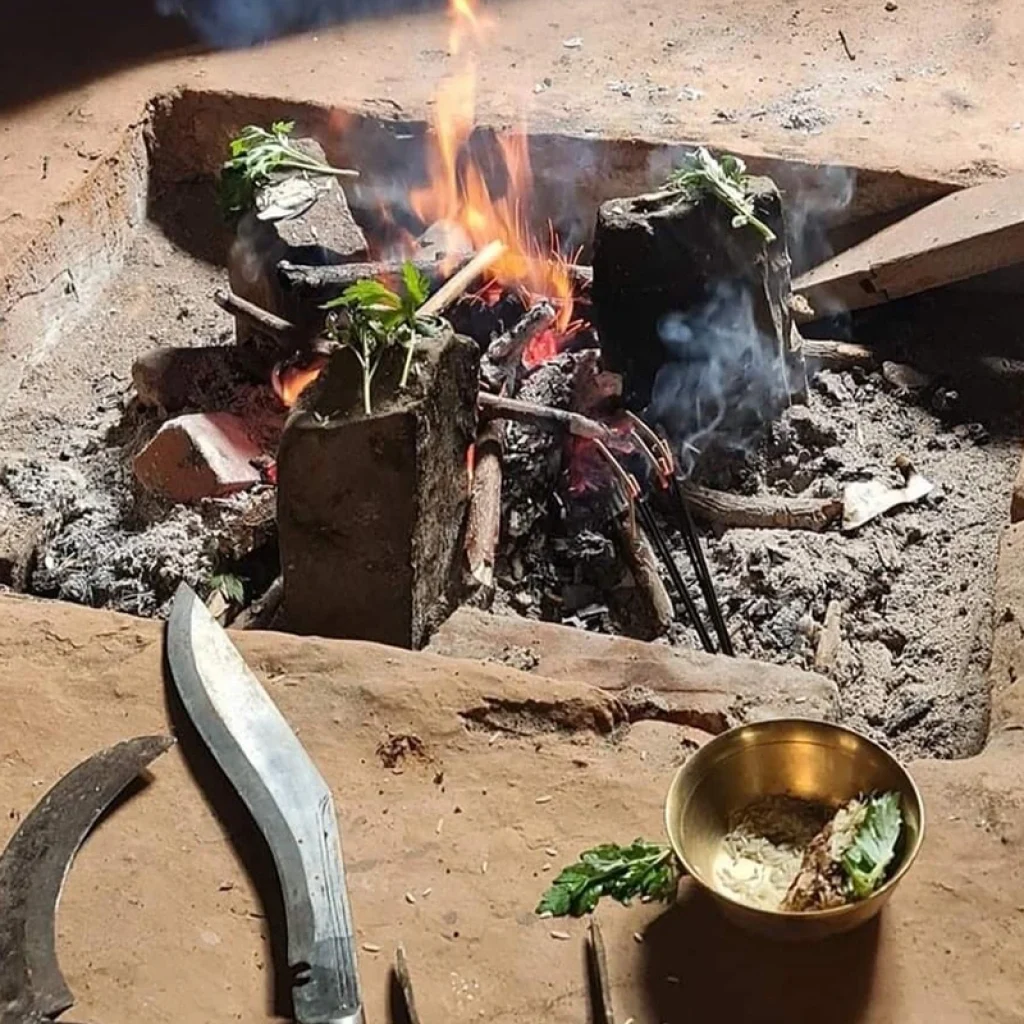
Each stone represents male ancestors, female ancestors, and spiritual energy. Rituals related to birth, marriage, and death are performed here, and it is believed to be a place where ancestral spirits reside and protect the household.
Religion and Beliefs
The Rai follow the Kirat Mundhum religion, which is based on oral traditions and ritual practices passed down through generations. It does not have written scriptures in the traditional sense, but its teachings are preserved through chants, stories, and rituals.
Religious ceremonies are conducted by shamans such as Mangpa, Nakchhong, and Bijuwa. These individuals play a key role in healing, guiding rituals, and communicating with spiritual forces.
The main deities are Sumnima, associated with the earth and fertility, and Paruhang, associated with the sky and cosmic power. While some Rai people follow Hinduism, Buddhism, or Christianity today, traditional beliefs still remain important in many communities.
Festivals
Sakela
Sakela is the main festival of the Rai people and is closely linked to agriculture. It is celebrated during Ubhauli and Udhauli, which mark the planting and harvesting seasons. The festival brings communities together and strengthens social bonds.
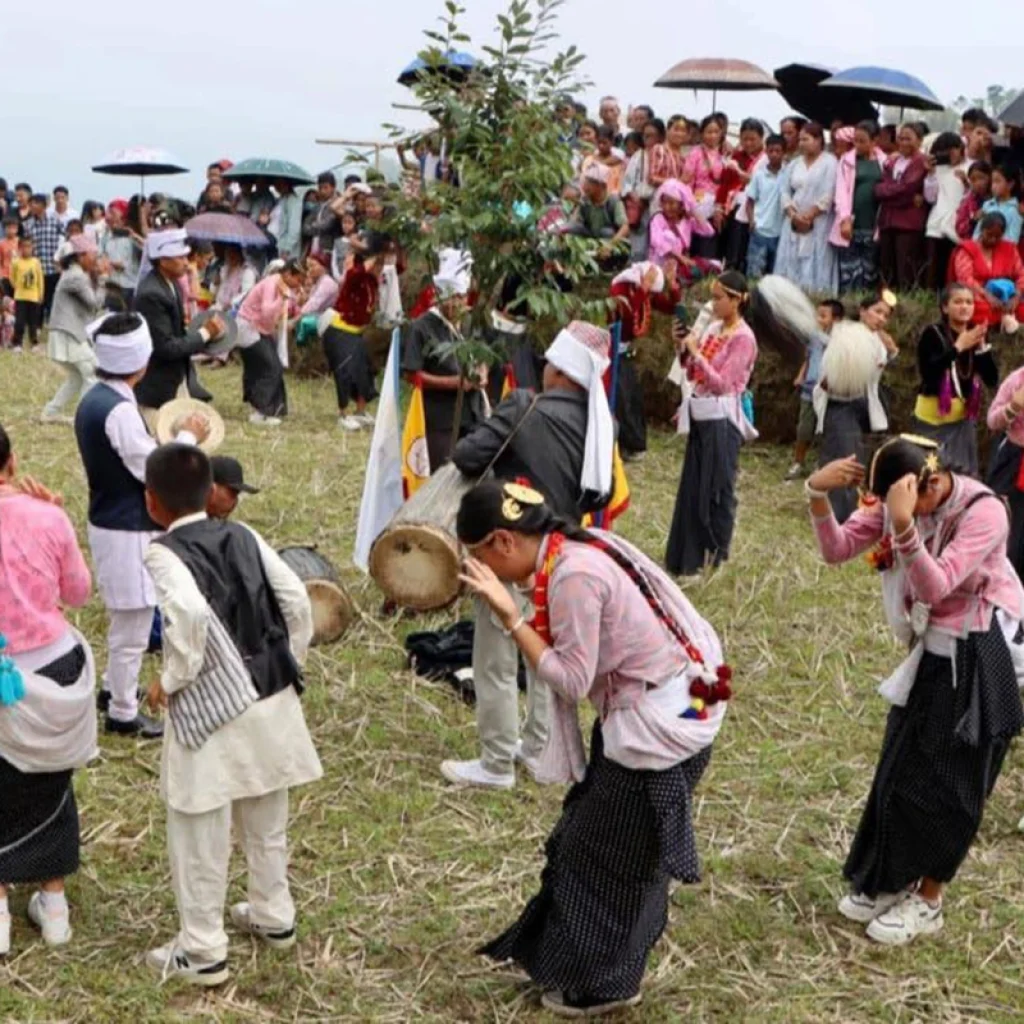
The Silli dance is performed during Sakela. Its movements reflect farming activities, hunting, and interaction with nature, making it both a cultural and symbolic performance.
Nwagi
Nwagi is celebrated before consuming newly harvested crops. Families offer the first portion of food to their ancestors, showing respect and gratitude. This ritual highlights the importance of ancestral connection in Rai culture.It is also a time when relatives gather, share food, and strengthen family relationships.
Yele Sambat
Yele Sambat is the traditional New Year of the Rai community, observed in mid January. It is connected to ancient Kirati history and is believed to have started during the time of the first Kirati king. The day is marked by cultural activities, food, and social gatherings.
Other Festivals
Other festivals such as Wadangmi and Dhwangkum are celebrated by specific Rai subgroups. These festivals vary by region but usually involve rituals, music, and community participation. They reflect local traditions and maintain cultural diversity within the Rai community.
Marriage and Family
Marriage in Rai society is considered a social institution that requires recognition from the community. It is not only a bond between two individuals but also between families and clans.
Different forms of marriage exist, including arranged marriage, love marriage, and widow remarriage. Traditional practices like Chori Biha and Zari Biha were more common in the past but are less practiced today.
Families may be nuclear or joint, and property is usually divided among family members. Men and women both participate in decision making, showing a relatively balanced social structure.
Language
Rai languages belong to the Kiranti subgroup of the Tibeto Burman family. These languages are an important part of identity and cultural expression.
Each subgroup has its own language or dialect, such as Bantawa, Chamling, and Kulung. These languages are used in daily communication as well as in rituals and oral traditions.
Oral knowledge systems like Mundum are preserved and transmitted through these languages, making them essential for cultural continuity.
Lifestyle and Occupation of Rai People in Nepal
Agriculture is the main occupation of the Rai people. They cultivate crops such as rice, maize, millet, wheat, and mustard depending on the season and landscape. Farming is closely linked with their festivals and daily routines.
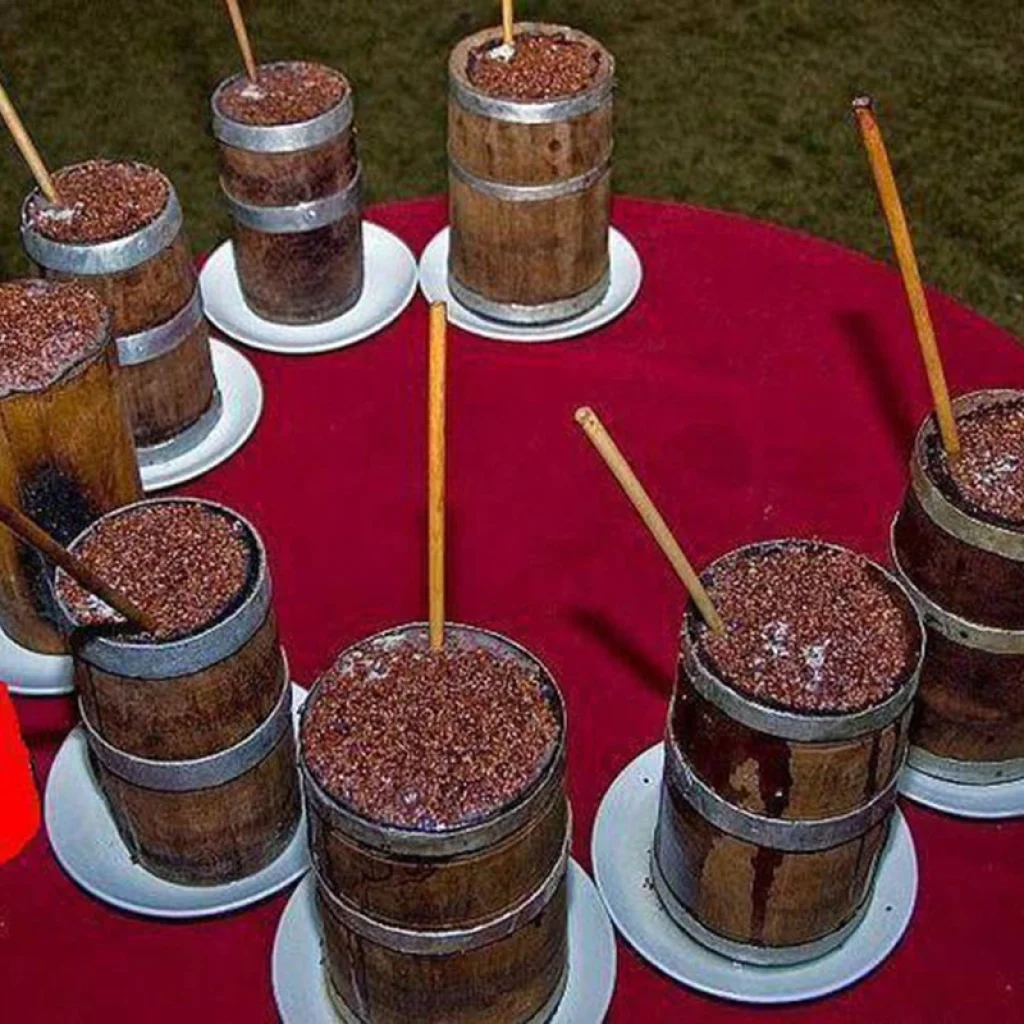
Livestock raising is also common, with animals like buffalo, pigs, and chickens playing an important role in the household economy. Many families also produce traditional food and beverages for both consumption and local trade.
In the past, the Rai followed the Kipat system, a communal land ownership system that allowed them to manage land, forests, and water resources collectively.
Music, Dance, and Art of the Rai People
Music and dance are important parts of Rai cultural life and are present in both daily activities and special occasions. Songs are performed during work, rituals, and celebrations, reflecting different aspects of life.
Some well-known song forms include Hiyari Chham, Saima Chham, and Hakpare Chham. These songs often carry messages related to love, work, and social relationships.

You May Also Prefer Reading: People of Nepal: Bahun
The Silli dance is the most recognised dance form. It represents everyday activities such as farming, hunting, and interaction with nature. Traditional instruments include Dhol, Jhyamta, Murchunga, bamboo flute, Binayo, and Pung.
Traditional Knowledge and Oral Heritage of Rai People
The Mundum is the core of Rai knowledge and belief. It is an oral tradition that includes myths, rituals, history, and moral teachings. It has been passed down from generation to generation without written texts.
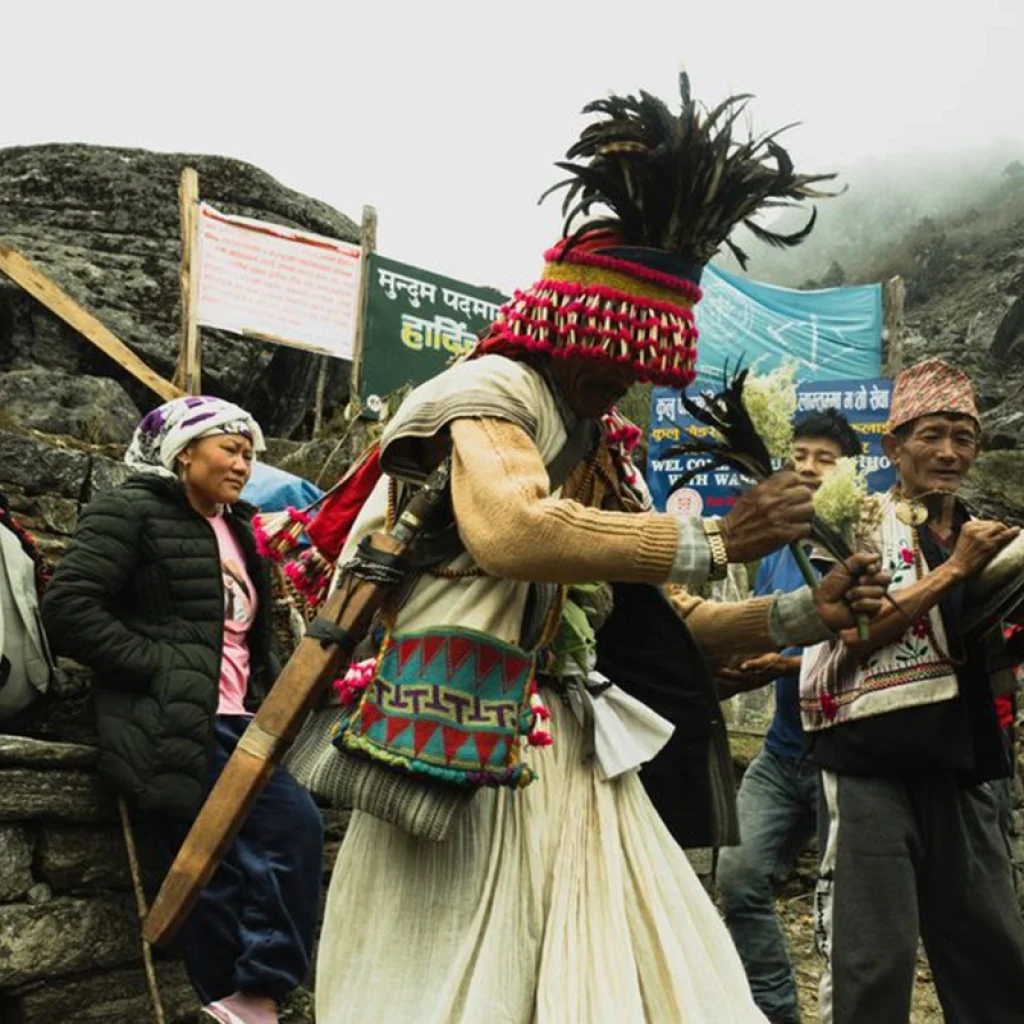
Different Rai groups may have variations of the Mundum, but the core ideas remain similar. It plays a key role in guiding rituals, social values, and cultural identity.
Identity Today
Today, the Rai community continues to maintain its traditions while adapting to modern life. Many Rai people have moved to urban areas and abroad for education and work, which has influenced their lifestyle.
Despite these changes, cultural practices such as festivals, rituals, and clan systems are still followed. Language and tradition continue to play a strong role in shaping their identity.
All about the Rai People
The Rai people are an important Indigenous community of Nepal with a long and continuous cultural history. Their traditions, beliefs, and social systems show a strong connection to nature, ancestry, and community life.
Explore more content like this on Kalapatthar to learn about Nepal’s people, traditions, and heritage. For Further Information and Queries: Do Contact Us
Even with modern changes, their cultural identity remains active and visible across generations. Their way of life continues to contribute to the cultural diversity of Nepal.
0 Comment