
14 Days
Daily Tour
10 people
___
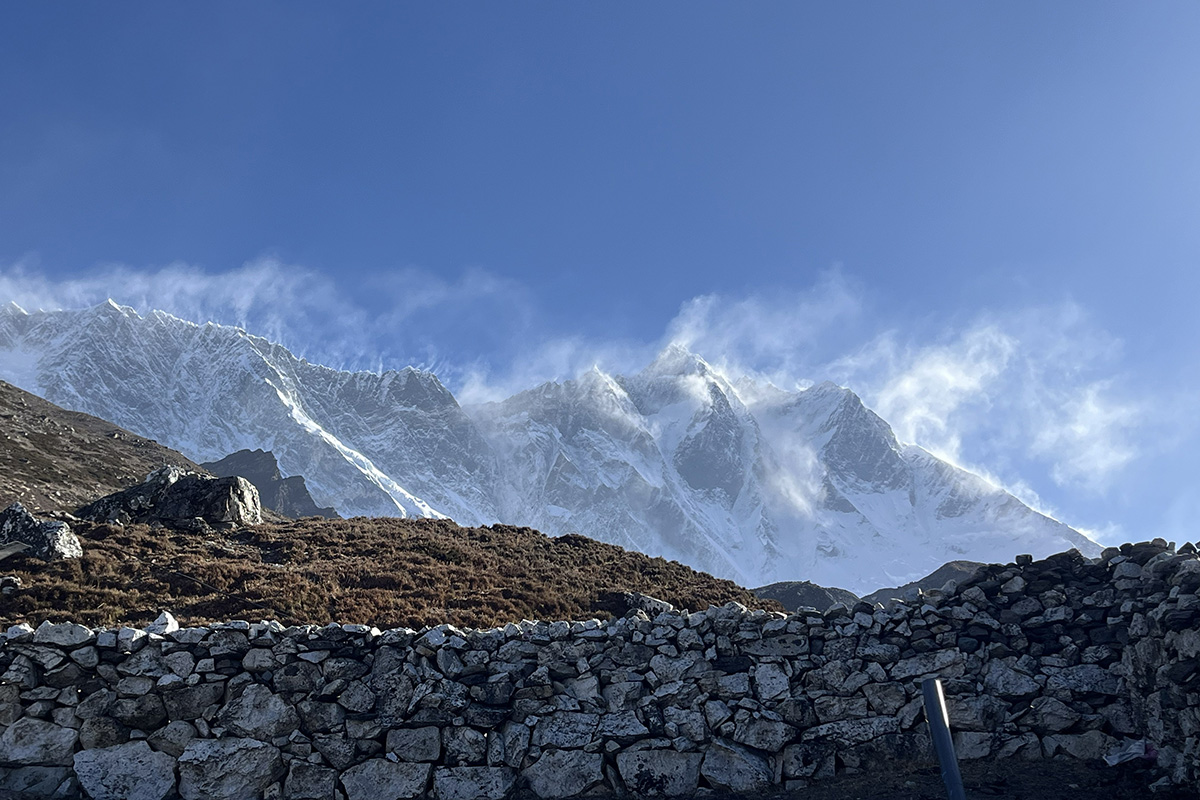
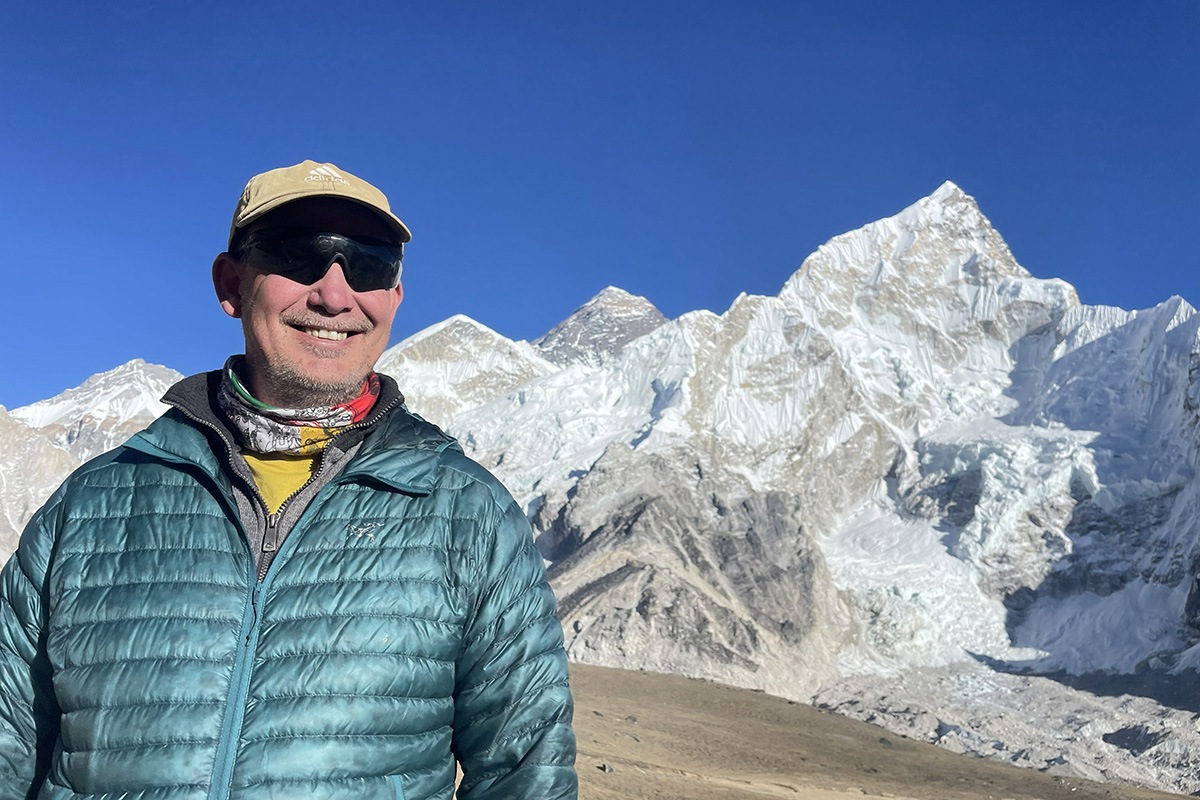
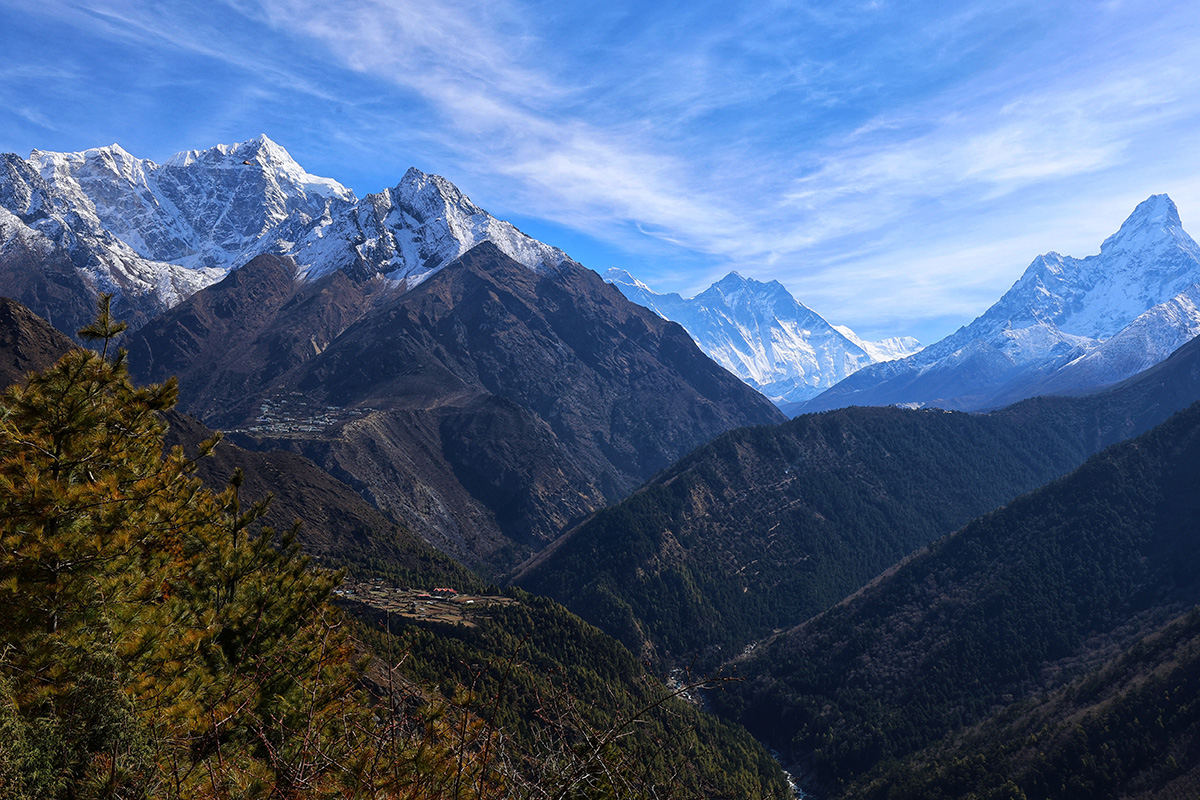
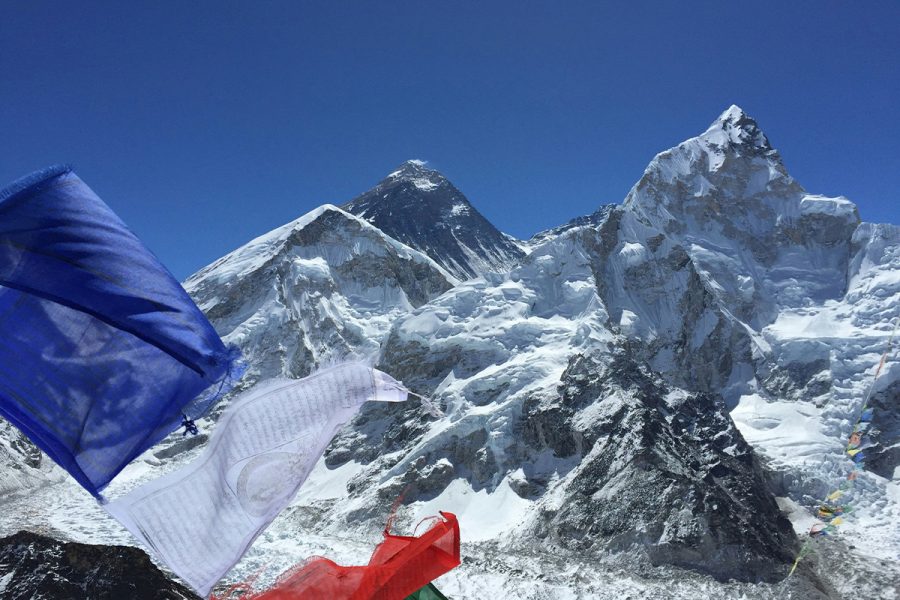
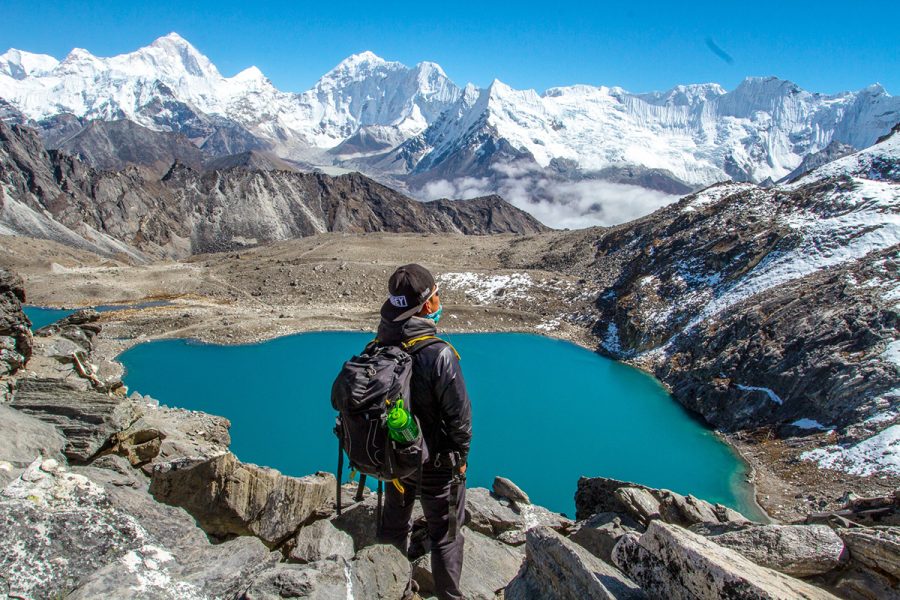
Everest Base Camp sits directly beneath a wall of neighboring peaks, and Nuptse blocks a clear line of sight to the summit from that exact spot. Kalapatthar solves this problem entirely, opening an unobstructed view across Everest and Changtse from a ridge set at a completely different angle above Gorak Shep.
The trail visits Khumjung Monastery, the Sir Edmund Hillary legacy sites at Khunde, and the quiet high path through Phortse, before rejoining the classic trail near Pangboche. Trekkers reach the same Everest Base Camp and Kalapatthar viewpoints as the standard trek, with a noticeably richer cultural experience along the way.
This 14-day itinerary keeps the same pace and acclimatization structure as our classic Everest Base Camp packages, with experienced guides monitoring each trekker daily and enough built-in rest days to make the extra distance through Khumjung and Phortse safe rather than rushed.
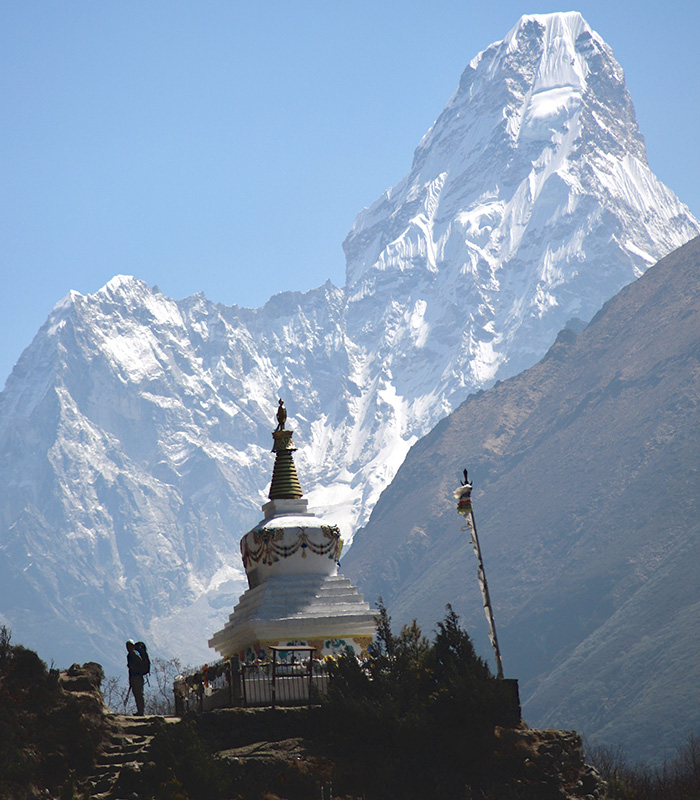
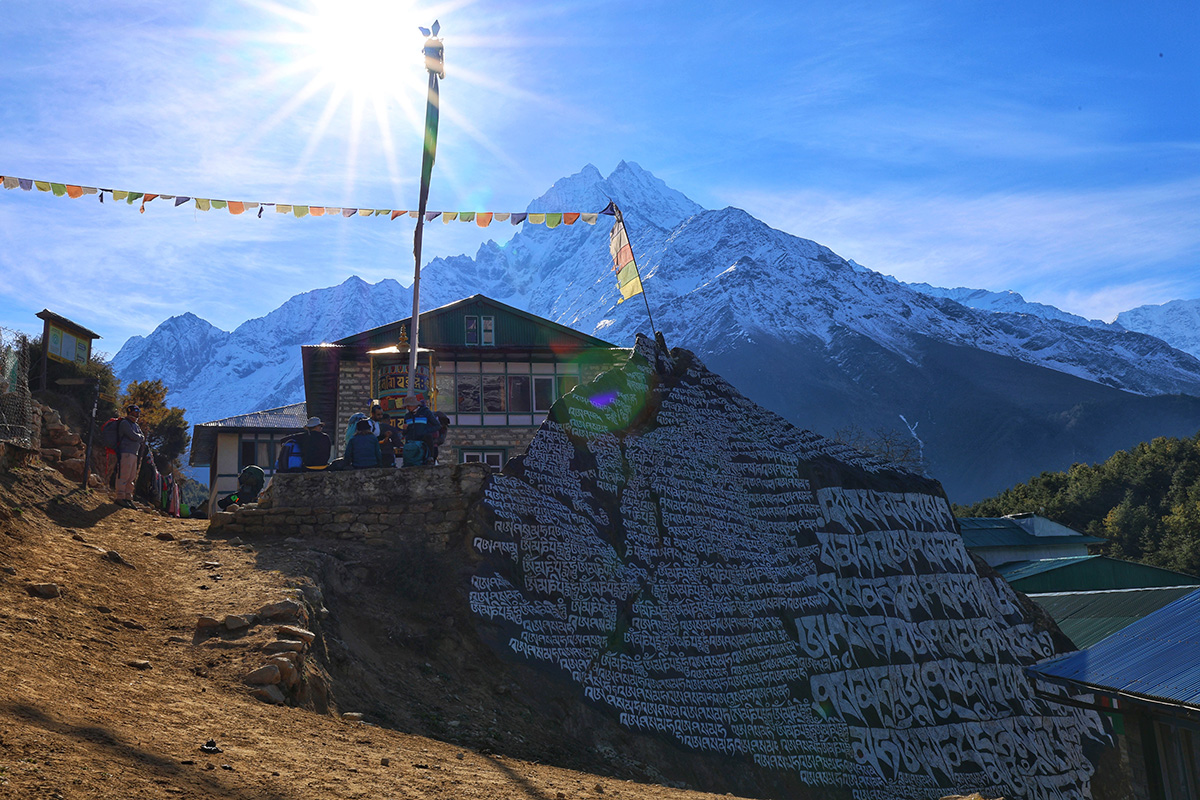
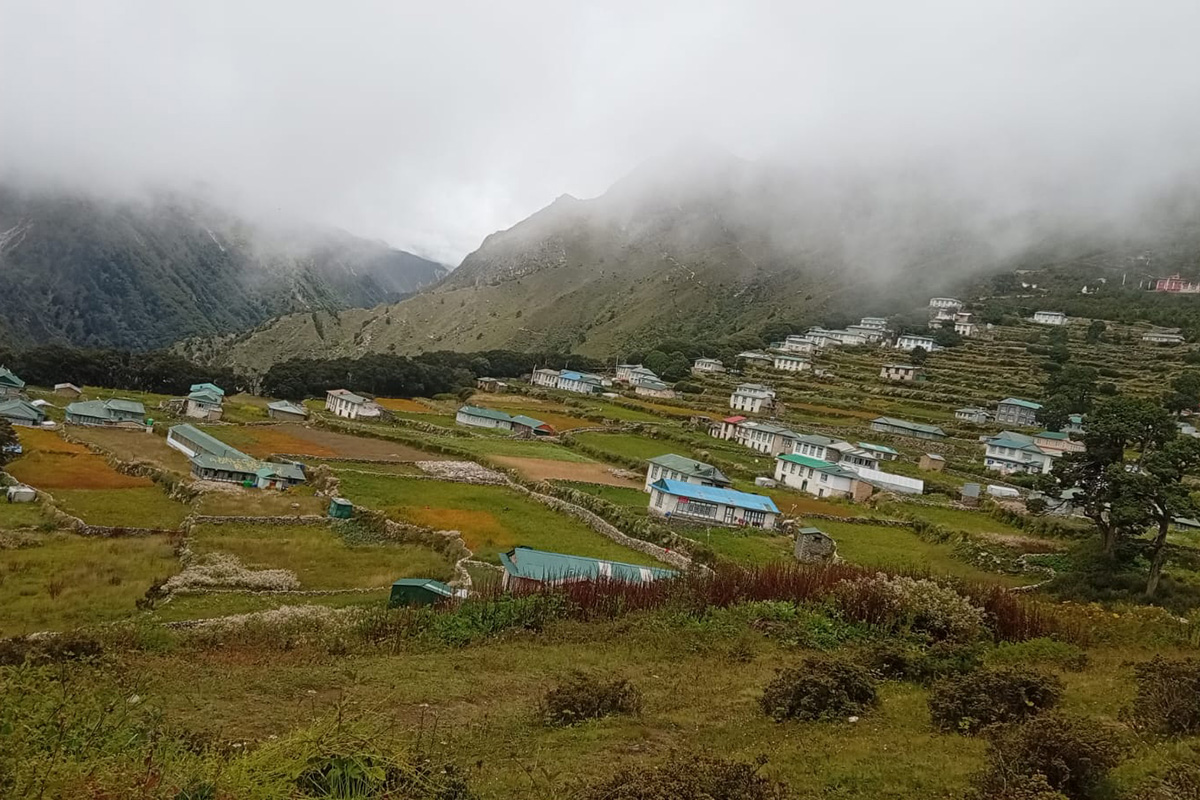
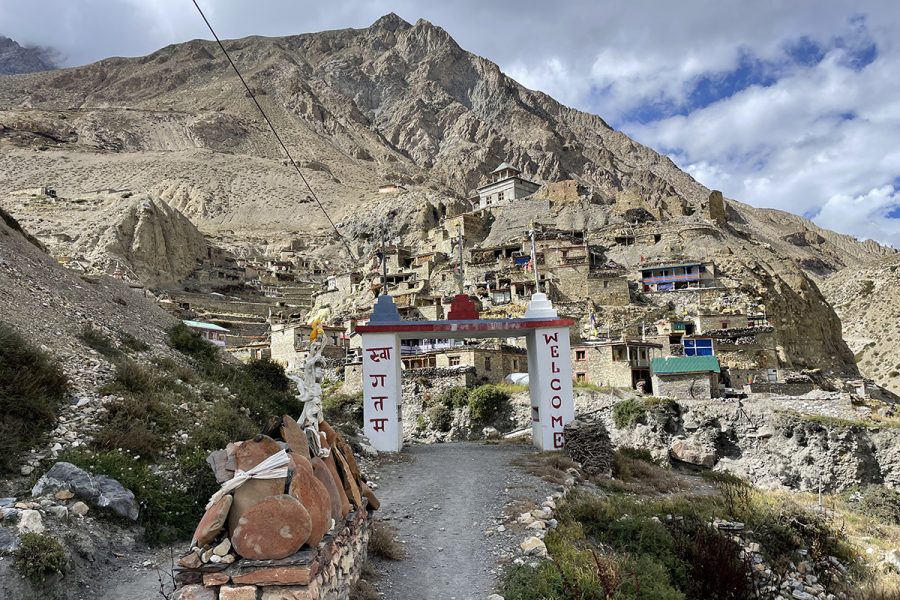
From Namche Bazaar, the route climbs to Khumjung village at roughly 3,790 meters, passing traditional stone houses, mani walls, and the historic Khumjung Monastery beneath Mount Khumbila. From Khumjung, the trail continues through rhododendron and juniper forest to Phortse, a quiet farming village that most EBC itineraries skip entirely.
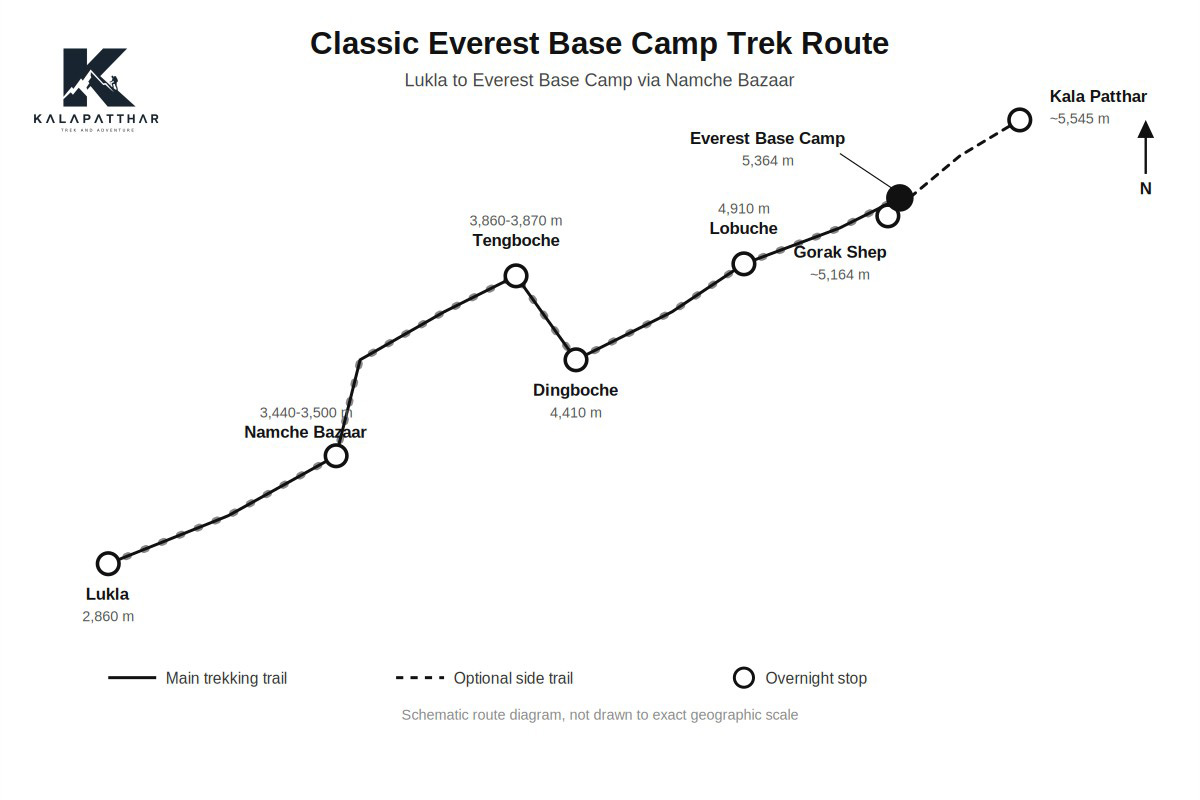
Beyond Phortse, a high traversing path leads to Upper Pangboche, where the route rejoins the standard trail toward Dingboche, Lobuche, and Gorak Shep. From there, the itinerary follows the classic path to Everest Base Camp and the sunrise climb to Kalapatthar before retracing the standard trail back through Namche and Lukla.
Kathmandu, 1,400 m Your journey begins the moment you land in Kathmandu, where the trek shifts from planning into motion.
The day closes with the whole trek mapped out, leaving nothing but the flight to Lukla ahead of you.
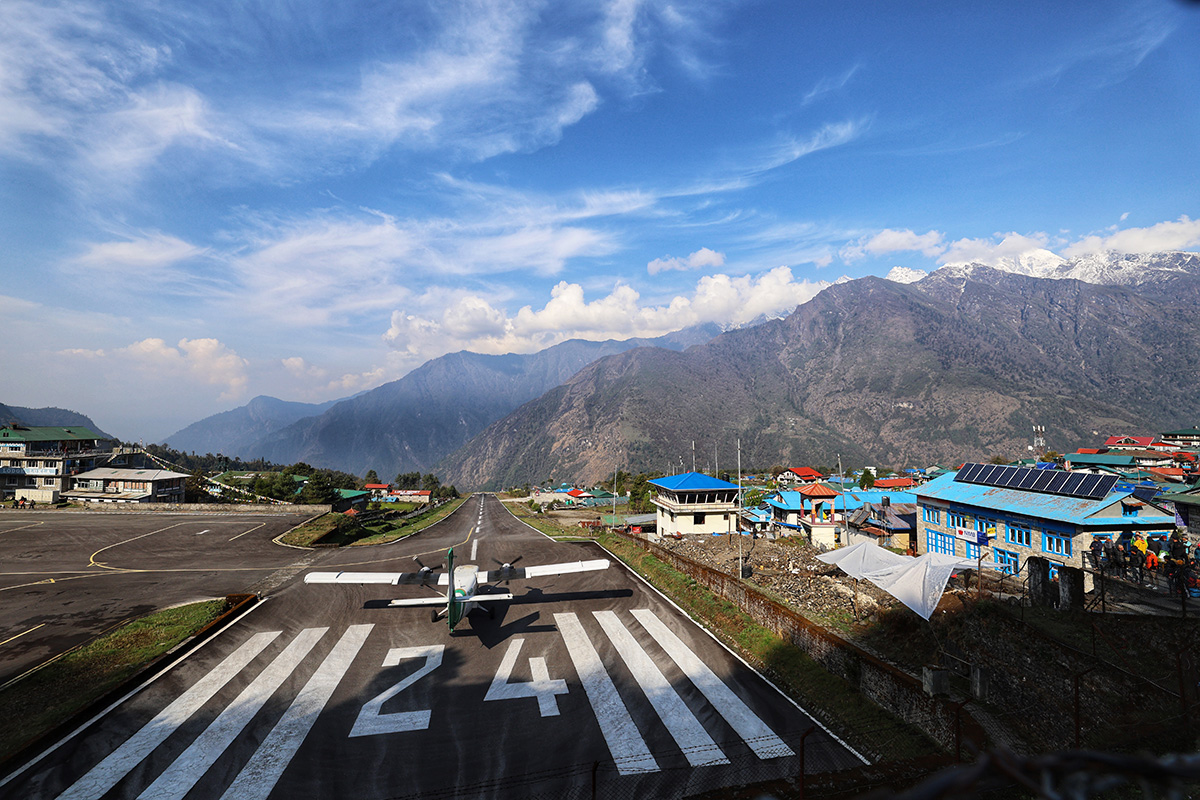
Lukla 2,860 m to Phakding 2,610 m, 8 km, 3 to 4 hours A short mountain flight replaces days of overland travel and drops you straight into the Khumbu.
Phakding marks a gentle first night on the trail, with the real climbing still to come.
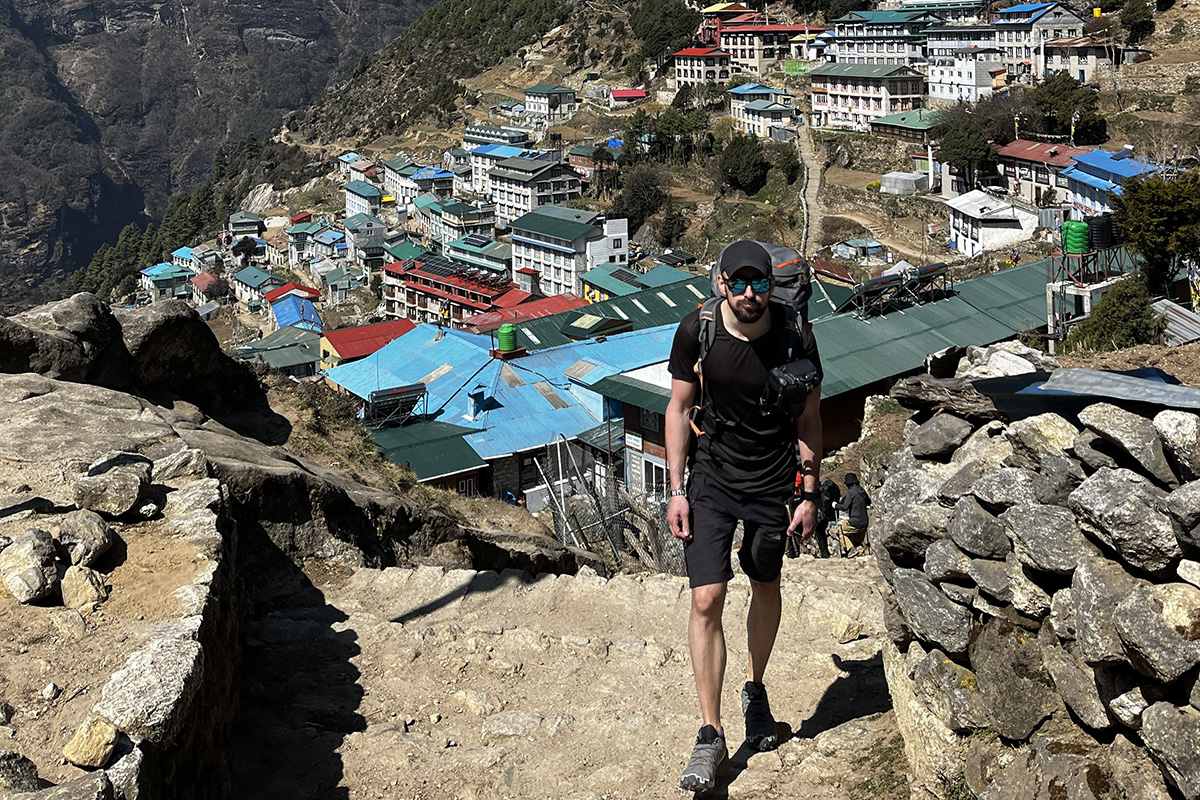
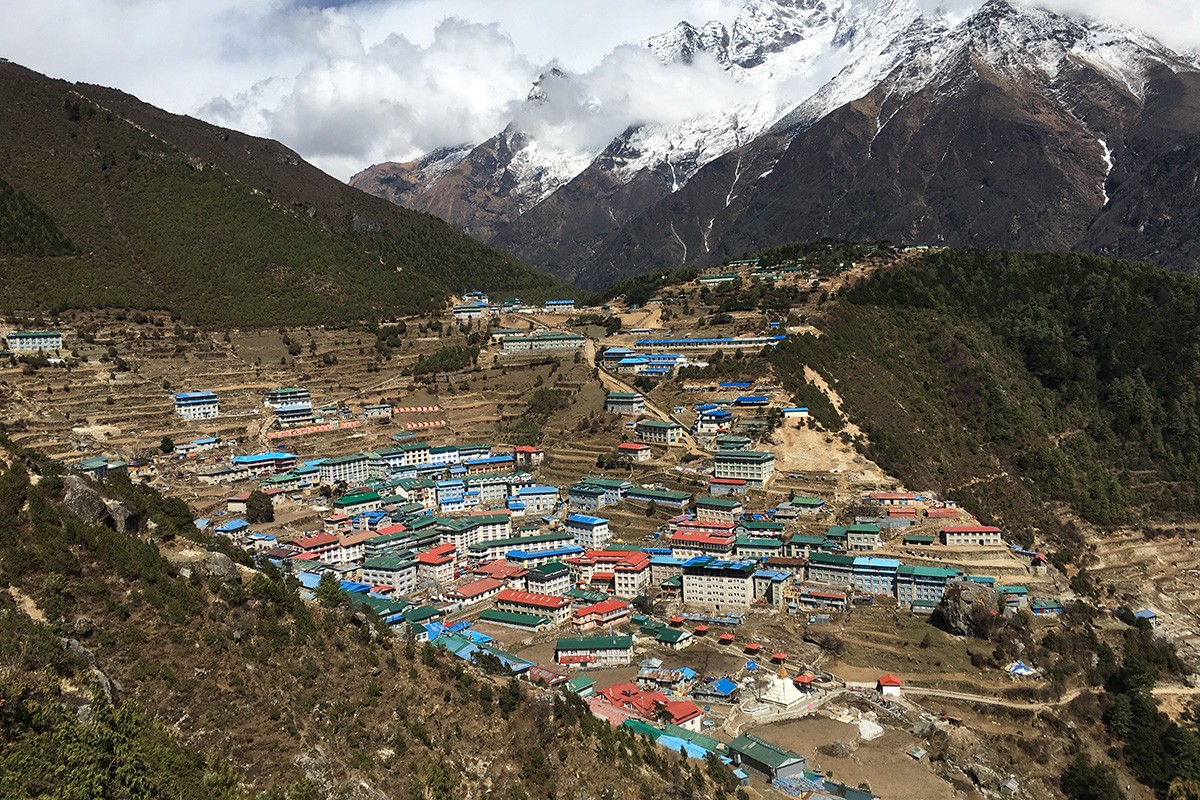
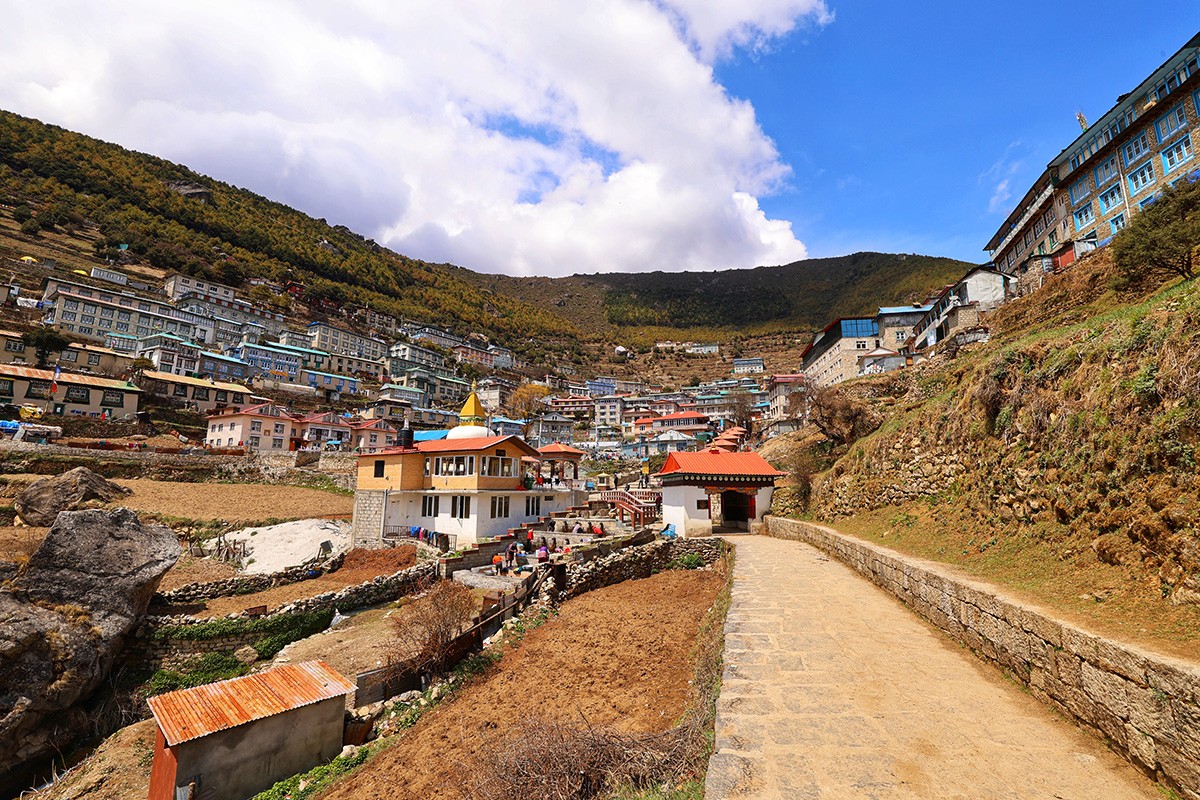
2,610 m to 3,440 m, 10 to 11 km, 5 to 6 hours Today brings the first real climb of the trek, ending in the trading hub of the Khumbu.
Namche's terraced streets and mountain views make for a well-earned end to a demanding day.
3,440 m, day hike to approximately 3,880 m, 4 to 5 km, 3 to 4 hours The first dedicated rest day gives your body real time to adjust before the trail climbs further.
This short but essential day sets the pace for safe acclimatization through the rest of the trek.
3,440 m to 3,790 m, 6 to 7 km, 3 to 4 hours The route leaves the main EBC trail here, heading toward one of the Khumbu's most storied villages.
Khumjung offers a quieter, more personal introduction to Sherpa life than the busier trail below.
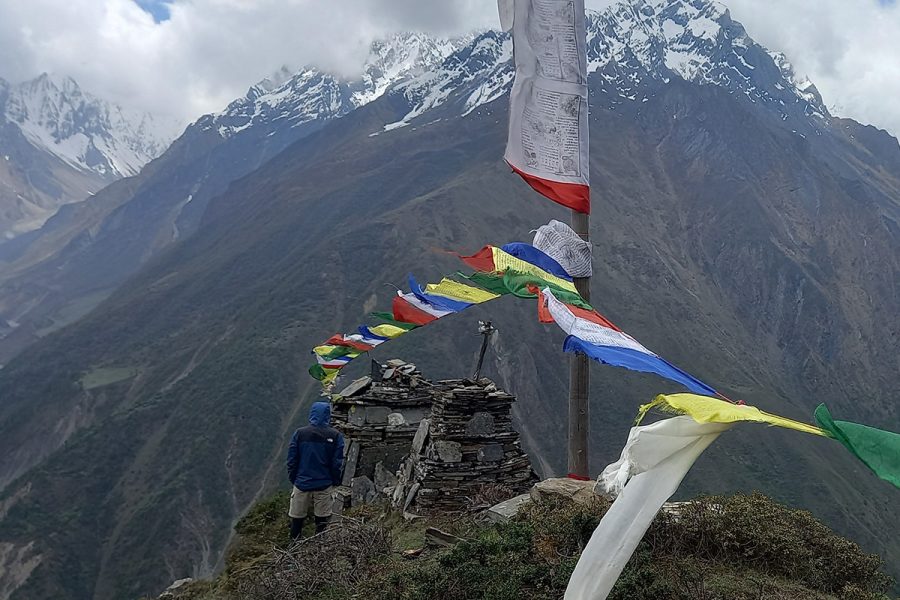
3,790 m to 3,930 m, 13 to 14 km, 6 to 7 hours A high traversing trail carries the route through Phortse, one of the least visited villages on any EBC itinerary.
The day's distance is considerable, but the near-total absence of crowds makes it worthwhile.
3,930 m to 4,410 m, 8 to 9 km, 4 to 5 hours The trail rejoins the classic Everest Base Camp route here, climbing into increasingly alpine terrain.
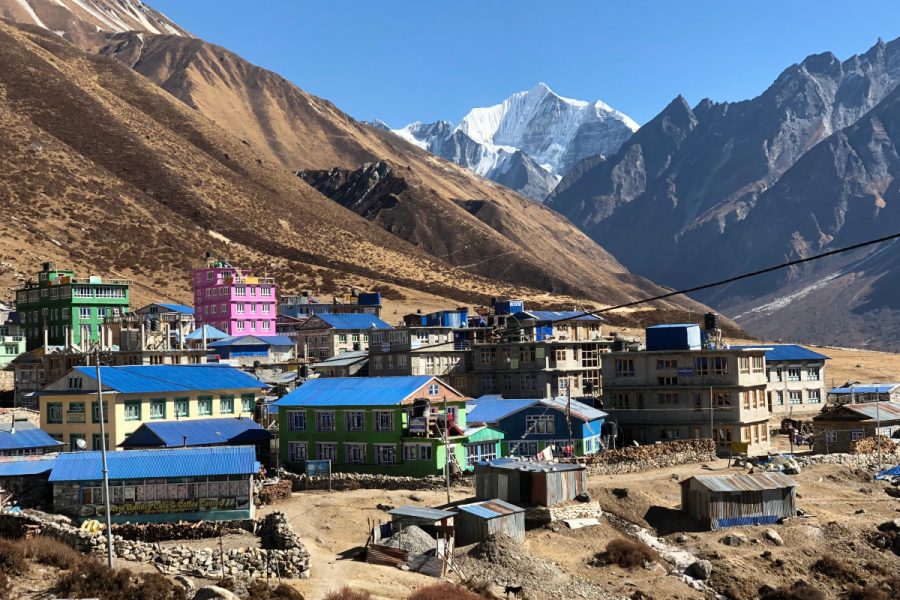
Dingboche's stone-walled fields mark the gateway to the trek's highest and most demanding stages.
4,410 m, day hike to approximately 4,800 to 5,000 m, 4 to 6 km, 3 to 5 hours A second dedicated rest day prepares the body for the altitude still ahead.
This second acclimatization day meaningfully lowers the risk of altitude illness on the days ahead.
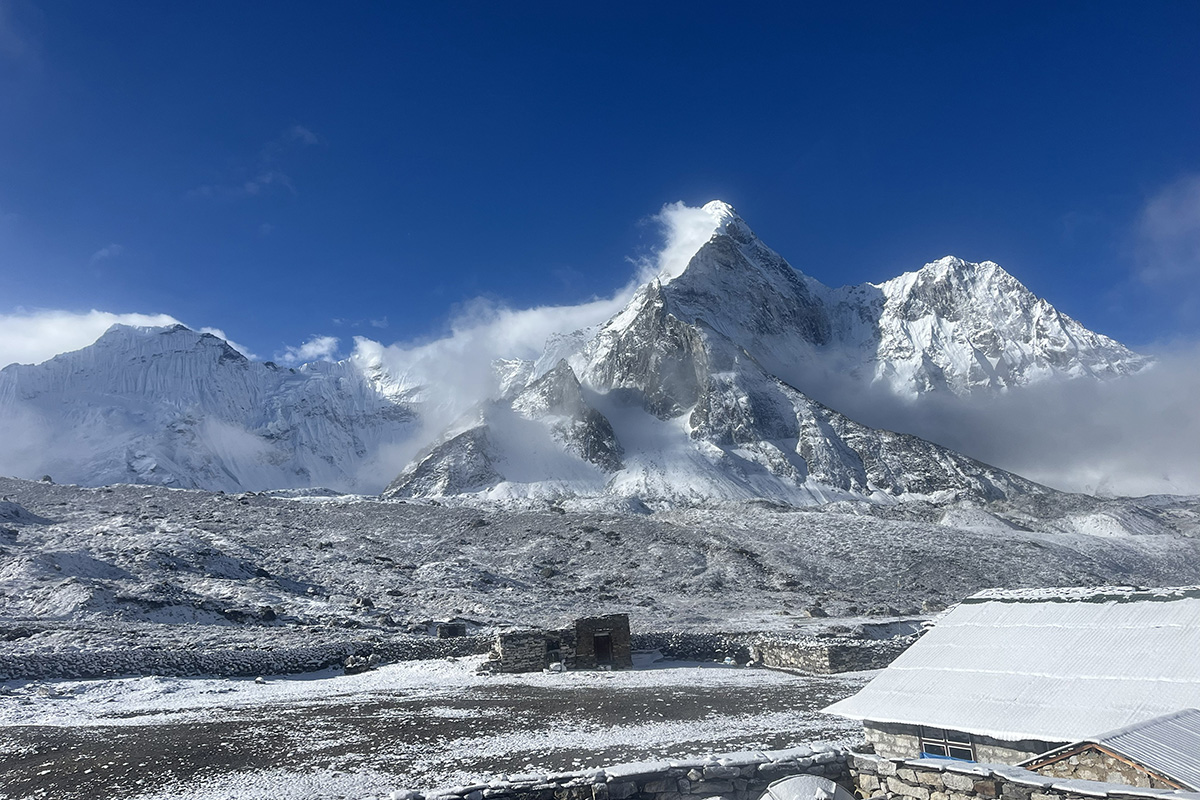
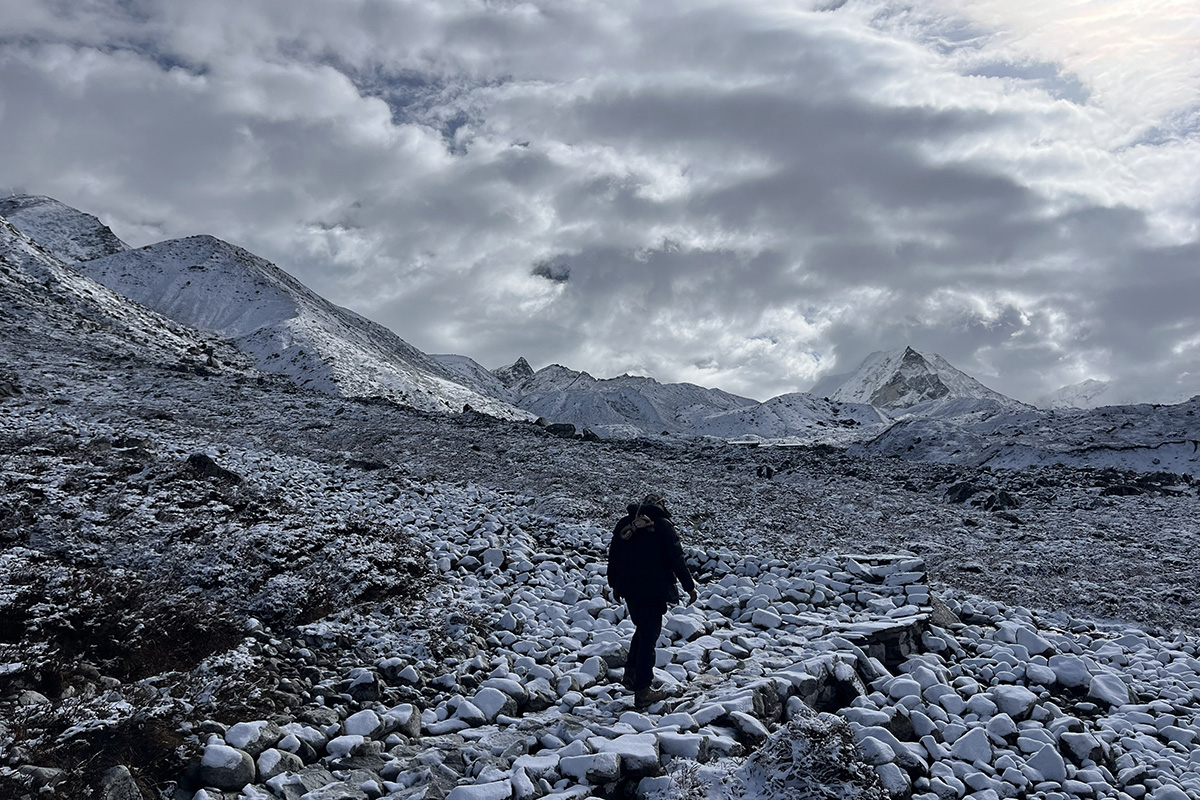
4,410 m to 4,910 m, 11 km, 5 to 6 hours The trail climbs into the high alpine zone, tracing the edge of the Khumbu Glacier moraine.
The mood shifts noticeably here, as the trail closes in on Everest Base Camp itself.
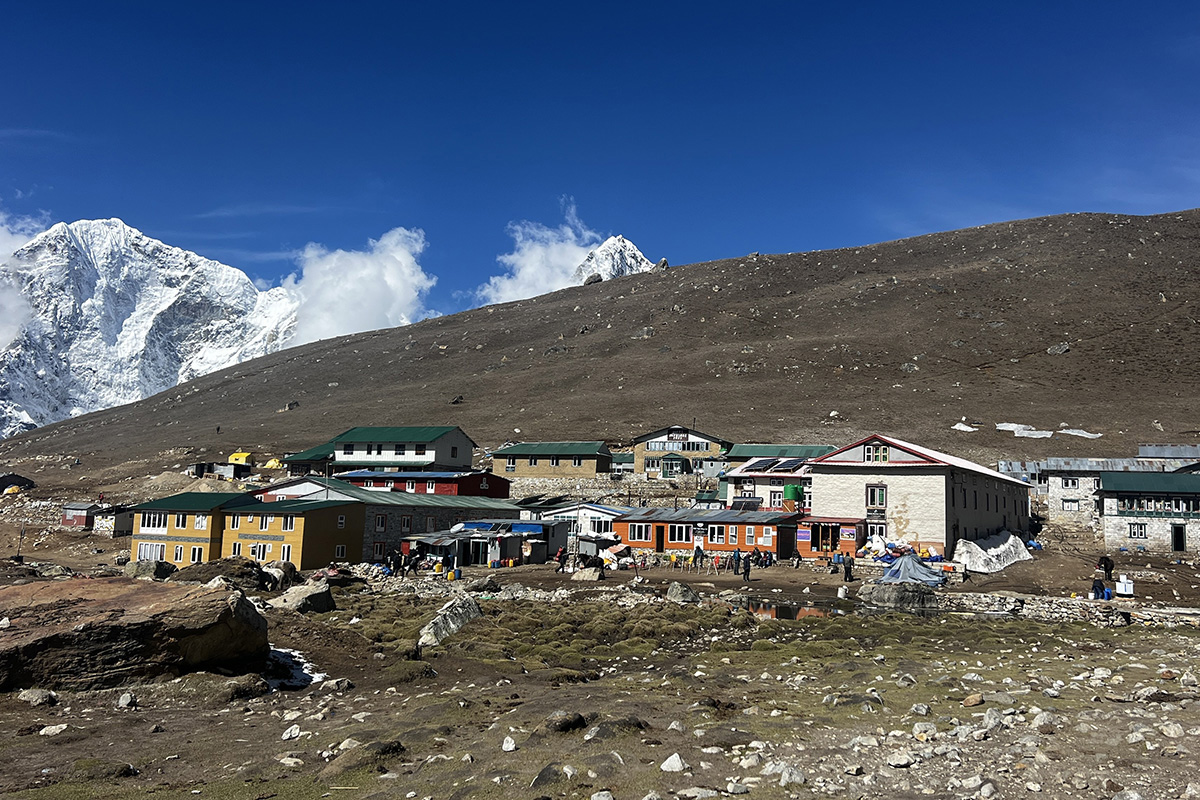
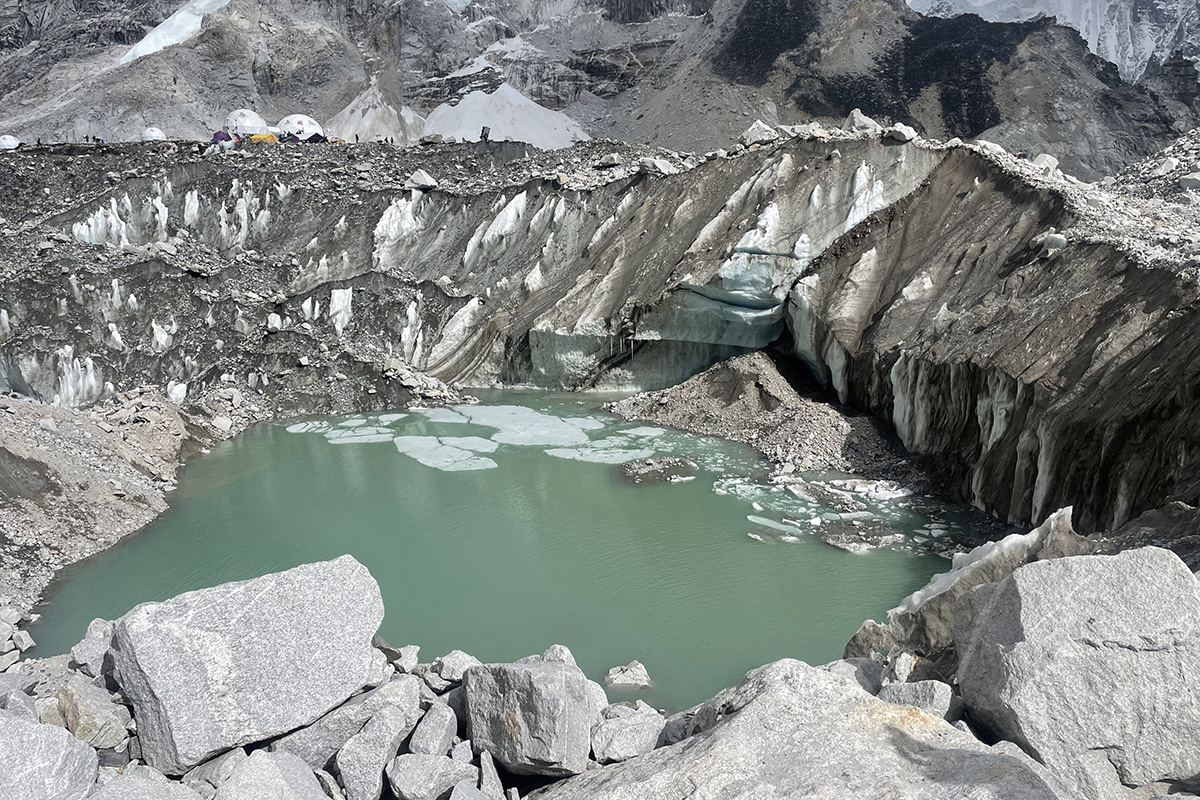
Lobuche 4,910 m to Gorak Shep 5,164 m to EBC 5,364 m, 13 km total, 7 to 9 hours This is the day most trekkers picture when they first imagine the trek.
The group returns to Gorak Shep for the night, already looking ahead to Kalapatthar at dawn.
Kalapatthar 5,545 m, then descend to Pheriche 4,240 m, 12 to 13 km, 7 to 8 hours An early start carries the group to the highest point of the entire trek before sunrise.
Reaching Pheriche marks the psychological turning point of the trek, with the descent now underway.
4,240 m to 3,440 m, 20 km, 7 to 8 hours A long descent retraces familiar ground, this time with the hardest climbing behind you.
Namche Bazaar offers a comfortable, familiar stop before the final push back to Lukla.
3,440 m to 2,860 m, 18 km, 7 to 8 hours The final trekking day closes the loop, following the Dudh Koshi back toward its starting point.
A shared meal in Lukla that evening usually turns into a celebration of the distance covered.
Lukla 2,860 m to Kathmandu 1,400 m, 35 to 40 minute flight The final flight closes out the adventure, weather and schedules permitting.
The trek ends where it began, with the Khumbu now firmly behind you as a finished journey.
This route adds a detour through Khumjung and Phortse, two Sherpa villages the standard EBC trail bypasses, before rejoining the classic path near Pangboche.
Yes, provided the itinerary includes proper acclimatization days and the trekker follows a gradual pace under the guidance of an experienced guide. No technical climbing skill is required.
Spring, running from March through May, and autumn, running from September through November, offer the most stable weather and the clearest mountain visibility.
Yes, a licensed guide is mandatory on this route, and this is especially important through the quieter Khumjung and Phortse sections, where trails are less clearly marked.
Both villages have teahouse lodges offering twin-sharing rooms and hygienic meals, though facilities are simpler than in Namche Bazaar.
No, the TIMS card is no longer required for treks in the Khumbu region, since it has been replaced by the Khumbu Pasang Lhamu Rural Municipality fee.
Porters carry a maximum of 20 to 25 kg per trekker, a limit maintained specifically to protect porter health and welfare throughout the journey.
Yes, comprehensive travel insurance covering high-altitude trekking to at least 5,545 meters and emergency helicopter evacuation is required for every trekker.
Khumjung holds a historic monastery and the schools and hospital built through Sir Edmund Hillary's Himalayan Trust, while Phortse offers one of the quietest Sherpa villages left on any EBC route.
A good baseline of cardiovascular fitness helps, since trekkers walk 4 to 9 hours a day on uneven terrain, though no technical climbing background is required.

Member Since 2026
Leave a review