
While trekking and climbing in Nepal, Trekking & Mountaineering Insurance is essential. In the event of a health issue, accident, or illness, emergency evacuation, often by private helicopter, may be required, which can be extremely expensive. To protect against unexpected incidents and significant financial loss, travelers are strongly advised to obtain comprehensive travel insurance.
Proper insurance coverage not only provides financial security but also helps minimize risk and ensures that trekking or climbing operators can arrange emergency rescue quickly and without delay. There are several reputable insurance companies offering specialized coverage for high-altitude trekking and mountaineering. Travelers may choose a policy based on coverage limits, rescue support, and additional benefits. Below are some of the best and most widely accepted insurance providers, popular in the Himalayas of Nepal as well as worldwide. However we Kalapatthar Treks & Expedition also give guidance when selecting suitable insurance.
Please note that insurance costs, rescue procedures, and claim processes vary by provider and are governed by each company’s policy terms and conditions.
Quick reference summary comparison for high-altitude trekking and mountaineering expeditions.
| S.N. | Insurance Company | Maximum Altitude | Estimated Cost Base | Essential Remark |
| 1. | ASC360 | 8,848m+ (No limit; by peak) | $110–$190 (Trek) $634–$1,243 (Peaks) | Features a true cashless helicopter evacuation system built specifically for native Nepalese rescue operations. |
| 2. | Global Rescue | 8,848m+ (With High-Altitude Package) | $135–$170 (Trek) $530–$995+ (Expedition) | Premium crisis medical membership that deploys high-camp helicopter rescues directly to the point of injury via an elite in-house operations team. |
| 3. | BMC Insurance | 8,848m+ (With High Altitude Policy) | $180–$320 (Up to 7k) $1,000–$2,500 (8k Peaks) | Considered the global gold standard for technical mountaineers; offers massive medical limits but eligibility is restricted to UK/Irish residents. |
| 4. | World Nomads | 6,000m (Explorer Plan only) | $120–$220 (Explorer Plan) | Highly flexible independent travel policy that can be bought on the road; strictly excludes specialized search operations and any 7,000m+ peaks. |
| 5. | Tin Leg Insurance | 6,000m (Adventure trekkingPlan only) | $150–$350 (Adventure Plan) | Exceptional financial value with a massive $1,000,000 emergency evacuation limit; ideal for trekking routes but completely excludes technical peaks. |
Top Insurance companies for adventure travel in Nepal are as below:
For travelers planning high-altitude treks in Nepal, ASC360 stands out as one of the most reliable insurance providers. While standard travel insurance often excludes activities above 2,500 meters, ASC360 specializes in extreme environments, making it a top choice for routes like Everest Base Camp and the Annapurna Circuit.
ASC360 offers tailored adventure packages that cover trekking up to 6,000 meters. These policies include coverage for Acute Mountain Sickness (AMS), accidents, and medical emergencies. Costs are generally competitive, typically ranging from $110 to $190 USD for a standard 15-to-21-day trek, depending on the specific itinerary and the traveler’s age.
ASC 360 categorizes its plans by specific peaks and extreme risk levels:
• 7,000m+ Expeditions: Standardized packages for high-altitude peaks (like Ama Dablam or Himlung) generally start around $634 per person.
• 8,000m+ Expeditions: For elite peaks like Manaslu, rates begin around $953.
• Mount Everest (8,848m): Due to the extreme altitude and extended duration of the trip, the dedicated Mt. Everest Safety Rescue Package starts at approximately $1,243 per person.
The most critical facility offered is the “cashless” helicopter evacuation. In the remote Himalayas, a private rescue can cost upwards of $5,000 USD. ASC360 maintains a 24/7 emergency response center that coordinates directly with local helicopter operators and high-altitude clinics in Nepal.
Also Read: Trekking & Expeditions Permit in Nepal
If an emergency occurs, the insured person or their guide contacts the hotline, and once the medical necessity is verified, a rescue is dispatched immediately without requiring upfront payment from the trekker. This seamless coordination and local expertise make ASC360 a premier option for ensuring safety in Nepal’s challenging terrain.
Phone/What’s app: +91 7303800101, +91 99998 26267 & +977 976-8988347.
Email: emergency@asc360.com
Website: https://asc360.com/
For extreme mountaineers and remote trekkers in Nepal, Global Rescue is often considered the gold standard in crisis management. Unlike traditional travel insurance companies that focus on financial reimbursement, Global Rescue is a membership-based service that provides direct medical evacuation and security services from some of the most inaccessible locations on earth.
Global Rescue offers short-term memberships (7, 14, or 30 days) as well as annual plans. For a typical 14-day trek in Nepal, a medical membership costs approximately $135 to $170 USD. It is important to note that a standard membership covers evacuation but not hospital bills; however, travelers can add “Signature Travel Insurance” to create a comprehensive package that covers both rescue and medical expenses. An extreme-altitude rescue requires a standard travel membership plus a mandatory High-Altitude Evacuation Package, which adds $495. Total baseline costs typically range from $530 to $995 depending on trip duration, while premium comprehensive packages can reach $2,500–$5,500.
The hallmark of Global Rescue is its “Field Rescue” capability. While many insurers only evacuate from a local hospital, Global Rescue will deploy helicopters directly to the “point of injury”—whether that is Everest Base Camp or a remote pass in the Dolpo region.
In an emergency, members contact the 24/7 Operations Center via satellite phone or app. The company’s team of paramedics and special operations veterans then coordinates the entire rescue mission. Because they provide the service themselves rather than outsourcing it to a third-party claim adjuster, the process is immediate and requires no out-of-pocket payment for the evacuation, providing unparalleled peace of mind for high-altitude adventurers.
Phone/What’s app: +1 (617) 459-4200, +1 (201) 971-0022 & +63 917 875 5644
Email: ops@globalrescue.com
Website: https://www.globalrescue.com/
The British Mountaineering Council (BMC) offers some of the most respected specialized insurance policies in the world for climbers and trekkers. While it is primarily available to UK residents and citizens, it is widely considered the “gold standard” for those heading to the Himalayas due to its deep understanding of mountain risks.
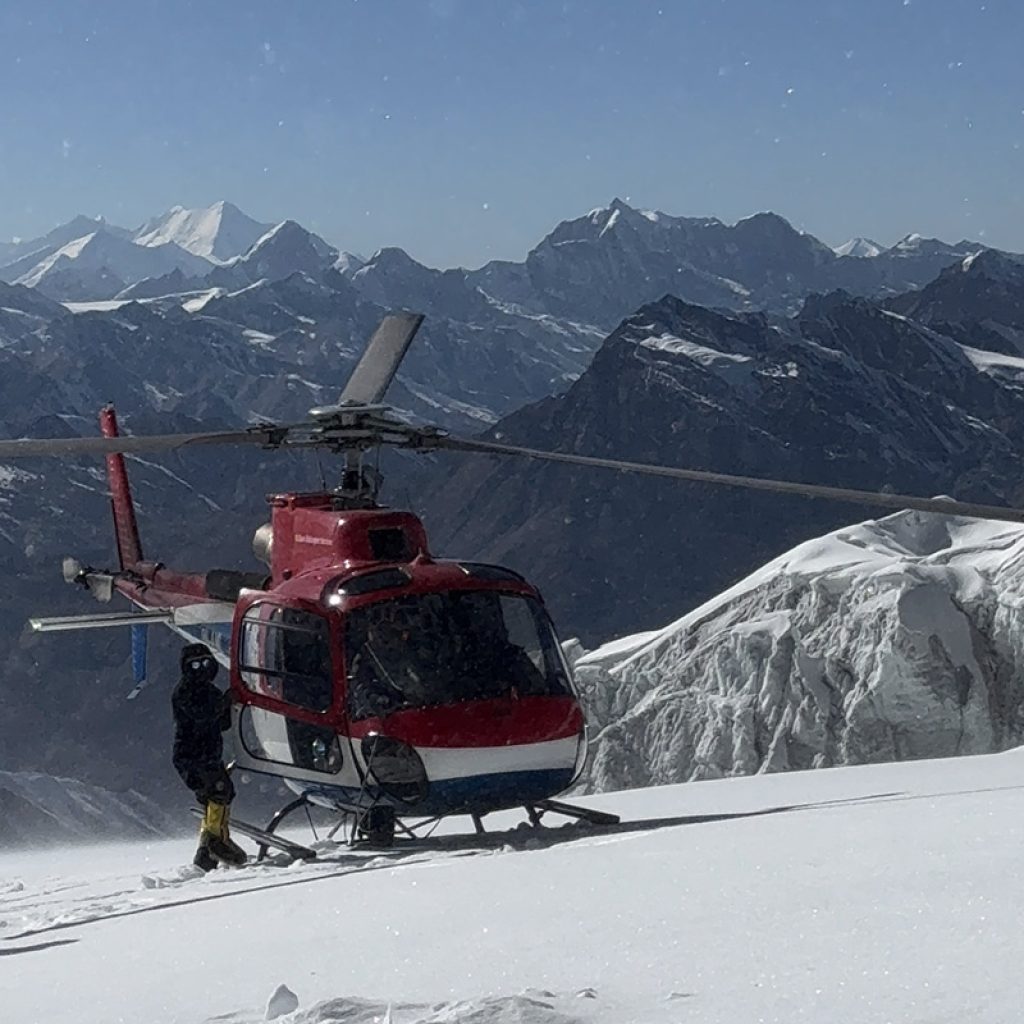
The BMC provides tiered coverage based on activity level. For Nepal, trekkers usually choose the “Trek” policy (covering up to 5,000m) or the “High Altitude & Remote” policy, which has no altitude limit and covers technical climbing. For a standard three-week expedition to peaks like Island Peak or Mera Peak, costs typically range from £150 to £300. While more expensive than standard travel insurance, the premium reflects the high-risk nature of the activities covered.
BMC prices its travel insurance based on the required operational difficulty, separated into distinct policies:
• Up to 7,000m (Alpine & Ski Policy): This policy covers technical mountaineering using ropes, crampons, and ice axes up to 7,000m (e.g., Ama Dablam or Himlung). A single-trip policy generally costs $180 to $320 (£150–£260) depending on the exact length of your expedition. Annual multi-trip options start around $365 (£291).
• Above 7,000m & 8,000m (High Altitude & Remote Policy): For elite peaks like Manaslu, K2, or Mount Everest, you must upgrade to their highest-tier custom policy. Prices for these extended 4-to-8-week extreme expeditions typically range from $1,000 to $2,500 (£800–£2,000), fluctuating heavily based on your age and exact trip duration.
BMC policies offer massive medical backing compared to standard travel plans:
• Medical Expenses: Up to $12.5 Million (£10M) in emergency medical and repatriation cover.
• Search and Rescue: Caps out at $125,000 (£100,000), which is usually plenty to cover the $8,000–$15,000 cost of a high-camp Nepalese long-line helicopter rescue.
The hallmark of BMC insurance is its 24/7 emergency assistance, staffed by experts who understand the logistics of high-altitude rescue. Their policies provide comprehensive coverage for search and rescue, including helicopter evacuation and specialized medical repatriation.
In the event of an emergency, the insured must contact the 24-hour helpline immediately. The BMC coordinates with reputable local helicopter agencies in Nepal to ensure a swift response. Crucially, their policies often include “Search and Rescue” costs as a primary benefit, ensuring that even if a trekker is lost rather than injured, the expensive search process is covered.
Phone/What’s app: +44 161 445 6111 & +44 161 445 6111
Email: insure@thebmc.co.uk & office@thebmc.co.uk
Website: https://thebmc.co.uk
World Nomads is a globally recognized insurance provider favored by backpackers and independent travelers for its flexibility and adventure-friendly coverage. It is a popular choice for Nepal because it allows travelers to purchase or extend a policy even after they have already left their home country.
World Nomads typically offers two main tiers: the Standard Plan and the Explorer Plan. For a typical three-week trip to Nepal, costs generally range from $120 to $220 USD, depending on your age and country of residence. Crucially, trekkers must choose the Explorer Plan, as it is designed to cover high-altitude trekking up to 6,000 meters, whereas the Standard plan often has much lower altitude limits.
Note: They are generally not suitable for 7,000m+ and 8,000m+ expeditions like Mount Everest.
The company provides 24/7 emergency assistance through a dedicated multi-lingual team. In the event of high-altitude sickness or a serious injury in the Himalayas, World Nomads covers emergency medical evacuation, including helicopter transport to the nearest adequate medical facility in Kathmandu.
If an emergency occurs, the insured person or their guide must contact the 24-hour emergency assistance team as soon as possible to authorize the rescue. While they aim to coordinate directly with local providers, travelers should be prepared to provide policy details immediately to ensure the “pre-approval” of expensive helicopter missions. This reliable support network makes it a solid option for those exploring Nepal’s rugged terrain.
Phone/what’s app: +353 21 237 8008 or +353 21 237 8003.
Email: assist@worldnomads.com
Website: https://www.worldnomads.com/
Tin Leg is a highly rated American travel insurance provider known for offering comprehensive coverage at competitive prices. For travelers heading to Nepal, it is a strong contender, particularly for those looking for high-limit medical evacuation without the premium price tag of boutique adventure firms.
Tin Leg offers several plan tiers, including Economy, Standard, and Luxury. However, for those trekking in the Himalayas, the Tin Leg Adventure Plan is the most suitable choice. This specific package is designed to cover “hazardous activities” that are typically excluded from basic policies. For a two-week trip to Nepal, costs generally range from $80 to $160 USD, depending on the traveler’s age and the total insured trip value.
The Base Plan Limitations: Tin Leg’s standard economy or luxury plans do not account for extreme heights and typically exclude mountaineering or any travel involving technical gear (ropes and ice axes).
The Tin Leg “Adventure” Plan: To get any high-altitude coverage, you must explicitly purchase their dedicated Adventure policy.
Cost: A typical 3-to-4-week premium policy for a traveler under 40 generally ranges from $150 to $350, scaling up based on your total insured trip cost and age.
Limits: This plan is generous with its benefits, offering $100,000 in Primary Emergency Medical coverage and up to $1,000,000 for Emergency Medical Evacuation (which easily covers Nepalese helicopter services).
Critical Warning: Tin Leg’s Adventure policy is built for high-altitude trekking (like Everest Base Camp at 5,364m) and lower trekking peaks. It strictly excludes technical mountaineering over 6,000 meters.
The most critical facility for Nepal is Tin Leg’s emergency medical evacuation benefit, which offers up to $1,000,000 in coverage on certain plans. This is vital for covering the $5,000–$10,000 cost of a helicopter rescue from remote regions like Everest or Annapurna.
In the event of an emergency, the insured must contact Tin Leg’s 24/7 emergency assistance line immediately. Their team coordinates with local Nepali rescue operators and medical facilities. To ensure a smooth claim, it is essential to obtain prior authorization before a helicopter is dispatched. Tin Leg’s focus on high-limit evacuation makes it a “best” choice for budget-conscious travelers who still require robust protection in high-altitude environments.
Phone/What’s app: +1-727-264-5657.
Email: emergency@tinleg.com
Website: https://www.tinleg.com/