Skip to content
Mount Everest Expedition
8,000 m Expedition

Mount Everest Expedition

The Mount Everest expedition is the world’s most iconic and demanding mountaineering challenge, drawing elite climbers from across the globe to its…

View packages
from$38,300$36,389per person
Duration46 days
Max altitude8,848 m
GradeExtreme
Best seasonSpring
The trip

Mount Everest Expedition

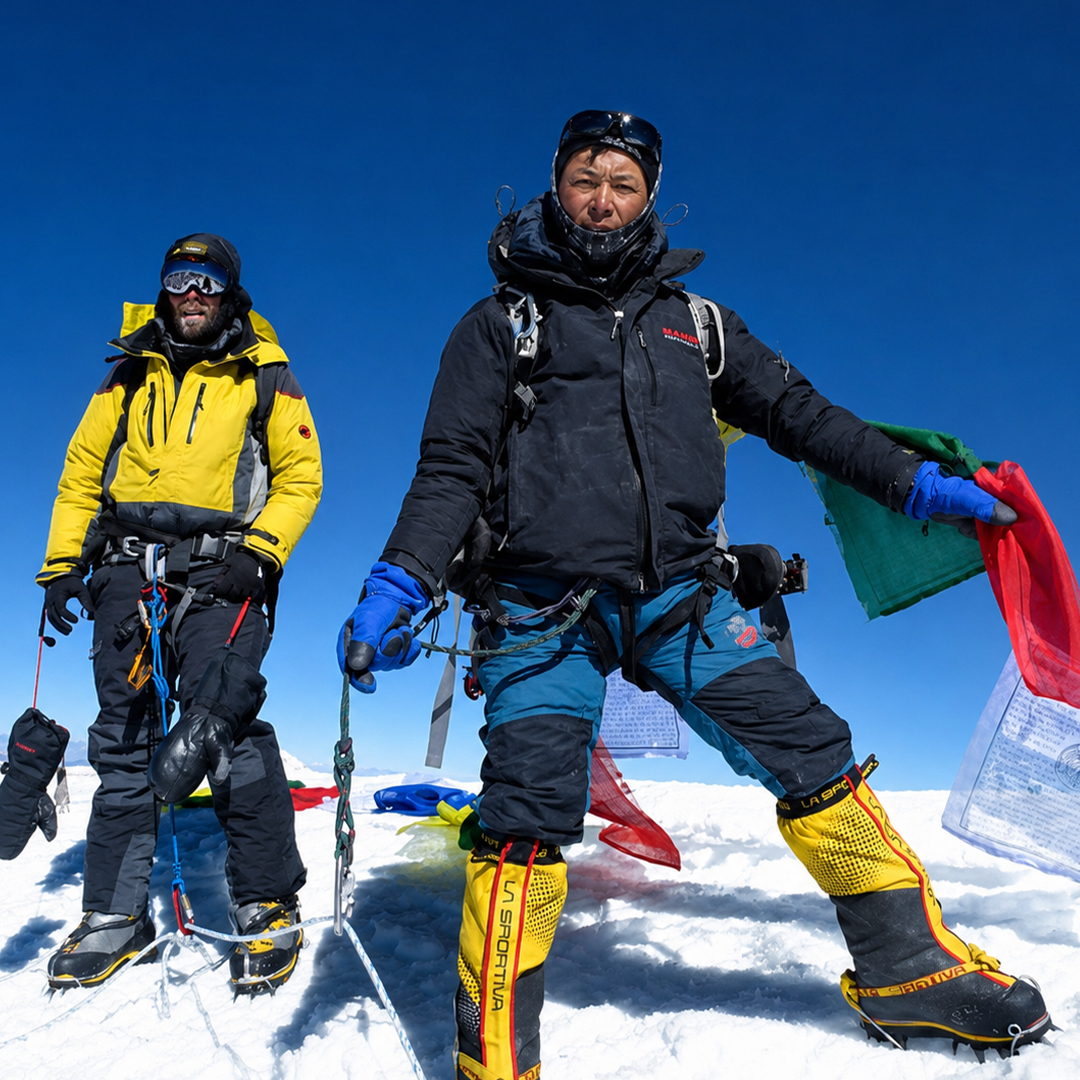
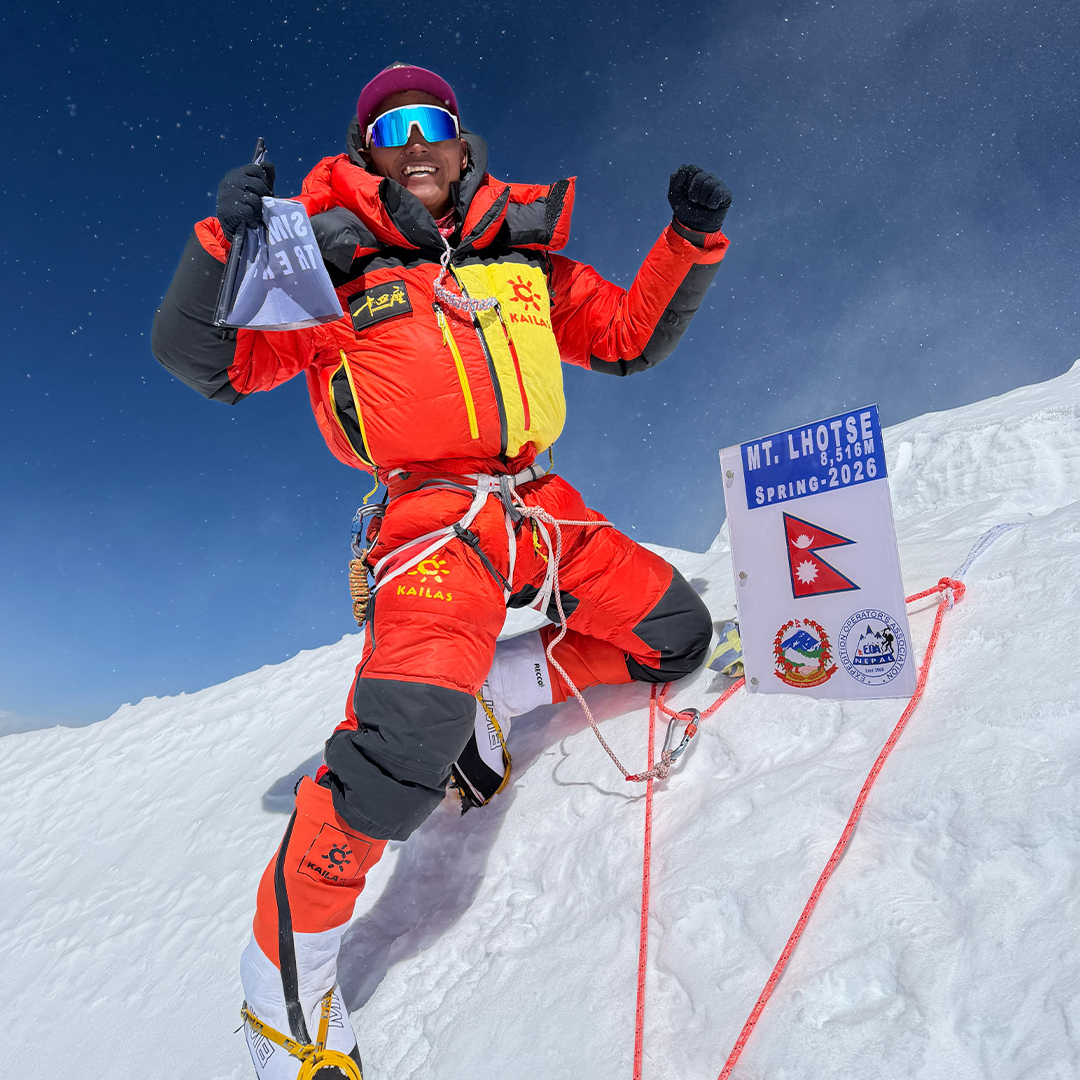
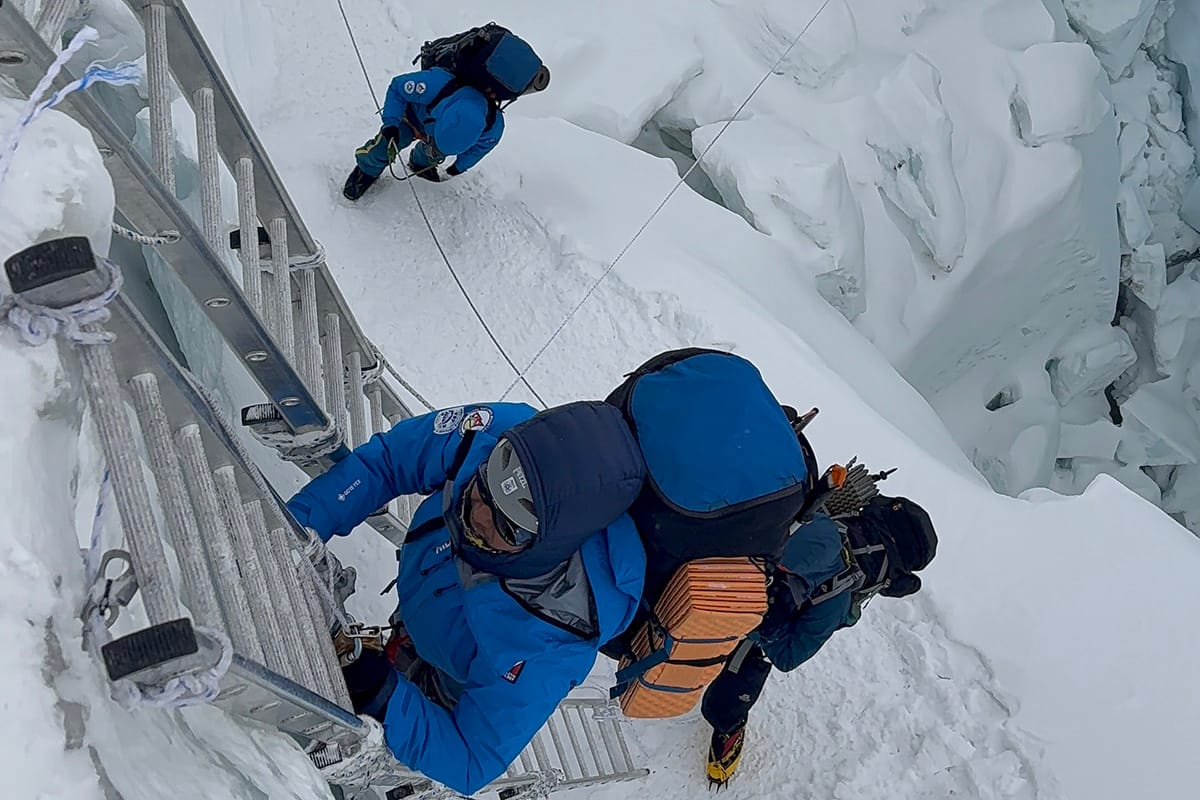
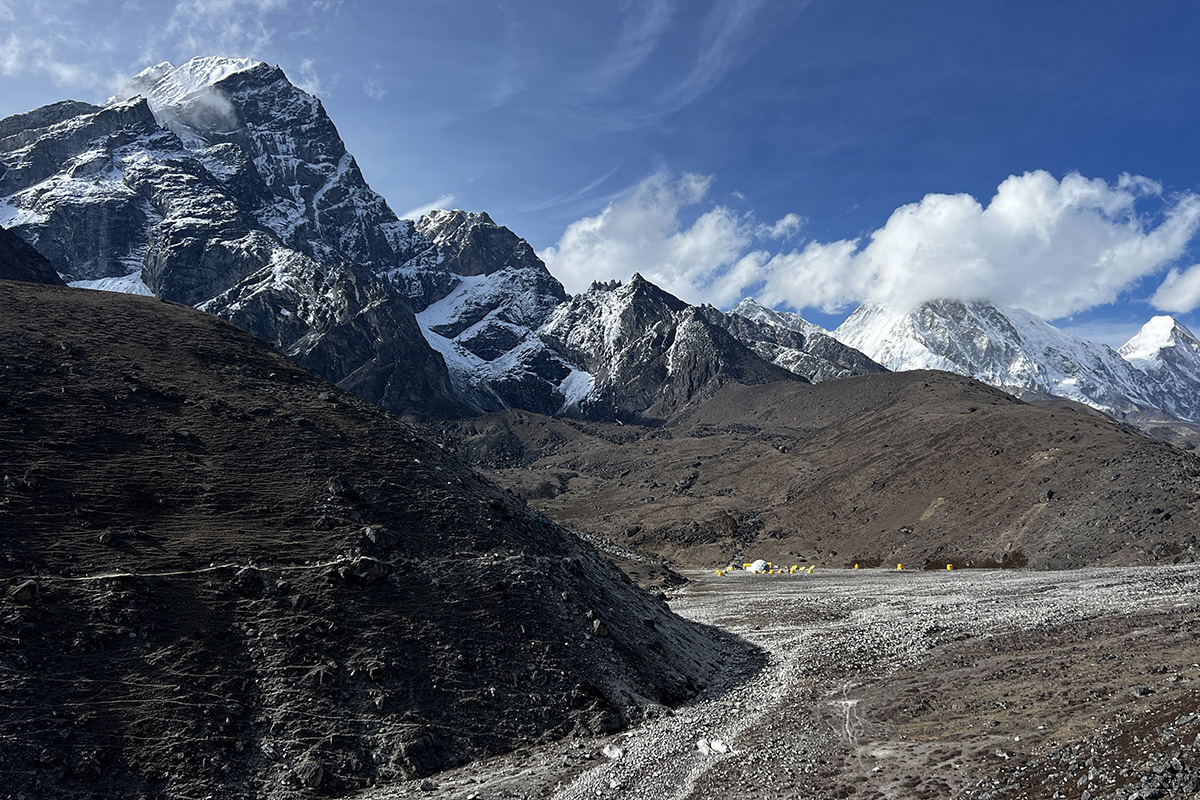
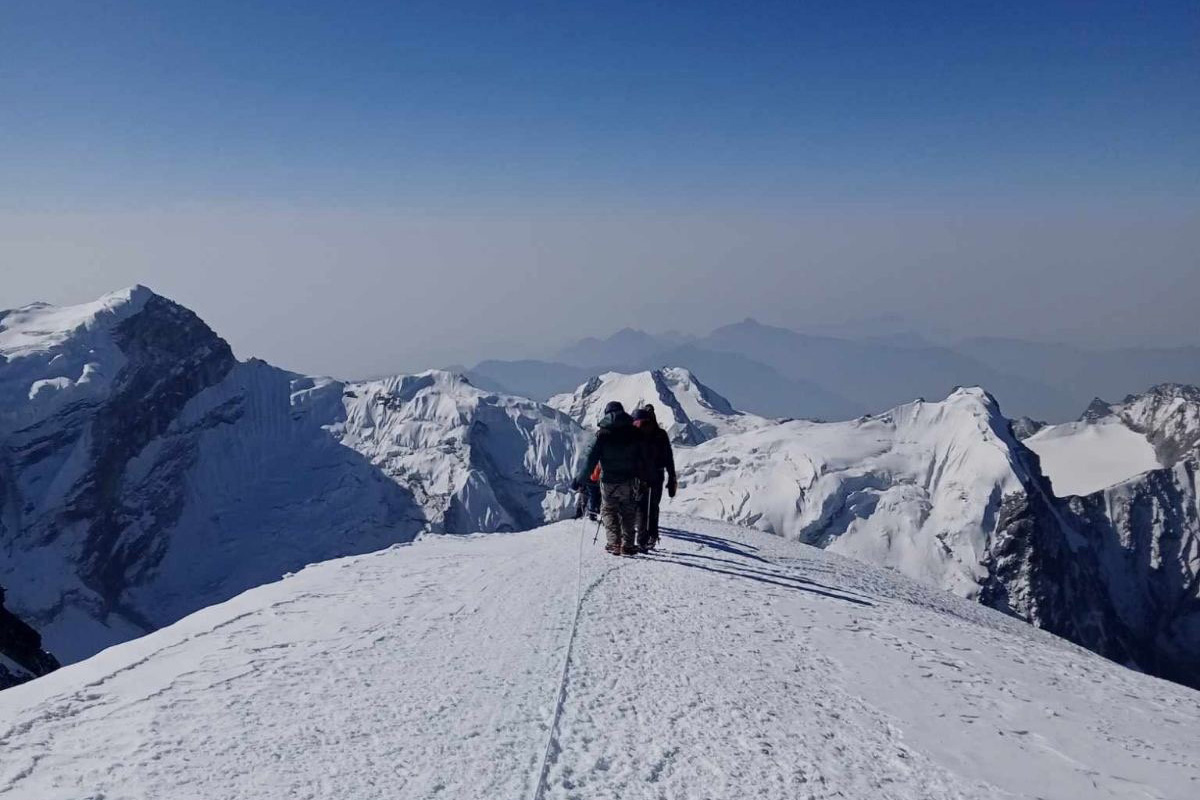
Sir Edmund Hillary and Tenzing Norgay Sherpa completed the first successful ascent on 29 May 1953 via normal route. We manage this expedition with IFMGA and UIAGM certified expedition leaders and legend Sherpas who are multiple time 8,000-metre sumitters. The itinerary includes a pre-acclimatisation climb of Lobuche East at 6,119 metres and two full days of ice climbing training at the Khumbu Icefall and proper rotation spending couple of nights at C2 and reching to C3 before attempting summit push.

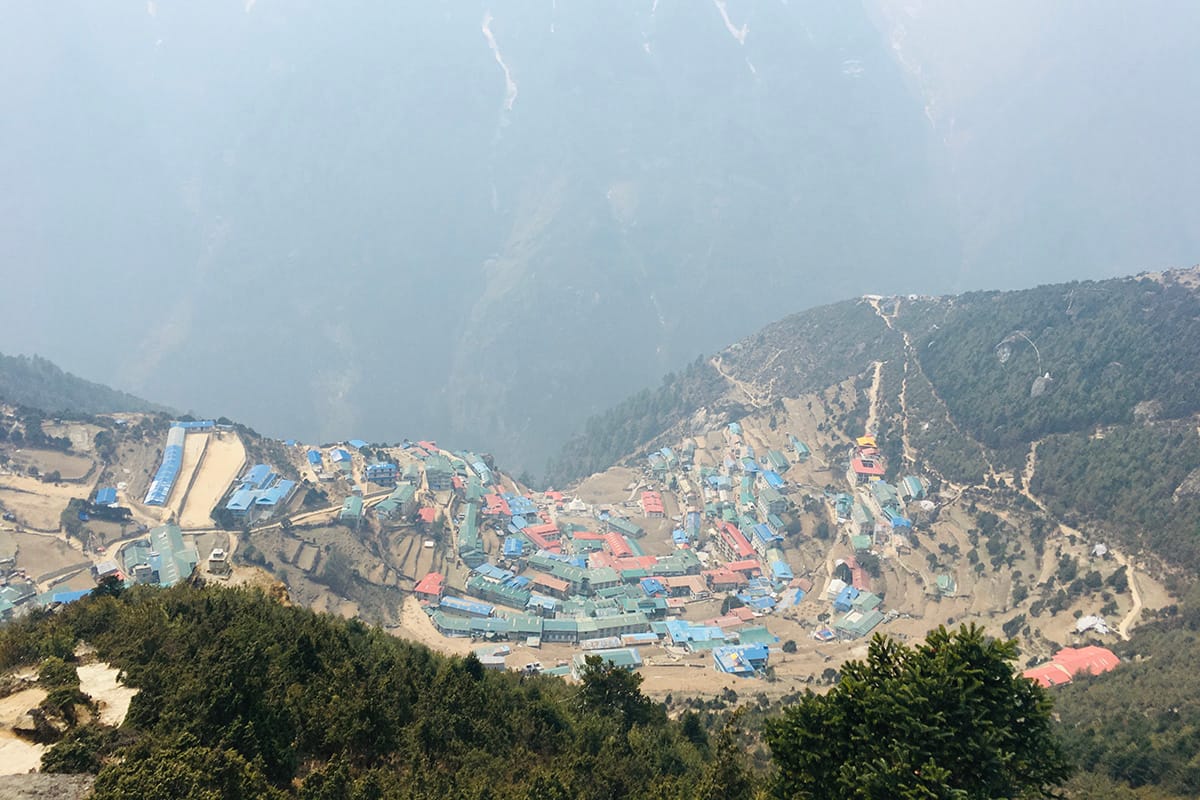
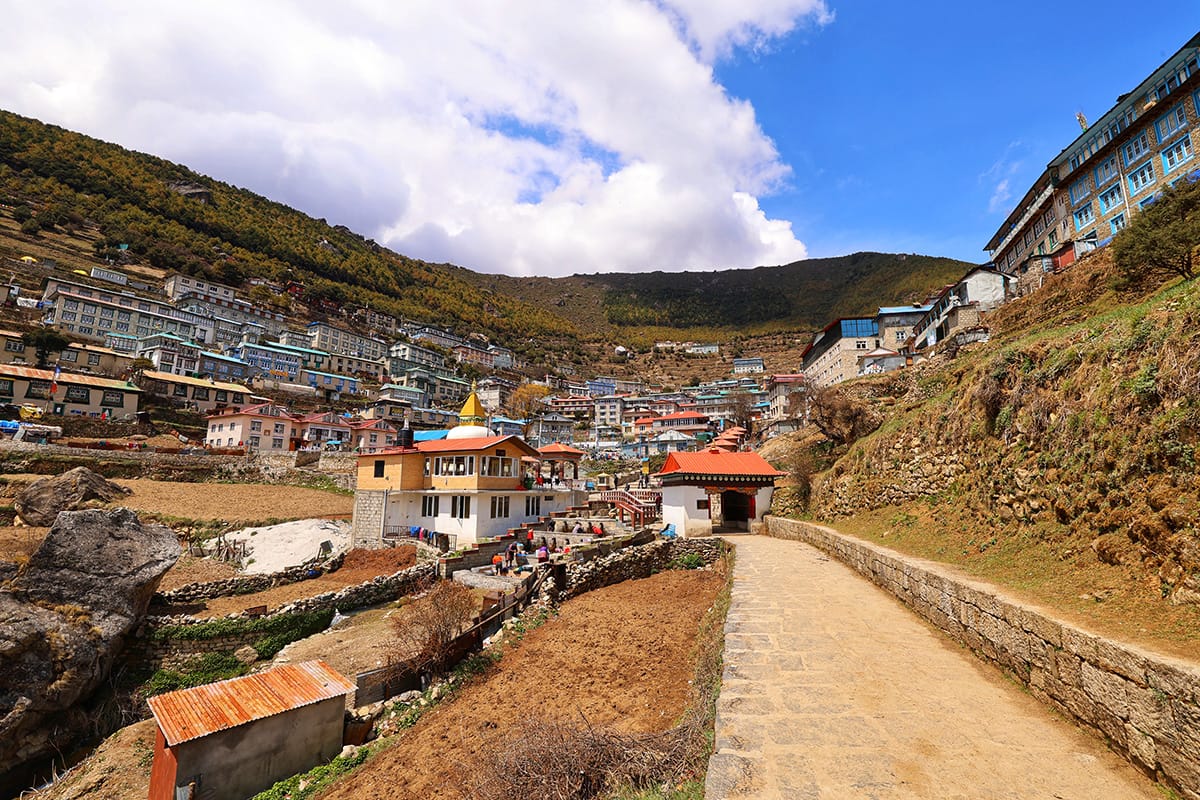
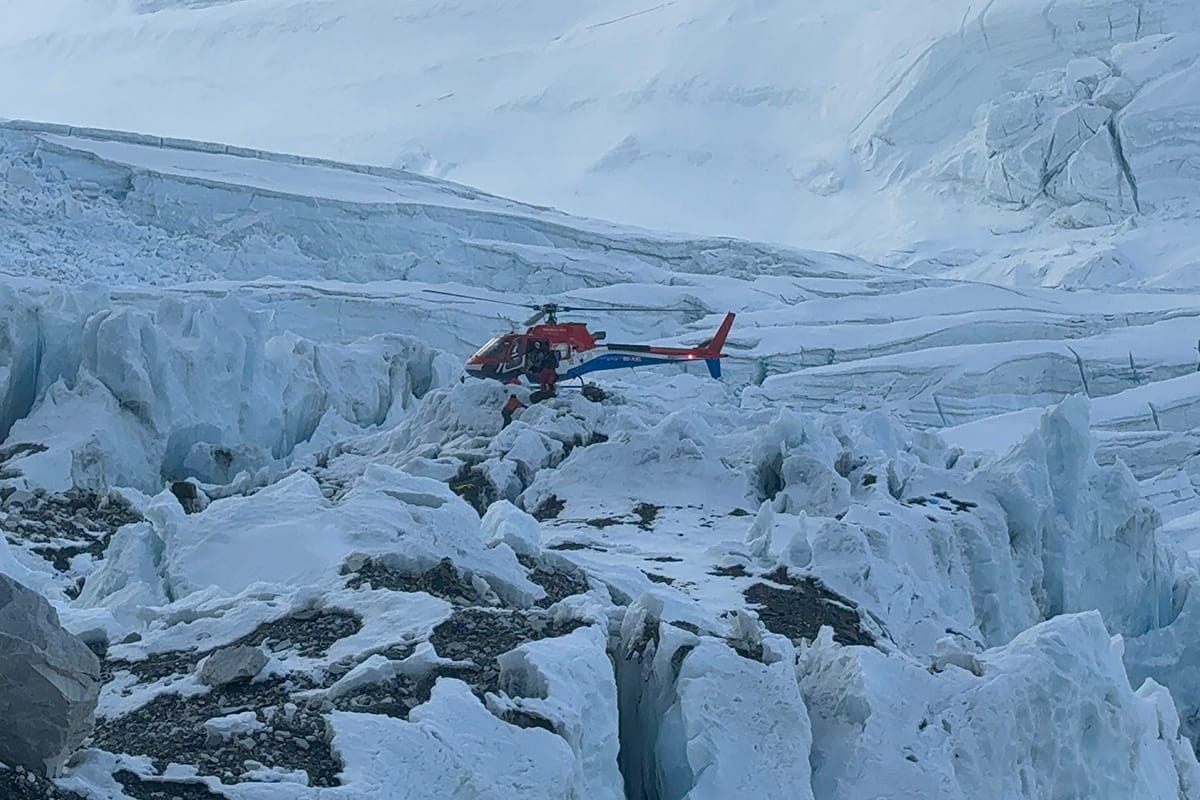
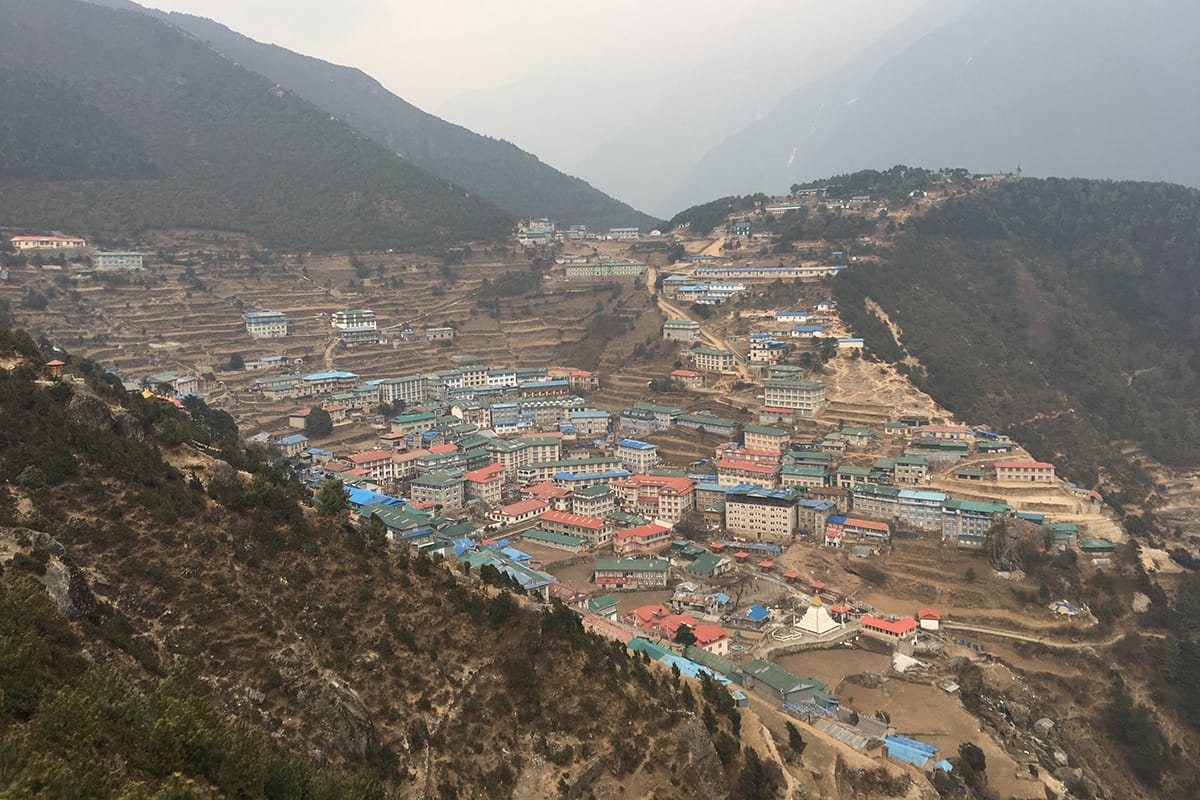
A dedicated medical team is stationed at Base Camp throughout the expedition, providing medical facilities and 24 hrs doctor communication for the consultation and health monitoring for every climber in each day. Strategic helicopter transfers to Namche Bazaar after rotation climbs support faster recovery and stronger acclimatisation. This Mount Everest Expedition package is fully guided and permit-inclusive in the Khumbu region.

5.0268 reviews

I couldn't have chosen a better company for my Everest Base Camp Trek. Our guide Suman was knowledgeable, friendly, and always happy to share information about the mountains and local culture, while our porter worked incredibly hard with a smile every day. The service we received was excellent, especially considering the reasonable price. It was truly outstanding value for money.

Camille Moreau 🇺🇸March 2026Read review

Mingma Tashi Sherpa was an amazing leader during our Himlung Himal Expedition. He is strong, experienced, and always looked after every team member, making sure we stayed safe and had the best chance of reaching the summit. I highly recommend him to anyone planning to climb Himlung Himal because he is a reliable, dedicated, and professional guide who makes the expedition much easier and more successful.

Jackson Brooks 🇦🇺March 2026Read review

Himlung was my first expedition above 7,000 metres, and I couldn't have chosen a better team. Base Camp was far beyond my expectations, the three-day climbing training gave me real confidence on the fixed ropes, and the Sherpa team was outstanding throughout.

Mark Reynolds 🇬🇧June 2026Read review
Unforgettable Tsum Valley Trek

To the best and professional team in the Himalaya. I want to say thank you for all the perfect organization. My Trip to Tsum Valley was lifetime memorable because of best guide and good organization. Thank you again.If anyone want quality trip with best services meet Kalapatthar Trek & Adventure team in Kathmandu.

Ursula W 🇩🇪March 2026Read review
Read all our reviews on Tripadvisor

Highlights

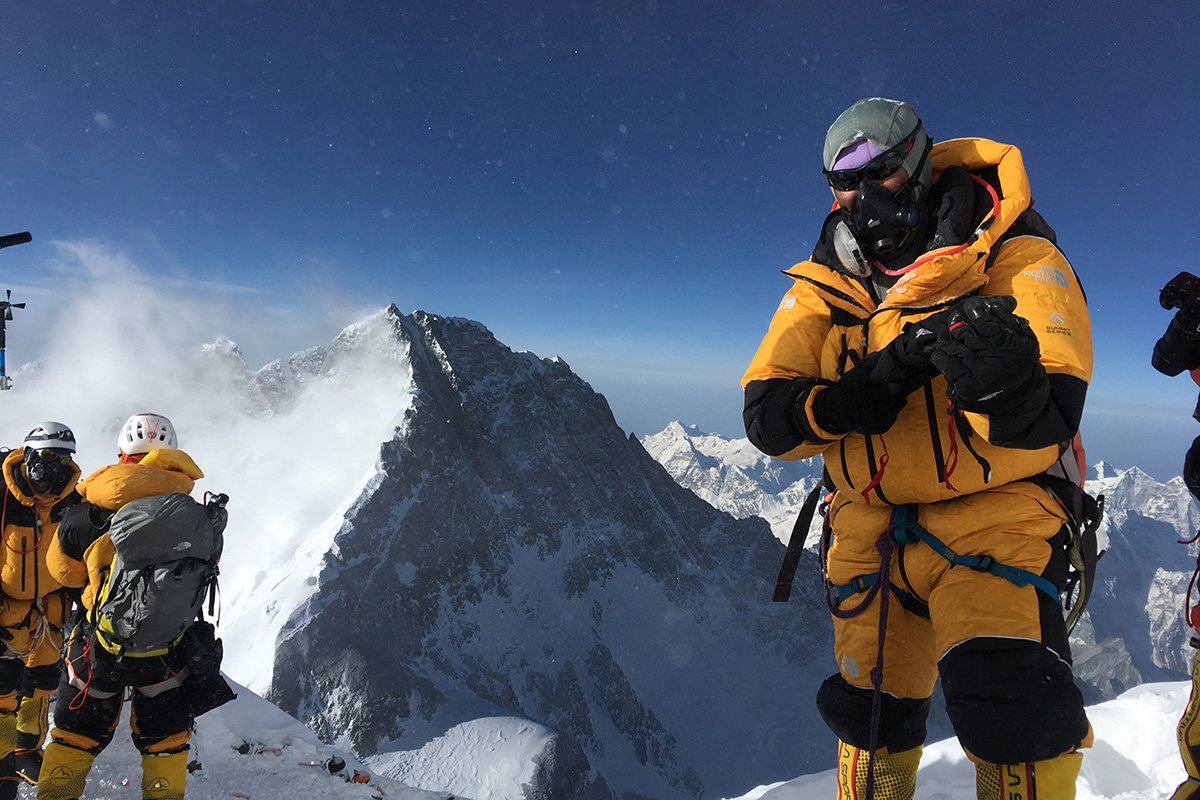
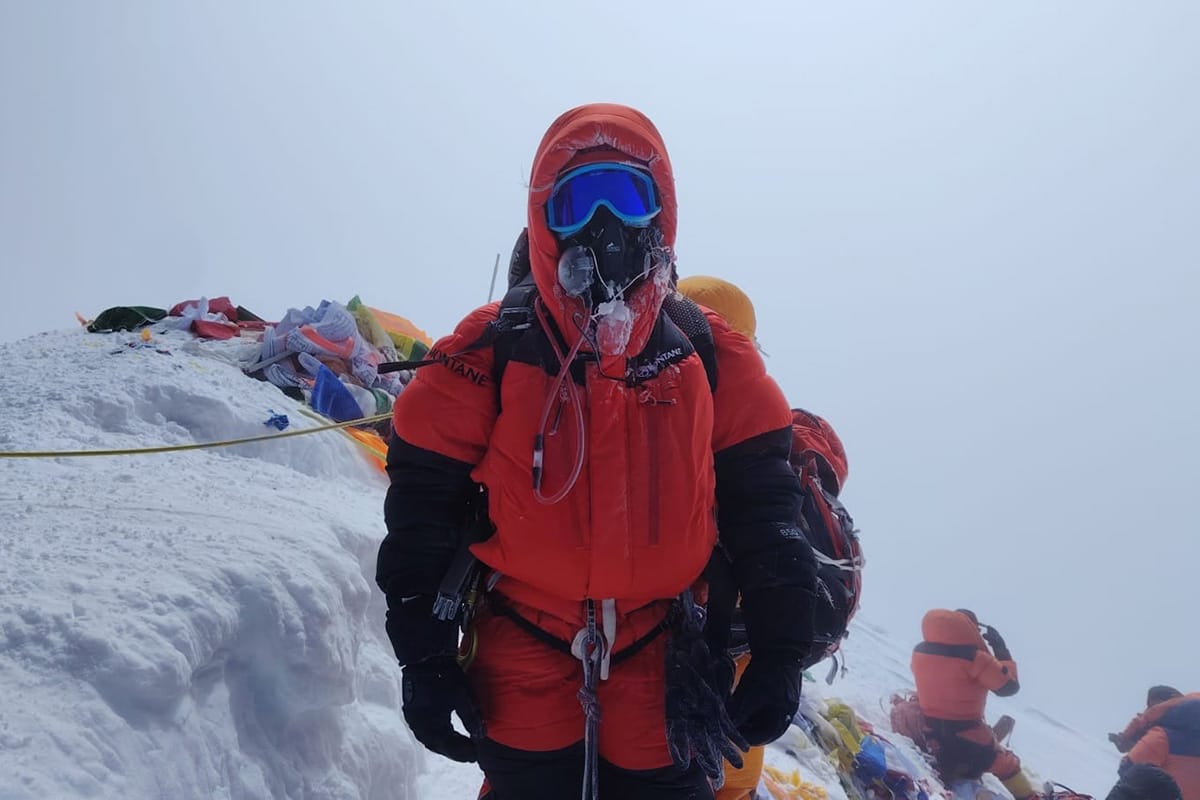
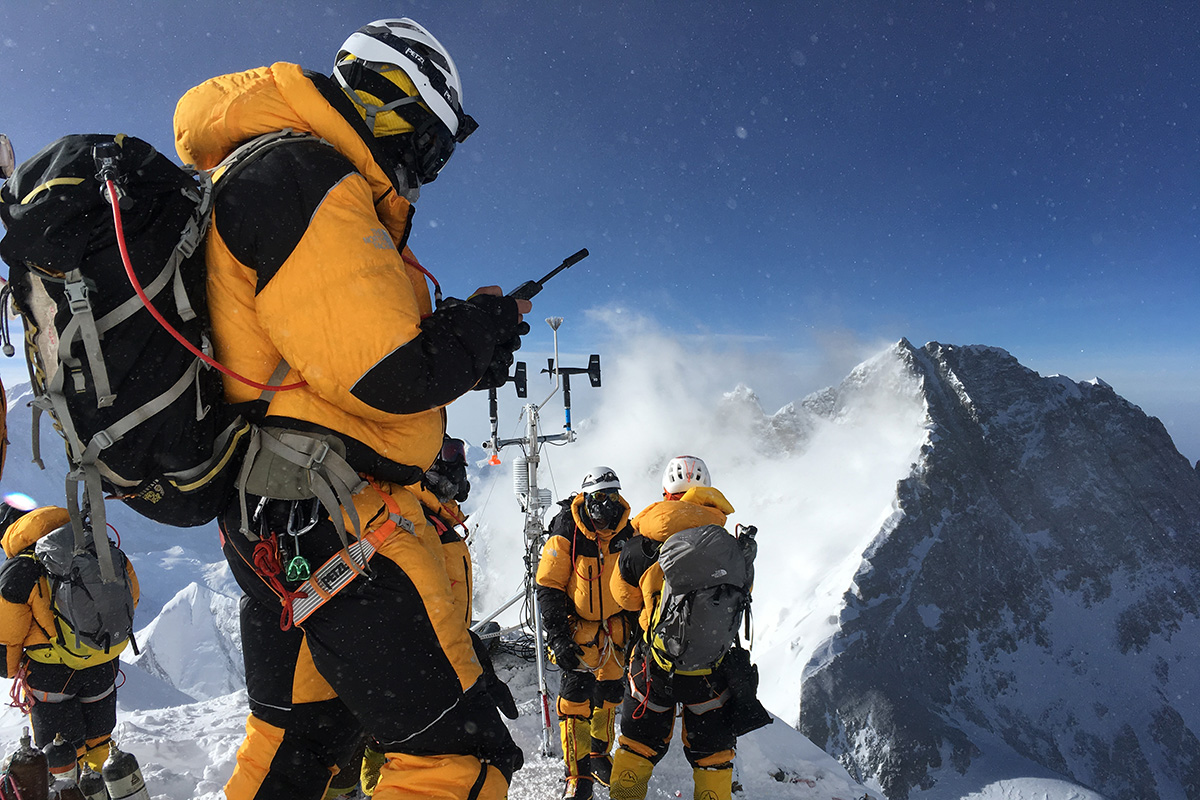
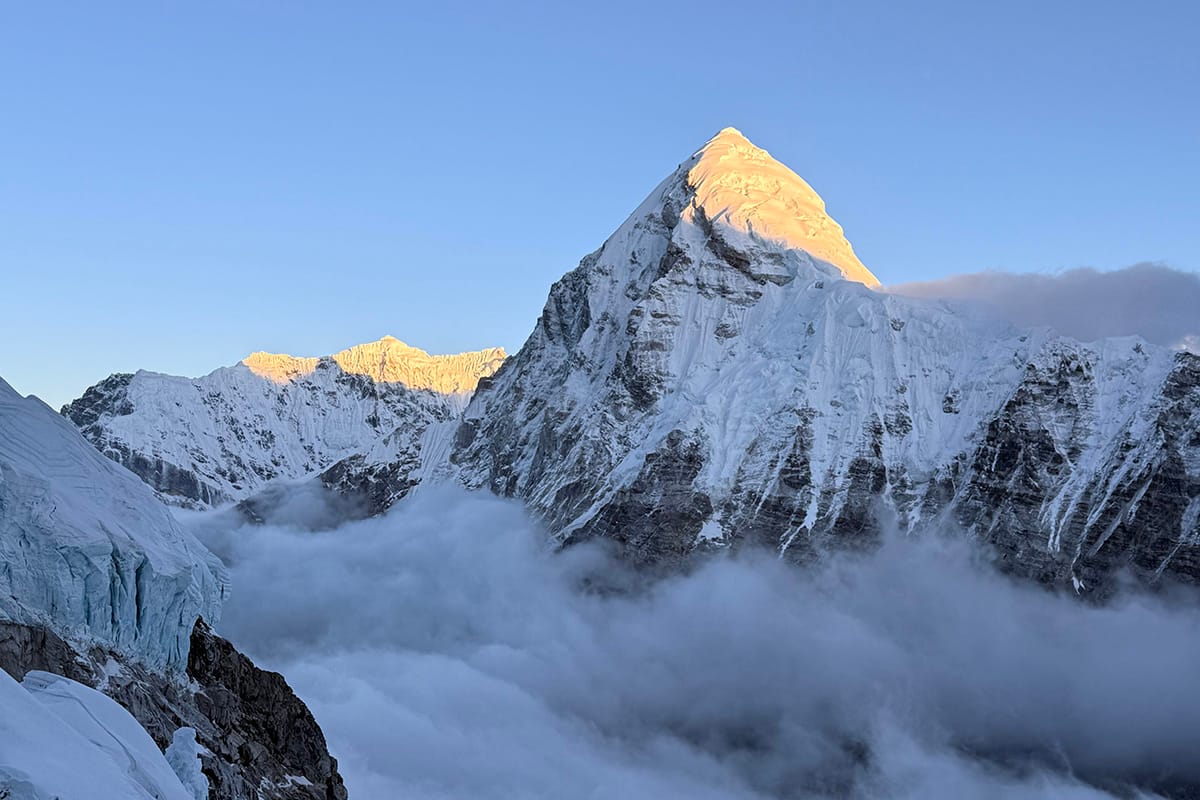
  • Summit Mount Everest at 8,848.86 m, the highest point on Earth, via the historic South Col route
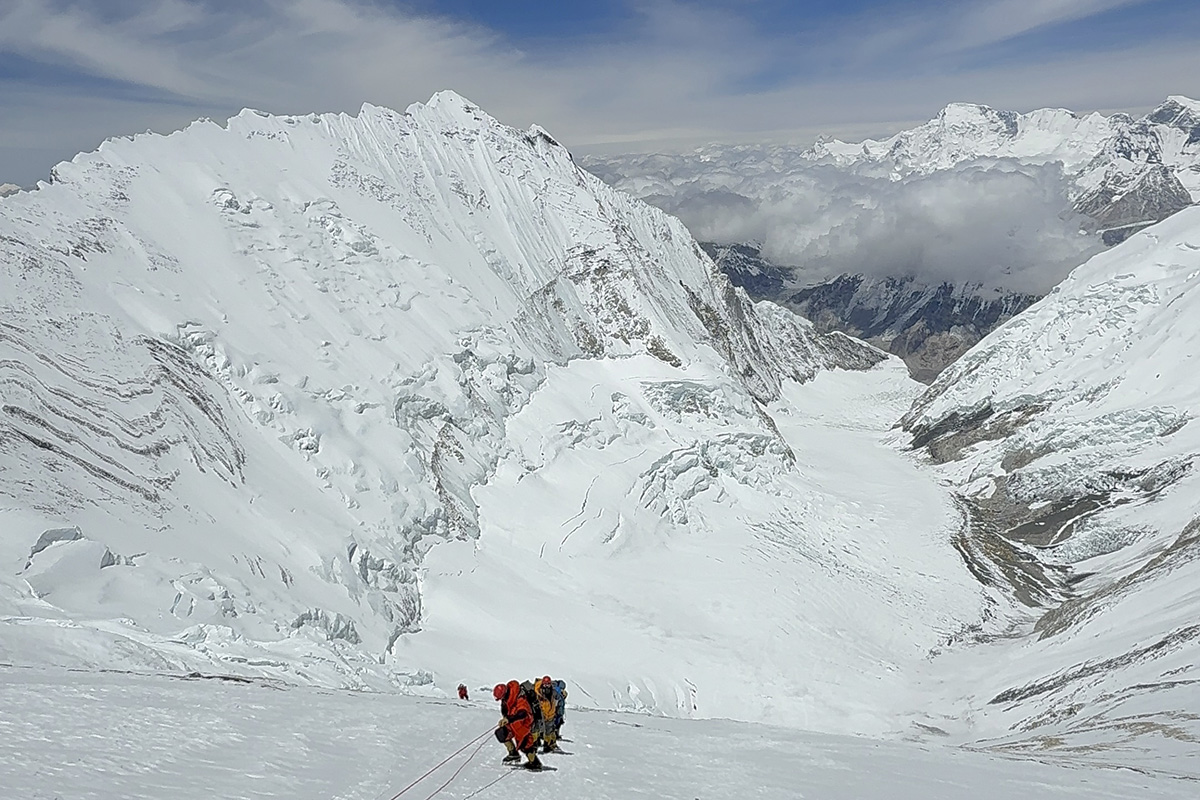
  • Climb through the Khumbu Icefall, Western Cwm, Lhotse Face, Yellow Band, Geneva Spur, and Hillary Step
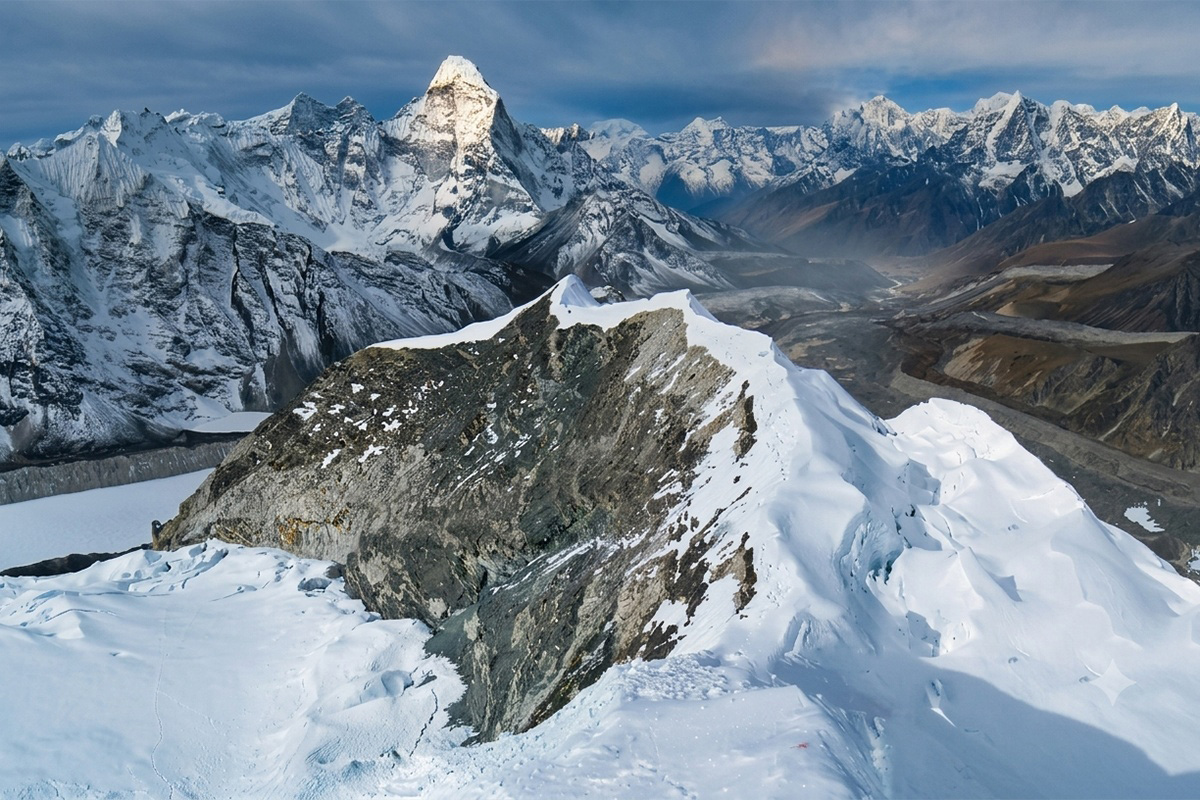
  • Complete a pre-acclimatisation climb of Lobuche East at 6,119 m before the Everest summit push
  • Train for two days at the Khumbu Icefall with expert Sherpa guides on ladders and vertical ice
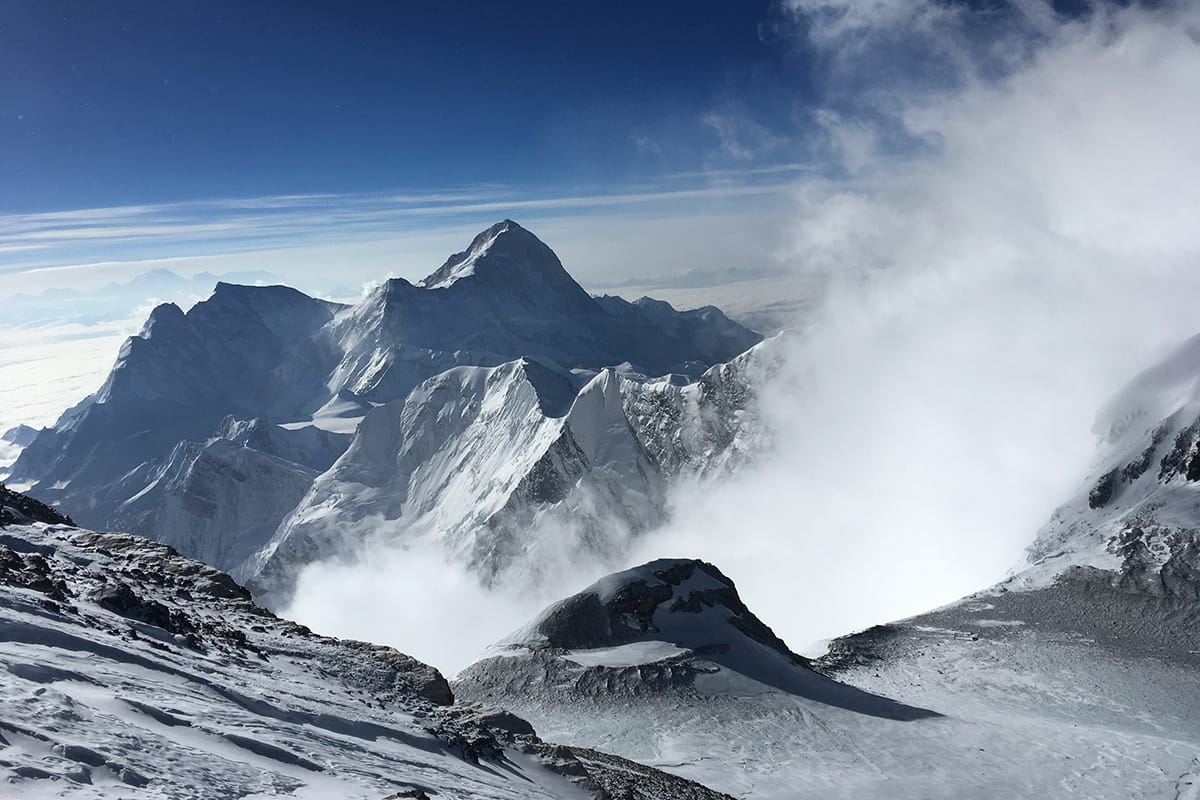
  • View Makalu, Lhotse, Cho Oyu, and Kanchenjunga in a wide panorama from the summit
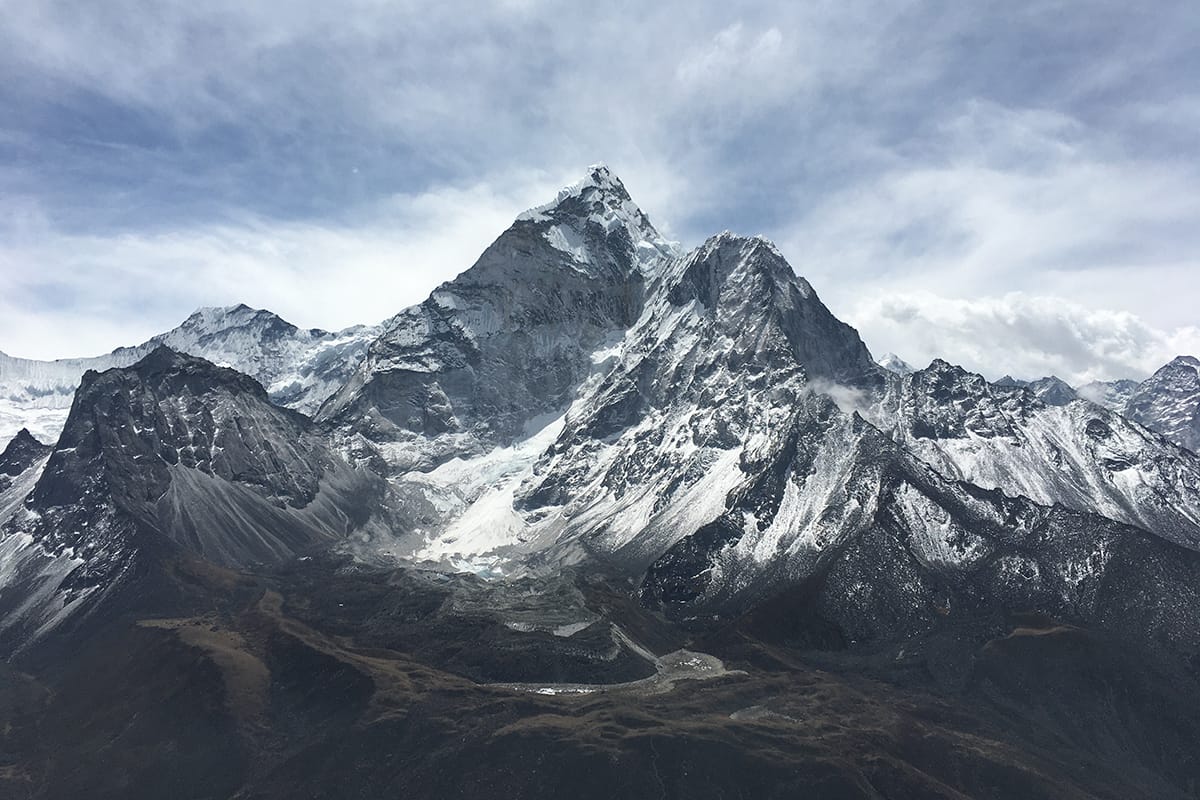
  • Trek through Namche Bazaar, Tengboche Monastery, Dingboche, and Lobuche with views of Ama Dablam and Everest
Day by day

Itinerary

Altitude profileSleeping altitudeHigh point
1,0002,0003,0004,0005,0006,0007,0008,0009,00010,0008,848 m
Day 1Day 46
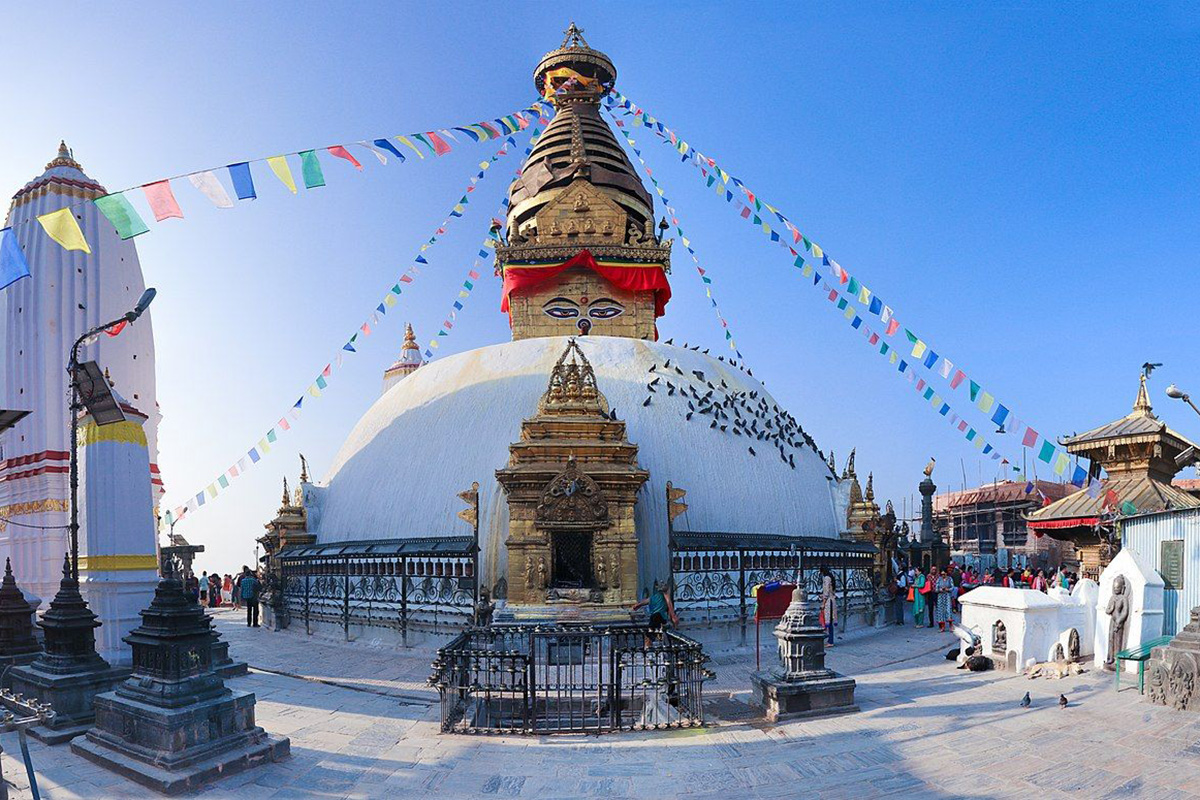
  1. Arrival in Kathmandu

    Arrive at Tribhuvan International Airport and transfer to your 5-star hotel in Thamel by private luxury Land Cruiser with the Kalapatthar team. The evening includes a traditional Nepali welcome dinner with cultural dance and live music, and a full expedition briefing covering permits, climbing safety protocols, and the gear checklist. Your guide conducts the first health check covering oxygen saturation, pulse rate, temperature, and general baseline condition. Overnight at a 5-star hotel.

    Altitude
    1,400 m
    Overnight
    5-Star Hotel
    Note
    No Trekking
    Health Check
    Baseline

This tried and tested itinerary may change for weather or safety, your guide always decides on the day, never the schedule.

Details

What your place covers

Included

  • Ground Transfer Private airport transfers on arrival and departure between Tribhuvan International Airport and your hotel in Kathmandu.
  • Accommodation Six nights in a five-star hotel in Kathmandu on a twin-sharing basis with daily breakfast.
  • Welcome Dinner Traditional Nepali welcome dinner with cultural performances, live music, and a full expedition briefing.
  • Satellite Communication Satellite phone access at Base Camp for emergency communication and scheduled family calls.
  • Climbing Permits All required permits, including Everest climbing royalty, Sagarmatha National Park permit, local municipality permit, and garbage deposit fees.
  • Staff Insurance Comprehensive insurance for all Nepali expedition staff, including guides, Sherpas, and kitchen crew.
  • Expedition Leader IFMGA/UIAGM certified expedition leader with a minimum of eight years of Himalayan climbing experience.
  • Personal Sherpa Support Dedicated 1:1 climbing Sherpa on summit day with additional assistant Sherpas available when required.
  • Pre-Acclimatisation Climb Fully supported ascent of Lobuche East (6,119 m), including permits, guides, accommodation, and meals.
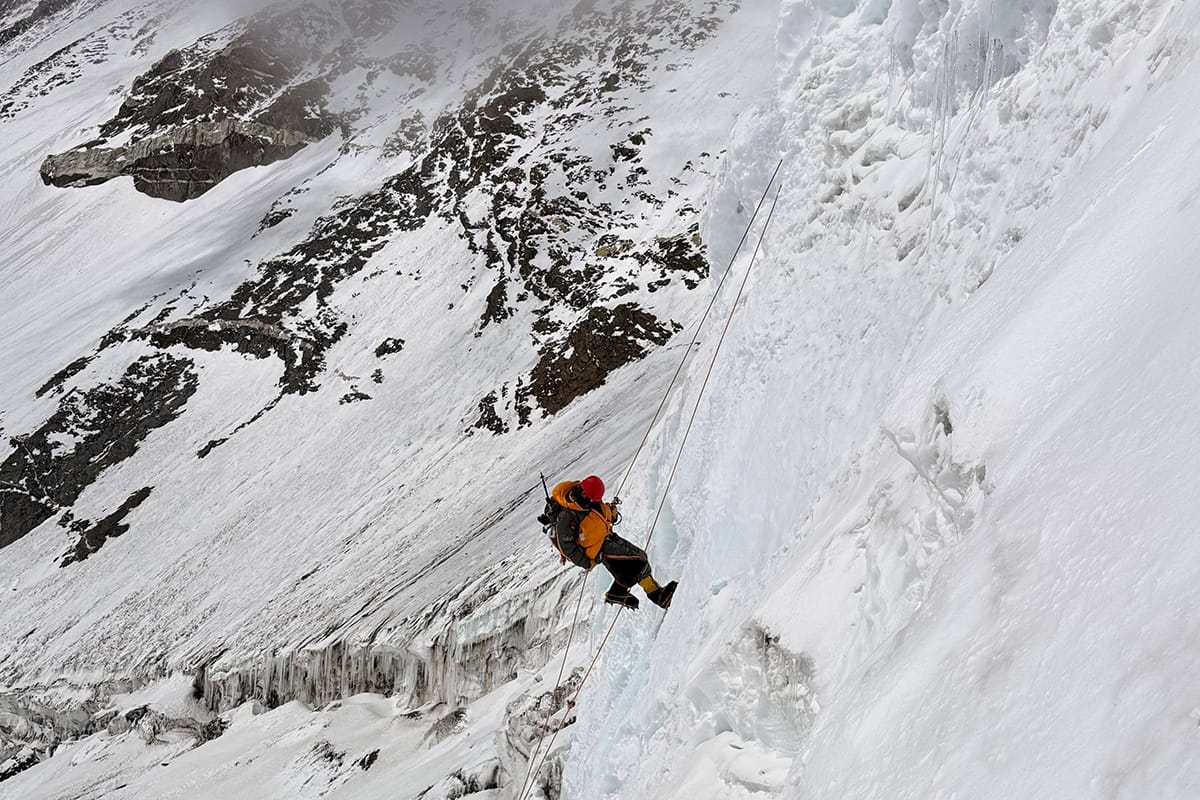
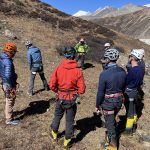
  • Ice Climbing Training Two-day ice climbing and fixed rope training in the Khumbu Icefall under experienced Sherpa instructors.
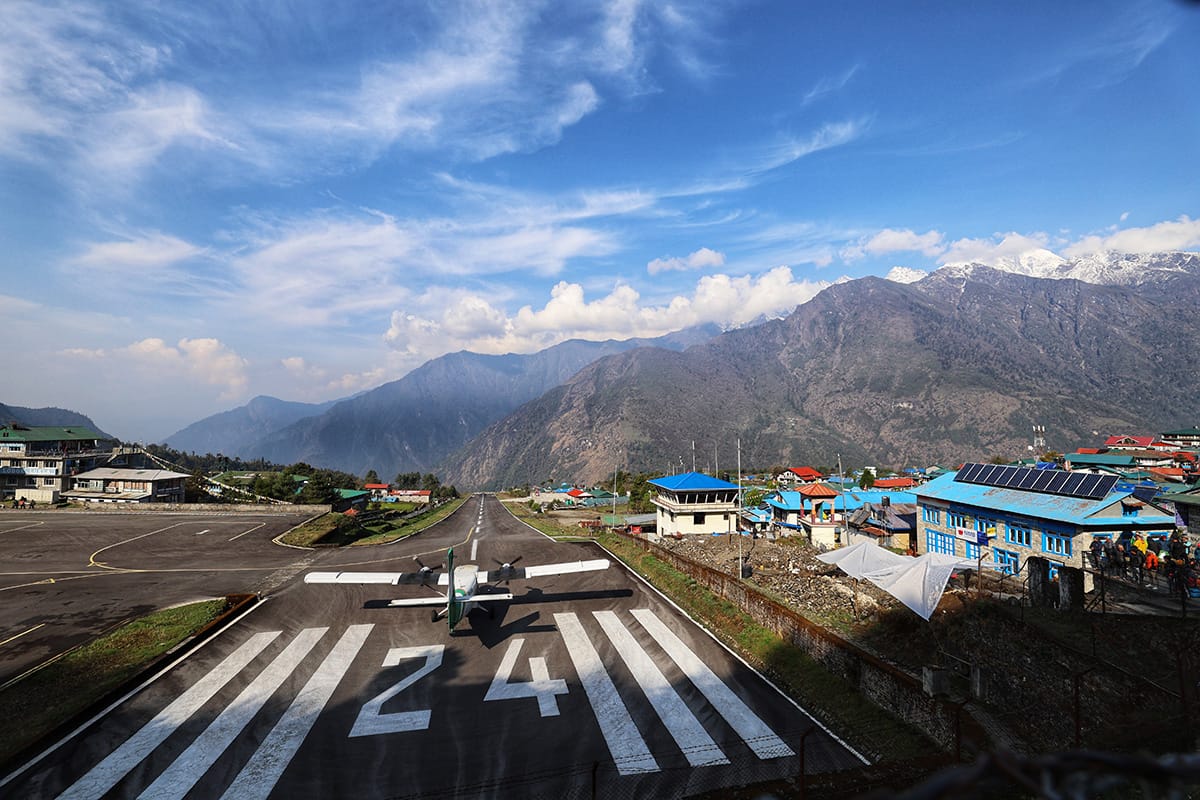
  • Approach Trek Teahouse accommodation with three daily meals throughout the trek from Lukla to Everest Base Camp.
  • Luxury Base Camp Spacious personal dome tent, heated dining tent, kitchen tent, shower tent, and dedicated toilet facilities.
  • Meals Three freshly prepared meals daily throughout the expedition with unlimited tea, coffee, and drinking water.
  • Hot Showers Hot shower facilities available throughout your stay at Base Camp.
  • Power Supply Twenty-four-hour solar and generator electricity for charging devices and operating expedition equipment.
  • Wi-Fi High-speed Wi-Fi access at Base Camp for communication, weather updates, and expedition coordination.
  • Medical Support Fully equipped medical camp staffed by a qualified high-altitude doctor with oxygen supplies and emergency care.
  • Health Monitoring Twice-daily health checks from Namche Bazaar until the summit phase.
  • Weather Forecasting Daily professional weather forecasts to support safe rotation and summit planning.
  • High Camp Support Complete logistics, accommodation, meals, and equipment support at Camps I, II, III, and IV.
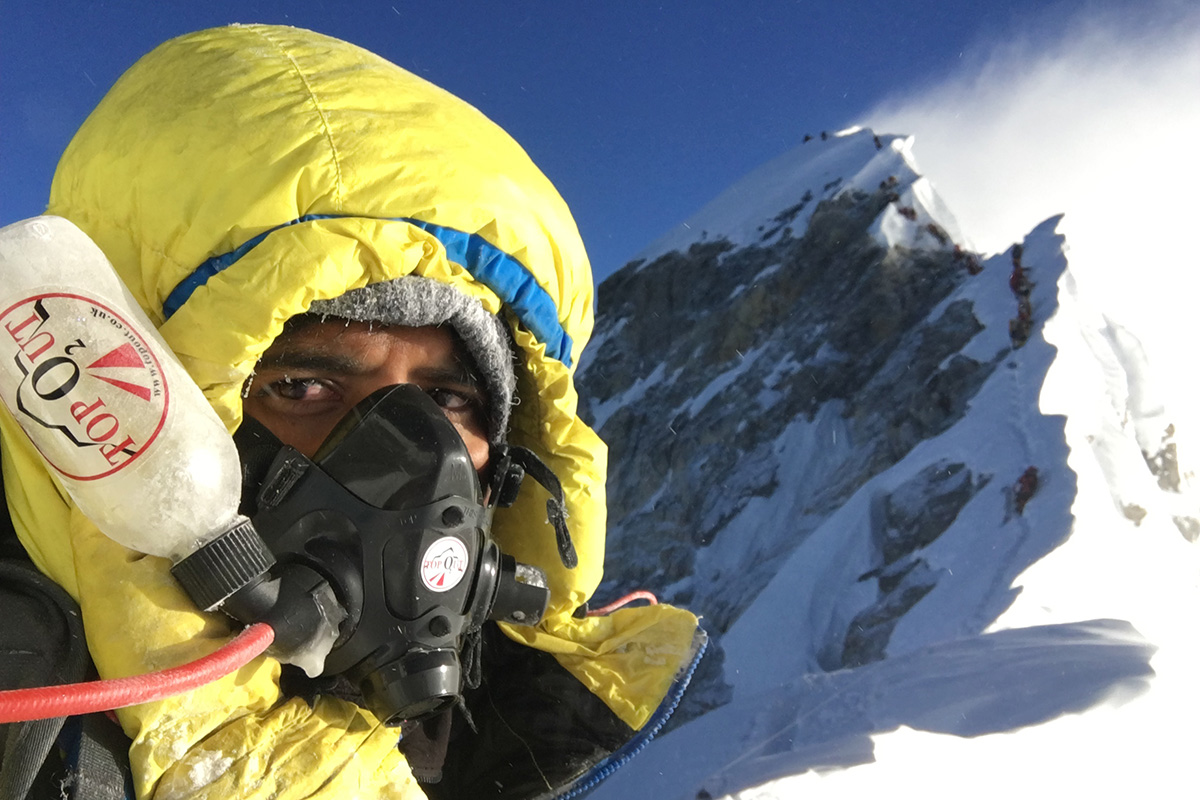
  • Supplemental Oxygen Five to six oxygen cylinders per climber, including masks, regulators, and Sherpa assistance.
  • Technical Equipment Crampons, ice axe, climbing harness, jumar, fixed ropes, and all essential technical climbing equipment.
  • Expedition Gear Complimentary high-altitude down suit and four-season sleeping bag for use throughout the expedition.
  • Helicopter Transfer Helicopter flight from Base Camp to Namche Bazaar following rotation climbs for improved recovery.
  • Return Helicopter Helicopter transfer from Everest Base Camp to Lukla after completing the expedition.
  • Reserve Days Three contingency days included for adverse weather or additional summit opportunities.
  • Emergency Rescue Full helicopter rescue coordination and emergency evacuation planning throughout the expedition.
  • Expedition Certificate Official Mount Everest Expedition Completion Certificate presented at the end of your 46-day expedition.

Not included

  • International airfare to and from Kathmandu and all associated airport taxes or departure fees
  • Nepal visa fee obtainable on arrival at Tribhuvan International Airport for 30 or 90 day stays
  • Travel and mountaineering insurance covering high-altitude climbing above 8,500 m and helicopter evacuation
  • Personal trekking and climbing gear beyond the complimentary down suit and sleeping bag rental
  • Meals in Kathmandu other than included breakfasts and the Day 1 welcome dinner
  • Personal expenses including teahouse hot showers, battery charging, Wi-Fi on trek, and laundry services
  • Additional supplemental oxygen bottles beyond the standard allocation, available at cost from Kalapatthar
  • Additional costs arising from weather delays, flight cancellations, or personal itinerary changes
  • Helicopter rescue and emergency evacuation costs, which must be covered by personal travel insurance
  • Tips for the expedition leader, climbing Sherpas, porters, kitchen staff, and Base Camp crew
  • Summit bonus for the lead climbing Sherpa and expedition leader, optional and customary
  • Alcoholic beverages, bottled soft drinks, and personal snacks beyond the standard meal plan
Secure your place

Choose your package

Most popular
Package A

Standard

$38,300Save 5%$36,389USD
per person
  • Everything listed under “What’s included”
  • Fixed-departure or private dates
  • Pay in full or secure with a deposit

Looking for something more exclusive, or want it built around your own dates? Message us on WhatsApp or email info@kalapatthartrek.com

Secure payment, powered by StripeVISAAMEX PayG Paystripe
Cancellation and payment terms

Your deposit secures your place and is used immediately to book permits, flights and lodges. The balance is due 30 days before departure. Deposits are refundable in full within 14 days of payment.

Prabhat Adhikari
Talk to our expertPrabhat AdhikariFounder & Managing Director
  • Certified IFMGA/UIAGM mountain guides (leader of the expedition) alongside Sherpas with multiple 8,000 m summits
  • Pre-acclimatisation climb of Lobuche East (6,119 m).
  • Two-day ice climbing training programme at Khumbu Icefall with expert supervision
Before you go

Practical info

Flora and Fauna of the Mount Everest

Lower Valley (Below 3,000 m)

The trek from Lukla to Namche Bazaar winds through temperate forests of pine, oak, birch, and rhododendron along the Dudh Koshi River valley. Orchids, ferns, and mosses thrive near waterfalls and river crossings. The Himalayan monal, Nepal's national bird, displays its iridescent plumage on forested slopes during spring, while langur monkeys move through the canopy in small groups during early mornings.

Mid-Altitude Forests (3,000 m–4,500 m)

As the trail rises toward Namche, Tengboche, and Dingboche, juniper, birch, and dwarf rhododendron replace the taller trees below. Himalayan tahr graze on rocky slopes above the tree line, while elusive musk deer inhabit these forests. Yellow-throated martens are occasionally spotted near rhododendron sections between Namche and Tengboche.

The Alpine Zone (4,500 m–5,500 m)

Above 4,500 m, forest gives way to alpine scrub, juniper bushes, and hardy grasses near Everest Base Camp (5,364 m). Sagarmatha National Park protects 118 bird species and 26 mammal species, including the snow leopard, which roams the highest elevations. Himalayan griffon vultures circle the valleys, snow pigeons roost on cliffs, and Tibetan snowcocks call from alpine meadows at dawn.

The Valley of Silence (Above 5,500 m)

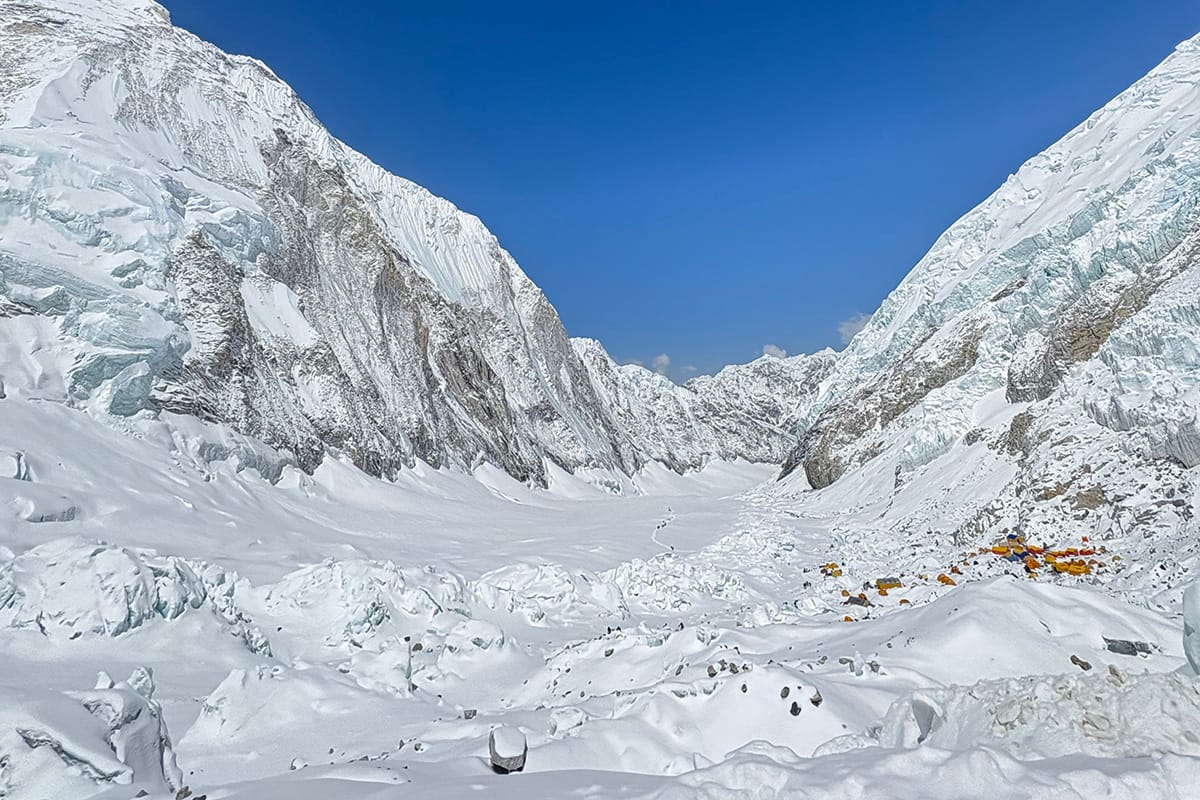
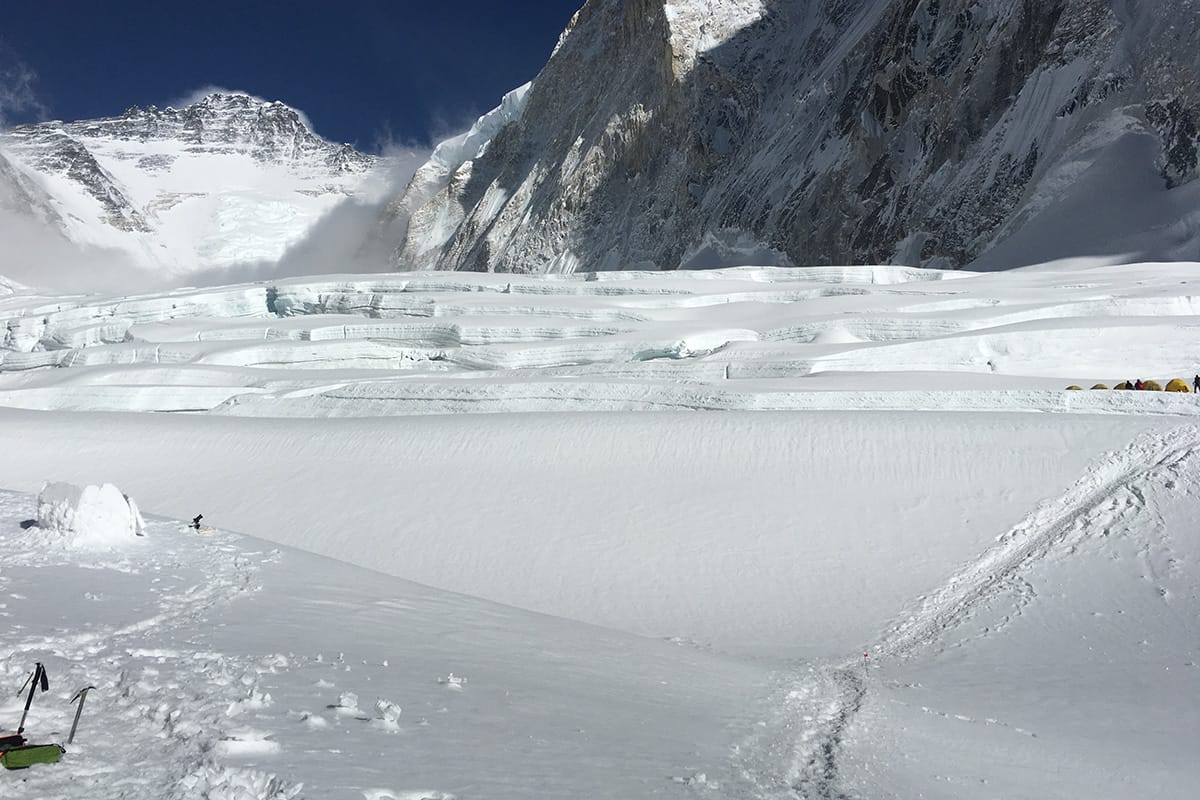
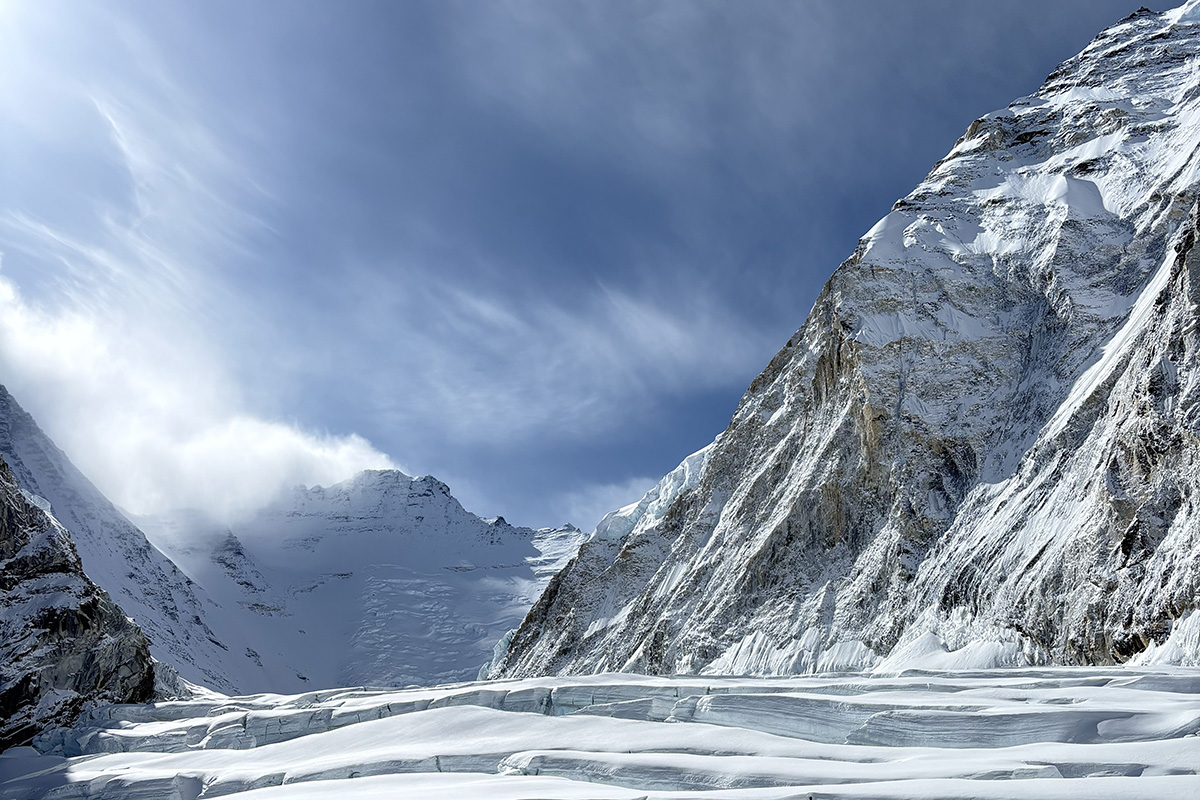
Beyond 5,500 m, vegetation vanishes, leaving rocky moraine, scree, permanent snowfields, and the slow-moving Khumbu Glacier. The Western Cwm (koom) is a flat, gently ascending glacial valley known as the Valley of Silence; its steep surrounding walls block wind from reaching the floor. Birdlife is scarce, limited to the occasional griffon vulture and alpine chough, which sometimes follow climbing teams on summit day.

The Mount Everest Expedition Difficulty

Overall Rating

The Mount Everest Expedition carries an Extreme rating. This climb demands prior high-altitude experience above 7,000 m and proven proficiency with fixed ropes and oxygen systems. Daily climbing times average 6 to 10 hours on technical terrain throughout the expedition. The route is exposed and unforgiving, and any serious mistake above 8,000 m can be fatal.

Most Demanding Sections

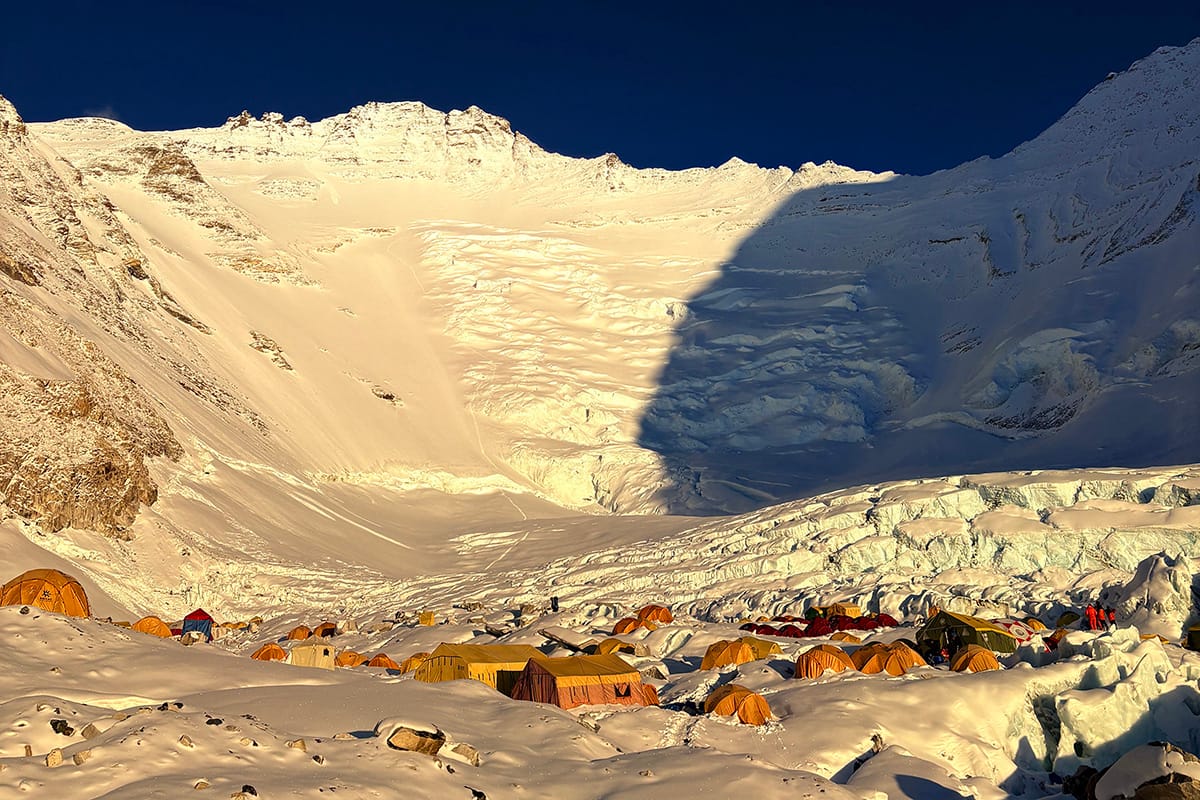
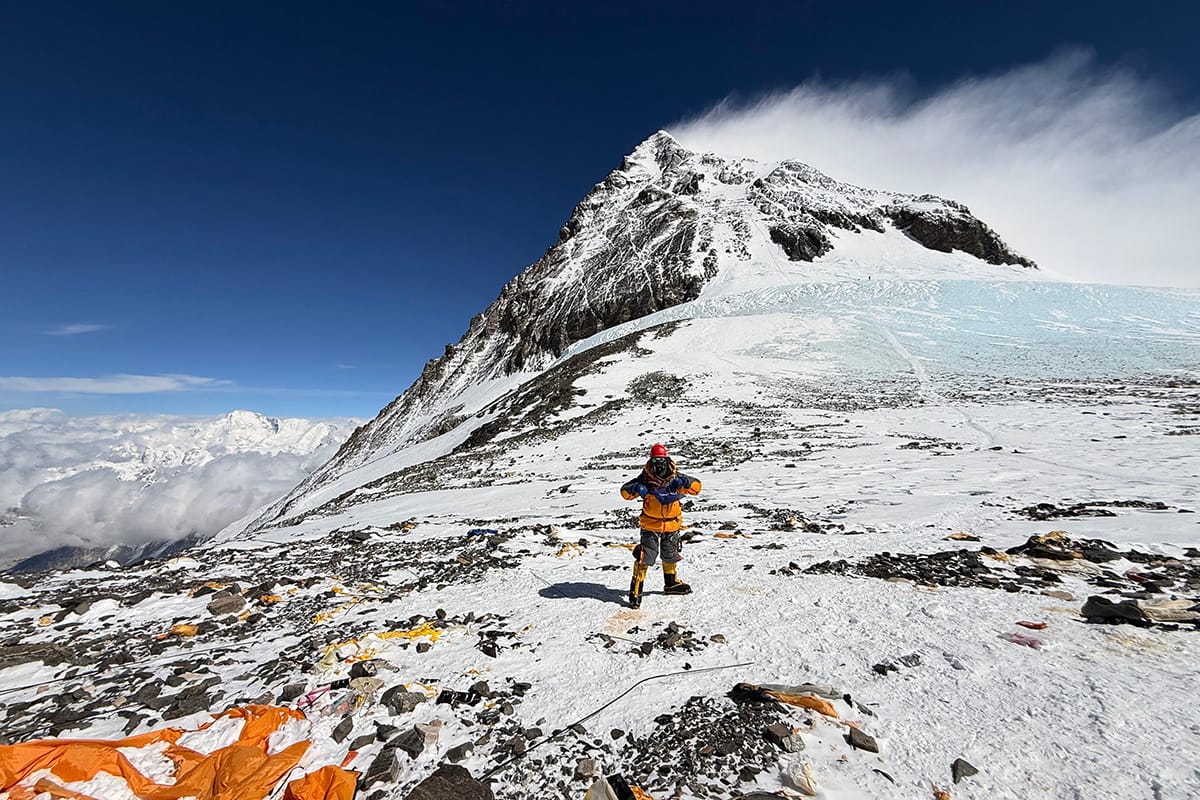
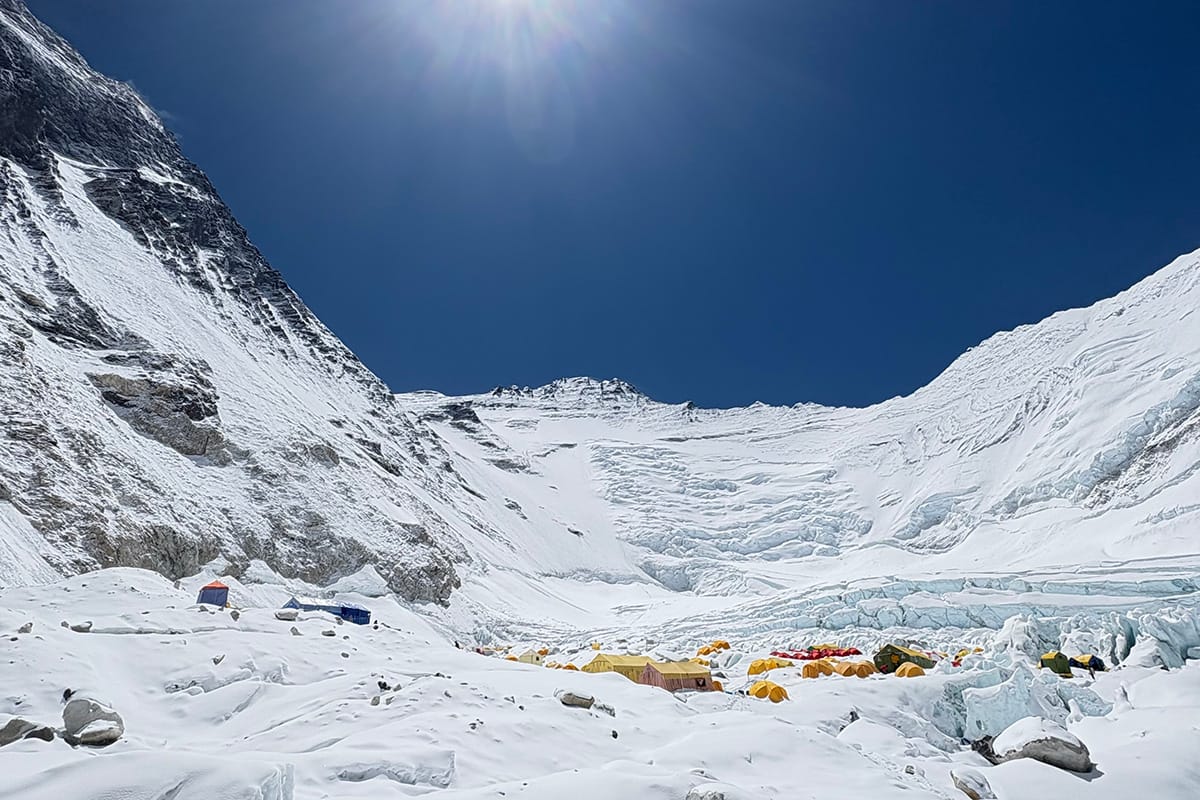
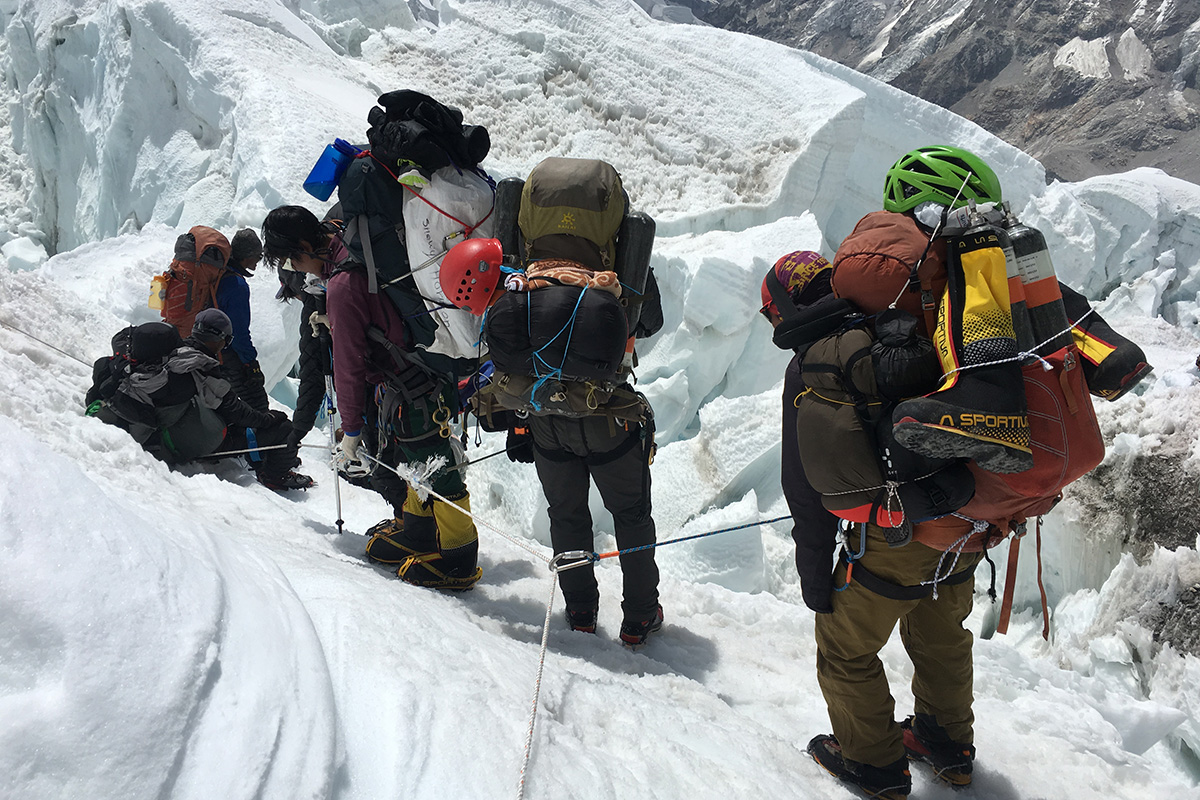
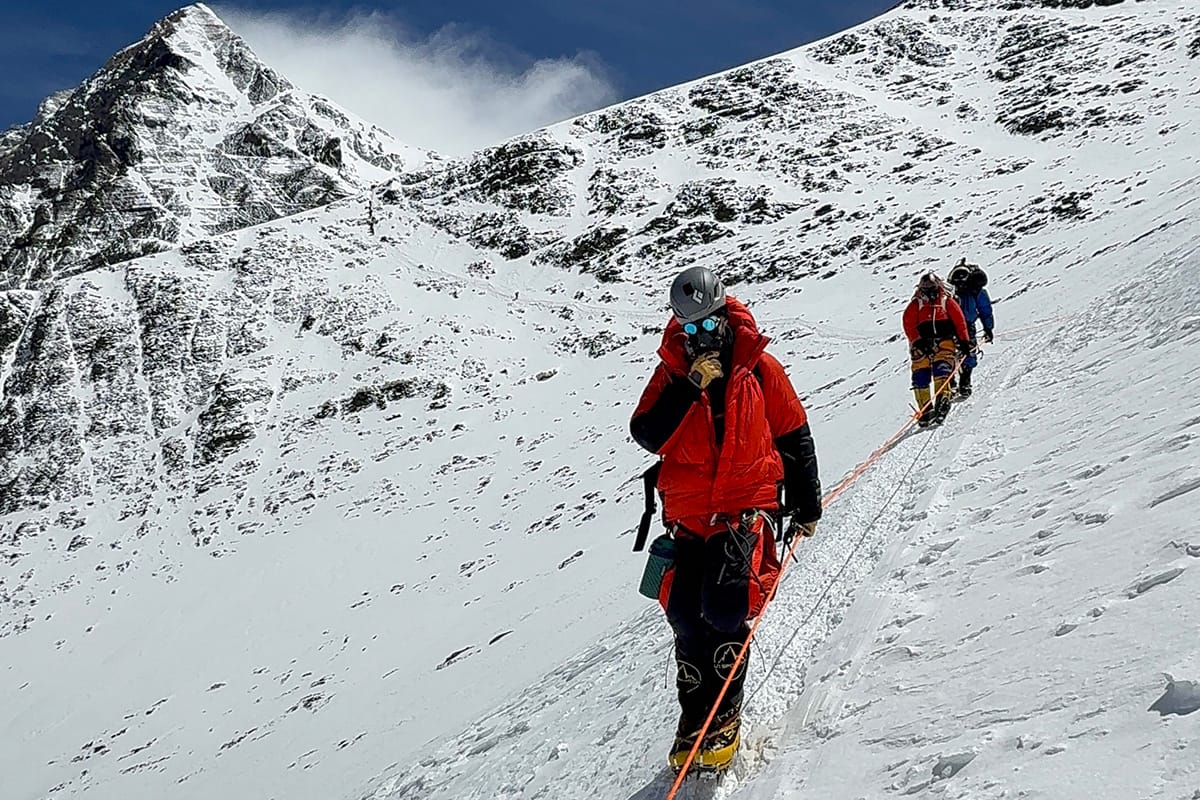
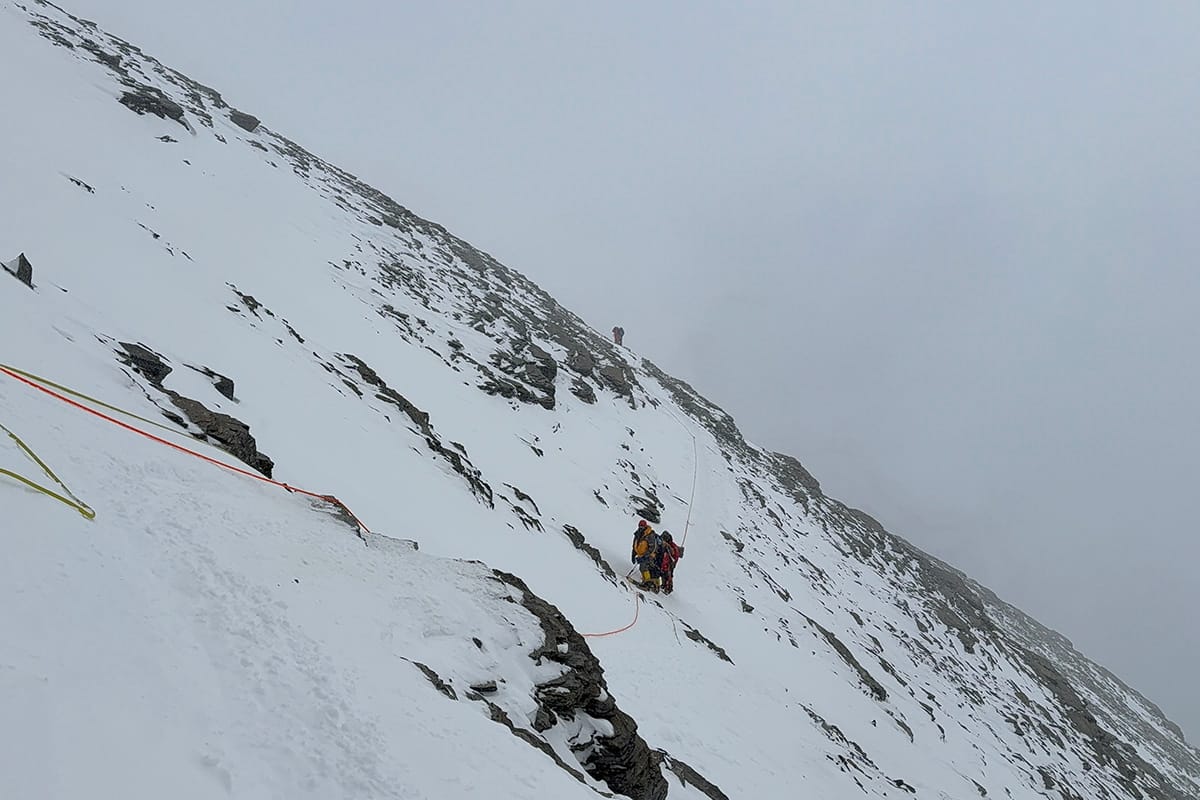
The Khumbu Icefall between Base Camp at 5,364 m and Camp I at 6,065 m is the most hazardous lower section, with shifting seracs and deep crevasses that can open overnight. Above Camp II, the Lhotse Face rises 1,200 metres of steep blue ice at 40 to 50 degrees, climbed on fixed ropes with crampons and jumar technique. The summit push from Camp IV at 7,920 m to the top at 8,848.86 m takes 10 to 14 hours and includes the Yellow Band, Geneva Spur, South Summit, and Hillary Step. The route above 8,000 m sits in the death zone, where supplemental oxygen is mandatory for survival beyond a few hours.

Recommended Training

Kalapatthar Trek & Expedition recommends at least eight months of intensive preparatory training before departure. This must include high-intensity cardiovascular work, weighted pack training with 15 to 20 kg, and strength training four to five times per week. Prior experience on a 7,000 m peak is mandatory, and a successful 8,000 m summit within the previous two years significantly improves your chance of reaching the top.

Best Time to Visit

Spring (April to May)

Spring is the primary and only recommended season for the Mount Everest Expedition, with pre-monsoon conditions creating the most stable weather windows. May is the strongest single month, as the jet stream moves north of the mountain, lowering wind speeds and improving climbing conditions. Daytime temperatures at Base Camp range from 0 to 10 degrees Celsius, while summit temperatures drop to minus 25 to minus 35 degrees Celsius.

Monsoon (June to August)

The summer monsoon brings heavy daily rainfall, unstable snow, and significant avalanche risk on the lower route. Cloud cover persistently obscures mountain views, and fixed rope sections become hazardous from wet ice and poor visibility. Kalapatthar Trek & Expedition does not offer scheduled departures during the monsoon season.

Autumn (September to October)

Autumn post-monsoon conditions are less predictable than spring, since jet stream activity often remains over the Khumbu region, creating higher wind speeds at altitude. Daytime temperatures at Base Camp range from 0 to 8 degrees Celsius, while summit temperatures drop to minus 25 to minus 35 degrees Celsius. Kalapatthar strongly recommends spring as the primary season for Everest summit attempts.

Winter (November to February)

Winter climbing is not possible on this expedition due to extreme cold, deep unconsolidated snow, and sustained high winds on the exposed South Col route. Temperatures at Camp IV drop to minus 40 to minus 50 degrees Celsius, making the summit push impossible and the risk of frostbite severe. Kalapatthar does not offer winter departures for this expedition.

Permits and Documentation

The Mount Everest Expedition requires five separate permits obtained through a registered agency like Kalapatthar Trek & Expedition. Independent climbing is not permitted on Everest, and all climbers must travel with a licensed guide holding IFMGA or UIAGM certification. Kalapatthar processes all permits before departure from Kathmandu at official government rates with no handling fees added.

  • Mount Everest Climbing Royalty: USD 15,000 per person for spring (March to May), USD 18,000 for autumn, and USD 22,500 for winter or summer, paid to the Nepal Mountaineering Association
  • From September 2025, climbers must first summit a 7,000 m peak in Nepal before applying for an Everest permit
  • Sagarmatha National Park Entry Permit costs NPR 3,000 per person and supports environmental protection and trail maintenance
  • Khumbu Pasang Lhamu Rural Municipality Permit costs approximately NPR 2,000 per person, collected near Lukla or Monjo
  • A garbage deposit of USD 4,000 per team is required and refundable upon returning all waste from the mountain
  • A licensed climbing guide with IFMGA or UIAGM certification is legally required for the summit attempt

Accommodation and Food on the Mount Everest Expedition

Accommodation changes four times between Kathmandu and the summit of Mount Everest. The expedition begins with six nights in a 5-star hotel in Kathmandu, with attached bathrooms and breakfast included each morning. The approach trek from Lukla to Lobuche uses teahouse accommodation with twin-sharing rooms and basic meals, run by Sherpa families along the trail.

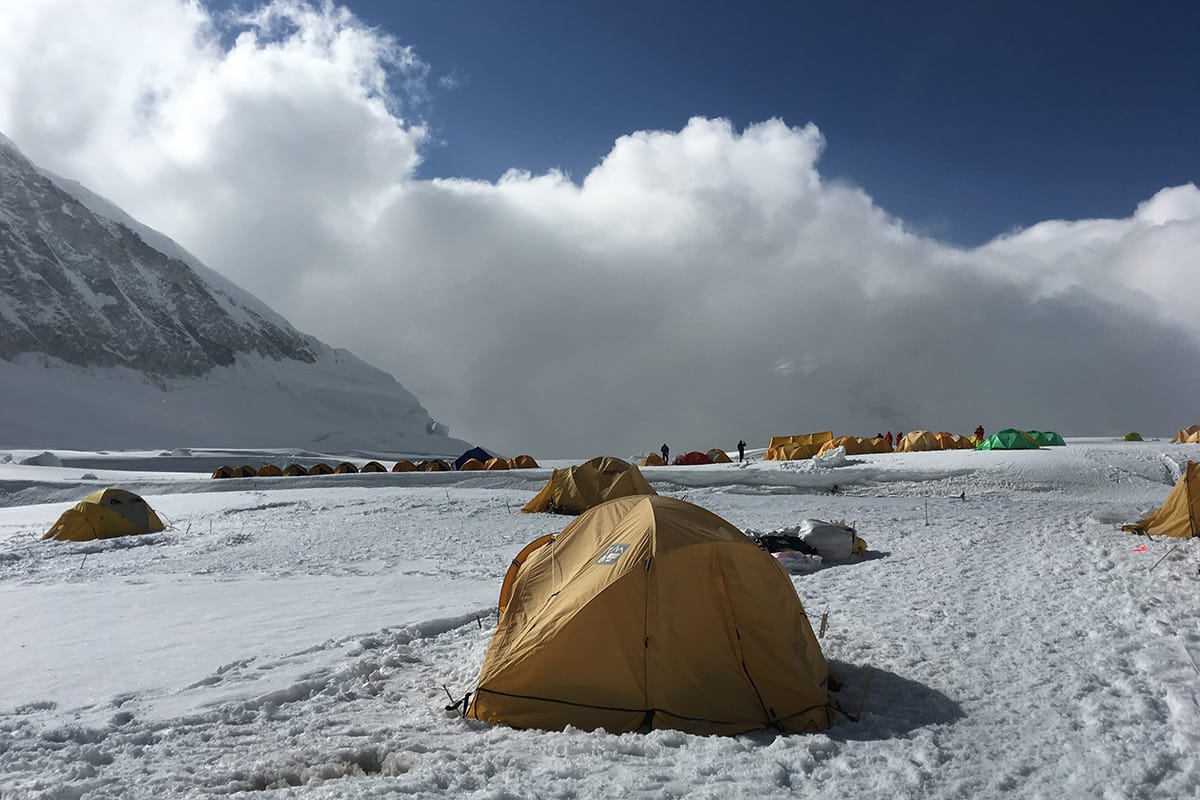
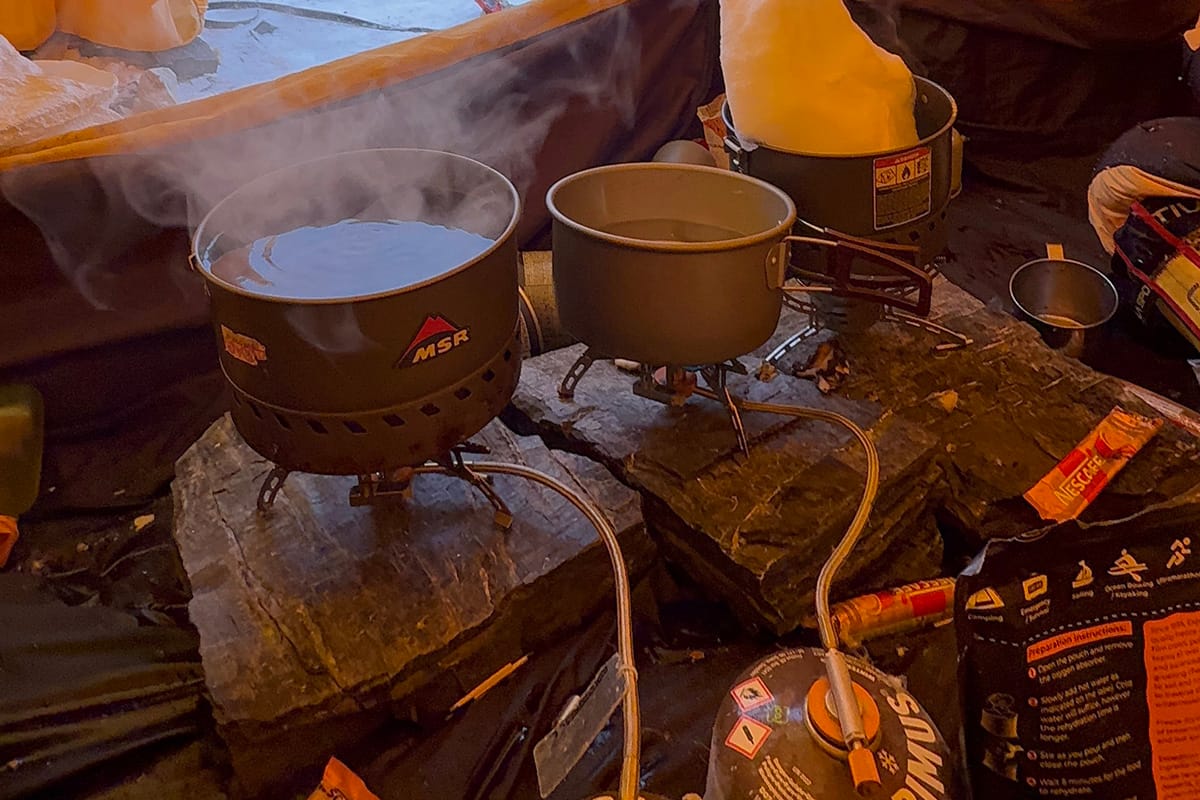
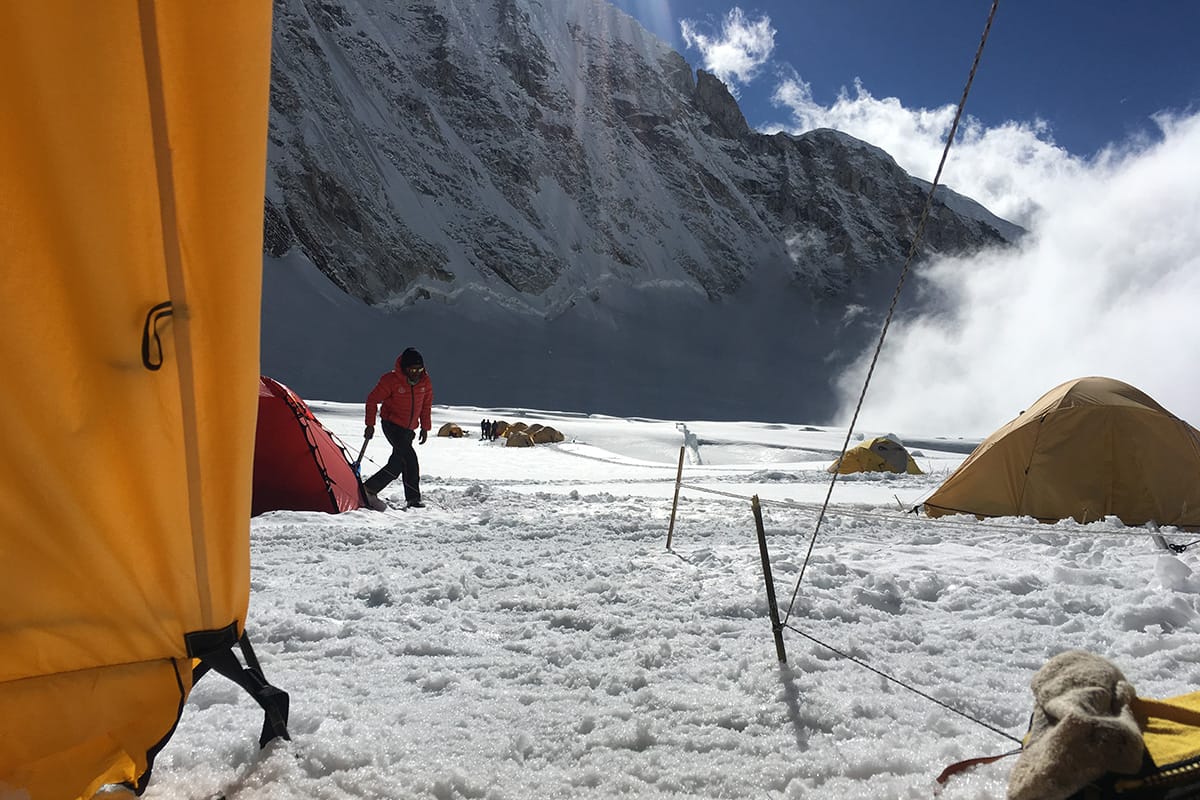
At 5,364 m, a luxury Base Camp is built to the same standard as Kalapatthar's other 8,000 m programmes, with personal dome sleeping tents featuring heated bedding and full amenities. A dedicated dining tent, fully equipped kitchen tent, toilet tent, and hot shower facilities support daily life at camp. The site runs on 24/7 solar and generator power with reliable Wi-Fi, and a fully equipped medical facility staffed by a certified high-altitude doctor provides continuous support throughout the expedition.

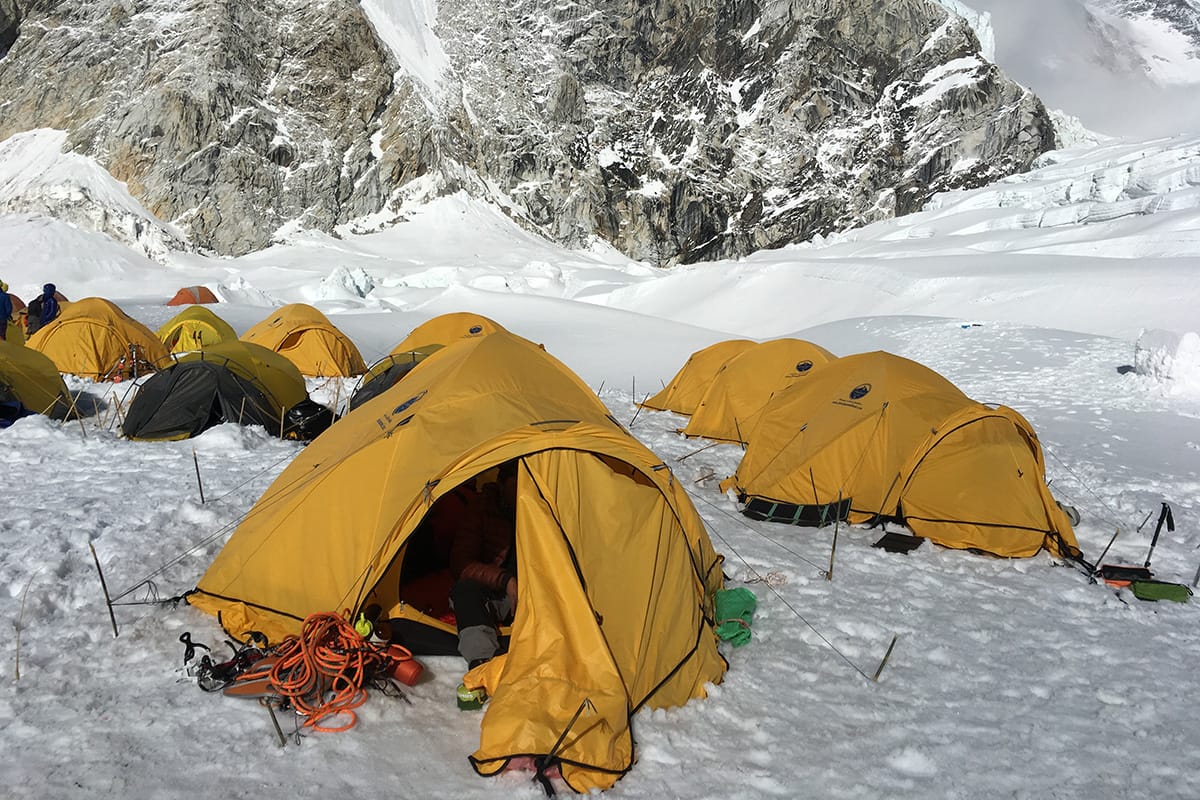
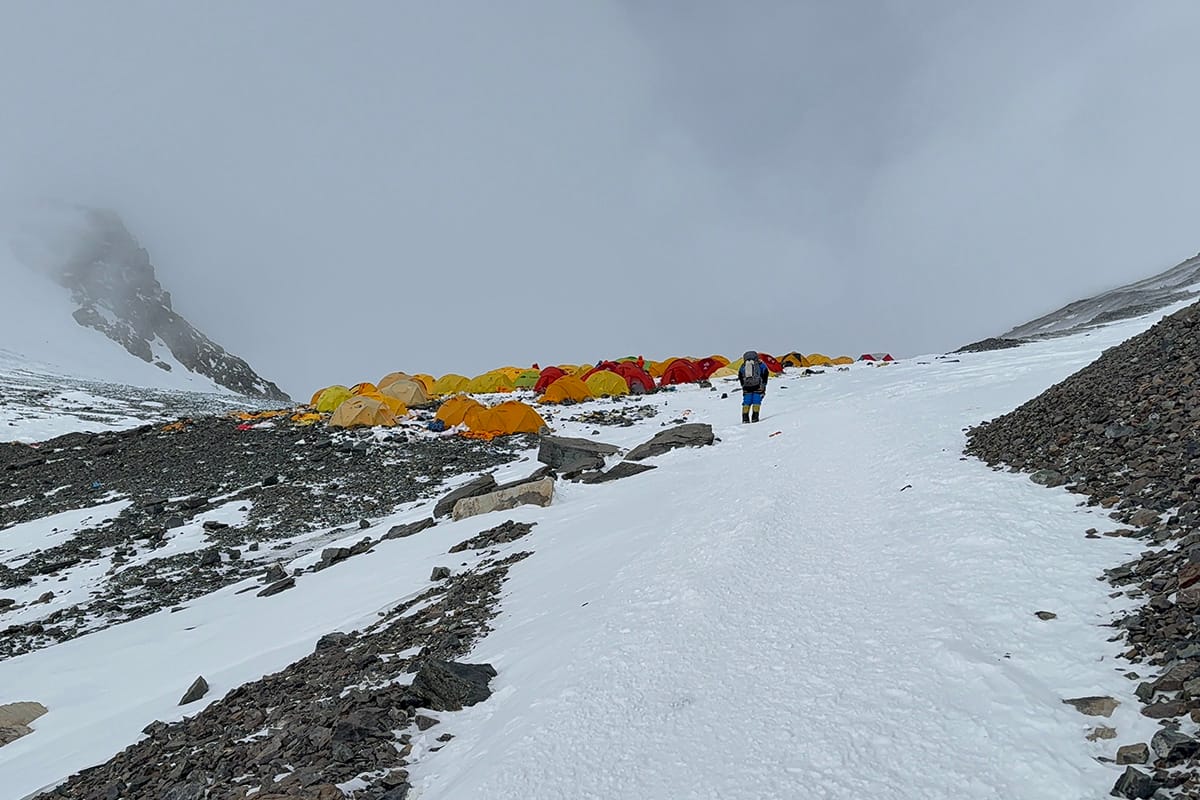
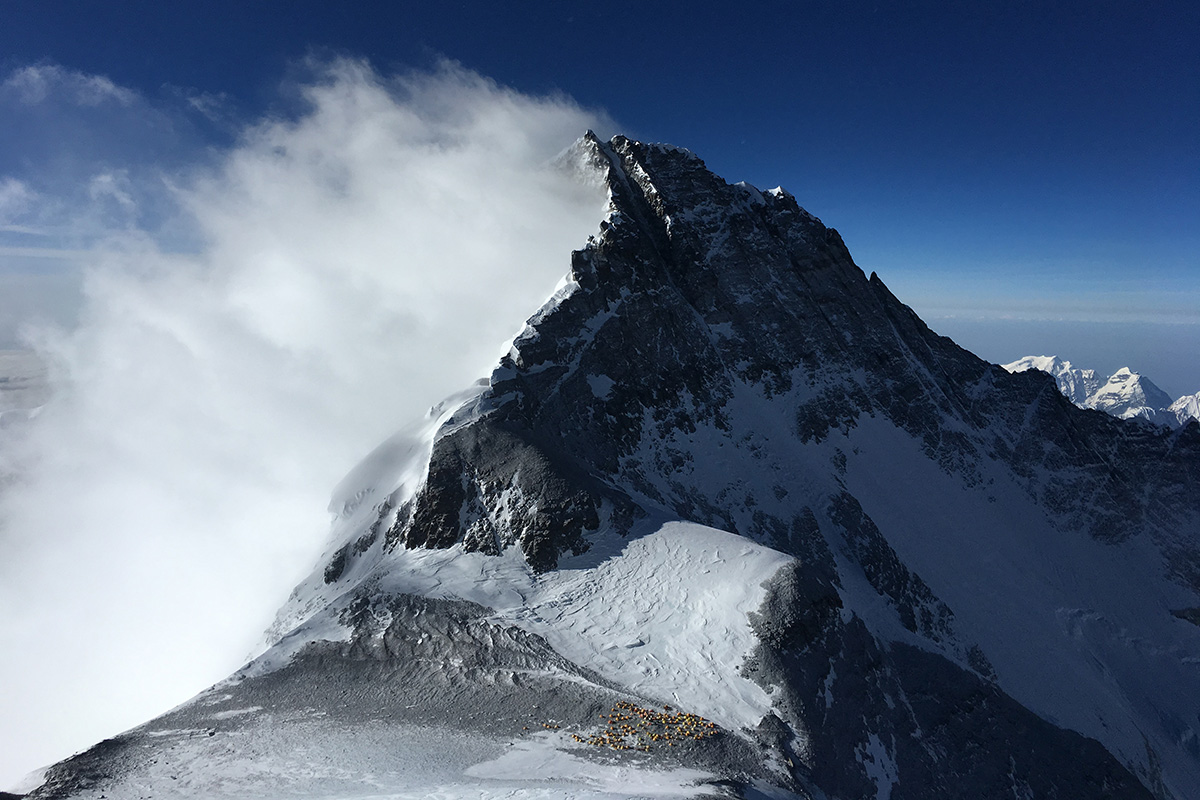
Above Base Camp, fully equipped expedition tents stand at Camp I (6,065 m), Camp II (6,500 m), Camp III (7,200 m), and Camp IV (7,920 m), built to withstand extreme winds and cold. The Sherpa team prepares hot meals at every high camp and manages oxygen systems throughout the summit push.

The Kalapatthar kitchen team prepares three fresh meals daily at Base Camp, with unlimited snacks, dried fruit, biscuits, fresh fruit, tea, and coffee available between meals. Teahouses along the approach serve dal bhat, fried rice, noodle soups, pasta, Tibetan bread, pancakes, oatmeal, and egg-based meals. Full hygienic kitchen service continues at Camp II and Camp III using fresh ingredients carried up from Base Camp, and vegetarian requirements can be accommodated with advance notice.

Packing List

Clothing
  • One waterproof hardshell jacket and matching trousers rated to a minimum of 20,000 mm water column
  • One high-altitude down suit rated for minus 50 degrees Celsius, available as a complimentary rental from Kalapatthar
  • One insulated down jacket rated for minus 30 degrees Celsius for Base Camp and high camp use
  • One fleece jacket or synthetic mid-layer for approach trekking and Base Camp use
  • Three moisture-wicking long-sleeved base layer tops in merino wool or synthetic fabric, no cotton permitted
  • Two pairs of softshell trekking trousers and two pairs of hardshell climbing pants
  • Two pairs of thermal base layer bottoms for cold nights at Base Camp and high camps
  • Six to seven pairs of wool or synthetic expedition socks, plus two pairs of summit-weight liners
  • One balaclava and one warm beanie covering the ears for summit day and cold nights
  • Three pairs of thin liner gloves, two pairs of insulated waterproof gloves, and one pair of overmitts
Footwear
  • One pair of high-altitude double boots rated for minus 50 degrees Celsius, compatible with step-in crampons
  • One pair of waterproof trekking boots, broken in for at least 100 kilometres before arrival in Nepal
  • One pair of lightweight camp shoes or sandals for Base Camp evenings and rest days
  • One pair of gaiters for glacier sections and high-altitude snow terrain above Base Camp

Climbing Equipment (Provided by Kalapatthar Trek & Expedition)

  • 12-point steel crampons compatible with your double boots for the Lhotse Face and summit slopes
  • Ice axe of 60 to 70 cm length for balance and self-arrest above Camp II
  • Climbing harness with adjustable leg loops for all fixed rope sections from Camp I to the summit
  • Jumar or ascender for climbing fixed ropes on the steep sections above Camp II
  • Two locking carabiners and two non-locking carabiners for rope attachment and safety backups
  • Climbing helmet for protection from falling ice and rock on the Khumbu Icefall
  • 120 cm and 240 cm sewn slings for anchor connection and safety backups at high camps
  • Prusik loops for emergency self-rescue on fixed ropes if required
  • Fixed ropes, snow stakes, and ice screws were managed and installed by the Kalapatthar Sherpa team
Gear and Equipment
  • One four-season sleeping bag rated for minus 40 degrees Celsius, available as a complimentary rental
  • Trekking poles with adjustable length and snow baskets for the approach trek and glacier terrain
  • One headlamp with a minimum 300 lumens output and spare batteries for the pre-dawn summit start
  • Two-litre insulated water bottle plus a thermos for hot drinks on summit morning
  • Water purification tablets or a filter bottle for teahouse water on the approach trek
  • One power bank with at least 20,000 mAh capacity for use above Namche Bazaar
  • Glacier goggles with Category 4 UV protection and full side shields for snow glare
Health and Hygiene
  • Sunscreen with SPF 50 or higher applied every morning to all exposed skin above 4,000 m
  • Lip balm with SPF protection for dry, cold conditions and summit day wind exposure
  • A comprehensive first aid kit with bandages, blister plasters, pain relievers, and personal medications
  • Diamox for altitude sickness prevention, if recommended by your doctor, is started at Namche Bazaar
  • Wet wipes and hand sanitiser for hygiene before meals throughout the expedition
  • Toilet paper in sealed zip lock bags for use above the teahouse facilities at high camps

Safety and Important Notes

Altitude Sickness Acute Mountain Sickness can affect any climber above 4,000 m, regardless of age or fitness. The summit reaches 8,848.86 m. Guides and the expedition doctor conduct twice‑daily oxygen, pulse, and temperature checks from Namche through the summit push. If HAPE or HACE symptoms appear, immediate descent is mandatory. The pre‑acclimatisation climb of Lobuche East (6,119 m) strengthens altitude adaptation before the Everest push.Travel Insurance Comprehensive insurance covering high‑altitude mountaineering above 8,500 m, helicopter evacuation, and medical treatment is mandatory. Proof must be presented at the Day 1 briefing in Kathmandu. Coverage must include helicopter rescue to 8,500 m and evacuation from the Khumbu region.Physical Preparation Climbers should begin a structured fitness programme at least eight months in advance, focusing on cardiovascular endurance, leg strength, and load‑bearing capacity. Recommended training includes HIIT, long‑distance running, stair climbing with a 15 kg pack, and strength training 4–5 times weekly. Prior experience above 7,000 m is mandatory; summiting an 8,000 m peak within the previous two years significantly boosts success rates.Responsible Mountaineering Sagarmatha National Park is a UNESCO World Heritage Site. Climbers must minimise waste and avoid single‑use plastics throughout the 46‑day journey. All non‑biodegradable waste must be carried out from Base Camp and high camps to designated teahouse facilities. Kalapatthar Trek & Expedition follows Leave No Trace principles and uses a refundable garbage deposit to support responsible climbing.

Cancellation & refunds

Cancellations must be submitted in writing. Because the company incurs immediate operational costs upon booking, cancellation fees are enforced based on the timeline below:

2(a) 45+ Days Before Departure: A fee of 25% of the total trip cost will be retained. The remaining balance will be refunded, minus Nepal Rastra Bank processing fees. Alternatively, this refund can be credited toward a future trip with Kalapatthar Trek & Expedition.

2(b) 25 to 44 Days Before Departure: A cancellation fee ranging from 40% to 50% of the total trip cost will apply. The remaining balance will be processed as per clause 2(a).

2(c) 8 to 24 Days Before Departure: A cancellation fee ranging from 60% to 70% of the total trip cost will apply. The remaining balance will be processed as per clause 2(a).

2(d) Within 7 Days or After Trip Commencement: No refunds are available for cancellations made less than a week before departure or once the trip has started. Clients are responsible for the full cost of the trip, including any unused services.

Note: We highly recommend purchasing comprehensive travel cancellation insurance to protect your investment against unforeseen emergencies.

Payment & deposit

To guarantee proper preparation, logistics, and safety, clients must book their trip at least three months prior to departure. Payment must be fulfilled according to the following schedule:

Initial Deposit: A 25% non-refundable deposit is required at the time of booking to secure permits, domestic flights, hotels, and staff allocations.

Second Installment: An additional 25% of the total cost is due one month before departure.

Final Balance: The remaining 50% must be settled prior to your arrival in Nepal .

Online payments are processed securely by Stripe. Card details never touch our servers.

Required documents

Clients must provide a passport copy, a passport-sized photograph, and completed registration forms upon booking. For expeditions exceeding 7,000 meters, documentation detailing your previous high-altitude and mountaineering experience is mandatory. Kalapatthar Trek & Expedition is not responsible for trip delays or permit denials resulting from missing or delayed documentation.

Travel insurance

Comprehensive travel insurance is a mandatory prerequisite for joining any of our trips. Your policy must explicitly cover:

  • High-altitude medical treatment and personal accidents.
  • Emergency helicopter evacuation, search, and rescue.
  • Trip interruption, flight cancellations, and baggage loss.

While our team will coordinate emergency logistics and paperwork, Kalapatthar Trek & Expedition assumes no financial liability for costs incurred during a rescue. All expenses not covered by your insurance provider are your sole responsibility. Please note that air evacuations can be limited by weather and regional restrictions.

Note: You can consult our team for finding the perfect travel insurance company. Our team can suggest you the best travel insurance company.

Read our full insurance guide →

FAQ

Frequently asked questions

Still unsure? Ask us anything, a real person replies.

How long is the Mount Everest Expedition?

This Kalapatthar Trek & Expedition package runs for 46 days, including arrival and preparation in Kathmandu, the approach trek, pre-acclimatisation climb of Lobuche East, rotation climbs, rest period at Namche Bazaar, summit push, and return to Kathmandu with hotel nights at both ends.

How difficult is this expedition?

The expedition is rated Extreme and requires prior high-altitude mountaineering experience above 7,000 m, as well as demonstrated proficiency with fixed rope climbing and oxygen systems. The route involves the Khumbu Icefall, Lhotse Face at 40 to 50 degrees, and climbing in the death zone above 8,000 m.

Do I need prior 8,000 m experience?

Prior high-altitude mountaineering experience above 7,000 m is mandatory for this expedition. Previous experience on peaks such as Manaslu (8,163 m) or Cho Oyu (8,188 m) significantly improves success probability, and from September 2025, a 7,000 m peak summit is legally required.

What is the maximum altitude on this expedition?

The highest point is the summit of Mount Everest at 8,848.86 m, the highest point on Earth. Camp IV at 7,920 m on the South Col is the highest overnight camp on the expedition.

Is altitude sickness a risk on this expedition?

Yes, altitude sickness, including AMS, HAPE, and HACE, is a serious risk at altitudes above 8,000 m in the death zone. Kalapatthar provides a certified high-altitude doctor at Base Camp throughout the expedition, and guides conduct twice-daily health monitoring with immediate descent protocols for any serious symptoms. Supplemental oxygen is mandatory above 7,200 m.

What permits are required for this expedition?

Five permits are required: the Mount Everest climbing royalty (USD 15,000 for spring), Sagarmatha National Park permit at NPR 3,000, Khumbu Municipality permit at NPR 2,000, and a garbage deposit of USD 4,000. A 7,000 m peak summit record may also be required from September 2025.

Is a guide legally required?

Yes, a licensed climbing guide with IFMGA or UIAGM certification is legally required for any Mount Everest summit attempt. Kalapatthar provides IFMGA/UIAGM certified expedition leaders as standard on this package.

What accommodation is available on the expedition?

Accommodation is a 5-star hotel in Kathmandu for six nights, quality teahouses on the approach trek, luxury dome tents with heated bedding at Base Camp, and fully equipped insulated expedition tents at Camp I, Camp II, Camp III, and Camp IV.

What food is available during the expedition?

Three-course freshly prepared meals are served daily at Base Camp with unlimited snacks, fruits, tea, and coffee. Full hygienic kitchen service is provided at all high camps. Dal bhat, pasta, fried rice, noodle soups, and Tibetan bread are available at teahouses on the approach. Vegetarian requirements are accommodated with advance notice.
Is travel insurance mandatory?

Yes, comprehensive travel insurance covering high-altitude mountaineering above 8,500 m and emergency helicopter evacuation is mandatory for this expedition. Proof of valid insurance must be presented to the expedition leader at the Day 1 briefing. Participation is not permitted without confirmed coverage that includes helicopter rescue to a minimum of 8,500 m elevation.

Is Wi-Fi available during the expedition?

24-hour Wi-Fi is available at Base Camp throughout the expedition. Some teahouses on the approach offer Wi-Fi for a small fee, but connectivity is not available at Camp I, Camp II, Camp III, or Camp IV.

What wildlife might I see on the expedition?

Himalayan tahr are commonly seen near Dingboche, musk deer live in mid-elevation forests, and snow leopards are documented but very rarely sighted in Sagarmatha National Park.

Can climbers without previous 8,000 m experience attempt this?

From September 2025, Nepal law requires climbers to first summit a 7,000 m peak in Nepal before applying for an Everest permit. Previous experience on peaks such as Manaslu or Cho Oyu is strongly recommended regardless of legal requirements.

How far in advance should I book this expedition?

Booking eight to twelve months in advance is strongly recommended for the spring peak season when permits, IFMGA guides, Sherpa teams, and logistics must be arranged well ahead of departure.

What is the summit success rate?

Based on Himalayan Database records from 1990 to 2025, the overall success rate for commercial expeditions on the South Col route is approximately 38 to 40 per cent for members above Base Camp. Proper acclimatisation, fitness level, weather conditions, and use of supplemental oxygen are the primary factors.

How much supplemental oxygen is provided, and how is it used?

The expedition includes a standard allocation of 5 to 6 oxygen bottles per climber, used at a flow rate of 2 to 3 litres per minute from Camp III at 7,200 m to the summit and back.

What happens if I need to descend early due to altitude sickness or injury?

Kalapatthar has a clear descent protocol where any climber showing signs of HAPE or HACE is immediately escorted down by a guide or Sherpa, with helicopter evacuation available from Base Camp if needed.

Are there any age restrictions or medical requirements for this expedition?

Climbers must be at least 18 years old with no upper age limit, but a comprehensive medical examination including ECG, chest X-ray, and blood tests is required before the expedition start date.

What is the Khumbu Icefall training, and why is it included?

The 2-day Khumbu Icefall training provides real glacier experience on ladders, seracs, and vertical ice walls under expert Sherpa supervision, building technical confidence before the actual climb.

How do I book this expedition with Kalapatthar Trek & Expedition?

Contact Kalapatthar Trek & Expedition Pvt. Ltd. directly with your preferred travel dates, group size, and any special requirements to receive a personalised quote and full pre-departure support from the expedition team.

What is the Khumbu Icefall, and why is it considered dangerous?

The Khumbu Icefall is a constantly shifting glacier between Base Camp at 5,364 m and Camp I at 6,065 m, featuring massive seracs, deep crevasses, and unpredictable ice collapses that require ladder crossings and fixed ropes for safe passage.

How many times will I cross the Khumbu Icefall during the expedition?

You will cross the Khumbu Icefall approximately 5 to 7 times during the expedition, including initial rotation climbs, the Lobuche Peak training phase return, and the final summit push.

What is the role of the Icefall Doctors, and who manages them?

The Icefall Doctors are a dedicated team of Sherpas who fix ropes, maintain ladders, and ensure safe passage through the Khumbu Icefall each season, managed by the Sagarmatha Pollution Control Committee (SPCC).

Can I use my own oxygen system, or is the provided system mandatory?

Kalapatthar provides a standardised oxygen system including masks, regulators, and Poisk cylinders that are tested and verified for high-altitude performance, and using the provided system is mandatory for safety and consistency.

What happens to my gear and unused oxygen after the expedition?

All personal gear must be carried down from the mountain, and the USD 4,000 garbage deposit is refunded only after the Kalapatthar team verifies that all waste, including empty oxygen bottles, has been returned to Base Camp.

Your team

The people beside you on summit day

Nima Tashi Sherpa

Nima Tashi Sherpa 🇳🇵

Climbing Sherpa / Guide15+ years · Everest, Manaslu, Himlung
Ngima Sherpa

Ngima Sherpa 🇳🇵

Climbing Sherpa / High-altitude Guide15+ years · Everest, Himlung, Island Peak
Taraman Tamang

Taraman Tamang 🇳🇵

High-altitude Climbing Guide10 years · Everest, Manaslu, Gasherbrum I & II
R.D Tamang

R.D Tamang 🇳🇵

Climbing Guide10+ years · Everest, Himlung
LS

Lhakpa Nuru Sherpa 🇳🇵

Sherpa / Guide
From our clients

From the people we've climbed with

I couldn't have chosen a better company for my Everest Base Camp Trek. Our guide Suman was knowledgeable, friendly, and always happy to share information about the mountains and local culture, while our porter worked incredibly hard with a smile every day. The service we received was excellent, especially considering the reasonable price. It was truly outstanding value for money.
Camille Moreau 🇺🇸Everest Base Camp Trek · March 2026
Verified traveller

Mingma Tashi Sherpa was an amazing leader during our Himlung Himal Expedition. He is strong, experienced, and always looked after every team member, making sure we stayed safe and had the best chance of reaching the summit. I highly recommend him to anyone planning to climb Himlung Himal because he is a reliable, dedicated, and professional guide who makes the expedition much easier and more successful.

Jackson Brooks 🇦🇺Himlung Himal · March 2026
Verified traveller

Himlung was my first expedition above 7,000 metres, and I couldn't have chosen a better team. Base Camp was far beyond my expectations, the three-day climbing training gave me real confidence on the fixed ropes, and the Sherpa team was outstanding throughout.

Mark Reynolds 🇬🇧Himlung Himal · June 2026
Verified traveller

To the best and professional team in the Himalaya. I want to say thank you for all the perfect organization. My Trip to Tsum Valley was lifetime memorable because of best guide and good organization. Thank you again.If anyone want quality trip with best services meet Kalapatthar Trek & Adventure team in Kathmandu.

Ursula W 🇩🇪Tsum Valley Trek · March 2026
Verified traveller
Your adventure

Ready to take on the challenge?

from$36,389pp
View packages