

Most people assume the Everest Base Camp Trek belongs to seasoned mountaineers, and that assumption keeps many capable first-time trekkers from booking the trip. With a sensible itinerary, proper acclimatisation, a gradual pace, and honest preparation, Everest Base Camp is genuinely achievable for a first-time Himalayan trekker.
Anyone researching this trip tends to ask a similar set of questions before committing to a booking.
- Will the body cope with the altitude at Everest Base Camp and Kala Patthar?
- Is Everest Base Camp suitable for someone attempting their first high-altitude trek?
- Does reaching Everest Base Camp require previous Himalayan trekking experience?
- Can a trekker reach Everest Base Camp after only lower-altitude treks?
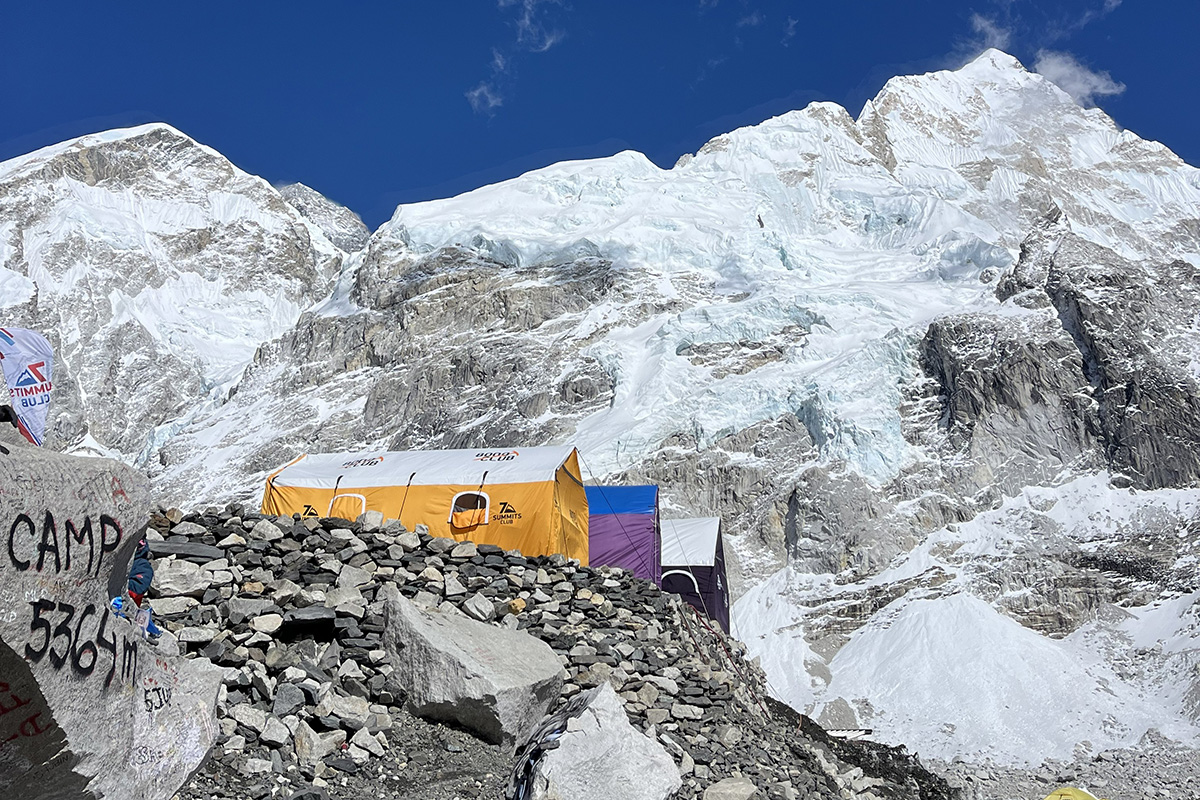
These concerns are reasonable rather than exaggerated, since Everest Base Camp sits at approximately 5,364 metres (17,598 feet) above sea level, while the popular Kala Patthar viewpoint reaches roughly 5,545 metres (18,192 feet). Both elevations sit considerably higher than most trekking destinations across Europe and North America, and the oxygen available to the body drops sharply at that height.
Acclimatisation, for this reason, has to be treated as the priority of the entire trip rather than an optional extra. The trek itself demands no technical mountaineering skill or previous climbing background of any kind. It calls instead for a realistic itinerary, patience with your own pace, and willingness to slow down when your guide advises it.
Which Everest Base Camp Route Works Best for First-Timers?
Several routes lead to Everest Base Camp, and the right choice depends on available time, fitness base, and appetite for extra adventure.
- The Classic Everest Base Camp Trek typically runs 12 to 14 trekking days, depending on the itinerary and transport arrangements.
- The Gokyo Valley and Everest Base Camp Trek usually takes around 15 to 18 days and asks considerably more of the trekker.
- The Everest Three Passes Trek with EBC generally spans 18 to 21 days and ranks among the demanding routes in the Khumbu region.
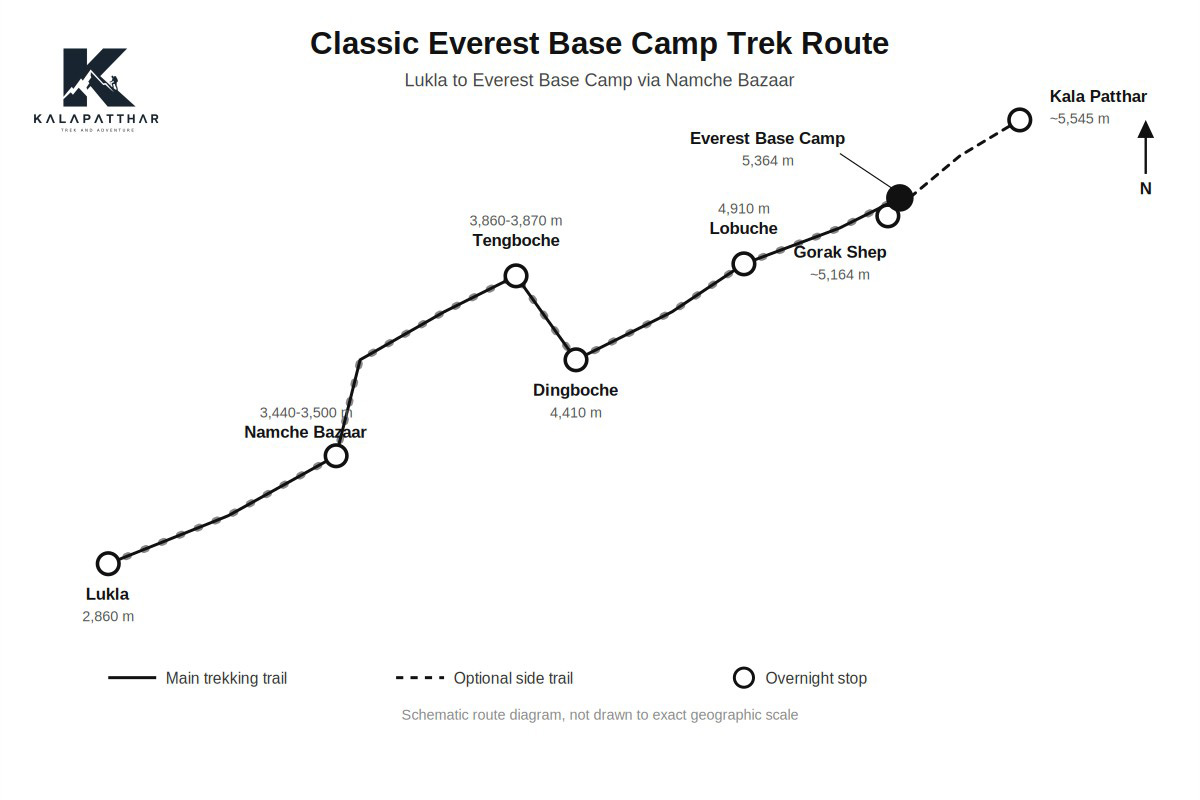
First-time trekkers generally do best on the classic route, ideally with built-in acclimatisation days and one spare day held in reserve. The route follows the Dudh Koshi Valley from Lukla toward Namche Bazaar, then continues through Tengboche, Dingboche or Pheriche, Lobuche, and Gorak Shep before reaching Everest Base Camp. At this altitude, one extra day in the schedule tends to matter more than a few saved hours of walking.
Related Reading: Everest Three Pass Trek
Acclimatisation: The Most Important Part of the Everest Base Camp Trek
If a beginner takes one lesson from this guide, it should be this: do not rush your ascent. Altitude illness affects people regardless of age, gender, or physical fitness, and even trekkers in excellent shape can develop Acute Mountain Sickness if they climb too quickly. Individual susceptibility genuinely varies, and previous experience at altitude helps but never guarantees a symptom-free trip.
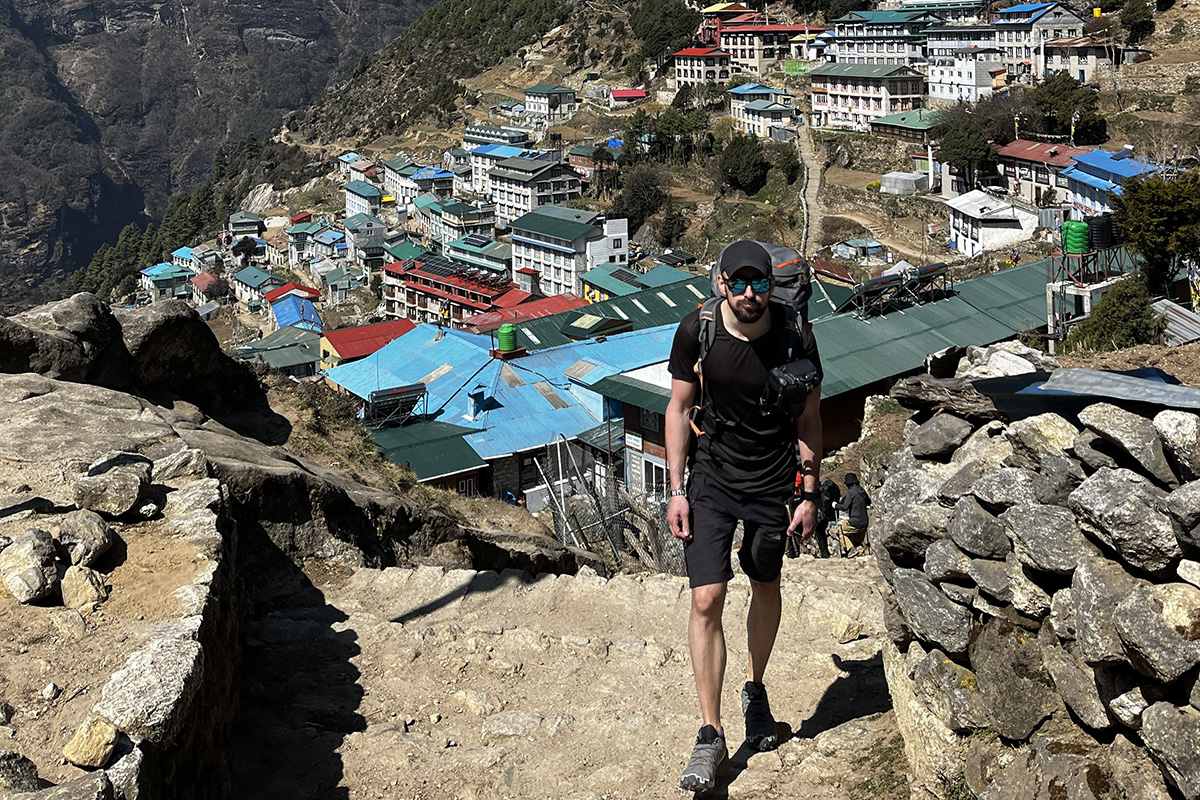
Namche Bazaar (approximately 3,440 to 3,500 metres) functions as the main acclimatisation hub of the Everest region. Most well-built itineraries schedule two nights here, giving trekkers a full day to explore nearby trails rather than pushing higher immediately.
Dingboche (approximately 4,410 metres) serves as the second major acclimatisation point on the classic route.
A second rest day is commonly built in here, usually involving a hike to higher ground followed by a return to Dingboche to sleep. The guiding principle behind all of this is simple: climb high during the day, but sleep at a lower altitude whenever possible.
Once a trekker passes roughly 3,000 metres, established altitude-medicine guidance recommends limiting increases in sleeping altitude to around 500 metres per day.
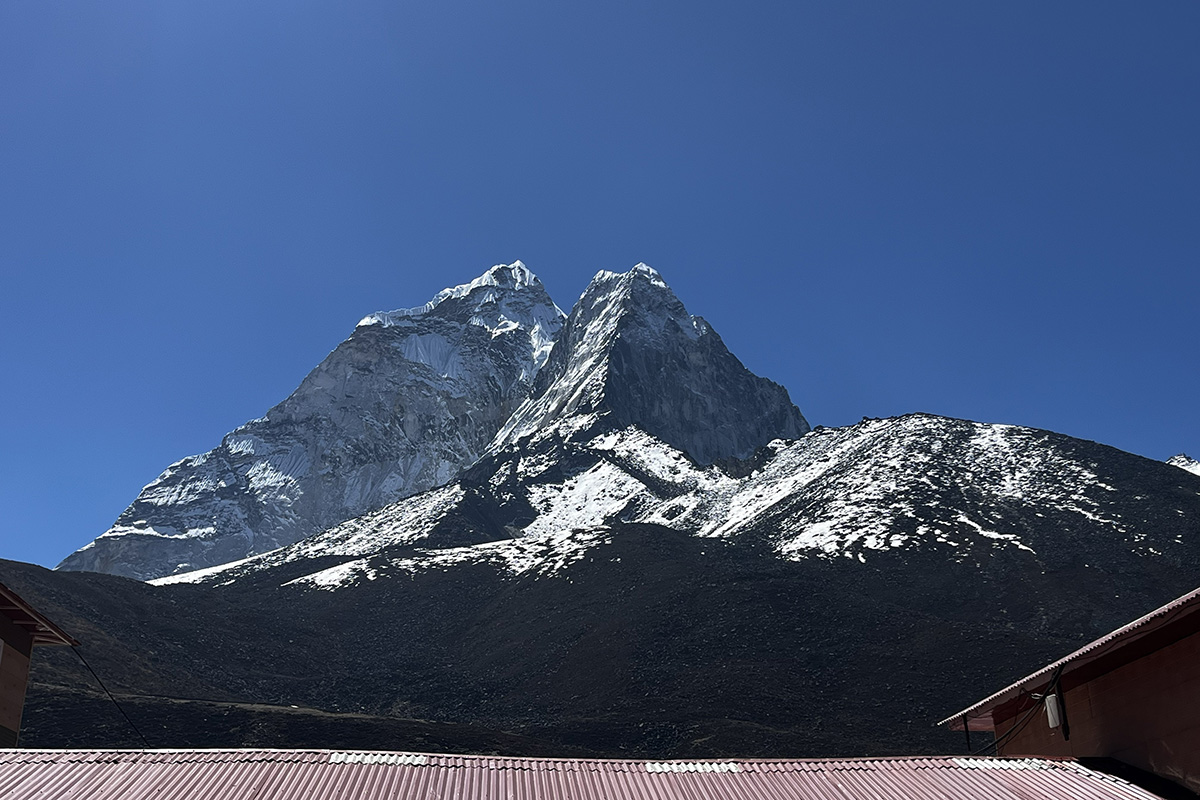
Additional acclimatisation days should be added into the schedule as the trek climbs higher, since individual responses to altitude differ from person to person. If a trekker develops symptoms of altitude illness, continuing to ascend simply because the itinerary calls for it is the wrong response.
A qualified guide should assess the situation carefully, and if symptoms worsen or turn severe, descent becomes the most important treatment available. Building one or two flexible days into your itinerary from the start is a genuinely sensible investment.
Why Acclimatisation Hikes Matter
An acclimatisation day rarely means sitting inside a lodge for a full day without moving. At Namche Bazaar, a typical acclimatisation hike heads toward Syangboche and the Everest View Hotel, with further exploration possible toward Khumjung or Khunde.
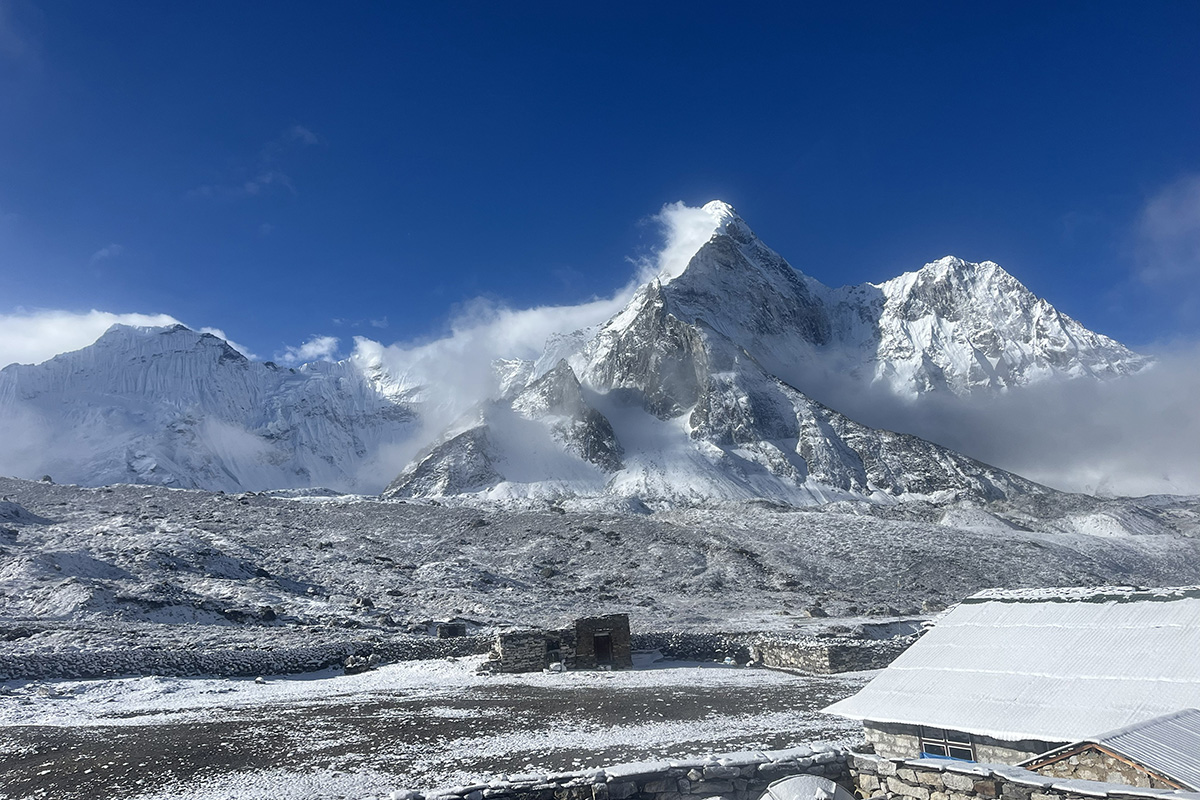
These hikes carry a purpose well beyond sightseeing, giving your body real exposure to thinner air during the day. Returning afterward to a lower village to sleep gives your system a genuine opportunity to adjust. Hypoxaemia tends to be more pronounced during sleep than during waking hours, which is why this pattern places less stress on the body than sleeping higher.
An acclimatisation hike cannot guarantee a good night’s sleep or prevent altitude sickness outright, and individual responses vary considerably. Some trekkers still sleep poorly at Namche despite following a textbook itinerary, while others adjust with surprising speed. The purpose of the hike is simply to give the body its best possible chance to adapt.
How the Trail Ascends: Elevation Profile Explained
A common misconception treats the EBC itinerary as a steady climb of 500 metres every single day. The real elevation profile looks considerably more uneven than that, as the table below shows.
| Location | Approximate Elevation |
| Lukla | 2,860 m |
| Namche Bazaar | 3,440–3,500 m |
| Tengboche | 3,860–3,870 m |
| Dingboche | 4,410 m |
| Lobuche | 4,910 m |
| Gorak Shep | approximately 5,164 m |
| Everest Base Camp | 5,364 m |
| Kala Patthar viewpoint | approximately 5,545 m |
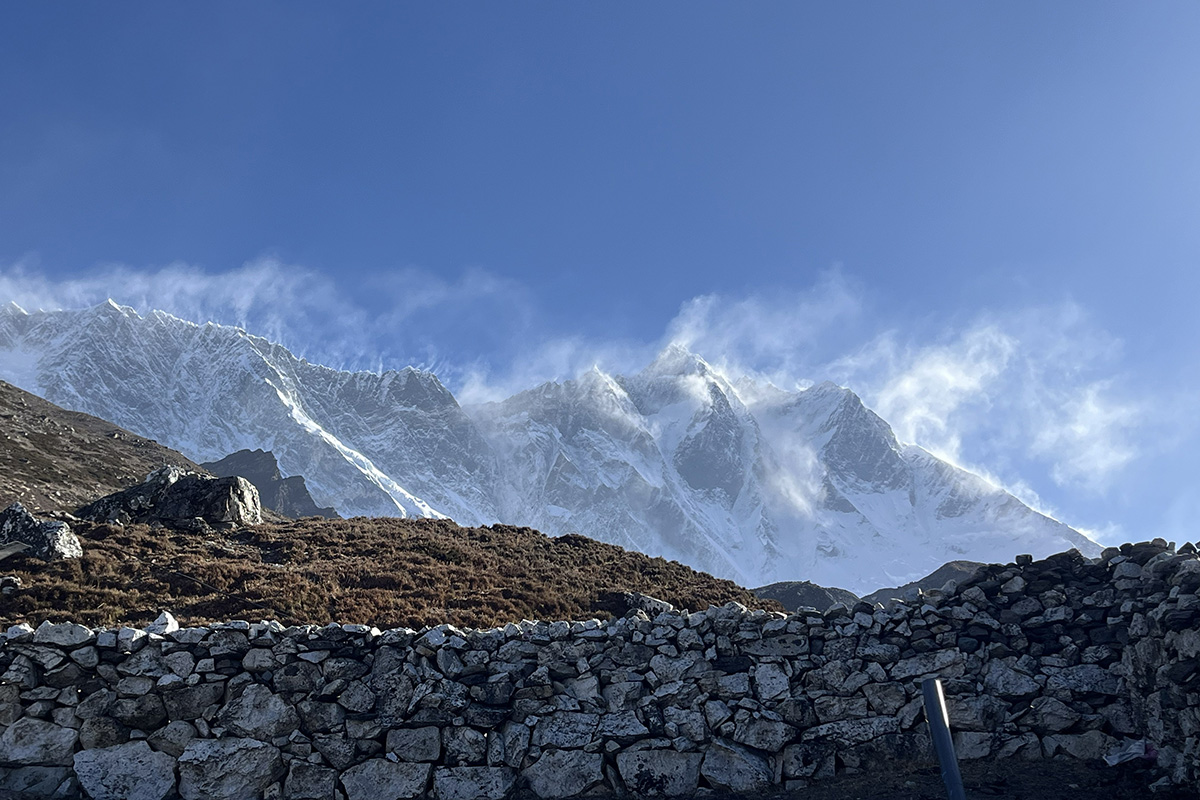
These figures can shift slightly depending on the source, the GPS measurement used, and the precise spot within a village or viewpoint. Some regional guides list Kala Patthar as high as 5,644 metres, so treat any single figure as an approximation rather than a fixed number.
The steepest early elevation gain happens between Lukla and Namche, though most of that climb still stays below 3,500 metres. The bigger concern arrives after Namche, once trekkers begin sleeping progressively higher with each passing night. A well-built itinerary should therefore focus on acclimatisation days rather than simply counting the total number of trekking days.
If the stretch from Tengboche toward Dingboche feels particularly demanding, an experienced guide may choose to stop at Pangboche, at roughly 3,985 metres, instead. There is no prize for reaching the next village first, since the only real objective is arriving safely.
What to Eat and Drink on the Everest Base Camp Trek
The body works considerably harder at altitude, and long walking days demand consistent energy and fluid intake throughout the trek.
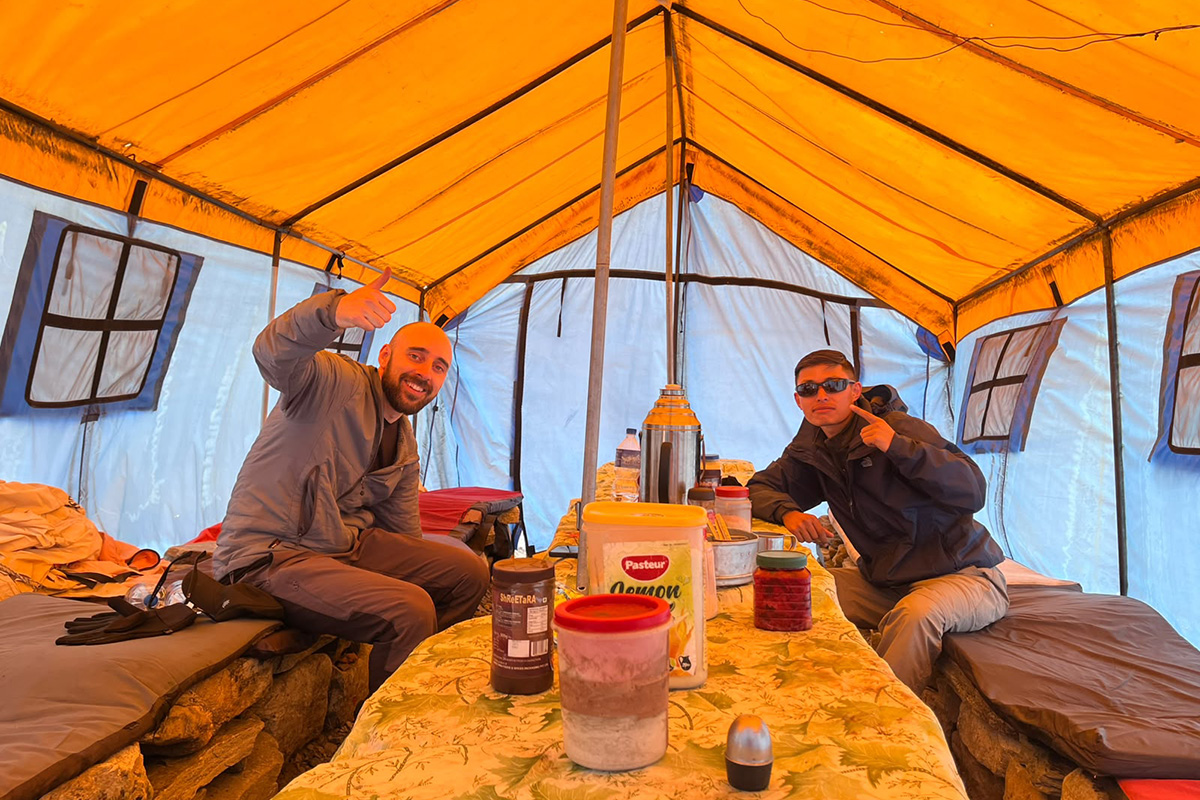
Breakfast typically includes eggs or an omelette, toast with jam or honey, porridge or cereal, and fresh fruit where available. A substantial breakfast provides the fuel needed for a full morning of walking at altitude.
Lunch commonly features pasta or noodles, rice with vegetables, momo, sandwiches, or other carbohydrate-heavy meals.
Dal bhat remains one of the most reliable trekking meals, since it combines carbohydrates, protein, and vegetables and can usually be refilled at most lodges.
Dinner often includes dal bhat, pasta, pizza, rice, noodles, potatoes, or soup, with garlic soup a popular starter in cold conditions.
Snacks worth carrying include almonds, cashews, walnuts, dried fruit, energy bars, and biscuits for quick energy on long stretches.
There is no universal rule for daily water intake, since fluid needs shift with temperature, exertion, altitude, and individual factors. A practical approach involves drinking regularly throughout the day rather than waiting until real thirst sets in. Excessive water intake is not automatically better for the body and can create its own problems at altitude.
Regular coffee drinkers generally do not need to cut caffeine entirely, since a normal intake helps avoid withdrawal headaches that mimic altitude symptoms. Alcohol, on the other hand, is best avoided during acclimatisation, since it contributes to dehydration and interferes with sleep and judgement.
What to Pack: Clothing and Gear for EBC Beginners
Temperatures across the Everest region shift dramatically within a single day, often starting mild and ending well below freezing.
Clothing
- Moisture-wicking base layers
- Thermal underwear
- Fleece or insulating mid-layer

- Down jacket
- Trekking trousers
- Waterproof and windproof outer shell
- Insulated down trousers for higher elevations
Footwear
- Warm trekking socks plus spare pairs
- Broken-in, waterproof trekking boots
Accessories and Extras
- Waterproof gloves
- Warm insulated gloves or mittens
- Woollen hat
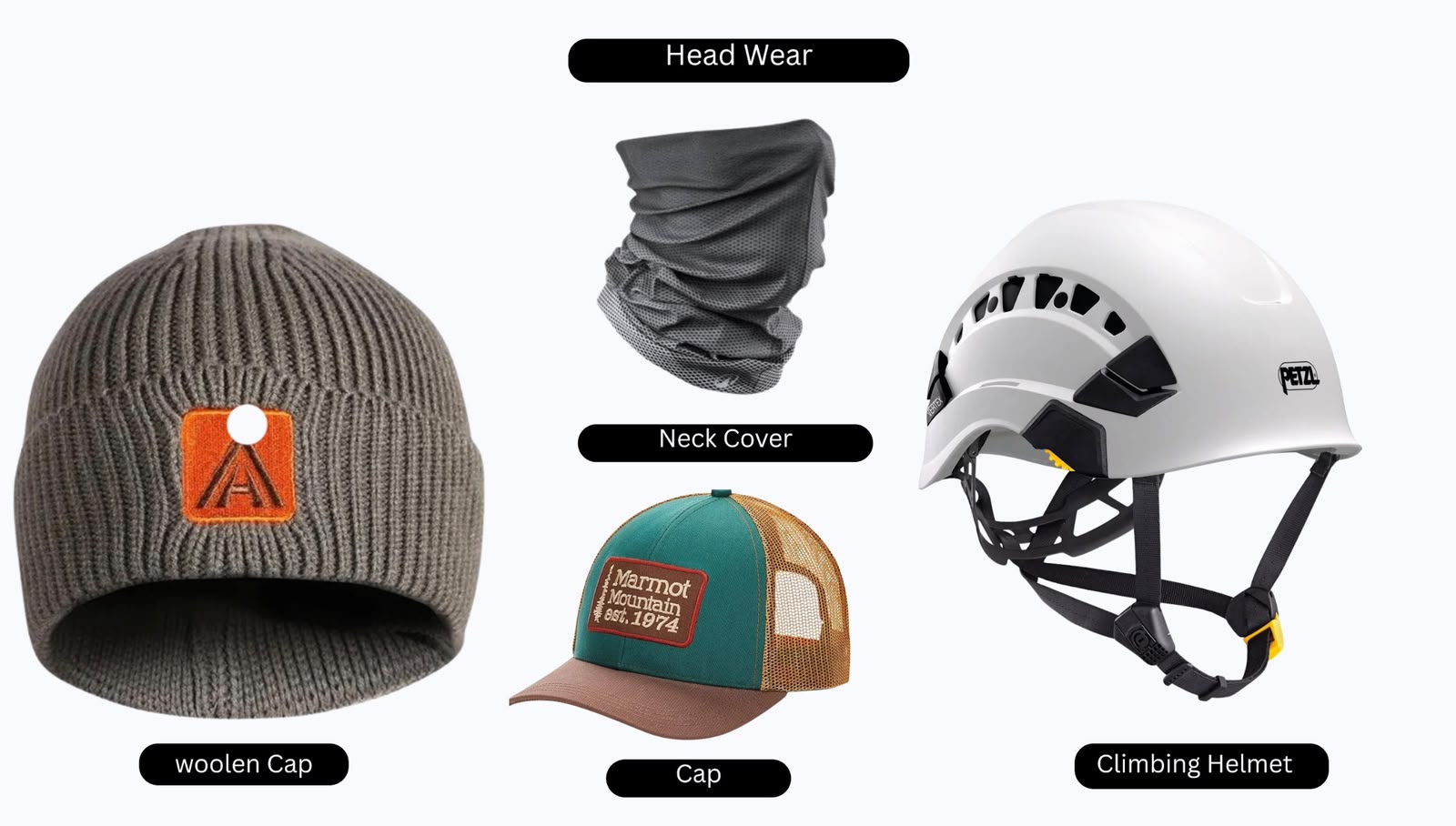
- Sun hat or cap
- Neck gaiter or buff
- Sunglasses with strong UV protection
Health and Safety
- Sleeping bag rated around -10°C to -20°C, since lodge blankets vary in warmth and availability
- Basic first-aid kit and any personal medication
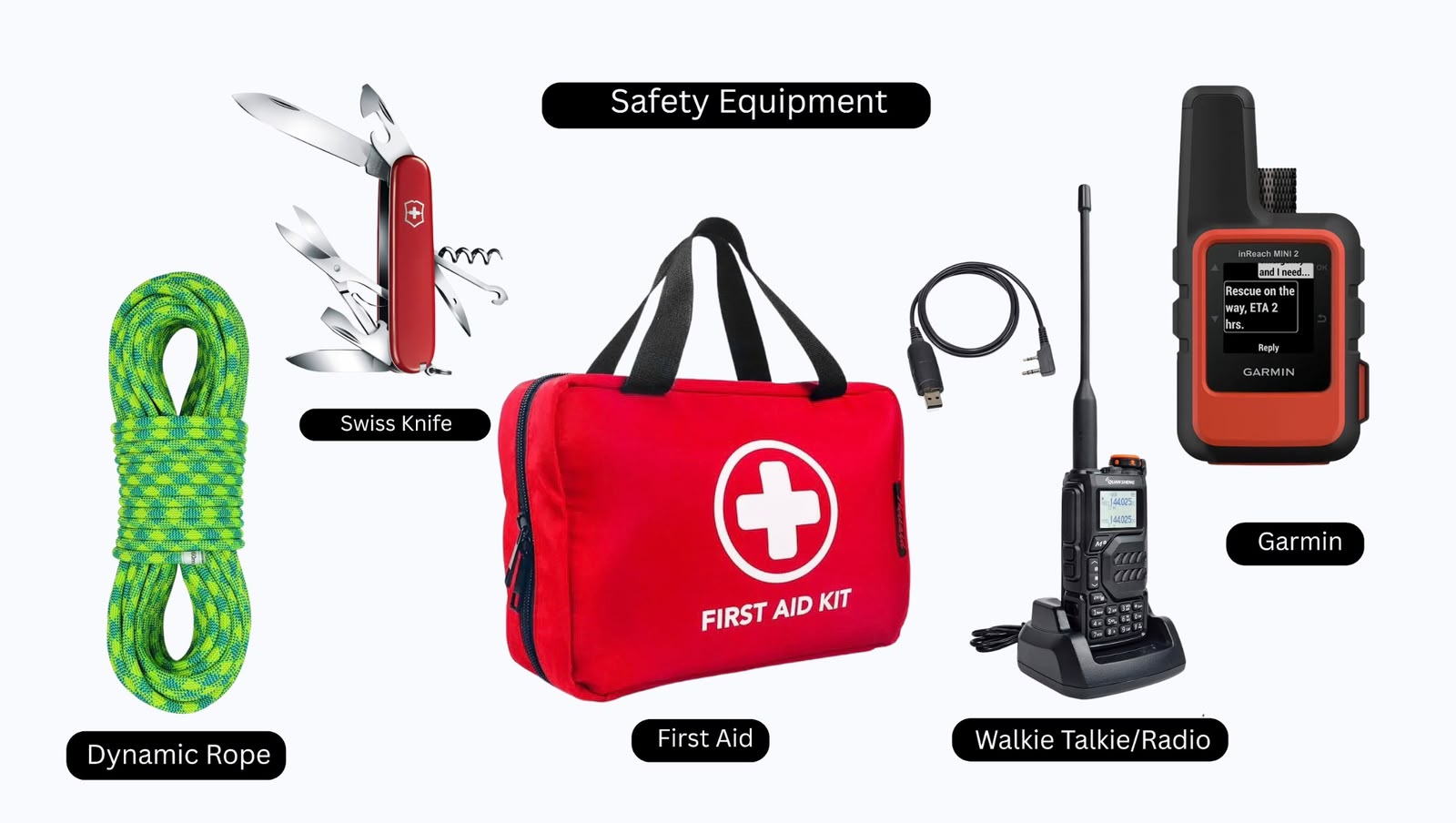
- Water purification tablets or a filtration system as backup
A good-quality down jacket earns its weight in gold at Lobuche, Gorak Shep, and the early-morning climb toward Kala Patthar. A sleeping bag remains strongly recommended even inside teahouses, since blanket quality varies considerably from lodge to lodge.
Do You Need to Be an Athlete for the Everest Base Camp Trek?
Completing this trek successfully does not require professional athletic conditioning or previous mountaineering experience. It does require several hours of daily walking across uneven terrain, with repeated ascents and descents throughout the route.
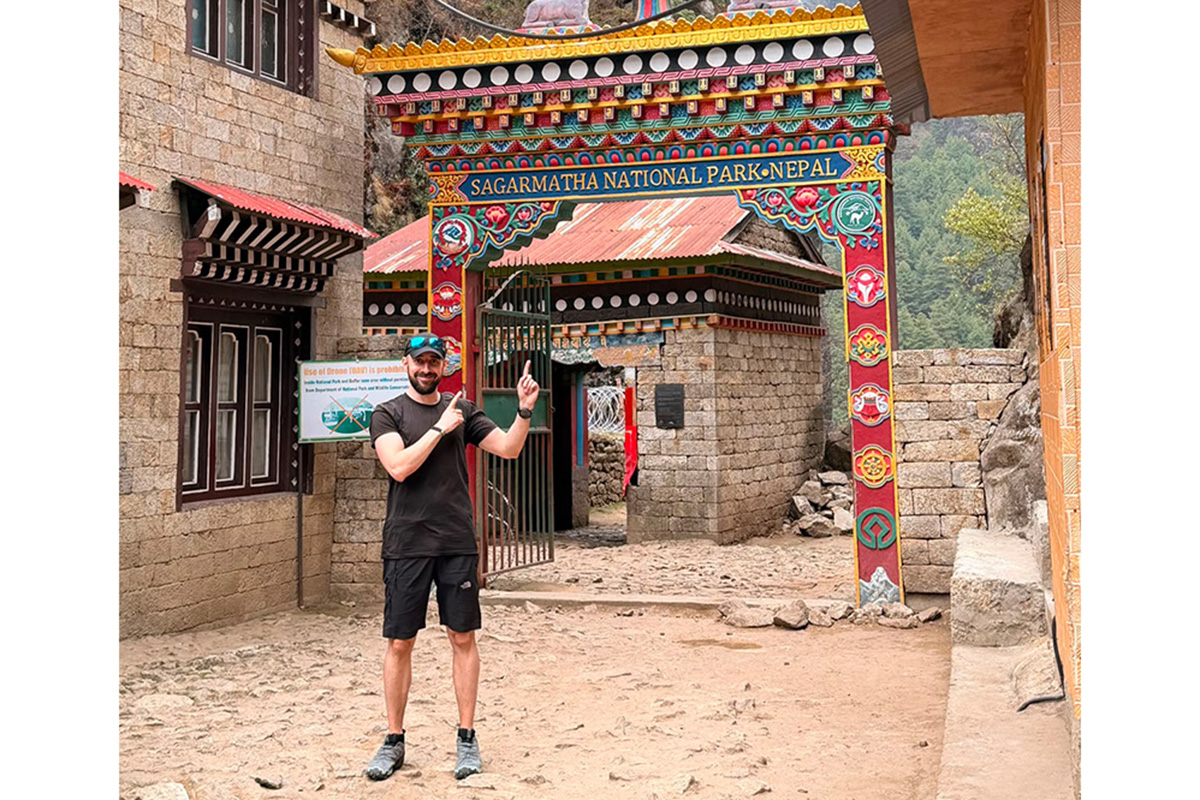
Useful preparation generally includes the following:
- Regular walking or hiking sessions
- Stair climbing for leg endurance
- Cardiovascular exercise several times a week
- Strength training focused on the legs and core
- Practice hikes wearing a loaded backpack
- Longer weekend hikes in the weeks before departure
One point deserves particular emphasis here, since it changes how trekkers should think about their preparation. Fitness helps a trekker cope with the physical demands of the trail, but it does not create immunity to altitude sickness.
Physical conditioning does not determine an individual’s susceptibility to altitude illness in any reliable way. This explains why an extremely fit trekker can still develop AMS while a moderately fit companion acclimatises without issue.
Safety, Health Monitoring and Emergency Evacuation
The Everest region maintains a well-established trekking and rescue network, though it remains a remote high-altitude environment at its core. Rescue services should never be treated as a substitute for responsible trekking decisions made along the way.
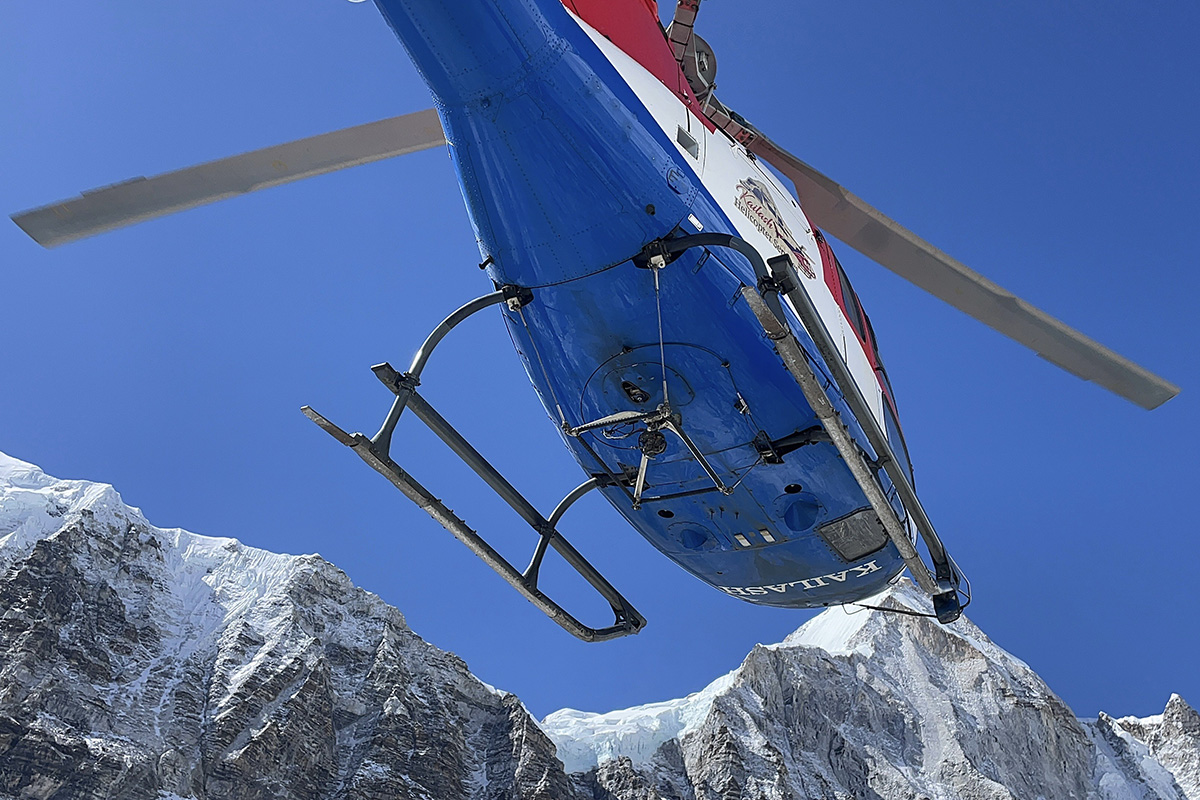
Helicopter evacuation may be possible depending on location, weather, and operational conditions on any given day. Visibility, aircraft availability, and altitude restrictions can all affect evacuation timing, so no operator should promise a fixed rescue window.
Before travelling, confirm that travel insurance specifically covers trekking at the planned altitude, emergency medical treatment, and helicopter evacuation. Coverage should also extend to search and rescue where applicable, repatriation, and the full duration of the trip. Pay close attention to the maximum altitude a policy actually covers, since standard plans often exclude activities above a set elevation.
Also Read: The Complete Guide to Trekking and Mountaineering Insurance in Nepal
Daily Health Checks on the Trek
A professional guide should monitor every trekker throughout the journey, with particular attention once the group climbs above 3,000 metres.
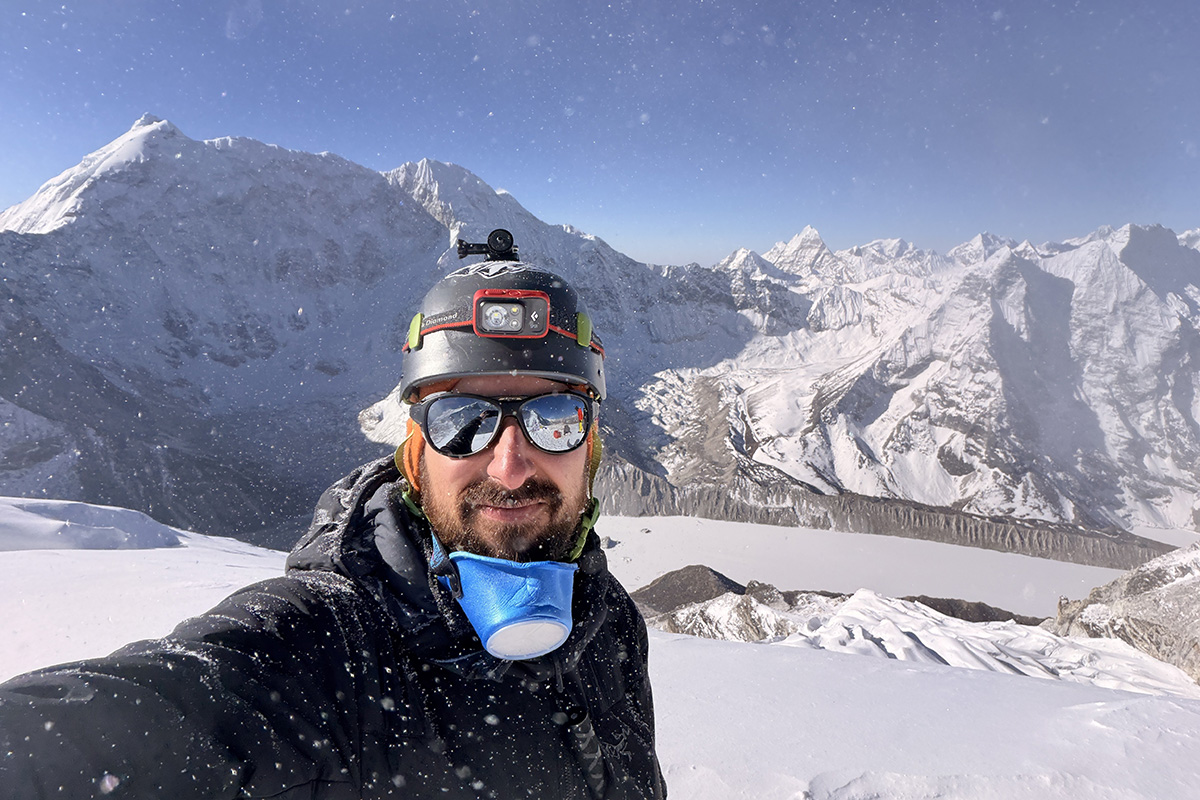
Depending on the operator’s procedures, daily checks typically cover heart rate, oxygen saturation, headache, nausea, dizziness, and general fatigue. A pulse oximeter reading should count as one part of a broader assessment rather than a standalone test for altitude sickness.
Symptoms and how they change over time carry just as much weight as any single reading. Common symptoms of Acute Mountain Sickness include headache, nausea, dizziness, tiredness, and difficulty sleeping through the night.
More serious conditions, including High-Altitude Cerebral Oedema (HACE) and High-Altitude Pulmonary Oedema (HAPE), require urgent medical attention and immediate descent. Trekkers should never continue ascending to sleep higher while experiencing symptoms of altitude illness, since worsening symptoms call for descent without delay.
Listening to Your Body: When to Slow Down
One of the most common mistakes beginners make involves becoming too fixated on the printed itinerary. The mountain does not follow a schedule, and a good trekking company should be ready to adjust the plan whenever it genuinely matters.
That flexibility might mean adding an extra acclimatisation day, walking at a slower pace, or spending an extra night lower down. It can also mean changing the day’s destination entirely, or descending outright if symptoms turn serious.
Even standard EBC itineraries can push some trekkers close to their acclimatisation limits. Building extra days into the schedule often makes the entire journey safer and considerably more enjoyable for everyone involved.
Is Everest Base Camp Really Suitable for Beginners?
Yes, though with one important qualification: Everest Base Camp is a trekking destination, not a technical climbing objective. Reaching it requires no ropes, crampons, or previous mountaineering experience of any kind. The altitude, however, remains genuinely serious, since at 5,364 metres, Everest Base Camp sits within extreme high-altitude territory.
The journey there demands proper acclimatisation regardless of how fit a trekker happens to be. A beginner who follows a carefully paced itinerary, eats and drinks appropriately, and listens closely to an experienced guide stands an excellent chance of completing the trek safely.
A trekker who is very fit but rushes between altitudes carelessly can still develop serious altitude illness despite that conditioning. Preparation, acclimatisation, patience, and responsible decision-making at every stage of the trip matter more than fitness alone.
Planning Your First Everest Base Camp Trek: Key Tips to Remember
A first Himalayan trek should not be shaped by fear of the numbers printed on an altitude chart. A trekker never reaches 5,364 metres in a single day, and no well-built itinerary asks anyone to try. The route carries trekkers gradually from Lukla through Namche Bazaar, Tengboche, Dingboche, Lobuche, and Gorak Shep, giving the body real time to adapt.

A short list of habits makes the biggest difference on the trail: go slowly, acclimatise properly, eat well, and drink regularly each day. Sleep as well as conditions allow, dress appropriately for the cold, and stay closely attuned to both your guide and your own body.
Ignoring symptoms of altitude sickness to keep a printed itinerary on schedule remains one of the most preventable mistakes on this trek. Everest Base Camp rewards patience rather than speed, and the journey passes through some of the most remarkable mountain landscapes on earth. With the right preparation behind it, this trip can become the first step into a lifetime of Himalayan trekking.
You May Also Prefer Reading: Everest Base Camp Trek
No previous Himalayan experience is required, though some hiking background helps you feel more comfortable during the long daily walking hours on uneven terrain.
The classic route typically runs 12 to 14 days, and beginners benefit from an itinerary with generous acclimatisation days and one spare day built in.
Everest Base Camp sits at approximately 5,364 metres, while the nearby Kala Patthar viewpoint reaches roughly 5,545 metres, the highest point most trekkers visit.
Yes, since physical fitness does not determine individual susceptibility to altitude illness, even strong and experienced trekkers can develop AMS if they ascend too quickly.
Stop ascending immediately, inform your guide, and be prepared to rest or descend if symptoms worsen, since descent remains the most effective treatment.
Yes, a sleeping bag rated around -10°C to -20°C is strongly recommended, since blanket quality varies considerably between lodges at higher elevations.
Yes, a licensed guide has been mandatory on this route since April 2023, and checkpoints such as Monjo now enforce the rule strictly.
Trekkers need the Sagarmatha National Park Permit and the Khumbu Pasang Lhamu Rural Municipality fee, since TIMS is no longer required on the route.
A standard guided package generally costs between USD 1,000 and 2,200 per person, depending on group size, season, and service level.
Most teahouses offer paid Wi-Fi through the Everest Link network, though speeds slow considerably and coverage becomes unreliable near Everest Base Camp itself.
Spring, from March to May, and autumn, from September to November, offer the clearest skies and most stable weather for this trek.
0 Comment