

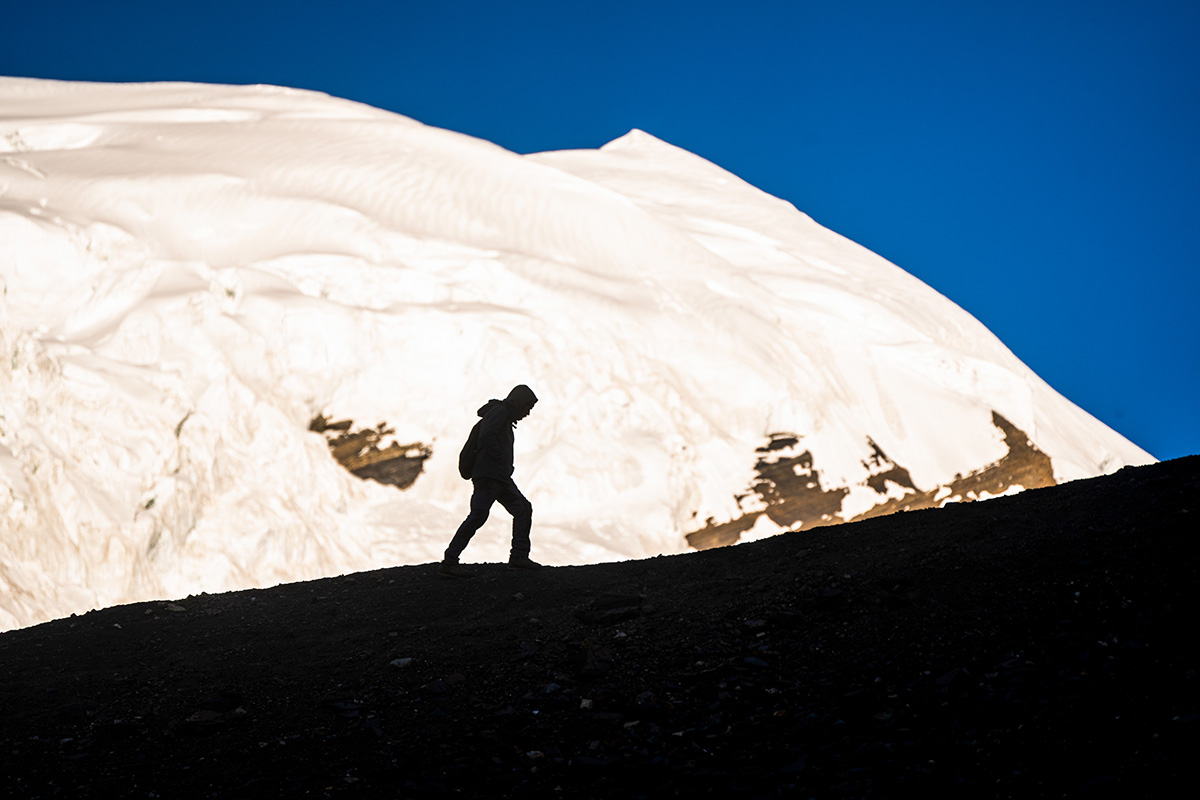

Himlung Himal climbing Expedition Guide: Climbers preparing for an 8,000-meter summit need a mountain that teaches real high-altitude decision-making without the extreme risk of Everest or K2. Himlung Himal, rising to 7,126 meters in the remote Nar-Phu Valley of Manang District, has become the answer for exactly that group of climbers. The peak sits close to the Tibetan border, and its route stays largely non-technical while still demanding genuine altitude fitness and glacier travel skills.
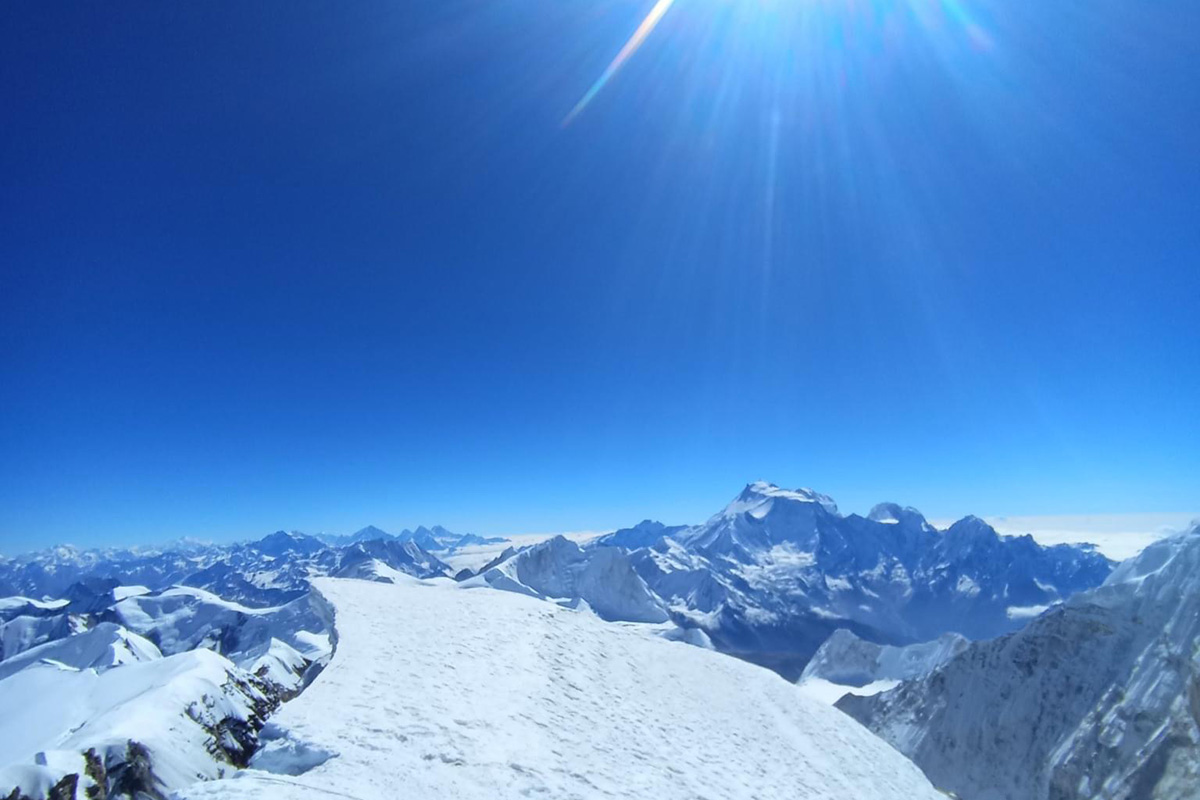
Himlung Himal Quick Facts
| Fact | Detail |
| Height | 7,126 meters (23,379 feet) |
| First ascent | October 3, 1992, by a Japanese team led by Akio Koizumi |
| Location | Nar-Phu Valley, Manang District, near the Tibetan border |
| Grade | Alpine PD+, non-technical but requiring glacier travel skill |
| Best season | Autumn (September to November) and spring (April to May) |
| Success rate | 65 to 80 percent in favorable seasons |
| Duration | 16 to 24 days from Kathmandu to Kathmandu |
| High camps | Three, at approximately 5,450 m, 6,000 m, and 6,350 m |
Why Himlung Himal Works as a Training Peak for 8,000m Climbers
Himlung Himal earns its reputation through a combination of factors rather than any single one. The Nar-Phu Valley only opened to foreign climbers in 1992, the same year as the first ascent, which explains why the route remains far quieter than the Khumbu. Guides carry a 1:1 Sherpa-to-climber ratio on most expeditions, and many of these Sherpas hold multiple Everest summits between them.
A few factors drive its rising popularity among climbers stepping up toward Everest, Manaslu, or K2:
- A 65 to 80 percent summit success rate, among the highest of any 7,000-meter peak in Nepal
- A flat, non-glaciated Base Camp at 4,850 to 4,900 meters, unlike peaks where Base Camp sits directly on ice
- Improved teahouse infrastructure through the Nar-Phu Valley in recent years
- Growing industry discussion around requiring 7,000-meter experience before an Everest attempt
You May Also Prefer Reading: Our Manaslu Expedition package page, for climbers weighing Himlung against a full 8,000m objective
Himlung Himal Route and High Camp Structure
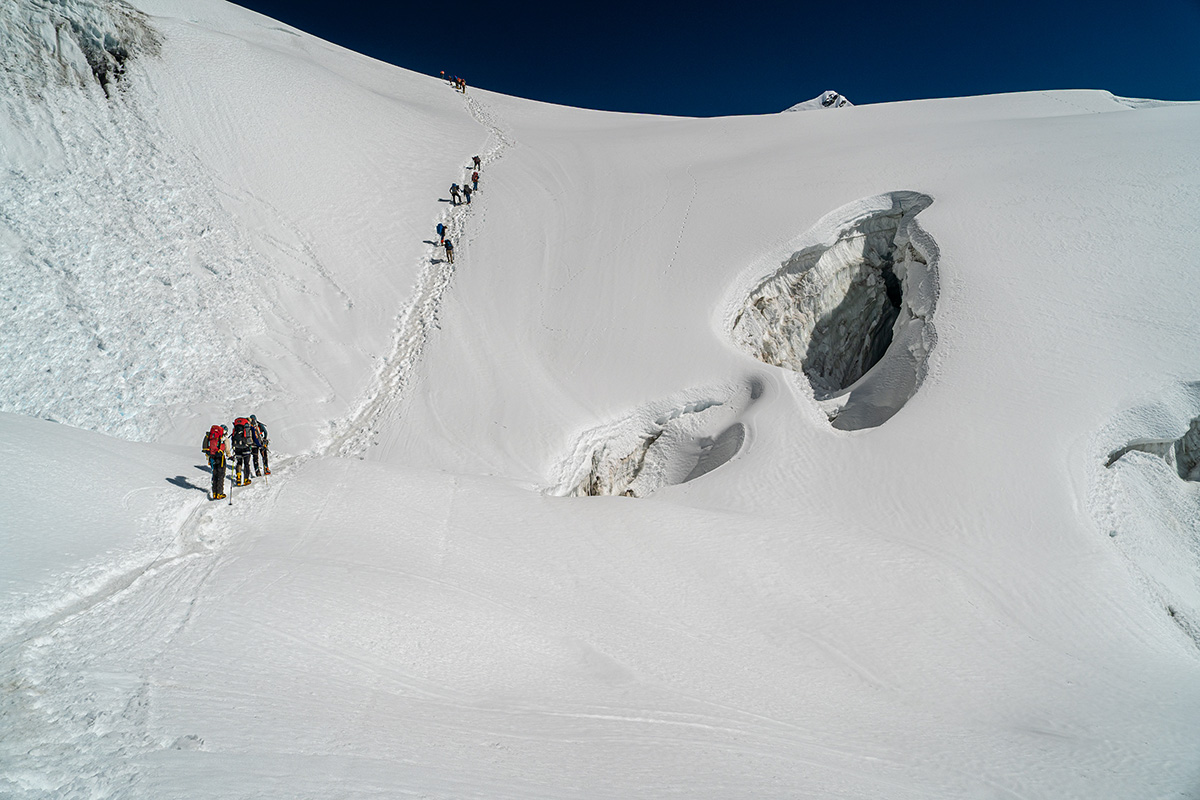
The standard route follows the mountain’s northwest ridge, mixing snow, ice, and glacier travel without any sustained technical climbing. Fixed ropes cover the steeper sections between camps, and ladders bridge the more heavily crevassed terrain near Camp I.
| Camp | Altitude | Terrain |
| Base Camp | 4,850 to 4,900 m | Flat, grassy plateau free of glacier hazards, easing early acclimatization |
| Camp I | 5,350 to 5,450 m | Steep snow and ice slope through a crevassed section, ladders and fixed ropes in place |
| Camp II | 6,000 to 6,100 m | Mostly rocky; crampons needed only near the top; easier plateau walking near 5,700 m beforehand |
| Camp III | 6,350 to 6,400 m | More technical, sustained snow slopes with fixed ropes, sometimes bypassed |
| Summit push | 7,126 m | Defined ridgeline at 30 to 40 degree slopes; crampon technique and fixed rope climbing required |
Best Season to Climb Himlung Himal
Autumn, running from September to November, is the most reliable season, with October standing out as the single best month for stable weather and clear summit views. Spring, from April to May, offers fewer climbers and warmer high camps, though permit costs run higher during this window due to demand.
| Season | Base Camp temperature | Advantage | Royalty fee |
| Autumn (Sep to Nov) | 3 to 8°C daytime, minus 15 to minus 20°C at summit | Most stable weather, clearest visibility | USD 250 |
| Spring (Apr to May) | 5 to 10°C daytime | Fewer climbers, warmer high camps | USD 500 |
Summer monsoon rain and winter cold make the route dangerous or impassable outside these two windows, so both remain the only recommended climbing seasons.
Nar-Phu Valley Trekking Route and Culture
The approach begins with a drive from Kathmandu to Besisahar, continuing on rougher roads to Koto at 2,600 meters, the entry point into the restricted Nar-Phu Valley. From Koto, the trail passes through Meta, Kyang, and Phu Gaon at 4,080 meters, one of the highest permanently inhabited villages in Nepal and home to a Tibetan-origin community still practicing traditional Tibetan Buddhism.
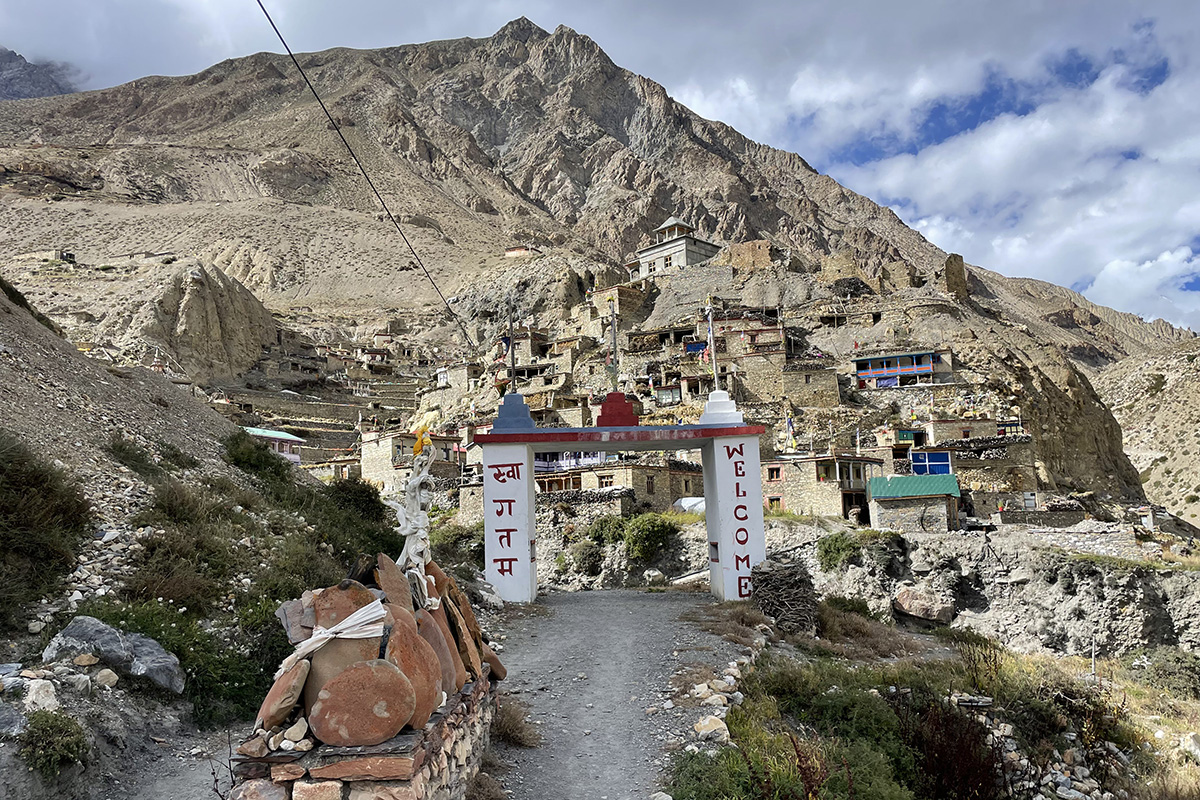
Blue sheep and Himalayan tahr appear regularly on the cliffs above Phu Gaon, and the valley’s centuries-old stone architecture has remained largely unchanged since it opened to outsiders. The trek passes through the Gates of Phu, a narrow gorge carved into vertical cliffs, before reaching Base Camp on a wide, rocky plateau.
Himlung Himal Climbing Expedition Guide: Training and Experience
For the Himlung Himal Expedition, prior experience on peaks such as Island Peak (6,189 m), Lobuche Peak (6,119 m), or Mera Peak (6,476 m) is strongly recommended, though not strictly mandatory for a well-prepared climber. Comfort with crampon use, fixed rope technique, and multi-day altitude exposure matters considerably more than raw climbing background.
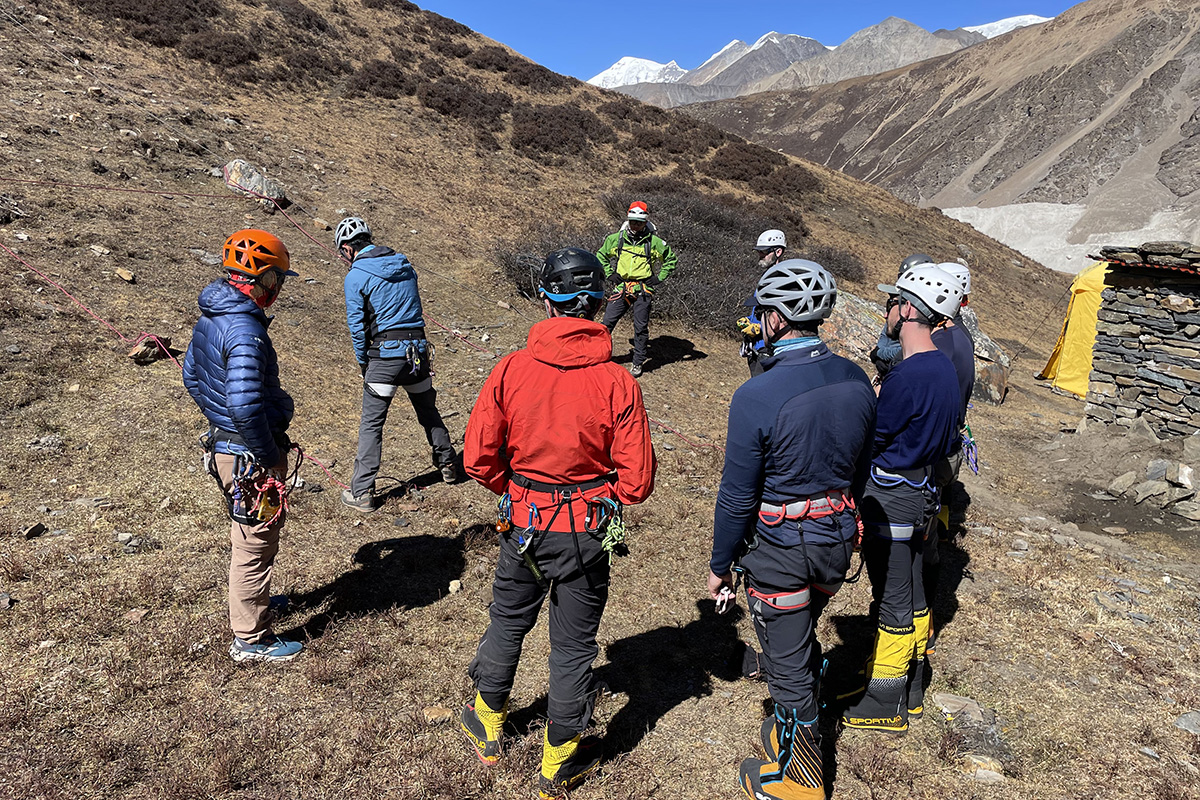
Physical preparation should include:
- Cardiovascular training four to five times per week in the months before departure
- Stair climbing or hill sessions with a weighted pack of 15 to 20 kilograms
- Extended hikes of 6 to 8 hours with sustained elevation gain
- Practice sessions with crampons, an ice axe, and fixed rope technique where possible
Himlung Himal Expedition Cost and Permits
Most professionally run Himlung Himal packages fall between USD 5,500 and USD 9,500, with the price shifting based on group size, season, and the level of Sherpa support included.
| Group size | Cost per person |
| Solo or private expedition | USD 9,000 to USD 10,000 |
| Group of 2 to 3 | USD 7,500 to USD 8,500 |
| Group of 4 to 6 | USD 6,500 to USD 7,500 |
| Group of 7 to 10 | USD 5,500 to USD 6,500 |
Three permits are required for this expedition, and all figures below reflect confirmed 2026 government rates:
| Permit | Cost |
| Himlung Himal climbing royalty | USD 500 (spring), USD 250 (autumn), approximately USD 125 (winter or monsoon) |
| Nar-Phu Restricted Area Permit | USD 100 per week (spring and autumn), USD 75 per week (winter and monsoon) |
| Annapurna Conservation Area Permit | Approximately USD 25 (NPR 3,000 for foreign nationals) |
A mandatory Liaison Officer fee, typically USD 250 to USD 400 depending on group size, and staff insurance covering Sherpa guides and Base Camp crew are additional fixed costs. Kalapatthar Trek and Adventure processes every permit before departure from Kathmandu at official government rates, with no added handling fees.
Also Read: The Complete Guide to Trekking and Mountaineering Insurance in Nepal
Essential Climbing Gear for Himlung Himal
A Himlung Himal kit should be treated with the same seriousness as gear for an 8,000-meter expedition, given the summit-day cold.
- A high-altitude down suit rated to minus 30 degrees Celsius, plus a four-season sleeping bag rated minus 30 to minus 40 degrees Celsius
- Double climbing boots compatible with step-in crampons, along with 12-point steel crampons
- An ice axe of 60 to 70 centimeters, a climbing harness, jumar, descender, and both locking and non-locking carabiners
- A climbing helmet, glacier goggles rated for Category 4 UV protection, and a headlamp with at least 200 lumens
- A satellite communication device, since mobile coverage disappears above Koto and Phu Gaon
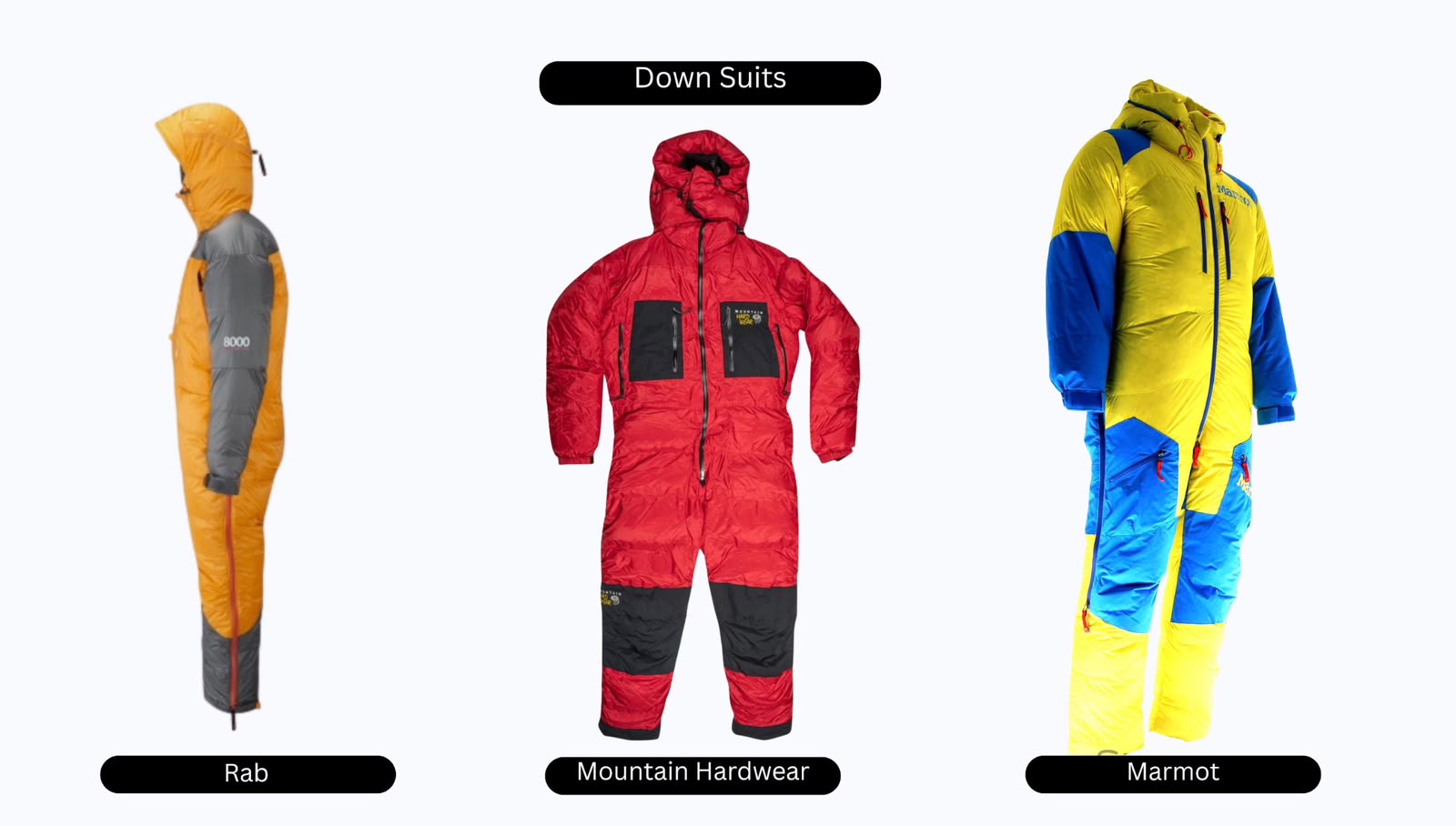
We at Kalapatthar Trek and Adventure provide complimentary rental of high-altitude down suits and sleeping bags as part of every expedition package, and technical gear can also be rented in Kathmandu for USD 100 to USD 300 depending on quality and duration.
What Kalapatthar Trek and Adventure Includes
Kalapatthar Trek and Adventure Pvt. Ltd. runs this expedition with a set of standards built specifically for high-altitude climbing.
- Guides with 5 to 7 years of experience in high-altitude Himalayan climbing, first aid trained
- A 1:1 Sherpa-to-climber ratio for camp setup, load carrying, and summit guidance
- All government permits and royalties, processed in advance with no hidden fees
- A 5-star hotel in Kathmandu for three nights, plus full Base Camp services including dining, kitchen, medical, and shower tents
- Starlink Wi-Fi at Base Camp and VHF radio communication throughout the climb
- Emergency evacuation coordination, backed by mandatory insurance covering altitudes above 6,000 meters
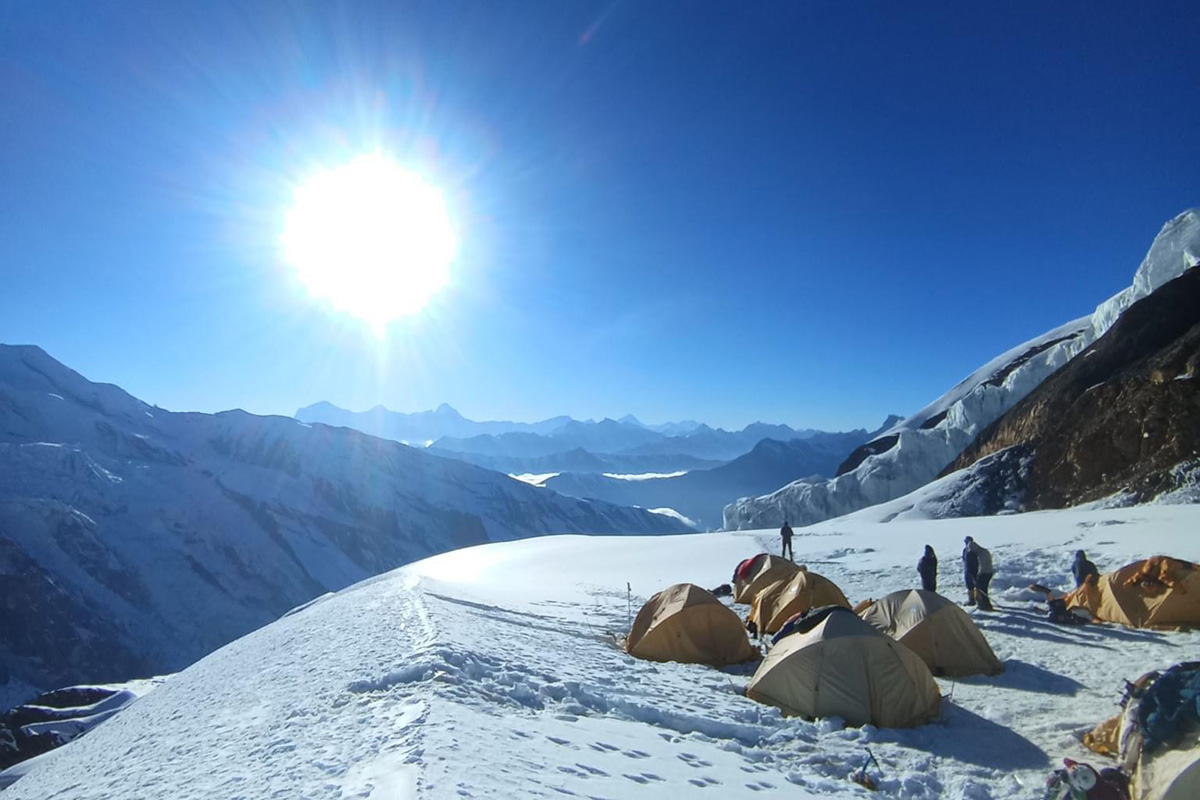
A Himlung Himal climbing expedition typically requires 16 to 24 days, depending on the acclimatisation schedule and weather conditions. A few days may be delayed due to weather, or the expedition may be completed earlier if conditions are favourable.
Upon arrival in Kathmandu, the expedition usually begins the next day or after one day of preparation, which includes a climbing gear check, briefings, and sightseeing. Once the journey starts, it takes one day of driving and four days of trekking to reach Base Camp. After arriving at Base Camp, climbers typically spend 3 to 5 days acclimatising and begin rotations up to Camp II at 6,000 meters, which can be completed in 3 to 4 days.
After acclimatisation, the team waits for a suitable weather window for the summit push. Depending on weather conditions and individual acclimatisation, climbers may choose to continue gradually or attempt the summit in one push, in consultation with their Sherpa guides. If conditions are favourable, it generally takes about three days to summit and return safely to Base Camp. The return to Kathmandu takes another 3 days, including two days of trekking and one day of driving.
The autumn season, from September to November, is the best time to climb Himlung Himal. During autumn, the weather is generally stable with clear skies, moderate cold, and a lower chance of snowfall. October and November are the two most favourable months for the expedition.
The spring season from April to May is also suitable for climbing; however, compared to autumn, there are fewer climbers, and the summit success rate is slightly lower due to a higher chance of snowfall and less stable weather. Most climbers choose the autumn season to attempt and successfully summit Himlung Himal.
The most budget-friendly Himlung Himal climbing packages with full-board services typically start at USD 5,500. This cost usually includes all necessary government permits, Kathmandu hotel accommodation for 3 nights, ground transportation, trekking logistics, and Base Camp and high-camp services, including Sherpa guide support.
If you prefer to climb with an IFMGA-certified guide and want a premium, luxury, or VIP-level expedition, the cost generally starts from USD 9,000 to 12,000 and can go up to USD 20,000 or more, depending on the level of service, expedition style, and support provided.
Most reputable companies offer Himlung Himal climbing packages in the range of USD 5,500 to 8,000. If a company offers a package below USD 5,000, it is advisable to be cautious, as the service level may be very poor and may not guarantee a safe, successful, or meaningful expedition.
Yes, hiring a climbing Sherpa or guide is mandatory for the Himlung Himal expedition. The Sherpa or guide sets up higher camps, carries essential personal and group equipment, and takes care of climbers throughout the expedition. Most climbing Sherpas speak basic to good English and are first-aid trained.
For Himlung Himal, it is important to choose a professional and experienced Sherpa, preferably someone who has successfully climbed peaks such as Everest, Manaslu, Ama Dablam, and Himlung Himal itself. A well-trained Sherpa with strong leadership and decision-making skills greatly increases safety and summit success. Only experienced and professional Sherpas can guide you safely to the summit, so make sure to confirm your climbing Sherpa or guide before or immediately after booking your expedition.
If you have a higher budget, you may choose to climb with an IFMGA- or UIAGM-certified guide, who offers international guiding standards but at a significantly higher cost. For Himlung Himal, however, experienced Sherpa guides are generally sufficient and highly effective. Climbing with an IFMGA or UIAGM guide typically adds USD 3,500 to 5,000 to the expedition cost.
Prior climbing experience is helpful but not mandatory for the Himlung Himal expedition. Even if you are new to mountaineering, you can start with Himlung Himal; however, you should plan to spend more time on training and acclimatisation during the climb.
If you are new to high-altitude climbing or would like to build experience before attempting Himlung Himal, it is strongly recommended to complete a pre-expedition training climb. Peaks such as Mera Peak at 6,476 meters, Lobuche Peak at 6,119 meters, or Chulu Far East at 6,059 meters are excellent choices for gaining altitude experience, learning basic mountaineering skills, and improving acclimatisation before the Himlung Himal expedition.
Yes, it is strongly recommended to have travel and mountaineering insurance that covers climbing above 6,000 meters, including emergency rescue and helicopter evacuation, while climbing Himlung Himal. Insurance helps protect you from unexpected financial loss in case of accidents, illness, or evacuation during the expedition. More importantly, it can be life-saving, as proper insurance allows the expedition operator to arrange a timely helicopter rescue when needed.
For Himalayan climbing expeditions, especially for Himlung Himal, we recommend choosing reliable providers such as Global Rescue, British Mountaineering Council (BMC), or ASC 360 Insurance. You can purchase insurance directly through their official websites. Insurance costs vary depending on the provider and the level of coverage, particularly the altitude limit and rescue services.
These insurance plans typically cover medical treatment and emergency evacuation. In the event of an emergency, you can either arrange a rescue helicopter through your expedition operator and submit a claim later, or inform the insurance company directly so they can initiate the rescue process on your behalf.
Although the height of Himlung Himal is impressive at 7,126 meters, in terms of technical difficulty, it is considered a moderate-level climbing peak. Basic physical fitness and fundamental mountaineering knowledge are generally sufficient for the ascent. Whether or not you have prior climbing experience is not a strict requirement, but proper preparation is always beneficial. With good planning, favourable weather conditions, strong teamwork, and experienced Sherpa support, the expedition can be successfully completed.
The climbing route of Himlung Himal involves glacier travel, snow slopes at 30 to 45 degrees, fixed rope sections on steeper terrain, ladder crossings over crevasses, and basic ice climbing near the summit. While it is not highly technical, climbers should be proficient in crampon use, ice axe techniques, rope travel, and high-altitude climbing skills.
Essential clothing includes a high-altitude down suit rated for minus 30 degrees Celsius, a four-season sleeping bag rated for minus 30 to minus 40 degrees Celsius, proper high-altitude climbing boots compatible with step-in crampons, base layers, a down jacket, down pants, a warm hat, and thermal wear. These are mandatory for protection against extreme cold conditions at high altitude.
Technical equipment includes an ice axe, crampons, carabiners (both locking and non-locking, at least 3 each), ascender (jumar), descender, climbing harness, and helmet. Fixed ropes, snow stakes, and ice screws are typically provided by the expedition operator.
Gear and clothing preparation should be taken very seriously, similar to an 8,000-meter expedition.
Himlung Himal is considered one of the colder peaks in the Himalayas, so proper protection is essential, including a warm hat, summit gloves, inner gloves, and trekking gloves. Kalapatthar provides complimentary rental of high-altitude down suits and sleeping bags rated for extreme cold as part of the expedition package.
Yes, climbing gear and equipment can be hired in Kathmandu. If you prefer to buy new gear, there are several official international brand stores such as The North Face, Rab, and Marmot in Thamel. You can also choose reliable Nepali outdoor brands such as Sonam, Everest Outfit, Sherpa, and Wild Yak, which are popular for high-altitude clothing and widely used in expeditions.
For technical equipment, there are generally no official Nepali manufacturers, so climbers should rely on international brands such as Black Diamond, Petzl, and Mammut, which are trusted for safety and performance in high-altitude mountaineering. Rental costs in Kathmandu typically range from USD 100 to 300 for a complete technical gear set, depending on quality and duration.
Yes, fixed ropes are installed by the expedition operator’s rope-fixing team. Each climber is required to contribute a rope-fixing fee, usually around USD 200 to 250 per person. The rope-fixing team normally fixes the route from Camp I up to the summit, covering approximately 500 to 700 meters of fixed rope on the steeper sections.
In some sections, fixed ropes are not necessary, while in others, ladders or additional safety measures may be required. All essential route preparation and safety installations are handled by the rope-fixing team in coordination with the climbing Sherpas.
Climbing Himlung Himal with a certified guide or professional Sherpa is strongly recommended for safety and logistical reasons. However, highly experienced alpinists with extensive high-altitude and technical climbing backgrounds may choose to climb independently.
Even for independent climbers, it is not possible to climb completely unsupported. You must work with a registered expedition operator to arrange mandatory base camp services, including permits, liaison officer coordination, base camp management, and logistics.
From Base Camp, experienced climbers may follow their own climbing plan without personal guide support, depending on their competence and risk tolerance. From a safety and success perspective, especially for first-time 7,000-meter climbers or those unfamiliar with the region, a fully guided expedition is the safest and most practical option.
The success rate of Himlung Himal expeditions is generally high compared to other 7,000-meter peaks, often ranging between 65 per cent and 80 per cent in good seasons. Favourable factors include a relatively straightforward climbing route, good acclimatisation opportunities through the Nar-Phu Valley, and stable weather windows during spring and autumn.
Success largely depends on proper preparation, fitness level, acclimatisation, weather conditions, and the support of experienced guides and a well-organised expedition team. Climbers who complete the recommended acclimatisation rotations up to Camp II significantly improve their summit chances.
On Himlung Himal, climbers typically establish two high camps above Base Camp. Camp I sits at approximately 5,450 meters on the glacier, offering a safe platform above the rocky moraine. Camp II is located at around 6,100 to 6,200 meters on the upper mountain, providing a strategic position for the summit push.
Depending on climbers’ experience, physical condition, and acclimatisation needs, the Sherpa team may set Camp II at approximately 6,300 to 6,400 meters to shorten and ease the summit push. For slower climbers or those requiring additional acclimatisation, an extra high camp above Camp II may be recommended to improve safety and increase summit success.
The major risks and hazards while climbing Himlung Himal include altitude-related illnesses such as Acute Mountain Sickness, High Altitude Pulmonary Oedema, and High Altitude Cerebral Oedema due to rapid elevation gain above 6,000 meters. Severe cold, strong winds, and sudden weather changes can affect summit attempts and increase the risk of frostbite. Other hazards include crevasses, steep snow slopes, and ice sections, particularly above Camp I.
Although considered relatively safe, avalanche risk, fatigue, and poor acclimatisation can pose serious challenges. Proper acclimatisation, including acclimatisation rotations up to Camp II at approximately 6,200 meters, can significantly reduce the risk of altitude-related illnesses. Climbers should maintain adequate hydration with a minimum of 4 to 5 litres per day, consume nutritious and hygienic food, follow a well-paced ascent schedule, and monitor daily weather reports from the Himalayan meteorology service.
Climbing with an experienced professional Sherpa or certified guide further enhances safety by ensuring correct route selection, timely decision-making, and effective risk management, all of which contribute to a safer and more successful ascent.
Yes, a Restricted Area Permit is required for the Himlung region. However, climbers holding a valid Himlung Himal climbing permit do not need to pay separately for the Restricted Area Permit, as it is issued free of charge and included with the climbing permit.
If you plan to trek only up to Himlung Himal Base Camp without a climbing permit, you must obtain and pay for the Restricted Area Permit separately. The RAP is strictly mandatory, issued by the Department of Immigration, Nepal, and applicants must present their original passport when obtaining the permit. Kalapatthar processes all permits before departure from Kathmandu at official government rates with no handling fees added.
During the autumn season, the royalty fee for Himlung Himal is USD 400 per climber, while in the spring season it is USD 800 per climber. In addition, a Liaison Officer fee is mandatory and generally costs USD 250 to 400, depending on group size. Insurance for Sherpa guides and Base Camp staff is also required and typically costs USD 350 to 400, depending on the number of staff.
Climbers must obtain the Annapurna Conservation Area Permit, which costs NPR 3,000 for foreign nationals and NPR 1,000 for SAARC nationals. TIMS cards are not required for mountaineering expeditions, as climbers travel under a climbing permit. A garbage deposit is mandatory but fully refundable and is managed by the expedition operator, so climbers do not need to pay it separately.
After summiting Himlung Himal, climbers descend via the same route used for ascent, following fixed ropes back through Camp II and Camp I to Base Camp. The descent is physically demanding due to fatigue and altitude effects, requiring careful movement on snow and ice sections.
Most climbers descend to Camp II or Camp I on summit day, depending on weather conditions and individual strength, and complete the descent to Base Camp the following day. The return journey to Kathmandu then continues with two days of trekking and one day of driving.
Yes, Himlung Himal is widely considered suitable for climbers attempting their first high-altitude 7,000-meter expedition. The mountain has a relatively straightforward route, moderate technical difficulty, and good acclimatisation opportunities through the Nar-Phu Valley.
With proper physical preparation, prior experience using crampons and ice axes, and support from experienced guides and Sherpa teams, first-time high-altitude climbers can safely gain valuable Himalayan expedition experience on Himlung Himal. The three-day technical training program at Base Camp further prepares climbers with essential skills before the summit push.
Compared to other 7,000-meter peaks, Himlung Himal is considered moderately difficult and relatively less technical. The climbing route mainly involves snow slopes and glacier travel with limited steep ice sections. This makes it easier than more technical peaks like Baruntse at 7,129 meters, Mount Putha at 7,246 meters, or Pumori at 7,161 meters, while still demanding strong fitness, proper acclimatisation, and basic alpine climbing skills.
As a result, Himlung Himal is often chosen as a training peak for climbers preparing for higher Himalayan objectives such as Everest at 8,848 meters or Manaslu at 8,163 meters.
A standard Himlung Himal expedition package typically includes climbing permits and government royalties, Kathmandu hotel accommodation for 3 nights, Restricted Area Permit, and Annapurna Conservation Area Permit. It covers Base Camp services, including personal dome tents with heated bedding, dining tent, kitchen tent, medical facility, shower tent, toilet tent, solar and generator power, and Wi-Fi connectivity. The package includes accommodation and meals during the trek, Sherpa support at a 1:1 ratio, route fixing, and group climbing equipment.
The package also includes Liaison Officer arrangements, staff insurance, medical kits, and emergency coordination. Airport transfers, domestic transport, and porter services are included. Personal climbing gear, rescue insurance, and summit bonuses are excluded. Kalapatthar provides a complete cost breakdown before booking with no hidden fees.
Helicopter evacuation or charter costs from Himlung Himal to Kathmandu are approximately USD 4,500 to 5,000 from Base Camp. From Camp I, the cost is around USD 6,000, and from Camp II, approximately USD 7,500. These are full charter costs for the helicopter. If the helicopter cost is shared with one additional climber, the per-person cost can be reduced by approximately 50 per cent.
From Base Camp, helicopters normally carry two passengers plus one government officer, as the area is classified as a restricted region. These costs must be covered by the climber’s personal travel insurance policy, which is mandatory for the expedition.
During a Himlung Himal expedition, communication is generally reliable but limited. Along the trekking route, mobile phone signals are available at a few points after Koto, and Phu Gaon has a relatively good phone signal. However, internet access is very limited, as local lodges usually do not provide Wi-Fi, and mobile data often does not work.
At Base Camp, Kalapatthar provides Starlink Wi-Fi, offering fast and stable internet, weather permitting. VHF radios are used for internal communication between Base Camp, Sherpa teams, and climbers on the mountain. Above Base Camp, satellite phones are commonly used for emergency and scheduled calls. Overall, communication on Himlung Himal is now manageable, allowing climbers to stay in touch with family and offices during the expedition.
0 Comment