Mera Peak Climbing with Hinku Valley Trek

0 (0 Reviews)
From: €0
0
(0 review)
Check
Duration

18 Days

Tour Type

Daily Tour

Group Size

10 people

Languages

___

About this tour

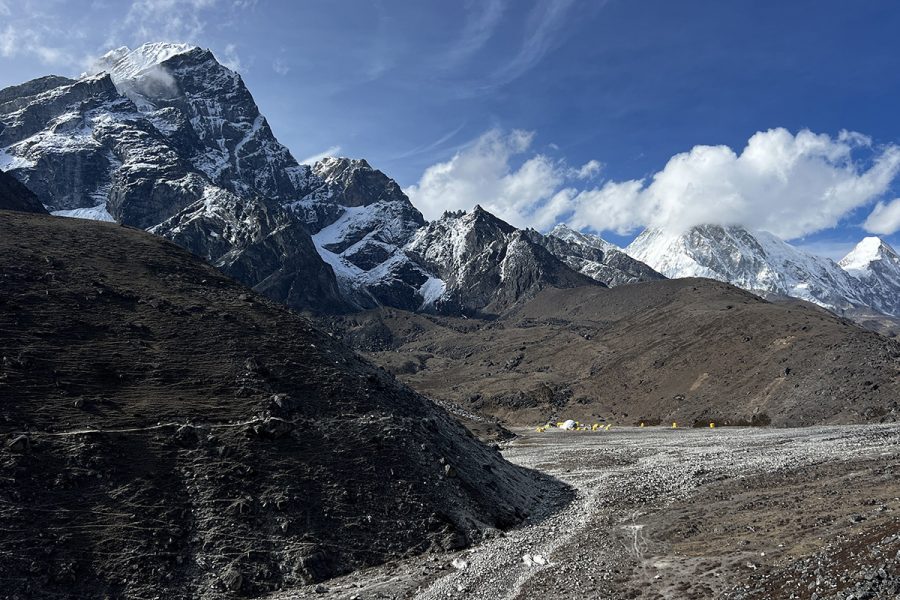
Mera Peak stands as the highest trekking peak in Nepal at 6,476 meters, first climbed on May 20, 1953, by Colonel Jimmy Roberts and Sen Tenzing, just weeks after Everest itself was summited for the first time. This trip follows the remote Hinku Valley through Makalu Barun National Park, a route that sees fewer than 500 trekkers a year compared to the tens of thousands who walk the main Everest Base Camp trail. Along the way, the landscape shifts from rhododendron forest and traditional Sherpa and Rai villages to high glaciers and a final snow dome ascent.

This itinerary is built around a dedicated training day at Khare, where rope handling, crampon practice, and ice axe technique get real hands-on attention before the summit push begins. Two reserve days are built into the schedule as well, giving weather genuine room to cooperate on a route where the summit push depends entirely on clear conditions.

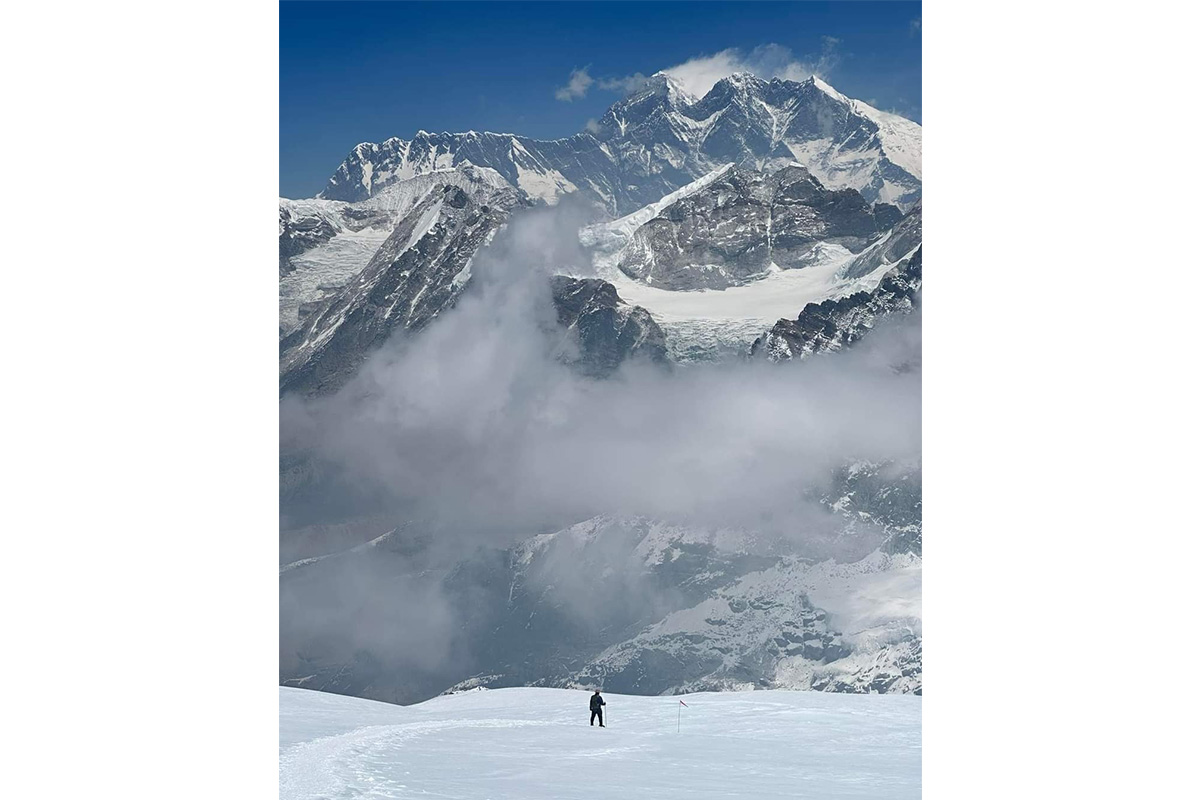
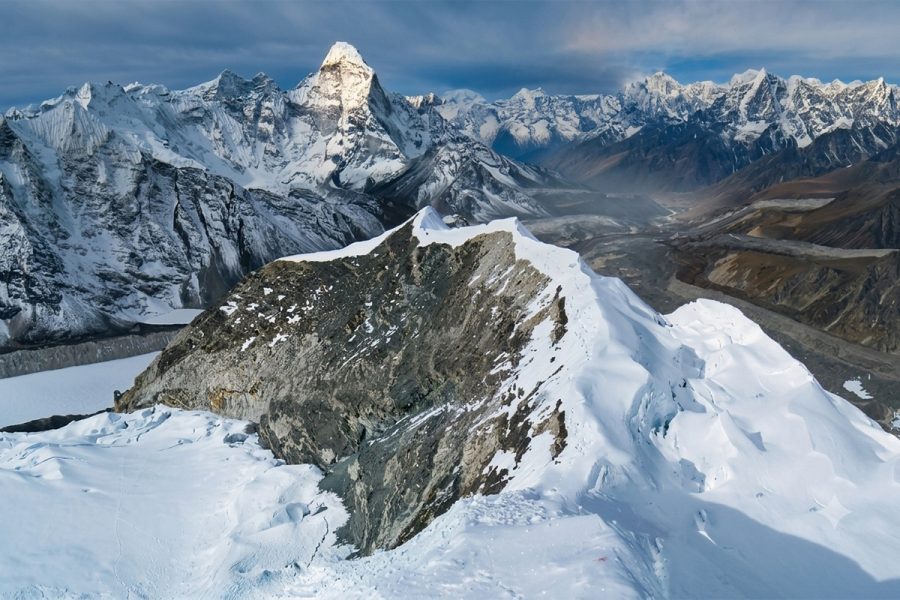
Licensed climbing guides holding Nepal Mountaineering Association certification manage this trip from Kathmandu through the summit and back, with daily health monitoring tracking your oxygen saturation, pulse rate, and temperature throughout. From the summit itself, five of the world’s highest peaks come into view in a single sweep: Everest, Kanchenjunga, Lhotse, Makalu, and Cho Oyu.

The Route Through the Hinku Valley to Mera Peak

A flight to Lukla opens the trip, followed by a quieter trail through Paiya, Panggom, and Ningsow that stays well clear of the crowded EBC route. The path enters Makalu Barun National Park before climbing steadily through Kothe and Thaknak, where the forest gives way to alpine terrain, and Mera Peak first comes into view.

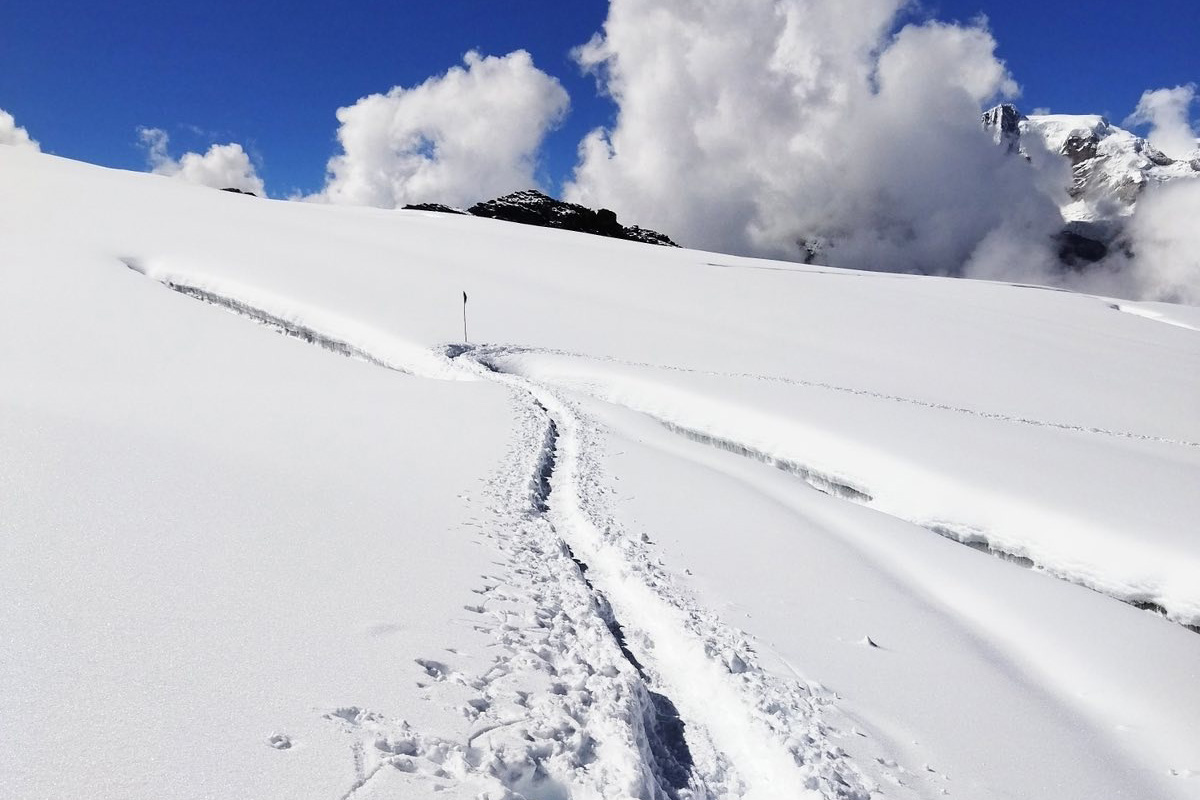
Khare serves as both the last village and the training ground, where a full day of technical instruction prepares you for the glacier and snow dome ahead. From Khare, the route climbs to Mera High Camp at 5,800 meters, set directly on the moraine beneath the peak, before the pre-dawn summit push itself.

After the descent, the trail crosses Zatrwa La Pass on the return route, rejoining the main trail network before the final flight back from Lukla to Kathmandu.

Why Choose Kalapatthar?

  • A full training day at Khare covering crampon use, rope handling, and ice axe technique
  • Twice-daily health monitoring, tracking oxygen saturation, pulse rate, and temperature
  • Climbing guides with 5 to 7 years of Everest and Hinku Valley experience and NMA certification
  • A dedicated climbing Sherpa for every two climbers on summit day itself
  • Two built-in reserve days, giving the summit push real flexibility against weather
  • All three required permits processed before departure, with no added handling fees
  • Complimentary four-season sleeping bag and down jacket rental, rated to -20°C
  • Emergency evacuation planning and helicopter rescue coordination included as standard
Flora and Fauna Along the Hinku Valley Trail
Below 3,000 meters, the trail passes through dense forest of rhododendron, pine, oak, and bamboo along the Hinku Valley between Lukla and Kothe, with the Himalayan monal displaying its plumage on forest slopes each spring. Makalu Barun National Park protects over 3,000 species of flowering plants across this lower zone alone. Between 3,000 and 4,500 meters, juniper and dwarf rhododendron take over as the trail approaches Kothe and Thaknak, where Himalayan tahr appear regularly on the rocky slopes above the tree line. Red pandas are documented in the bamboo zones of the lower valley, with the best sighting chances in early morning or late afternoon during spring and autumn. Above 4,500 meters, vegetation disappears almost entirely into alpine scrub and eventually rocky moraine near Khare and High Camp, where Himalayan griffon vultures and alpine choughs remain the most consistent company on the higher stretches of trail.
Mera Peak Trip Difficulty Level
This trip carries a strenuous, moderately technical rating, requiring good physical fitness along with basic mountaineering skills for the summit section. Daily walking runs 4 to 7 hours across remote mountain trails, rocky moraine, and glacier terrain, with the summit push standing as the most physically demanding day of the entire trip. The most demanding sections are the climb from Khare to Mera High Camp, gaining over 750 meters on steep glacier terrain, and the summit push itself, which runs 8 to 12 hours round trip and finishes with a snow dome ascent at roughly 50 degrees using fixed ropes and jumar technique. At least two to three months of preparatory training beforehand, including regular stair climbing with a weighted pack, makes a genuine difference on summit day.
Best Time for the Mera Peak Trip
Spring (March to May) brings mild temperatures and stable trail conditions, with rhododendron blooms visible in the lower forest sections below Kothe and generally clear skies giving reliable views from the summit. Autumn (September to November) stands as the most reliable season, with dry trails and strong mountain visibility from High Camp and the summit itself. October offers the most consistent weather for the ascent to 6,476 meters. Winter (December to February) is not recommended for this expedition, since summit temperatures can drop to minus 25 or minus 35 degrees Celsius and deep snow can make the glacier and summit slopes genuinely dangerous. Monsoon (June to August) brings heavy rain and slippery trails to the lower sections, with the climbing route itself becoming hazardous due to falling rocks and wet ice conditions.
Permits and Documentation for the Mera Peak Trip
Three separate permits are required for this expedition, and Kalapatthar Trek & Expedition Pvt. Ltd. processes all of them in full before departure from Kathmandu, at official government rates with no added handling fees.
  • Mera Peak Climbing Permit: USD 350 for spring, and USD 175 for autumn, winter, and summer, payable to the Nepal Mountaineering Association
  • Makalu Barun National Park Entry Permit: NPR 3,000 per person, approximately USD 25, supporting conservation across the Hinku Valley
  • Khumbu Pasang Lhamu Rural Municipality Permit: approximately NPR 2,000 per person, collected at the entrance to the region
  • A refundable garbage deposit of USD 500 per team is required and returned upon bringing all waste back from the mountain
  • A licensed climbing guide with NMA certification is legally required for any Mera Peak summit attempt
Accommodation and Food on the Trip
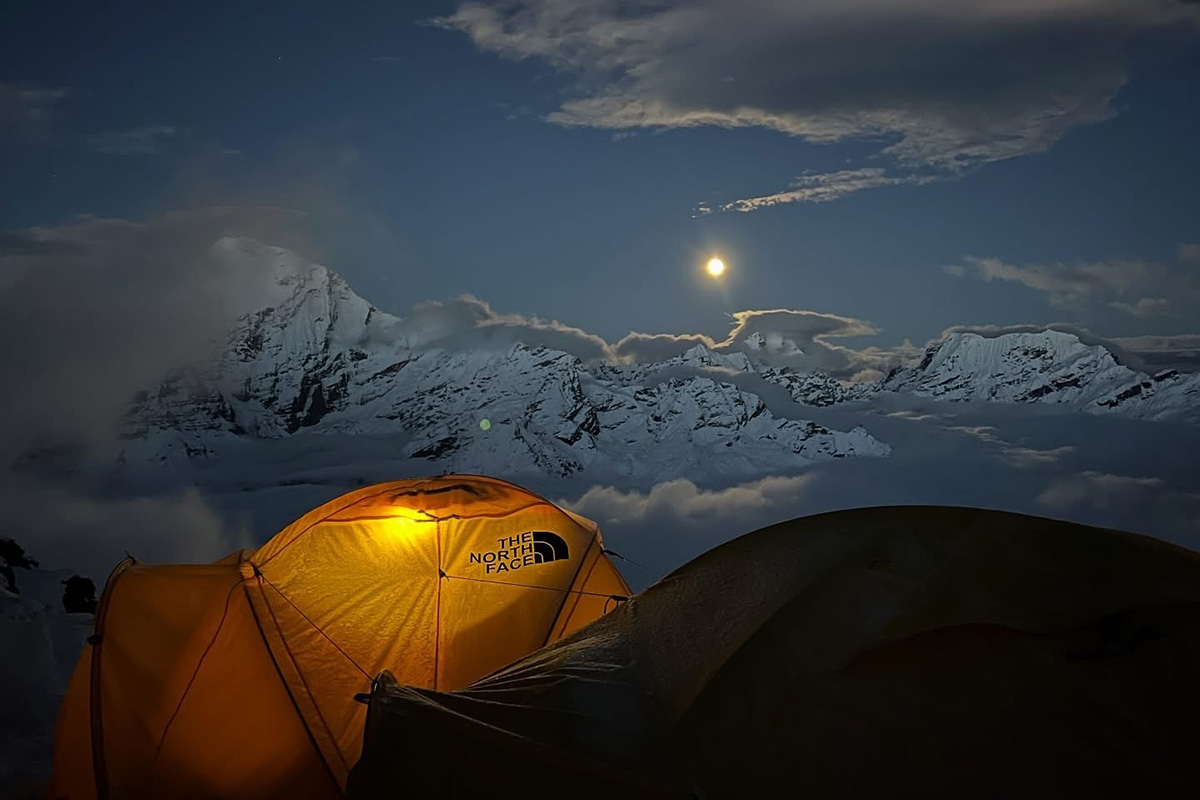
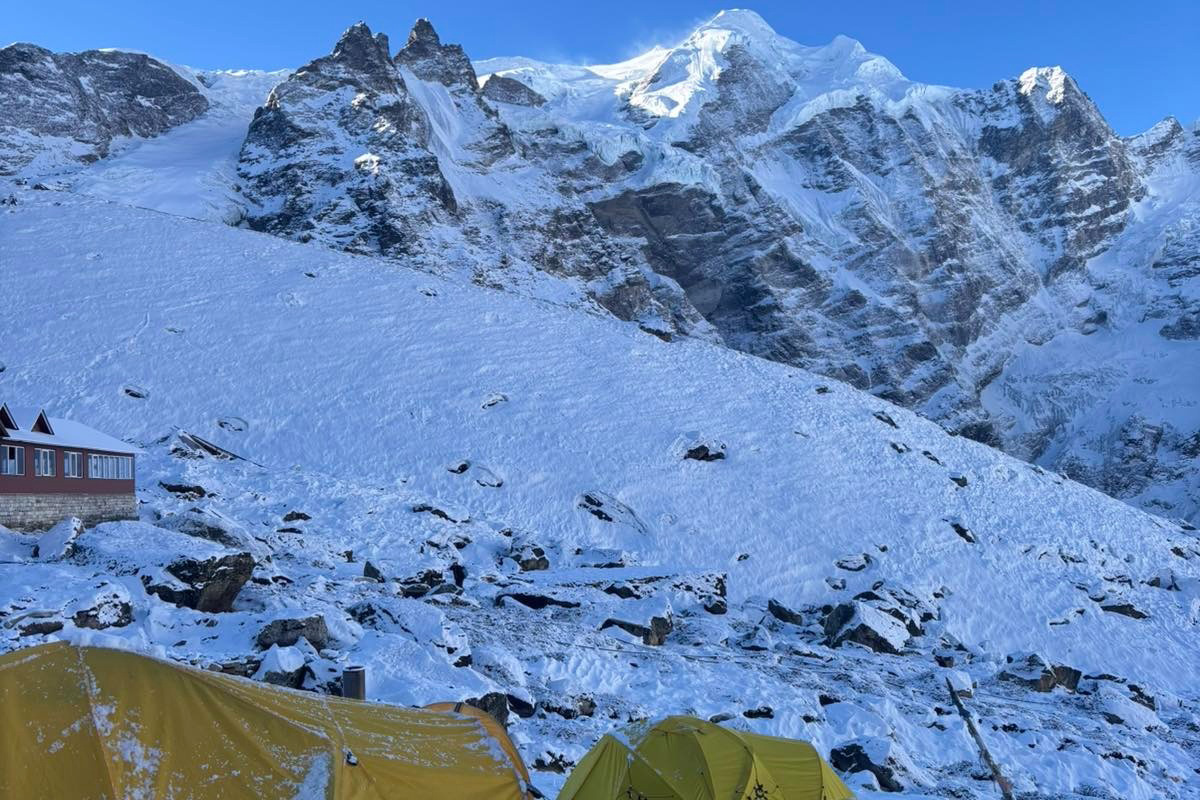
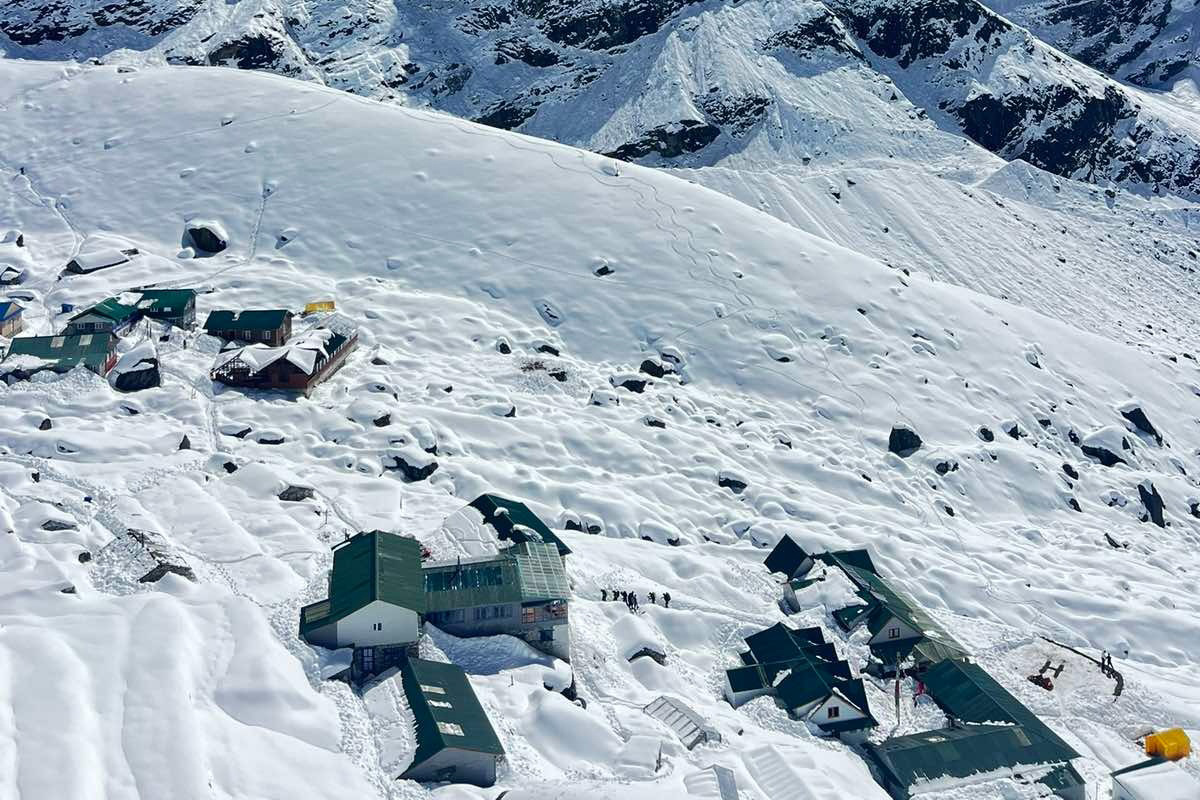
Accommodation runs as a mix of teahouses up to Khare and full camping support at Mera High Camp, where two-person tents, a dining tent, and a kitchen tent handle the night before the summit push. Hotel stays in Kathmandu, on a twin-sharing basis with breakfast included, frame the trip on either end. Meals at High Camp come from the Kalapatthar kitchen team using fresh supplies carried in by porters and yaks. Along the trekking section, dal bhat, fried rice, and Tibetan bread remain widely available at every established teahouse, with unlimited tea and coffee served throughout.
Essential Packing List for Mera Peak
Clothing
  • A waterproof shell jacket with a hood, rated to at least 10,000 mm water column
  • An insulated jacket rated to -20°C for extreme cold at the summit
  • A fleece mid-layer for moderate cold through the middle of each trekking day
  • Moisture-wicking long-sleeved shirts in merino wool or synthetic fabric, three sets
  • Thermal base layer leggings for cold nights at Khare, High Camp, and summit push
Footwear
  • Waterproof trekking boots with ankle support, broken in for at least 80 km beforehand
  • Double plastic or insulated climbing boots for summit day on the snow dome
  • Lightweight camp shoes for teahouse evenings and wet trail sections
  • Gaiters, essential for keeping snow and debris out of boots during glacier sections
Backpack and Load
  • A main duffel carried by a porter, with a 20 to 25 kg weight limit per trekker
  • A daypack for water, snacks, extra layers, and personal essentials
Health and Safety
  • A basic first aid kit with bandages, blister plasters, and personal medications
  • Diamox for altitude sickness prevention, typically started at Kothe or Khare
  • SPF 50+ sunscreen applied every morning, since UV intensity rises sharply above 4,000 meters
  • Wet wipes and hand sanitiser for hygiene where running water is not consistently available
Technical Climbing Equipment
A full technical kit separates this trip from a standard high-altitude trek, and most of it comes included or available for rental.
  • Crampons compatible with your climbing boots for the steep snow dome ascent
  • Ice axe for balance and self-arrest on the glacier and snow slope sections
  • Climbing harness with adjustable leg loops for rope work on the fixed lines
  • Jumar or ascender for climbing the fixed ropes on the 50 degree snow dome
  • Two locking and two non-locking carabiners for rope attachment and safety
  • Helmet for protection from falling rock and ice on the glacier and summit section
  • 120 cm and 240 cm slings for anchor connection and safety backups
  • Prusik loops for emergency ascent on ropes if ever needed
Trekking Gear and Equipment Checklist
A handful of general trekking items round out your kit alongside the technical climbing gear above.
  • A four-season sleeping bag rated to -20°C, available free as part of the Kalapatthar rental package
  • Trekking poles with rubber tips for the approach trek and descent sections
  • A headlamp with at least 200 lumens of brightness for the 2 AM start on summit day
  • A reusable water bottle of at least two litres, plus a thermos for hot drinks on summit morning
  • Water purification tablets or a filter bottle for treating teahouse tap water
  • A power bank of at least 20,000 mAh, since charging outlets grow limited above Kothe
Acute Mountain Sickness can affect anyone above 4,000 meters, and this trip reaches 6,476 meters at the Mera Peak summit. Guides conduct twice-daily oxygen saturation and pulse checks from Kothe onward, watching for headache, nausea, and dizziness before allowing the day's plans to continue. Comprehensive travel insurance covering high-altitude climbing above 6,500 meters, emergency helicopter evacuation, and medical treatment is mandatory, confirmed during your Day 1 briefing in Kathmandu. Makalu Barun National Park is a protected zone, so plan to minimize waste and carry out all non-biodegradable materials from High Camp, supported by Kalapatthar's refundable garbage deposit system.

Highlights

  • Summit Mera Peak at 6,476 meters, the highest trekking peak in Nepal
  • See five of the world's highest mountains in a single 360-degree view from the summit
  • Trek through the remote Hinku Valley, with fewer than 500 trekkers annually
  • Train for a full day at Khare with professional guides teaching real climbing technique
  • Camp at Mera High Camp beneath the Mera Glacier and the peak's south face
  • Cross Zatrwa La Pass on the return route, with wide views of the Hinku Valley
  • Walk through Makalu Barun National Park, home to over 3,000 plant species
  • Spot Himalayan tahr on the rocky slopes near Thaknak and Khare

Included/Excluded

  • Airport Transfers: private vehicle transfers on arrival and departure in Kathmandu
  • Permits: Makalu Barun National Park Permit, Khumbu Municipality Permit, and Mera Peak Climbing Permit, fully processed
  • Trekking and Climbing Guide: a licensed guide with 5 to 7 years of Everest and Hinku Valley experience and NMA certification
  • Climbing Sherpa: one high-altitude climbing Sherpa for every two climbers on summit day
  • Porter Service: one porter per two trekkers, with a 20 to 25 kg limit per porter
  • Teahouse and Camping Accommodation: twin-sharing teahouse rooms plus full camping support at High Camp
  • Meals and Refreshments: breakfast, lunch, and dinner daily with unlimited tea and coffee
  • Ground and Air Transportation: Kathmandu-Lukla flights included, with airport taxes
  • Kathmandu Accommodation: 5-star hotel stays with breakfast included
  • Welcome Dinner: a welcome dinner in Kathmandu with a full trip briefing and health assessment
  • Health Monitoring: twice-daily checks covering oxygen saturation, pulse rate, and temperature
  • Rental Gear: complimentary four-season sleeping bag and down jacket rental
  • Technical Equipment: crampons, ice axe, harness, jumar, carabiners, helmet, slings, and fixed ropes
  • Garbage Deposit: USD 500 per team, paid on your behalf and fully refundable
  • Emergency Support: evacuation planning and helicopter rescue coordination included as standard
  • Completion Certificate: issued at the end of the expedition
  • International airfare to and from Kathmandu and associated airport taxes
  • Nepal visa fee, obtainable on arrival at Tribhuvan International Airport
  • Travel insurance covering high-altitude climbing and emergency helicopter evacuation
  • Personal trekking and climbing gear beyond the complimentary rental, including boots and clothing layers
  • Meals in Kathmandu other than included breakfasts and the welcome dinner
  • Personal trail expenses, including hot showers, battery charging, Wi-Fi, and laundry
  • Alcoholic beverages, bottled drinks, and personal snacks outside the standard meal plan
  • Tips for guides, climbing Sherpas, porters, and kitchen staff, customary at the end of the trip
  • Optional summit bonus for the climbing Sherpa or guide, customary but not mandatory

Itinerary

Your journey begins the moment you step off the plane at Tribhuvan International Airport, where the Kalapatthar team greets you and transfers you by private vehicle to your five-star hotel in the heart of Thamel. That evening brings a welcome dinner where you meet your guide and fellow climbers for the first time, followed by a full expedition briefing covering permits, climbing safety protocols, and a careful review of your gear checklist.

  • Private airport pickup and transfer to your five-star Kathmandu hotel
  • Welcome dinner and first meeting with your guide and fellow climbers
  • Full trip briefing covering permits, safety protocols, and gear checklist
  • Baseline health check recording oxygen saturation, pulse rate, and temperature

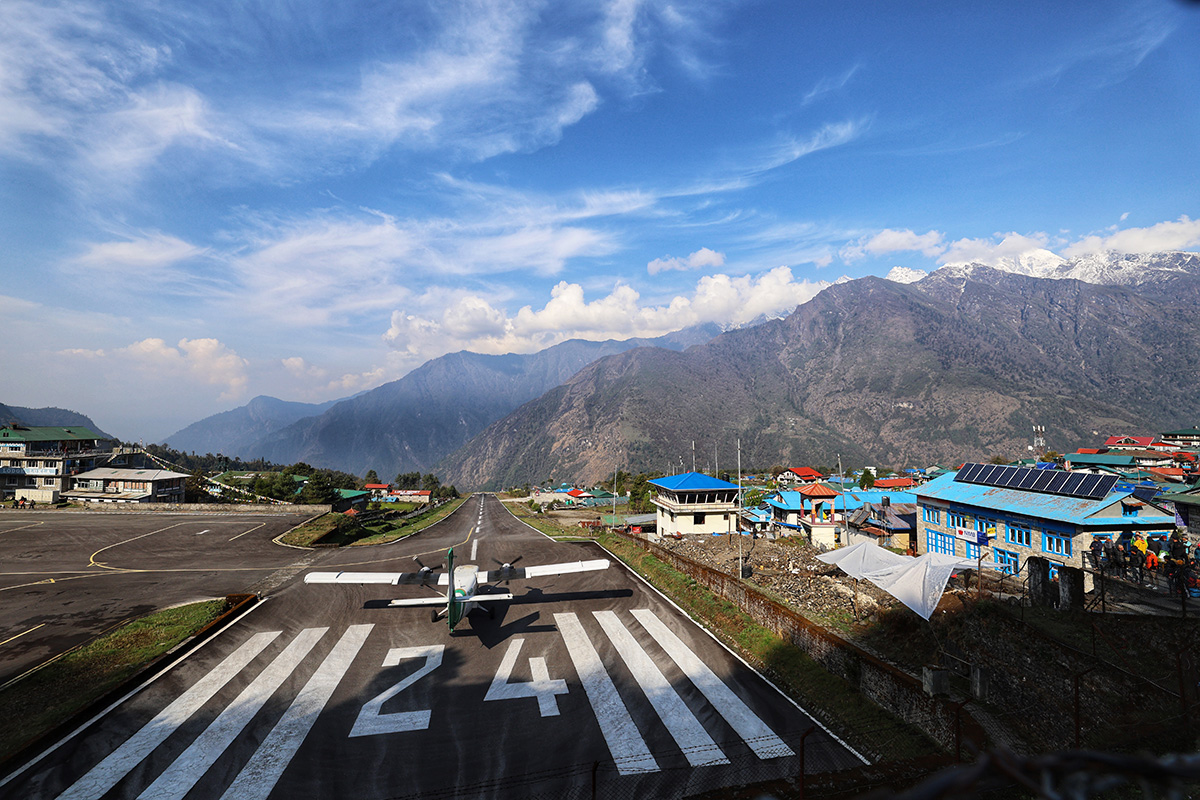
An early morning flight carries you to Lukla, a short 35-minute hop with wide views of the Himalayan range on a clear day, before the trail immediately turns away from the crowded main route. From Lukla, the path climbs gently to Paiya through forest trail and small villages, following the quieter approach that defines this entire trip.

  • 35-minute flight from Kathmandu to Lukla Airport
  • A 4 to 5 hour trek along a quieter route than the main EBC trail
  • Makalu Barun National Park permit registered at the checkpoint
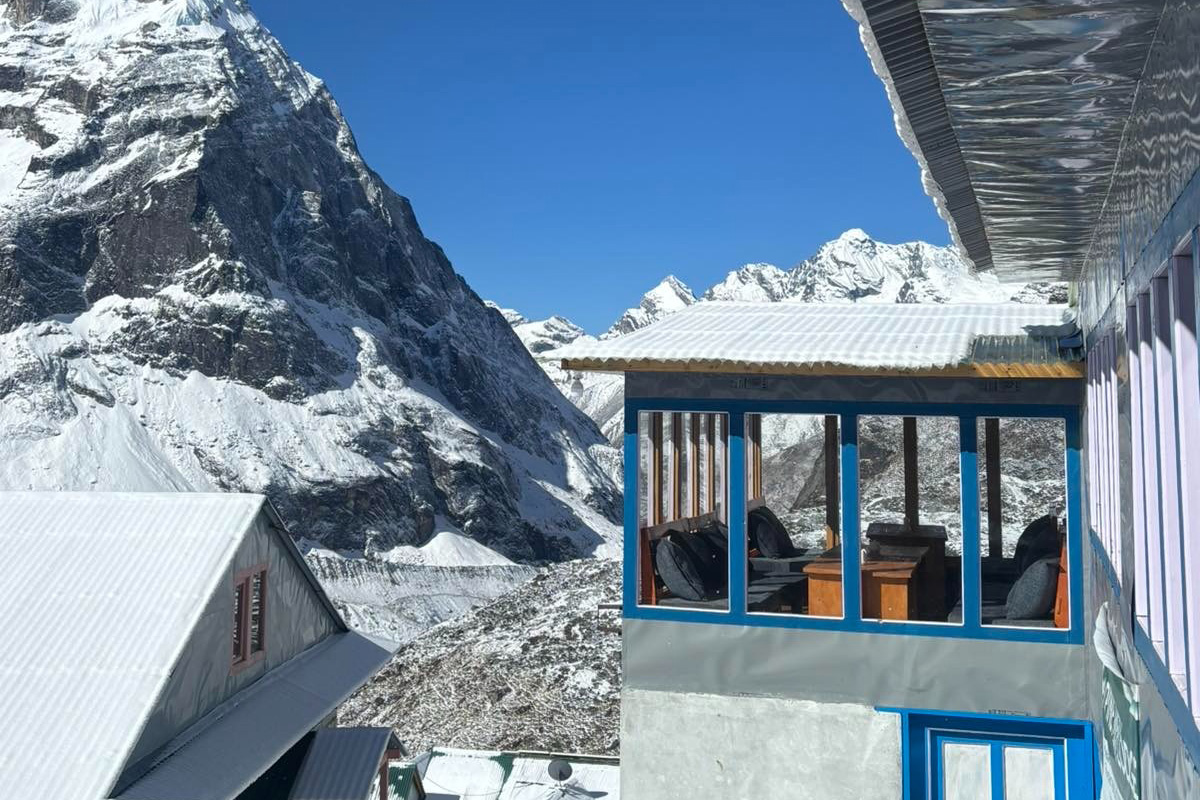
  • First overnight teahouse stay and evening health check

The trail continues through rhododendron forest and open ridgeline, with distant mountain views appearing on clear days as the path winds through small Sherpa and Rai villages. Traditional stone houses and terraced farms mark the way toward Panggom.

  • A 5 to 6 hour walk through rhododendron forest and ridge terrain
  • Passage through traditional Sherpa and Rai villages
  • Arrival at Panggom, a small settlement with basic teahouse accommodation
  • Continued evening health monitoring throughout the trek

The remote trail crosses hills and river valleys with fewer settlements as the route pushes deeper into the Hinku Valley. Dense forest and occasional clearings offer glimpses of distant peaks along the way.

  • A 5 to 6 hour walk through increasingly remote terrain
  • Fewer settlements as the trail pushes deeper into the Hinku Valley
  • Arrival at Ningsow, a small village with basic teahouse facilities
  • A genuine sense of remoteness setting in well before Khare

The trail enters Makalu Barun National Park, known for its rich biodiversity and protected wildlife, descending gently toward the river with several suspension bridge crossings along the way.

  • Entry into Makalu Barun National Park
  • A gentle descent with suspension bridge crossings over mountain streams
  • Arrival at Chhatra Khola, with basic teahouse accommodation near the riverbank
  • Roughly 6 to 7 hours of walking across 14 kilometers

The trail follows the Hinku Valley northward, with Mera Peak and its surrounding summits appearing ahead for the first time as the forest transitions from rhododendron and pine to alpine scrub.

  • A steady 6 to 7 hour climb gaining 800 meters of elevation
  • First views of Mera Peak and the surrounding summits
  • A gradual shift from forest to alpine terrain
  • Arrival at Kothe, the last major forested stop before the high valley

A gradual ascent through yak pastures and alpine terrain delivers wide views of the Hinku Valley, with local herders and their yaks and dzopkyo visible on the surrounding slopes.

  • A 3 to 4 hour climb through summer yak grazing pastures
  • Wide views of the Hinku Valley opening up along the trail
  • Arrival at Thaknak, with some operators recommending an extra acclimatization night here
  • Continued careful attention to oxygen saturation as altitude increases

The trail climbs steadily toward Khare, the staging village for Mera Peak, with the south face of the mountain visible ahead for much of the day.

  • A steady 3 to 4 hour climb gaining nearly 700 meters
  • First direct views of Mera Peak's south face
  • Arrival at Khare, the highest village on the route
  • Final preparation before tomorrow's dedicated training day

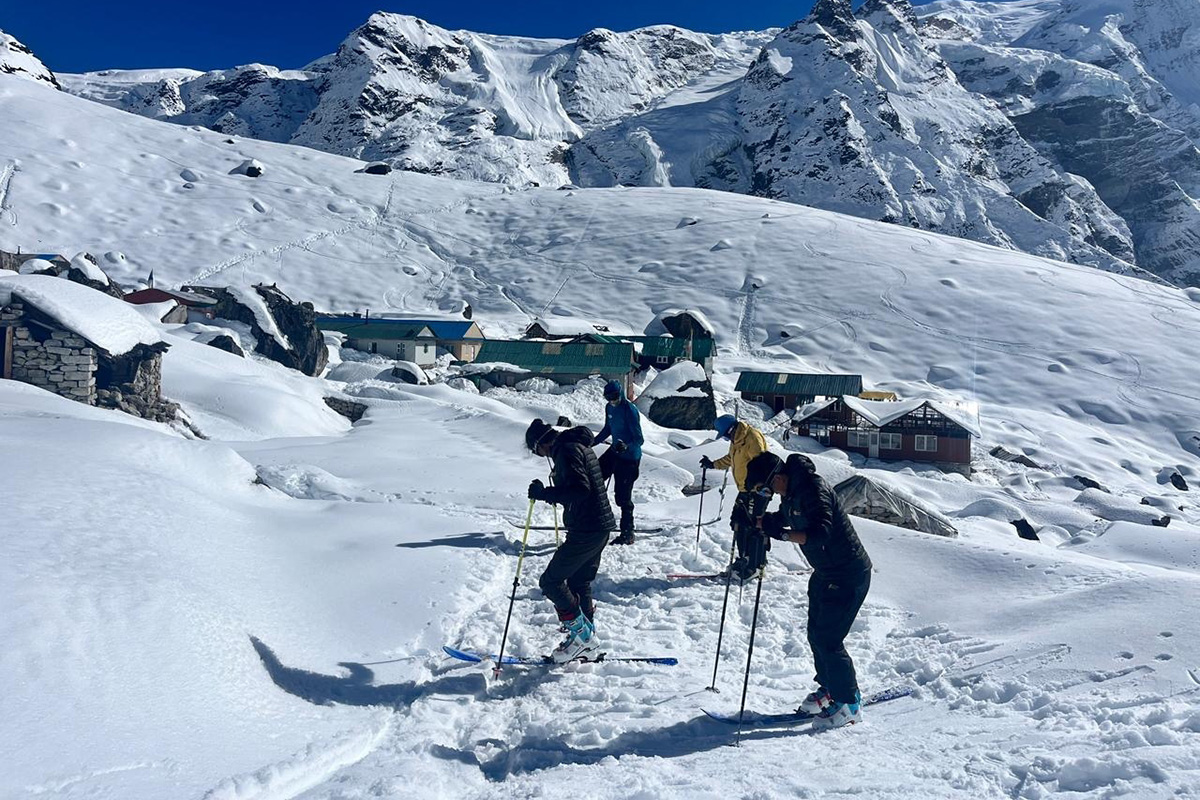
This is where the trip shifts from trekking into genuine mountaineering. Your climbing guide leads a full day of hands-on instruction covering crampon technique, ice axe use, rope handling, and jumar ascent practice on a nearby snow slope.

  • Full-day hands-on training with a certified climbing guide
  • Crampon technique and ice axe use practiced on a nearby snow slope
  • Rope handling, fixed-line ascent, and belay descent instruction
  • Self-arrest practice, building the exact skills needed for summit day

The trail leaves Khare and climbs steeply along the Mera Glacier, with the landscape shifting noticeably as the glacier spreads out below and the peak rises directly ahead.

  • A steep 3 to 4 hour climb along the Mera Glacier moraine
  • A clear shift in landscape as glacier terrain takes over
  • Arrival at High Camp, with tents pitched directly on the moraine
  • Final summit-day briefing covering route, timing, and safety protocols

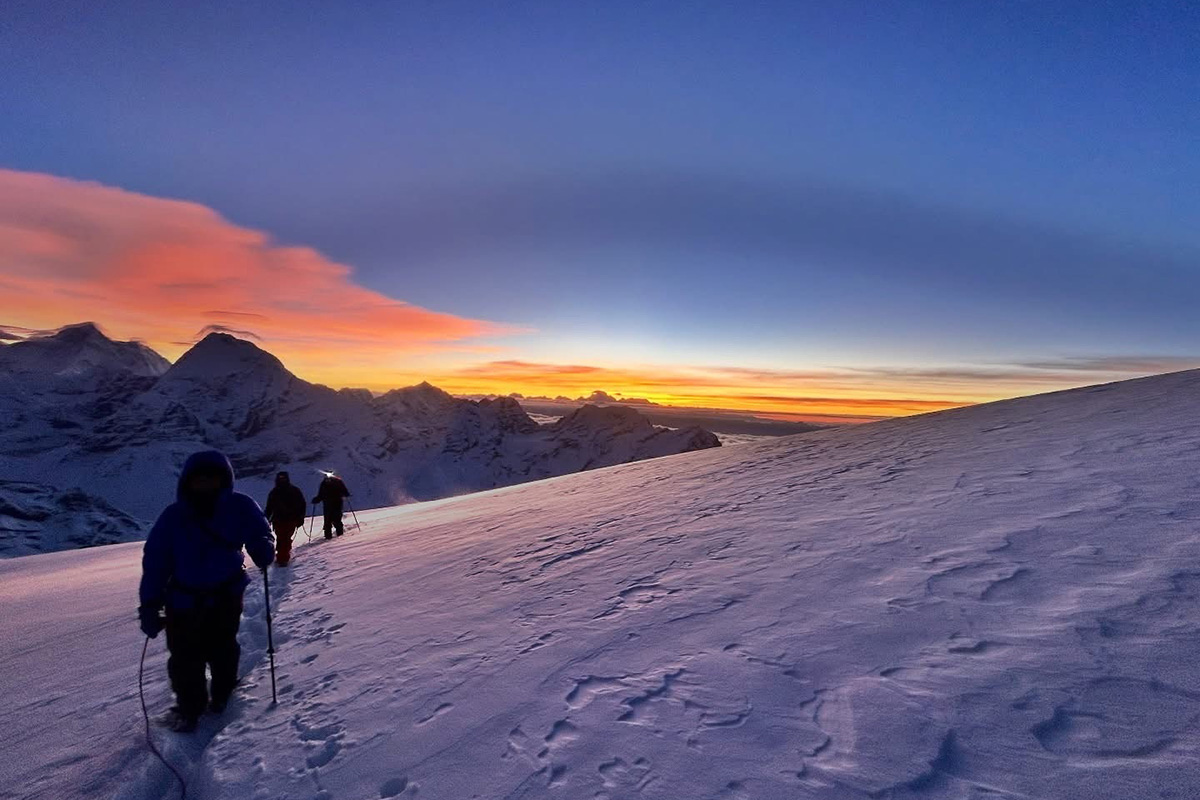
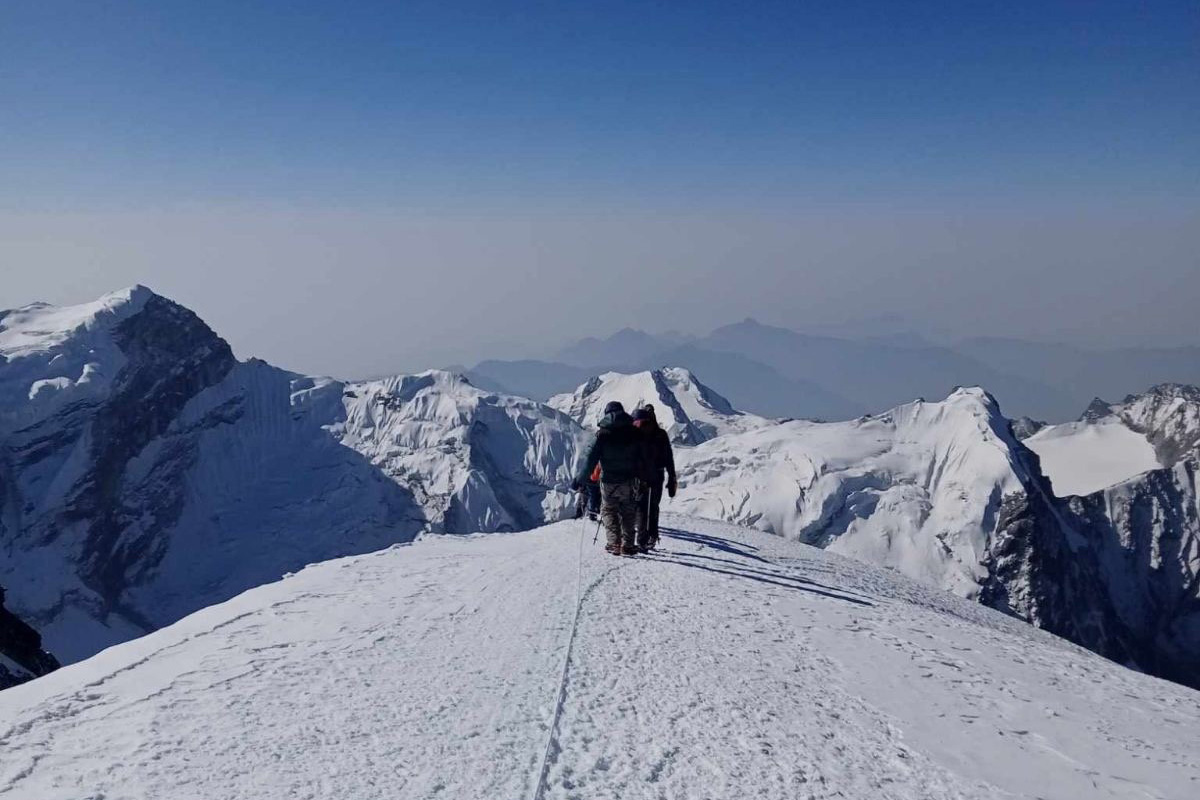
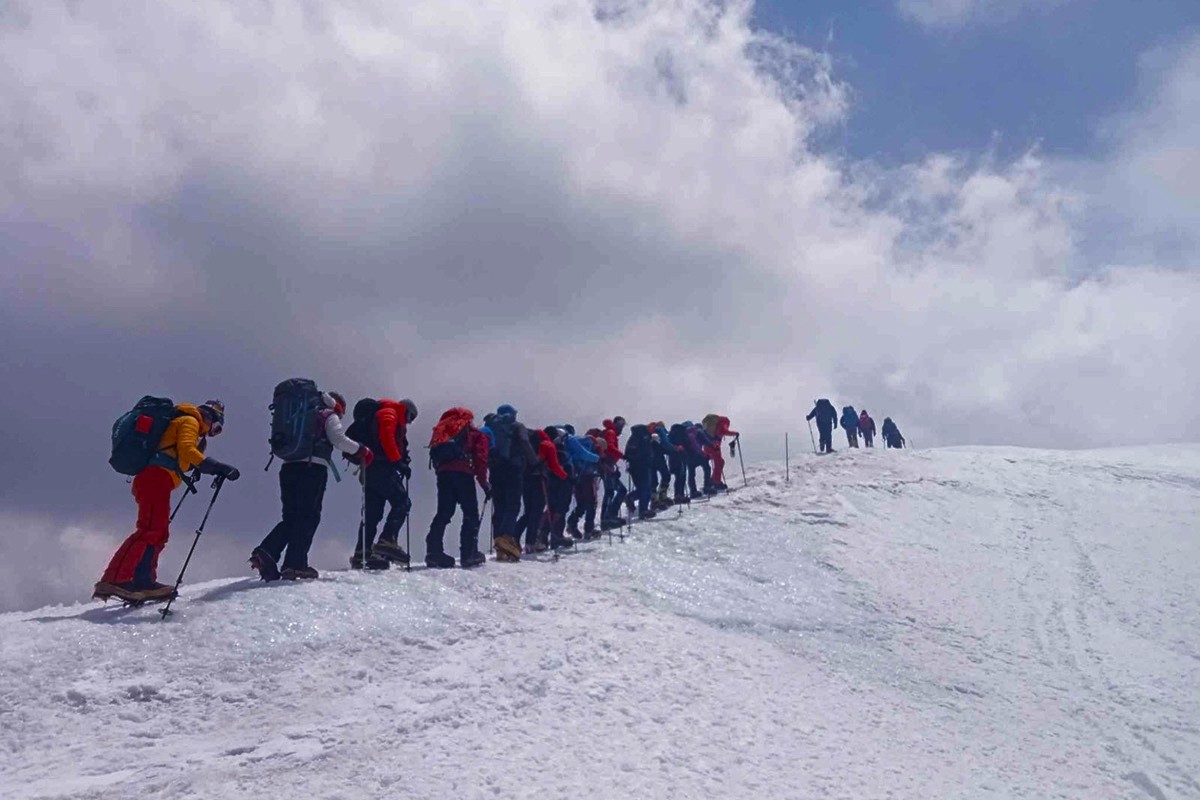
A 1:30 AM wake-up and a light breakfast set the stage for departure at 2 AM sharp. The climb ascends the Mera Glacier before reaching the snow dome itself, a steep 50-degree face climbed on fixed ropes using your jumar over roughly 200 vertical meters.

  • A 2 AM departure following a 1:30 AM wake-up and light breakfast
  • A glacier ascent followed by the technical snow dome climb
  • Summit arrival around 7 to 8 AM, with five 8,000-meter peaks visible
  • A full descent to High Camp and onward to Khare by late afternoon

This day serves as a weather buffer if the summit attempt was not possible on Day 11 due to high winds or storms. If the summit was successful, it becomes a genuine rest day at Khare instead.

  • A built-in weather contingency day for the summit attempt if needed
  • If summit was successful, a restful day at Khare to recover
  • Your guide assesses group condition and forecast before any decisions
  • Continued evening health monitoring throughout the day

A second reserve day provides additional weather buffer, genuinely useful in a valley this remote. If the summit was already successful, the team descends from Khare back down toward Kothe.

  • A second built-in weather contingency day if still needed
  • If summit was successful, a descent back through Thaknak to Kothe
  • Wide valley views accompanying the return journey
  • Continued evening health monitoring as the group descends

The trail leaves the Hinku Valley behind and climbs steeply toward Thuli Kharka on a ridge, with wide views of the surrounding peaks opening up along the way.

  • A steep 5 to 6 hour climb onto a ridge above the Hinku Valley
  • Arrival at Thuli Kharka, a grazing area with basic teahouse accommodation
  • Strong sunrise viewing potential from this ridge-top location
  • Final stop before crossing Zatrwa La Pass tomorrow

An early start carries you up to Zatrwa La Pass, the high point of the return route, before a long, steep descent back toward Lukla through rocky and forested terrain.

  • An early morning ascent to Zatrwa La Pass at roughly 4,610 m
  • Wide views of the Hinku Valley and Everest region from the pass
  • A steep descent losing over 1,700 meters of elevation
  • A celebratory return to Lukla with your guide and porter team

A final short flight carries you from Lukla back to Kathmandu, with the Himalayan range visible below on a clear morning, closing out the trekking and climbing sections of the trip.

  • A 35-minute return flight from Lukla to Kathmandu
  • A free afternoon for rest, Thamel exploration, or relaxation
  • Overnight at your five-star hotel with breakfast included
  • A natural pause point before the final days in Kathmandu

Built in specifically to absorb the weather delays that regularly affect Lukla flights, this day either serves as a genuine buffer or opens up free time in the capital.

  • A built-in buffer for potential Lukla flight delays
  • Optional Kathmandu sightseeing if flights ran on schedule
  • Presentation of your Kalapatthar completion certificate
  • A final evening to reflect on summiting Nepal's highest trekking peak

Your trip concludes with a private vehicle transfer to Tribhuvan International Airport, carrying home the memory of summiting the highest trekking peak in Nepal.

  • Private vehicle transfer to the airport for your departure flight
  • Final farewell from the Kalapatthar team
  • Departure with your Mera Peak completion certificate in hand

Durations

Multi day

Max Altitude

6,476 m

Trip Grade

Moderate to Strenuous

Accommodation

Hotel + Lodge + Tent

Best Season

Autumn
Spring

Frequently asked questions

This Kalapatthar package runs for 18 days total, including arrival, the trekking section, the climbing section, two reserve days, and your return to Kathmandu.

The trip is rated strenuous with daily walking of 4 to 7 hours, reaching 6,476 meters at the summit, and requires good physical fitness along with basic mountaineering skills.

Prior high-altitude trekking experience above 5,000 meters is strongly recommended, but technical climbing experience is not required, since training is provided at Khare.

Mera Peak North summit at 6,476 meters is the highest point, making it the highest trekking peak in Nepal, with Mera Central at 6,461 meters as the standard climbing objective.

Yes, altitude sickness becomes a genuine risk above 4,000 meters, and this trip reaches 6,476 meters. Guides run twice-daily health checks and follow strict descent protocols if symptoms appear.

Three permits are required: the Makalu Barun National Park Permit at NPR 3,000, the Khumbu Municipality Permit at roughly NPR 2,000, and the Mera Peak Climbing Permit, which runs USD 175 to USD 350 depending on season.

Yes, a licensed climbing guide holding Nepal Mountaineering Association certification is legally required for any Mera Peak summit attempt.

Accommodation runs as teahouses up to Khare, followed by full camping support at Mera High Camp with two-person tents, a dining tent, and a kitchen tent.

Dal bhat, fried rice, and Tibetan bread remain available at teahouses along the trekking section, while the Kalapatthar kitchen team prepares all meals at High Camp using fresh supplies.

Yes, comprehensive travel insurance covering high-altitude climbing above 6,500 meters and emergency helicopter evacuation is mandatory before departure.

Wi-Fi remains available at some teahouses up to Kothe for a small fee, but connectivity disappears entirely at Khare, High Camp, and on summit day itself.

This trip is not recommended for complete beginners, though Mera Peak is genuinely less technical than other 6,000-meter peaks, making it a reasonable first major climb for fit, well-prepared trekkers.

Booking three to four months ahead is strongly recommended for spring and autumn departures, when permits, climbing guides, and teahouses need to be arranged well in advance.

Based on Himalayan Database records and operator data from 2015 to 2025, overall success sits around 70 to 80 percent, with autumn seeing the highest rates and spring running slightly lower.

The Hinku Valley sees fewer than 500 trekkers annually compared to over 30,000 on the EBC trail, offering genuine solitude, remote forest and village scenery, and a gentler acclimatization curve.

Contact Kalapatthar Trek & Expedition directly with your preferred travel dates and group size to receive a personalized quote and full pre-departure support.

Tour's Location

Reviews

0/5
Not Rated
(0 Reviews)
Excellent
0
Very Good
0
Average
0
Poor
0
Terrible
0
0 reviews on this Tour - Showing 1 to 0

Write a review

From: €0
0 (0 Reviews)

Owner

Mishek Limbu

Member Since 2026

Information Contact

Email

info@kalapatthartrek.com

Website

https://kalapatthartrek.com/

Phone

‪+977 - 9843648522

Fax

‪+977 - 9843648522

Explore other options

Island Peak Climbing with Everest Base Camp Trek

0 (No Review)

Lobuche Peak Climbing with Everest Base Camp Trek

0 (No Review)