

38 Days
Daily Tour
10 people
___
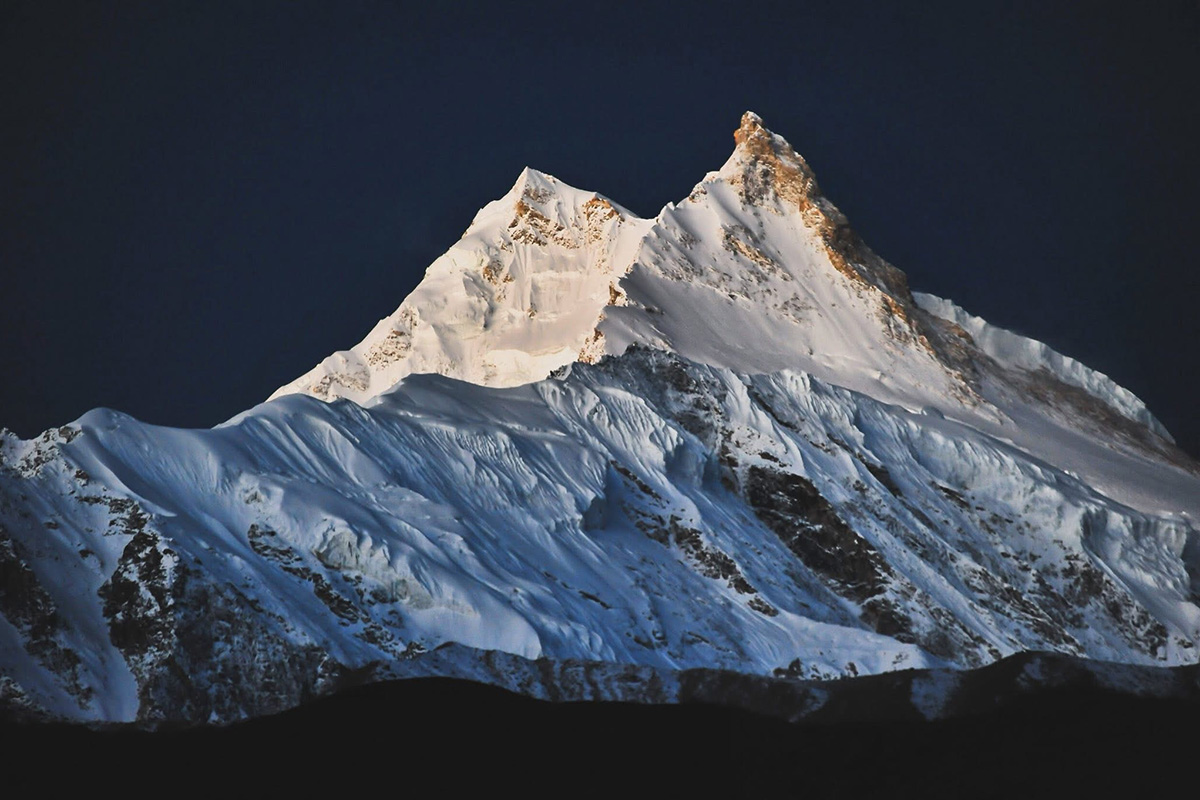
Set in the Gorkha region of north-central Nepal, the Mount Manaslu Expedition climbs to a summit of 8,163 metres, the eighth-highest peak in the world. The route follows the Northeast Face through four high camps above Base Camp, crossing glacier terrain, steep snow slopes, and exposed ridges en route to the top.
Manaslu rises in the Mansiri Himal range, 64 kilometres east of Annapurna in the Gorkha district. Its name derives from the Sanskrit word Manasa, meaning intellect or soul, earning it the title “Mountain of the Spirit.” Toshio Imanishi of Japan and Gyalzen Norbu Sherpa completed the first successful ascent on 9 May 1956, marking the first 8,000 m summit achieved by an Asian expedition team.
Kalapatthar Trek & Expedition leads this climb with IFMGA/UIAGM-certified guides and a Sherpa team experienced across multiple 8,000 m summits. The itinerary features a structured acclimatisation rotation through Camps I, II, and III, with a certified high-altitude doctor stationed at Base Camp providing round-the-clock medical care throughout the expedition. This fully guided, permit-inclusive package covers 38 days in the Gorkha region.
Arrive at Tribhuvan International Airport and transfer to your 5-star hotel in Thamel by private luxury Land Cruiser with the Kalapatthar team. The evening includes a traditional Nepali welcome dinner with cultural dance and live music, full expedition briefing covering permits, climbing safety protocols, and the gear checklist. Your guide conducts the first health check covering oxygen saturation, pulse rate, temperature, and general baseline condition.
Morning medical briefing and baseline health assessment conducted by the expedition doctor. Permit processing, equipment check, and final briefing with the full guide and Sherpa team. Gear distribution including complimentary high-altitude down suit and four-season sleeping bag rental. Free afternoon for rest or Kathmandu sightseeing. Evening health check and team meeting to review final preparations.
Morning departure briefing and health check before leaving Kathmandu. Depart Kathmandu by private luxury Land Cruiser for the 8 to 9 hour drive along the Prithvi Highway before turning onto the rough road following the Budhi Gandaki River. The road winds through terraced hillsides and small towns before reaching Machha Khola at 900 m. Register your Manaslu Restricted Area permit at the checkpoint on arrival. Evening health check conducted by your guide. Overnight at teahouse.
Morning health check and daily trek briefing before departure. The trail follows the Budhi Gandaki River through forested sections and small settlements, crossing the river on a suspension bridge near Khursane. Jagat serves as the official entry point to the Manaslu region with a police checkpoint and permit verification. Jagat at 1,340 m is a small village with basic teahouse accommodation and wide views of the surrounding hills. Evening health check conducted by your guide. Overnight at teahouse.
Morning health check and trek briefing covering the day's route. The trail continues along the Budhi Gandaki River passing through Salleri before climbing to Deng. The path crosses several suspension bridges and passes through small settlements with terraced fields and stone houses. Deng at 1,860 m is a small village with basic teahouse facilities and the first clear views of the mountains ahead. Evening health check conducted by your guide. Overnight at teahouse.
Morning health check and daily briefing before departure. The trail climbs steadily through dense forest with views of Siringi Himal appearing above the tree line. Pass through the villages of Rana, Ghap, and Prok before reaching Namrung at 2,630 m. Namrung is the first village in the Manaslu region with clear Tibetan Buddhist influence, featuring chortens, prayer flags, and traditional stone houses. Evening health check conducted by your guide. Overnight at teahouse.
Morning health check and trek briefing focusing on altitude awareness. The trail passes through Lihi and Sho before reaching Lho at 3,180 m with the first clear views of Mount Manaslu rising above the valley. The landscape transitions from forest to alpine scrub as the valley opens up for wider mountain views. Lho offers wide views of Manaslu and the surrounding peaks from the village teahouses. Evening health check with careful attention to oxygen saturation. Overnight at teahouse.
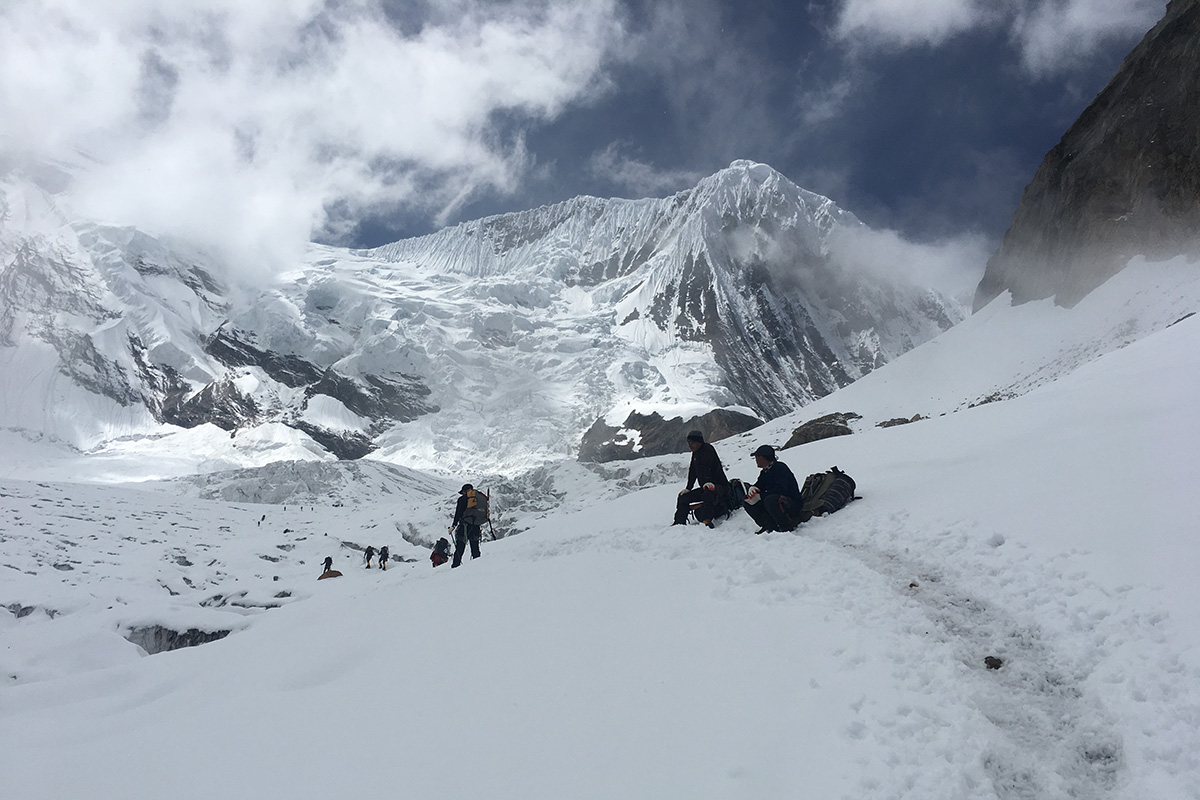
Morning health check and daily briefing before departure. The trail climbs gradually to Samagaun at 3,530 m, the largest village in the Manaslu region and the main acclimatisation stop before Base Camp. Samagaun is a traditional Tibetan Buddhist village with a monastery, chortens, and stone houses surrounded by stone walls. The village offers wide views of Manaslu, Himalchuli, and the surrounding peaks. Evening health check with careful attention to oxygen saturation. Overnight at teahouse.
Morning health check and altitude lecture covering AMS symptoms, prevention, and treatment options. This rest day is essential for proper acclimatisation before the push toward Base Camp at 4,800 m and the climbing route above. Hike to the Manaslu viewpoint at approximately 4,000 m for direct views of the Manaslu climbing route. Visit Birendra Lake, a glacial lake below Manaslu, and the Samagaun monastery to learn about Tibetan Buddhist culture. Rest and hydrate with 4 to 5 litres of water to prepare your body for the higher elevations ahead. Evening health check with careful attention to oxygen saturation. Overnight at teahouse.
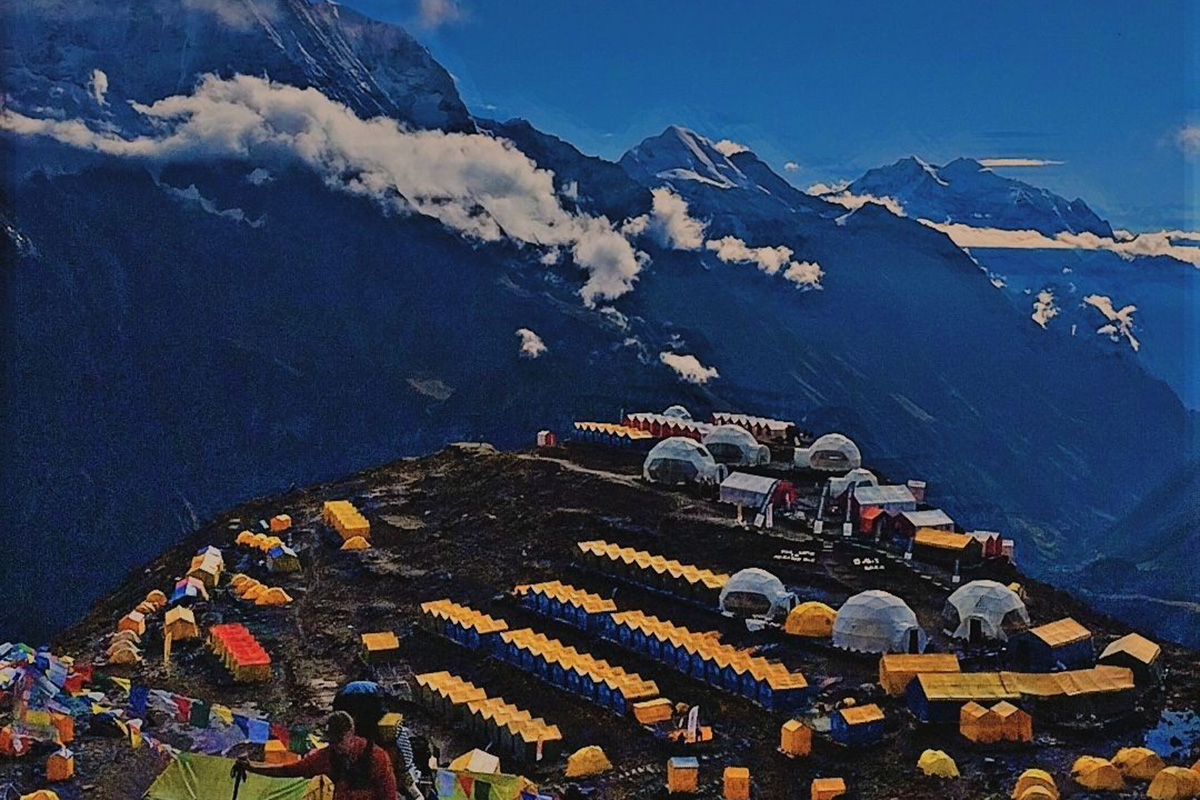
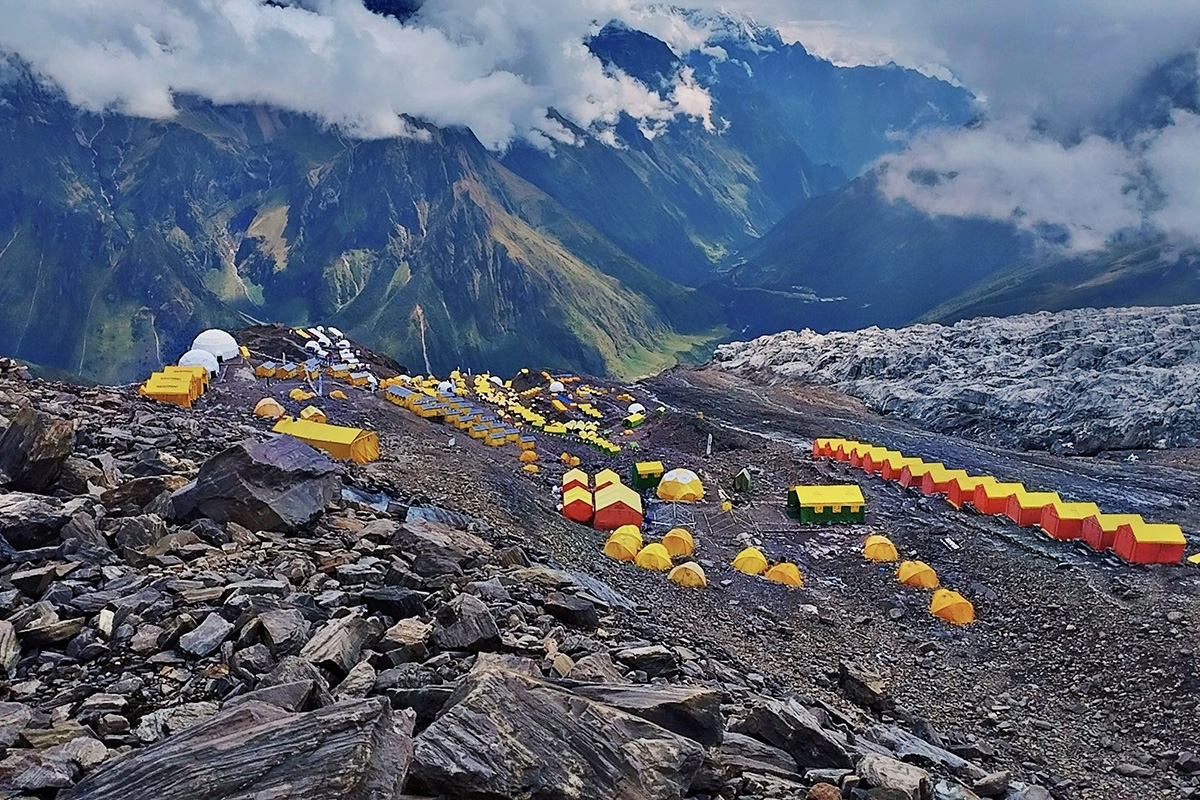
Morning health check and final approach briefing before reaching Base Camp. The trail leaves Samagaun and climbs steeply across rocky moraine toward Manaslu Base Camp at 4,800 m on the Northeast Face route. Base Camp sits on a lateral moraine of the Manaslu Glacier with direct views of the climbing route above. Arrival and complete establishment of Base Camp including personal dome sleeping tents with heated bedding, dining tent, kitchen tent, medical facility, hot shower tent, toilet tent, solar and generator power, and Wi-Fi connectivity. Twice-daily health monitoring begins at this altitude. Evening health check marks the beginning of twice-daily monitoring. Overnight at Base Camp.
Morning health check and briefing on the Puja ceremony. Traditional Sherpa Puja ceremony performed by the expedition's lead Sherpa to bless the climb and seek safe passage on the mountain. The ceremony includes prayer flags, butter lamps, and offerings to the mountain gods. Rest and hydrate with 4 to 5 litres of water. Evening health check with oxygen saturation and pulse rate recorded. Overnight at Base Camp.
Morning health check and technical training briefing. First technical training day covering crampon technique for walking on snow and ice slopes. Practice walking on crampons on a safe snow slope near Base Camp learning proper foot placement and balance techniques. Afternoon session covers ice axe use including self arrest techniques in case of a fall. Evening health check with careful attention to fatigue and oxygen saturation. Overnight at Base Camp.
Morning health check and technical training briefing. Second technical training day covering fixed rope ascent with jumar device and oxygen system use at altitude. Learn how to tie into the rope, ascend fixed lines using a jumar, and descend using a belay device. Practice oxygen mask fitting and regulator operation. High altitude safety procedures and emergency response protocols reviewed. Evening health check with careful attention to oxygen saturation. Overnight at Base Camp.
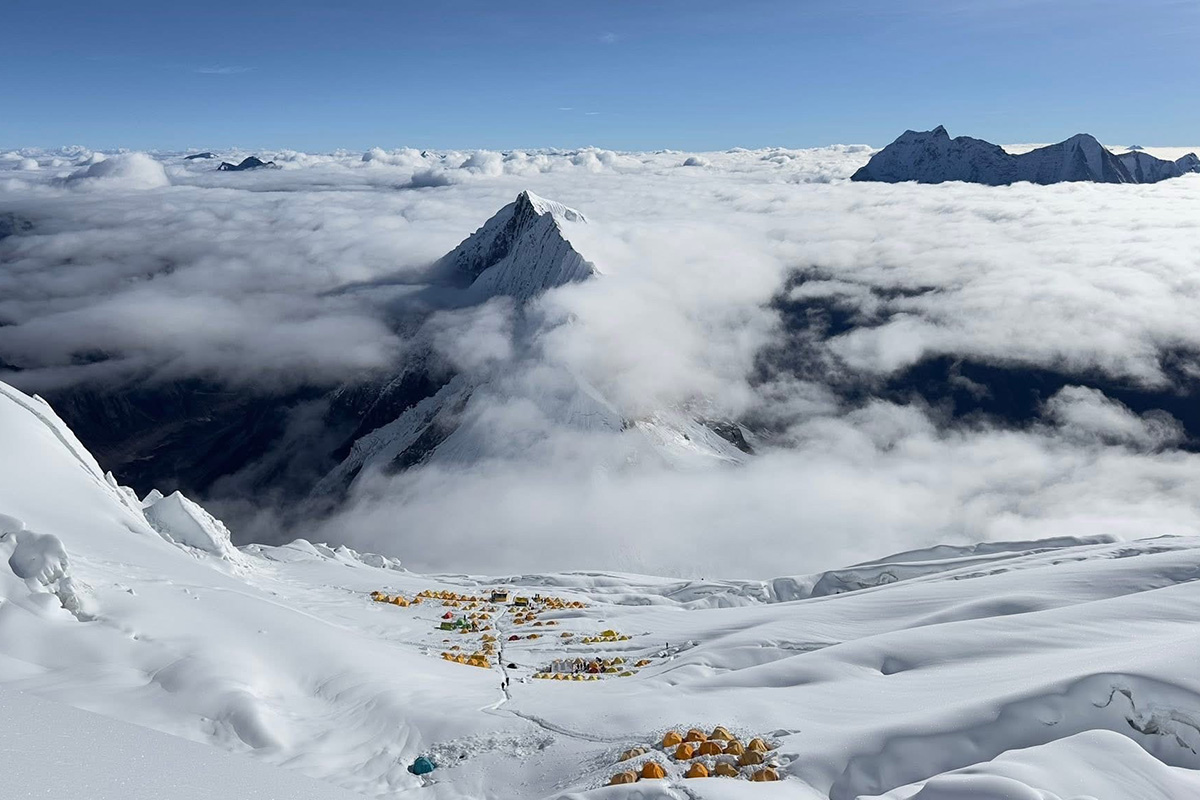
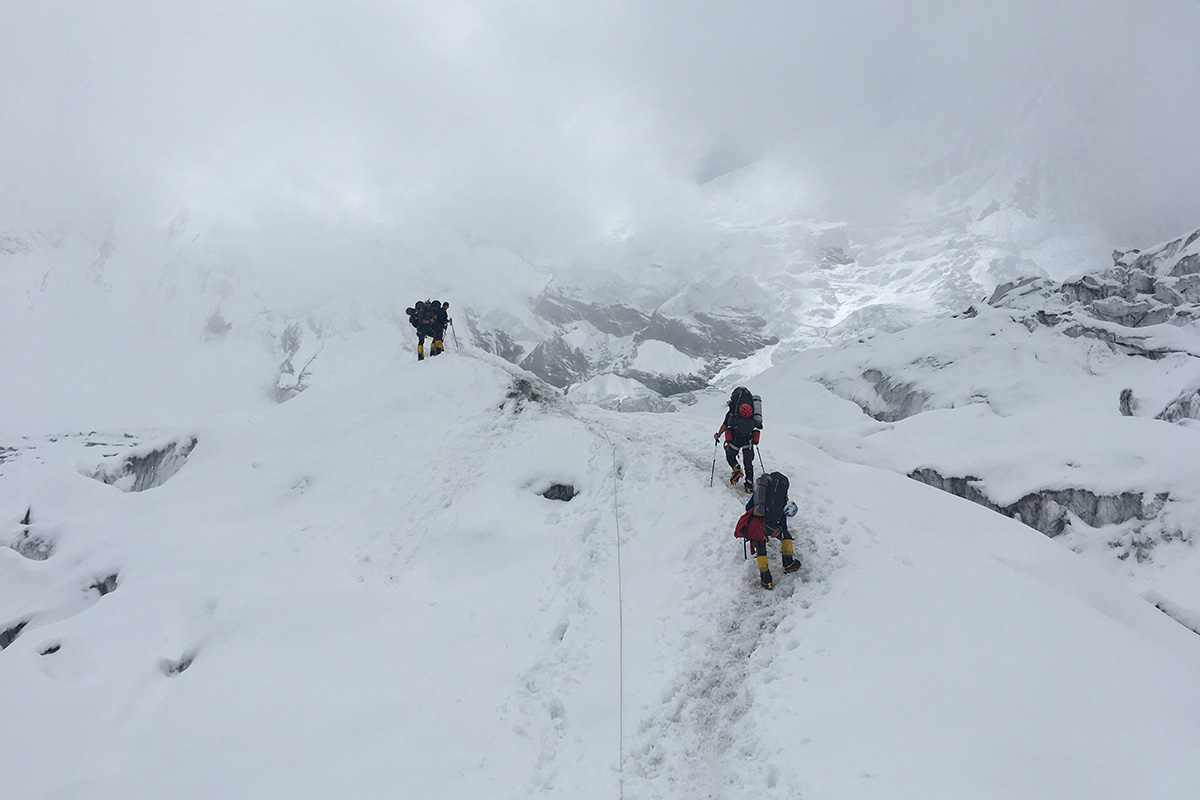
Morning health check and first rotation briefing. First rotation from Base Camp at 4,800 m to Camp I at 5,700 m across rocky moraine, glacial debris, and initial snow slopes. The trail climbs steadily onto the Manaslu Glacier following fixed ropes through the most technical sections below the camp. This rotation provides essential altitude exposure and technical practice before higher camps. Evening health check with careful attention to oxygen saturation and fatigue. Overnight at Camp I.
Morning health check and medical assessment after first rotation. Return to Base Camp from Camp I for rest and recovery. The medical team monitors oxygen saturation and overall recovery. Hydrate with 4 to 5 litres of water and rest. Evening health check with careful attention to recovery markers. Overnight at Base Camp.
Morning health check and briefing on the second rotation ahead. Continue resting and hydrating while the medical team monitors acclimatisation progress. Gear review and equipment adjustments as needed. Daily professional Himalayan weather forecasting service active throughout. Evening health check with oxygen saturation recorded. Overnight at Base Camp.
Morning health check and second rotation briefing. Second rotation from Base Camp to Camp I at 5,700 m for acclimatisation. The trail now feels more familiar as climbers have gained confidence on the glacier terrain. Camp I is fully established on a snow platform by the Sherpa team. Evening health check with careful attention to oxygen saturation. Overnight at Camp I.
Morning health check and briefing for the Camp II push. From Camp I climb to Camp II at 6,300 m across steep snow slopes with fixed ropes through the most exposed sections. Touch Camp II for altitude exposure then return directly to Base Camp in the same day. This rotation builds significant altitude adaptation and technical confidence. Evening health check with careful attention to fatigue and oxygen saturation. Overnight at Base Camp.
Morning health check and medical assessment after second rotation. Medical team conducts thorough health assessments to monitor acclimatisation progress. Rest and recovery with proper nutrition and hydration. Evening health check with oxygen saturation and pulse rate recorded. Overnight at Base Camp.
Morning health check and briefing on the third rotation ahead. Continue resting and hydrating while the medical team clears climbers for the higher altitude push. Final gear checks and oxygen system review. Evening health check with careful attention to any AMS indicators. Overnight at Base Camp.
Morning health check and third rotation briefing. Move from Base Camp to Camp I on the first day, then continue to Camp II at 6,300 m on the second day of the rotation. This longer rotation provides deeper altitude exposure and prepares the body for the summit push above 7,000 m. Evening health check with careful attention to oxygen saturation at Camp II. Overnight at Camp II.
Morning health check and briefing for the Camp III push. From Camp II, continue climbing to Camp III at 6,800 m on the Northeast Face with sustained steep snow climbing on fixed ropes. The route passes through the Yellow Band section, a distinctive geological feature visible from Base Camp. Camp III is the highest acclimatisation point before the summit push. Evening health check with careful attention to oxygen saturation. Overnight at Camp III.
Morning health check and descent briefing. Return from Camp III at 6,800 m directly to Base Camp at 4,800 m. The descent passes through Camp II and Camp I, requiring careful navigation on fixed ropes. This rotation has provided maximum altitude exposure before the summit push. Evening health check with careful attention to recovery. Overnight at Base Camp.
Morning health check and medical assessment after third rotation. The medical team conducts final health assessments to ensure all climbers are ready for the summit push. Final gear checks and oxygen system review. Daily professional Himalayan weather forecasting service active. Evening health check with careful attention to climber readiness. Overnight at Base Camp.
Morning health check and comprehensive summit briefing by the expedition leader. The briefing covers route details from Camp I to the summit, timing for each camp, emergency procedures, the weather forecast, and summit-day protocols. Final gear check and oxygen system review completed. Each climber receives their oxygen allocation for the summit push. Evening health check with careful attention to climber readiness and final preparations. Overnight at Base Camp.
Morning health check and departure briefing for the summit push. First move of the summit rotation from Base Camp to Camp I at 5,700 m across rocky moraine and glacier terrain. The trail climbs steadily onto the Manaslu Glacier, following fixed ropes through the technical sections. Camp I is fully established on a snow platform by the Sherpa team. Evening health check with careful attention to oxygen saturation. Overnight at Camp I.
Morning health check and briefing for the Camp II push. Move from Camp I to Camp II at 6,300 m across steep snow slopes with fixed ropes in place through the most exposed sections. The route follows the Northeast Face with wide views of the surrounding peaks. Camp II sits on a snow ridge with limited tent space. Evening health check with careful attention to oxygen saturation. Overnight at Camp II.
Morning health check and briefing for the Camp III push. Move from Camp II to Camp III at 6,800 m, following the Northeast Face with sustained steep snow climbing on fixed ropes. Pass through the Yellow Band section, a distinctive geological feature. Camp III sits on a small snow platform, the final camp before the high-altitude zone above 7,000 m. Evening health check with careful attention to oxygen saturation. Overnight at Camp III.
Morning health check and briefing for the Camp IV push. Move from Camp III to Camp IV at 7,400 m, entering the death zone above 7,000 m where supplemental oxygen becomes mandatory for safe progress. The route follows fixed ropes through steep snow and ice terrain with wide exposure on the upper mountain. Camp IV sits on a small snow ridge, the final camp before the summit push. Evening health check with careful attention to oxygen saturation and final oxygen system check. Overnight at Camp IV.
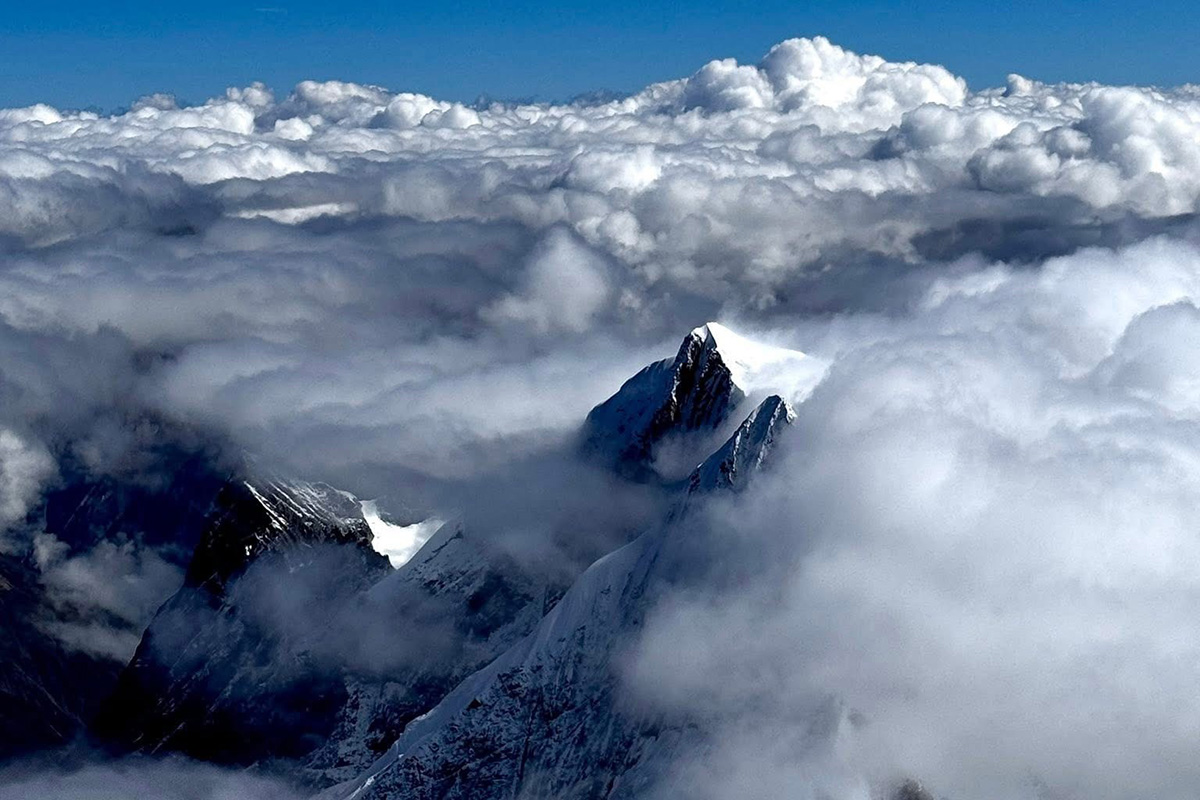
Late evening health check and summit briefing before departure. Wake at 1:00 AM for a light breakfast and final gear check before starting the climb from 1:30 AM to 2:00 AM. The route above Camp IV follows a defined ridge line with fixed ropes climbing steep snow and ice slopes toward the summit at 8,163 m. Reach the summit ridge at approximately 7 AM to 8 AM with Annapurna I at 8,091 m, Himalchuli at 7,893 m, Ganesh Himal at 7,422 m, and the Tibetan plateau visible in a wide 360-degree panorama. The summit of Manaslu is broad and flat, offering one of the finest summit panoramas in the Himalayas. Spend 15 to 20 minutes on the summit before beginning the careful descent down the fixed ropes, past Camp IV and Camp III, to Camp II or Camp III for overnight, depending on conditions and climber fatigue. Evening health check conducted after the demanding summit day. Overnight at Camp II or Camp III.
Morning health check and descent briefing. Descend from Camp II or Camp III to Camp I at 5,700 m. The descent requires careful navigation on fixed ropes through the Yellow Band and steep snow sections. The body is significantly fatigued after summit day, so extra caution is required. Evening health check with careful attention to recovery. Overnight at Camp I.
Morning health check and final descent briefing. Descend from Camp I to Base Camp at 4,800 m on glacier terrain and rocky moraine. The final section back to Base Camp is emotional as climbers have returned from the summit of an 8,000 m peak. Evening health check conducted with careful attention to recovery. Overnight at Base Camp.
Morning health check and recovery assessment. Full rest day at Base Camp for recovery, gear sorting, and celebration with the support team. The medical team conducts thorough health assessments after the summit push. Evening celebration with the Sherpa team and kitchen crew. Evening health check with careful attention to recovery markers. Overnight at Base Camp.
Morning health check and return trek briefing. Begin the return trek from Manaslu Base Camp descending through the Manaslu Glacier moraine to Samagaun at 3,530 m. Physical recovery and improved oxygen saturation are noticeable at lower altitude after the days above 7,000 m. Pass by the Samagaun monastery one final time before checking into the teahouse. Evening health check with recovery assessment. Overnight at teahouse.
Morning health check and daily trek briefing. The trail descends through Lho and Sho back to Namrung at 2,630 m, with the forests becoming denser as altitude drops. Wide views of Manaslu and the surrounding peaks are visible throughout the descent on clear days. Evening health check conducted. Overnight at teahouse.
Morning health check and descent briefing. Continue the descent through the Budhi Gandaki Valley, passing through Deng, Jagat, and other villages before reaching Machha Khola at 900 m. The descent of over 1,700 meters requires careful pacing and trekking poles to protect your knees on the rocky trail. Evening health check conducted. Overnight at teahouse.
Morning health check and departure briefing. Depart Machha Khola by private luxury Land Cruiser for the 8 to 9-hour drive back to Kathmandu along the rough road following the Budhi Gandaki River. The road winds through terraced hillsides and small towns before reaching the Kathmandu Valley. Arrive in Kathmandu in the late afternoon. Your Kalapatthar completion certificate is issued, and the expedition officially concludes with a hotel night included. Expedition celebration dinner with the full guide team, Sherpa staff, and kitchen crew in Kathmandu. Evening health check conducted. Overnight at a 5-star hotel.
Enjoy your last breakfast in Nepal at the 5-star hotel. Return your complimentary rental gear (high-altitude down suit and four-season sleeping bag) to the Kalapatthar representative. The Kalapatthar team arranges a private luxury Land Cruiser airport transfer to Tribhuvan International Airport. Your expedition leader accompanies you to the airport for a final farewell. Check in for your international flight and clear immigration. Board your flight home with the memories of summiting Mount Manaslu at 8,163 meters, one of the world's fourteen 8,000-meter peaks.
This Kalapatthar Trek & Expedition package runs for 38 days, including arrival and preparation in Kathmandu, the approach trek, high camp rotation schedule, summit climb with three reserve days, and return to Kathmandu with hotel nights at both ends.
The expedition is rated Extreme (8,000m Expedition) and requires prior high-altitude mountaineering experience above 7,000 m, as well as demonstrated proficiency with fixed rope climbing and oxygen systems. The route involves fixed ropes, steep snow slopes of 40 to 50 degrees, and climbing in the death zone above 8,000 m.
Prior high-altitude mountaineering experience above 7,000 m is mandatory for this expedition. Previous experience on peaks such as Cho Oyu, Manaslu, or Shishapangma is highly recommended before attempting Everest or similar 8,000 m peaks.
The highest point is the summit of Manaslu at 8,163 m, the eighth highest mountain in the world. Camp IV at 7,400 m is the highest overnight camp on the expedition.
Yes, altitude sickness, including AMS, HAPE, and HACE is a serious risk at altitudes above 8,000 m in the death zone. Kalapatthar provides a certified high-altitude doctor at Base Camp throughout the expedition, and guides conduct twice-daily health monitoring with immediate descent protocols for any serious symptoms. Supplemental oxygen is mandatory above 7,000 m.
Five permits are required: the Manaslu climbing royalty (USD 1,800 autumn or USD 1,500 spring), Manaslu Restricted Area permit, Manaslu Conservation Area permit at NPR 3,000, TIMS card, and a garbage deposit of USD 500. All are processed by Kalapatthar at official rates.
Yes, a licensed climbing guide with IFMGA or UIAGM certification is legally required for any Manaslu summit attempt. Kalapatthar provides IFMGA/UIAGM certified expedition leaders as standard on this package.
Accommodation is a 5-star hotel in Kathmandu for four nights, quality teahouses on the approach trek, luxury dome tents with heated bedding at Base Camp, and fully equipped insulated expedition tents at Camp I, Camp II, Camp III, and Camp IV.
Three-course freshly prepared meals are served daily at Base Camp with unlimited snacks, fruits, tea, and coffee. Full hygienic kitchen service is provided at all high camps. Dal bhat, pasta, fried rice, noodle soups, and Tibetan bread are available at teahouses on the approach. Vegetarian requirements are accommodated with advance notice.
Yes, comprehensive travel insurance covering high-altitude mountaineering above 8,200 m and emergency helicopter evacuation is mandatory for this expedition. Proof of valid insurance must be presented to the expedition leader at the Day 1 briefing. Participation is not permitted without confirmed coverage.
24-hour Wi-Fi is available at Base Camp throughout the expedition. Some teahouses on the approach offer Wi-Fi for a small fee, but connectivity is not available at Camp I, Camp II, Camp III, or Camp IV.
Blue sheep and Himalayan tahr are commonly seen near Samagaun, red pandas live in the lower bamboo forests of the Manaslu Conservation Area, and snow leopards are documented but very rarely sighted in the region.
Manaslu is widely regarded as the best training peak for Everest, making it suitable for climbers stepping up from 7,000 m peaks without prior 8,000 m experience. However, prior high-altitude experience above 7,000 m is mandatory.
Booking six to eight months in advance is strongly recommended for the autumn peak season when permits, IFMGA guides, Sherpa teams, and logistics must be arranged well ahead of departure.
Based on Himalayan Database records and expedition operator data from 2015 to 2025, the overall success rate for Manaslu on professionally guided expeditions is approximately 65 to 75 per cent. Autumn (September to October) sees rates of 70 to 80 per cent while spring (March to May) averages 60 to 70 per cent. Proper acclimatisation, fitness level, weather conditions, and use of supplemental oxygen are the primary factors.
Contact Kalapatthar Trek & Expedition Pvt. Ltd. directly with your preferred travel dates, group size, and any special requirements to receive a personalised quote and full pre-departure support from the expedition team.
Manaslu has the highest success rate among the fourteen 8,000 m peaks for first-time climbers, with approximately 70 to 80 per cent of well-prepared individuals reaching the summit in good weather conditions.
The expedition includes a standard allocation of 4 to 5 oxygen bottles per climber, used at a flow rate of 2 to 3 litres per minute from Camp III at 6,800 m to the summit and back.
Kalapatthar has a clear descent protocol where any climber showing signs of HAPE or HACE is immediately escorted down by a guide or Sherpa, with helicopter evacuation available from Base Camp if needed.
Climbers must be at least 18 years old with no upper age limit, but a comprehensive medical examination including ECG and chest X-ray is required before the expedition start date.

Member Since 2026




Leave a review