

46 Days
Daily Tour
10 people
___
The Mount Everest expedition is the world’s most iconic and demanding mountaineering challenge, drawing elite climbers from across the globe to its perilous slopes. The summit reaches 8,848.86 metres, the highest point on Earth. The route follows the historic South Cool through four high camps (C1, C2, C3 & C4) above Base Camp, crossing the Khumbu Icefall, South Summit, and Hillary Step before reaching the top of world.
Sir Edmund Hillary and Tenzing Norgay Sherpa completed the first successful ascent on 29 May 1953 via normal route. We manage this expedition with IFMGA and UIAGM certified expedition leaders and legend Sherpas who are multiple time 8,000-metre sumitters. The itinerary includes a pre-acclimatisation climb of Lobuche East at 6,119 metres and two full days of ice climbing training at the Khumbu Icefall and proper rotation spending couple of nights at C2 and reching to C3 before attempting summit push.
A dedicated medical team is stationed at Base Camp throughout the expedition, providing medical facilities and 24 hrs doctor communication for the consultation and health monitoring for every climber in each day. Strategic helicopter transfers to Namche Bazaar after rotation climbs support faster recovery and stronger acclimatisation. This Mount Everest Expedition package is fully guided and permit-inclusive in the Khumbu region.
Arrive at Tribhuvan International Airport and transfer to your 5-star hotel in Thamel by private luxury Land Cruiser with the Kalapatthar team. The evening includes a traditional Nepali welcome dinner with cultural dance and live music, and a full expedition briefing covering permits, climbing safety protocols, and the gear checklist. Your guide conducts the first health check covering oxygen saturation, pulse rate, temperature, and general baseline condition. Overnight at a 5-star hotel.
Morning medical briefing and baseline health assessment conducted by the expedition doctor. Permit processing, equipment check, and final briefing with the full guide and Sherpa team. Gear distribution, including complimentary high-altitude down suit and four-season sleeping bag rental. Free afternoon for rest or Kathmandu sightseeing. Evening health check and team meeting to review final preparations. Overnight at a 5-star hotel.
Early morning departure briefing at the hotel before transfer to the domestic airport. Take the 35-minute scenic flight from Kathmandu to Lukla at 2,840 m with wide Himalayan views on clear days. Lukla airport runway is 527 m long with a 12% gradient, one of the most challenging airports in the world. Arrival briefing at Lukla including trail safety and daily expectations. Trek 8 km descending gently along the Dudh Koshi River through pine forests and Sherpa villages to Phakding at 2,610 m. Register Sagarmatha National Park permit at the checkpoint near Phakding. Evening health check conducted by your guide with oxygen saturation recorded. Overnight at teahouse.
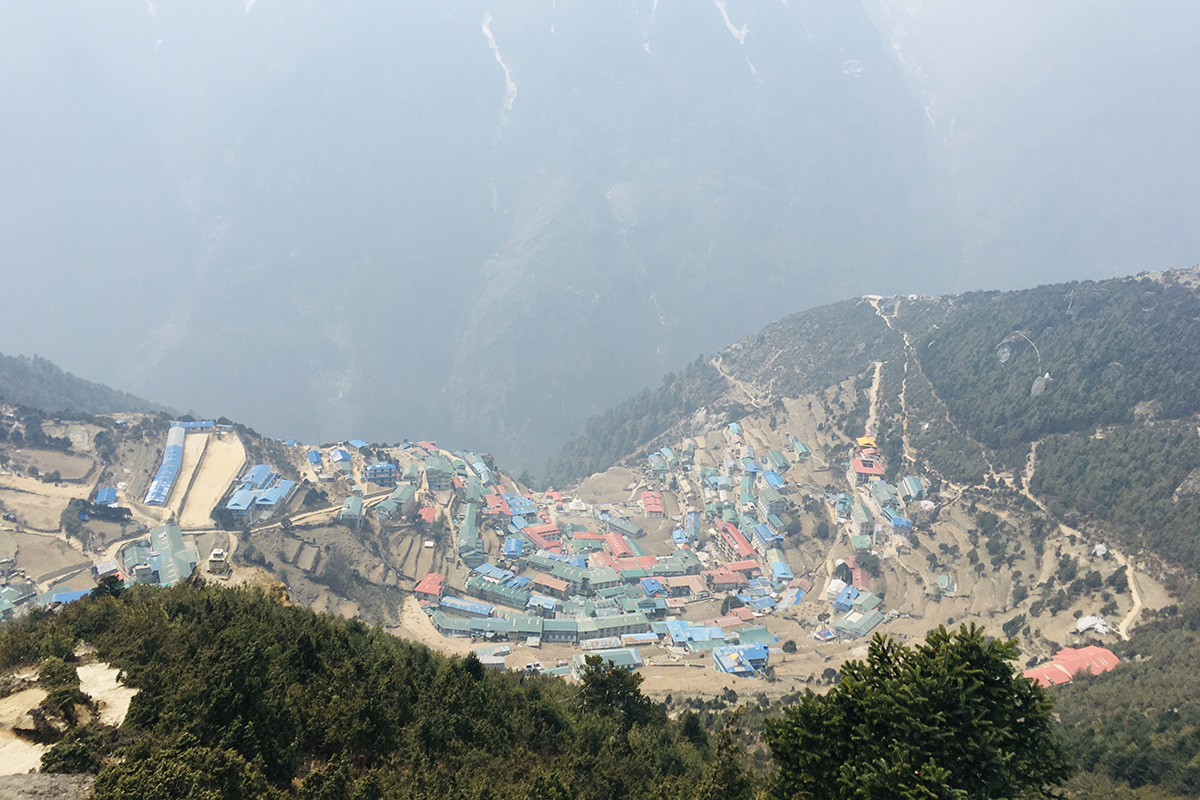
Morning health check and daily trek briefing before departure. Trek 10 km, crossing the Dudh Koshi River multiple times on high suspension bridges, including the famous Hillary Bridge. Enter Sagarmatha National Park gate at Monjo at 2,835 m. Complete a steep ascent of 2 to 3 hours on the final section to Namche Bazaar at 3,440 m, the Sherpa capital of the Khumbu region. Namche is the administrative and trading hub of the Khumbu with markets, bakeries, gear shops, and wide views of Kongde Ri (6,187 m) and Thamserku (6,623 m). Evening health check with oxygen saturation and pulse rate recorded. The guide answers questions about the coming acclimatisation day. Overnight at teahouse.
Morning health check and altitude lecture covering AMS symptoms, prevention, and treatment options. Acclimatisation hike to Everest View Hotel at 3,880 m (2-3 hours round trip) for direct views of Everest (8,848 m), Lhotse (8,516 m), and Ama Dablam (6,812 m). Visit Sherpa Museum and local market to learn about Sherpa culture and mountaineering history. Rest and hydrate with 4 to 5 litres of water minimum. Evening health check with careful attention to any AMS indicators. Overnight at teahouse.
Morning health check and trek briefing with route overview. Trek 9 km following a relatively flat contour from Namche to Kyangjuma. Descend to the Dudh Koshi River at Phunki Tenga (3,250 m), the lowest point of the day. Complete a steep ascent of 1.5 to 2 hours through rhododendron and pine forest to Tengboche at 3,860 m. Tengboche Monastery is the largest Tibetan Buddhist monastery in the Khumbu region, established in 1916 and rebuilt after a 1989 fire. Visit the monastery in the late afternoon to hear monks chanting. Evening health check with oxygen saturation recorded. Overnight at a teahouse.
Morning health check and daily briefing focusing on altitude awareness. Trek 11 km descending through rhododendron forest to Deboche. Cross the Imja River and climb to Pangboche village at 3,985 m, home to the oldest monastery in the Khumbu region (circa 1667). Continue through alpine meadows and yak pastures with close views of Ama Dablam (6,812 m) on the right side of the valley. Dingboche at 4,410 m sits in a wide valley surrounded by stone walls protecting barley fields from the wind. This is the last permanent settlement with year-round residents. Evening health check with careful attention to oxygen saturation and early AMS signs. Overnight at teahouse.
Morning health check and briefing covering the memorial stupas section. Trek 9 km climbing gradually through the alpine zone past the memorial stupas for climbers who died on Mount Everest. Over 100 stone cairns and prayer flags mark the names of famous Sherpas and mountaineers lost on the mountain, including Scott Fischer (d. 1996) and Babu Chiri Sherpa (d. 2001). Lobuche at 4,940 m is a small settlement with basic teahouses and wide views of Lobuche Peak (6,119 m) and Nuptse (7,861 m). Evening health check with careful attention to oxygen saturation and hydration levels. Overnight at teahouse.
Morning health check and final approach briefing before reaching Base Camp. Trek 8 km following the Khumbu Glacier moraine past ice seracs and crevasses to Everest Base Camp at 5,364 m. The Khumbu Glacier is 15 km long and is the highest glacier in the world. Arrival and complete establishment of Base Camp, including personal dome sleeping tents with heated bedding, dining hall, kitchen tent, medical facility, hot shower tent, toilet tent, solar and generator power, and 24-hour Wi-Fi connectivity. Twice-daily health monitoring begins at this altitude. Evening health check marks the beginning of twice-daily monitoring. Overnight at Base Camp.
Morning health check and altitude lecture covering AMS symptoms, prevention, and treatment options. The medical team conducts thorough health assessments to ensure all climbers are ready for the climbing phase. Rest, hydrate with 4 to 5 litres of water daily, and finalise gear checks. Acclimatisation at Base Camp typically requires 3 to 5 days before moving higher. Evening health check with oxygen saturation and pulse rate recorded. Overnight at Base Camp.
Morning health check and briefing on the upcoming Lobuche Peak climb. Continue resting and hydrating while the medical team monitors acclimatisation progress. Gear review and equipment adjustments as needed. Normal oxygen saturation at Base Camp ranges from 75% to 85% compared to 95% to 99% at sea level. Evening health check with careful attention to any AMS indicators. Overnight at Base Camp.
Morning health check and briefing for the Lobuche Peak training phase. Trek 6 to 7 hours descending from Everest Base Camp to Lobuche Peak Base Camp at 4,940 m. Lobuche East (6,119 m) is a trekking peak classified by the Nepal Mountaineering Association. This warm-up climb provides essential altitude exposure and technical practice before the Everest summit push. Evening health check with oxygen saturation recorded. Overnight at Lobuche Peak Base Camp.
Morning health check and technical training briefing. Climb steeply along rocky moraine toward Lobuche High Camp at 5,400 m. This section allows climbers to practise crampon technique and fixed rope movement at altitude in a lower consequence environment than Everest. Comprehensive training session covering crampon use, rope handling, fixed line climbing, jumar ascent, and altitude safety techniques. Evening health check with careful attention to oxygen saturation and fatigue levels. Overnight at High Camp.
Early morning health check and summit briefing at 2 AM. Wake at 3 AM for the summit push on Lobuche East at 6,119 m following fixed ropes up a steep snow slope and ridge line. The standard route has approximately 300 m of fixed ropes on the final summit slope at 45 to 50 degrees. Reach the summit at approximately 7 AM to 8 AM with wide views of Everest (8,848 m), Lhotse (8,516 m), Nuptse (7,861 m), Ama Dablam (6,812 m), and the Khumbu Glacier. Descend to High Camp for a short rest, then continue down to Lobuche Base Camp by mid-afternoon. Evening health check conducted after the demanding summit day. Overnight at Lobuche Base Camp.
Morning health check and recovery briefing after the Lobuche summit. Return trek from Lobuche Base Camp to Everest Base Camp taking 5 to 6 hours. Rest day at Base Camp with final gear checks and oxygen system review. The pre-acclimatisation climb of Lobuche East has provided essential altitude adaptation and technical practice. Evening health check with careful attention to recovery markers. Overnight at Base Camp.
Morning health check and briefing on the first rotation climb ahead. The medical team conducts thorough health assessments to ensure all climbers are ready for rotation climbs. Final checks on all equipment and oxygen systems. Daily professional Himalayan weather forecasting service active throughout the expedition. Evening health check with oxygen saturation recorded. Overnight at Base Camp.
Morning health check and weather review for the coming rotation. Continue resting and hydrating while monitoring acclimatisation progress. Guide team reviews Khumbu Icefall route and safety protocols. The Khumbu Icefall moves approximately 1 to 2 metres per day, requiring constant route maintenance by the Icefall Doctors. Evening health check with careful attention to any AMS indicators. Overnight at Base Camp.
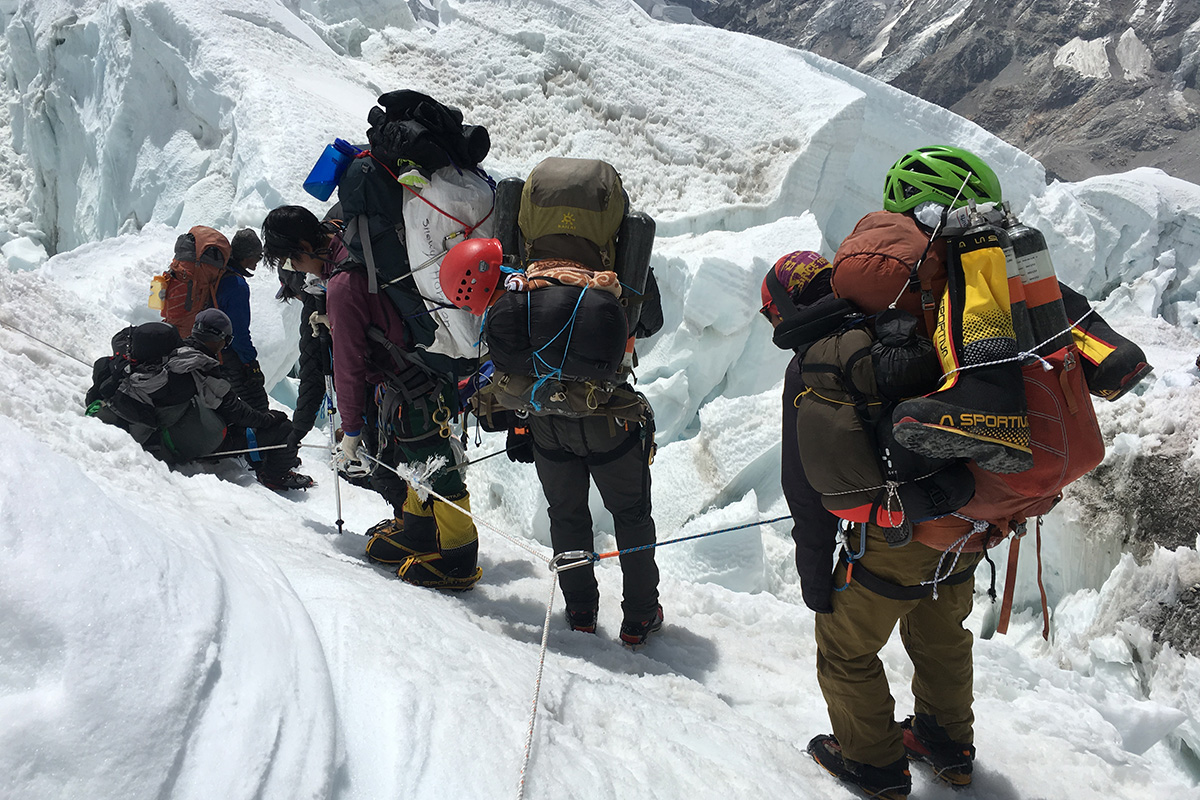
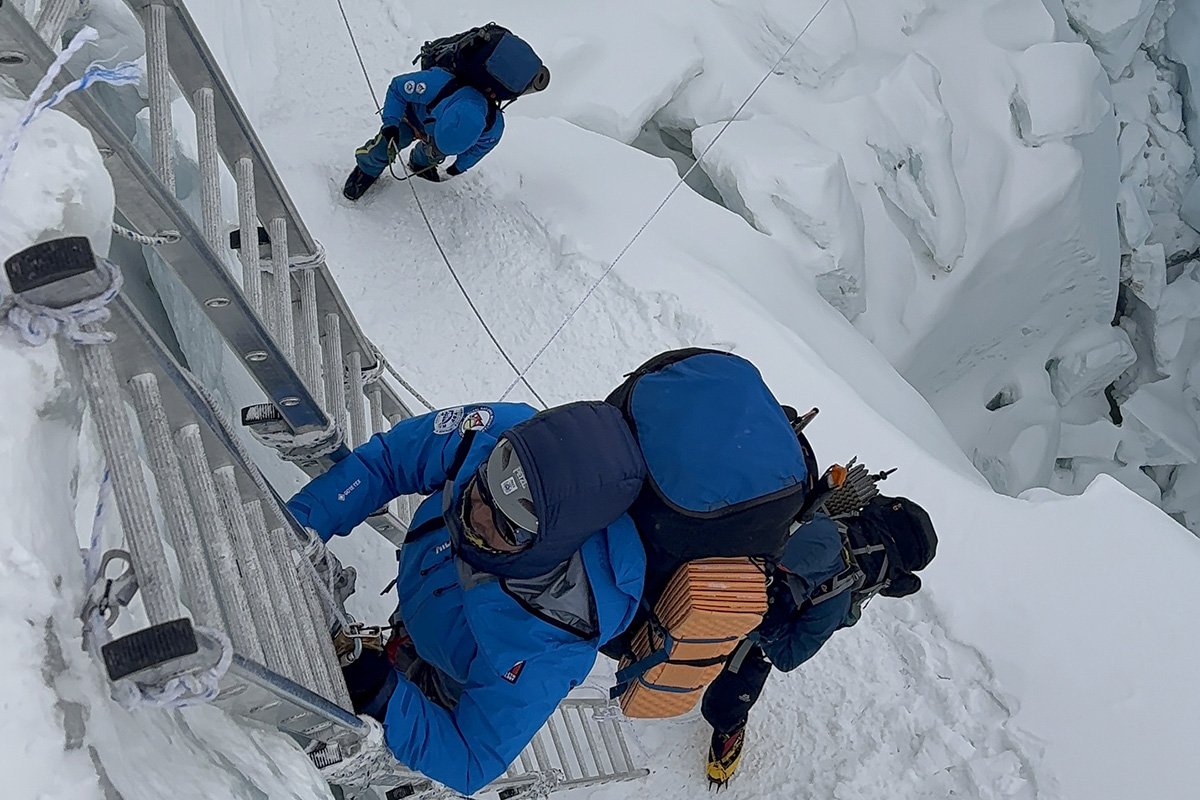
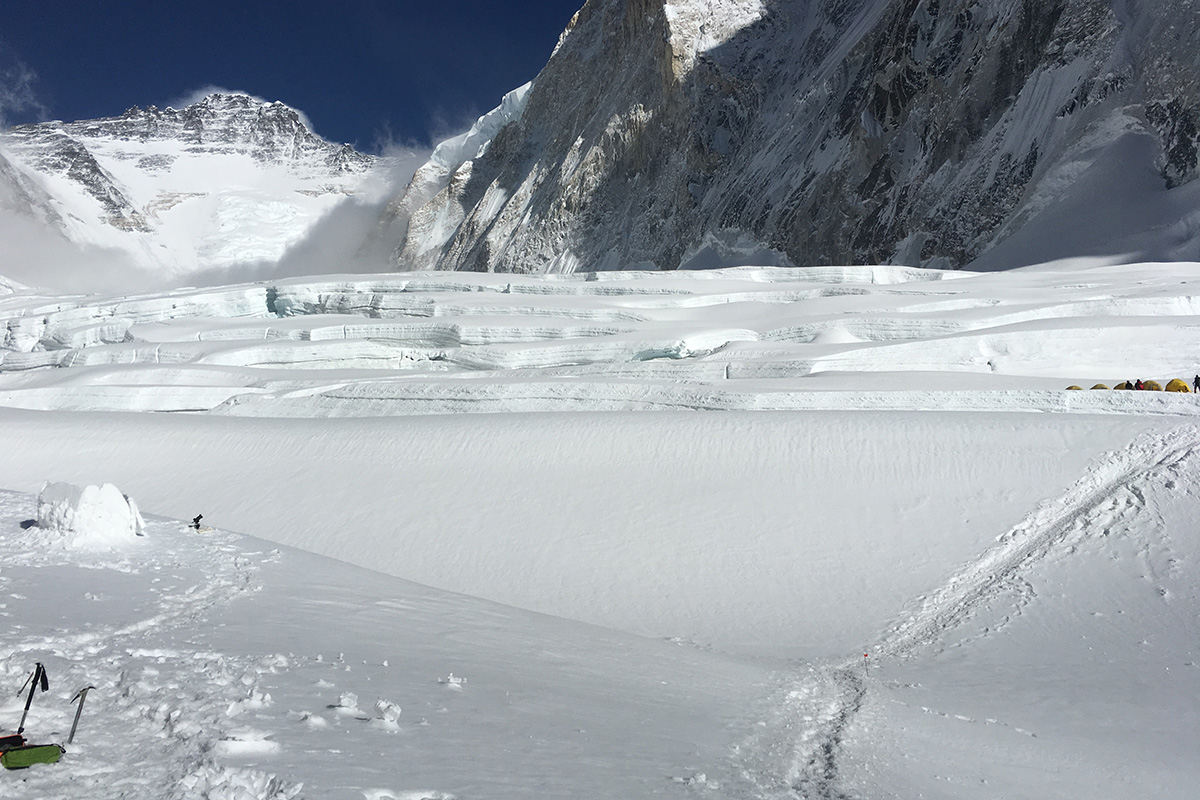
Morning health check and Khumbu Icefall safety briefing before departure. First rotation climb from Base Camp through the Khumbu Icefall to Camp I at 6,065 m. The Khumbu Icefall is a constantly shifting glacier of seracs and crevasses requiring ladder crossings (typically 6 to 12 ladders per crossing) and navigation around massive ice blocks. Fixed ropes and ladders are managed by the Icefall Doctors team, a dedicated group of Sherpas employed by the Sagarmatha Pollution Control Committee (SPCC). Camp I is located at 6,065 m above the icefall on a relatively flat area of the Western Cwm. Evening health check with careful attention to oxygen saturation. Overnight at Camp I.
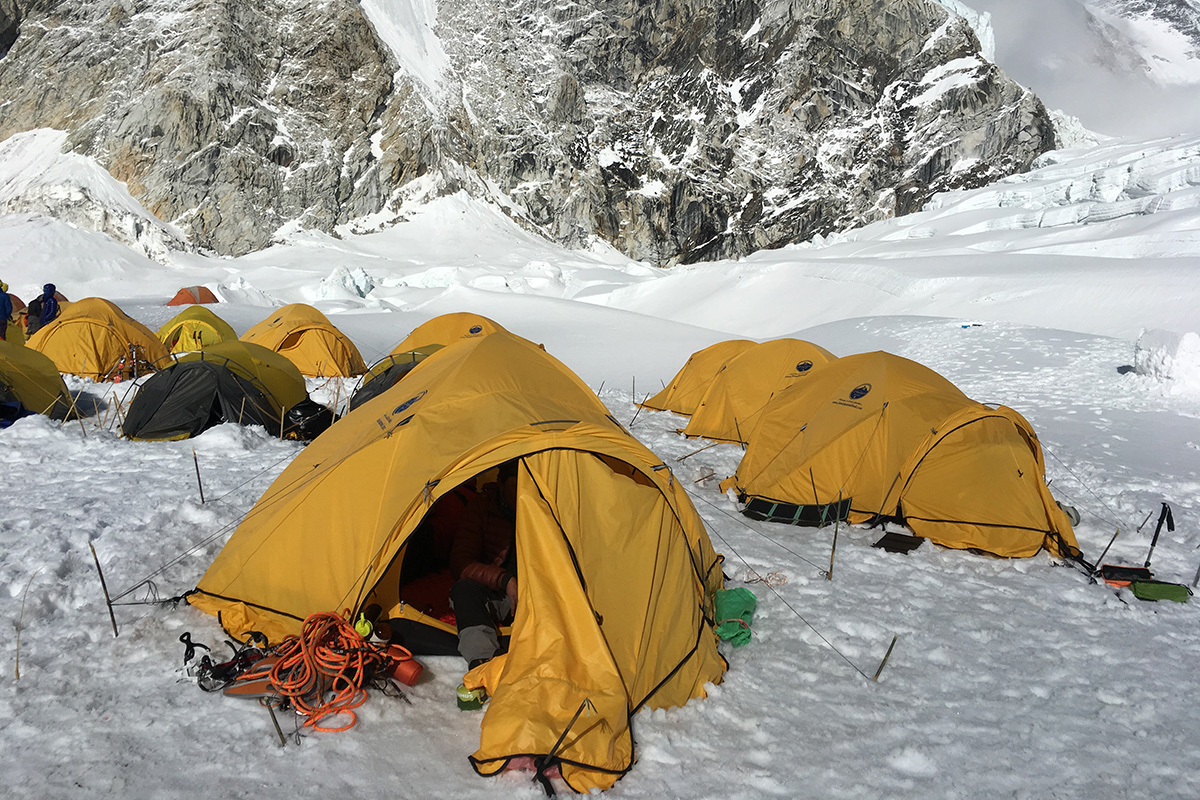
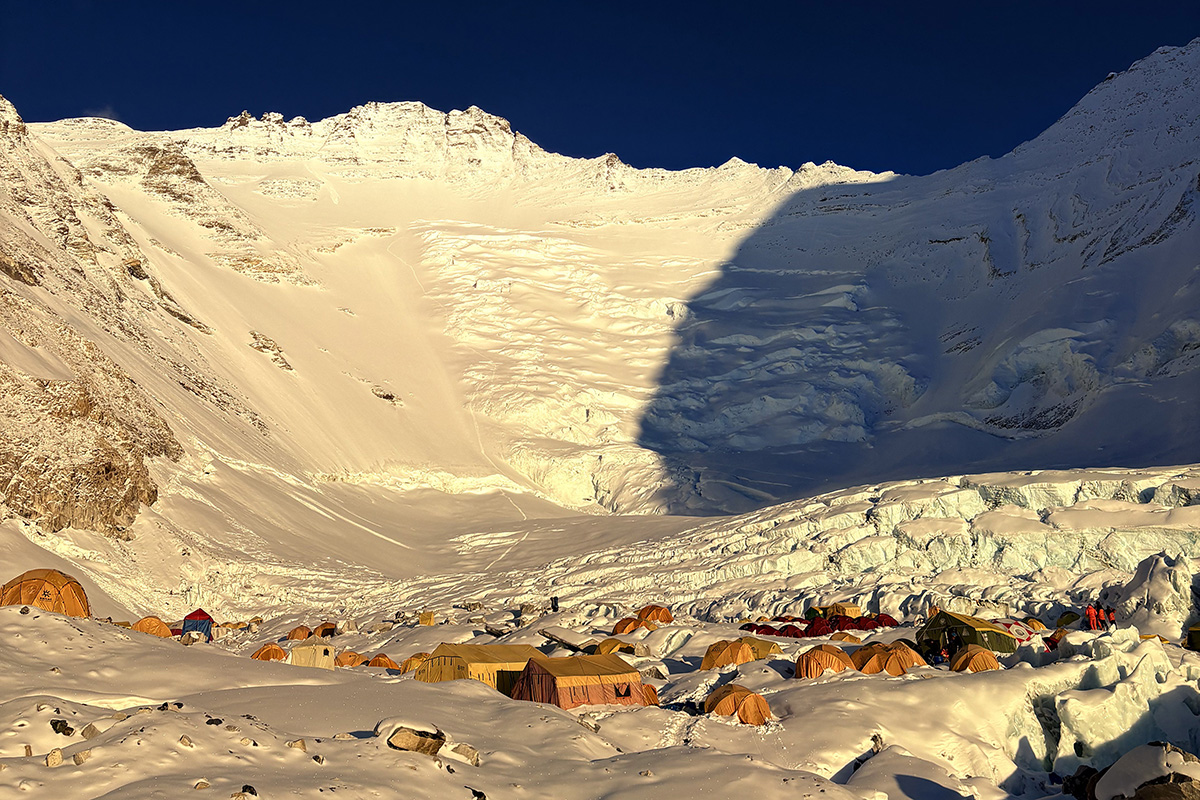
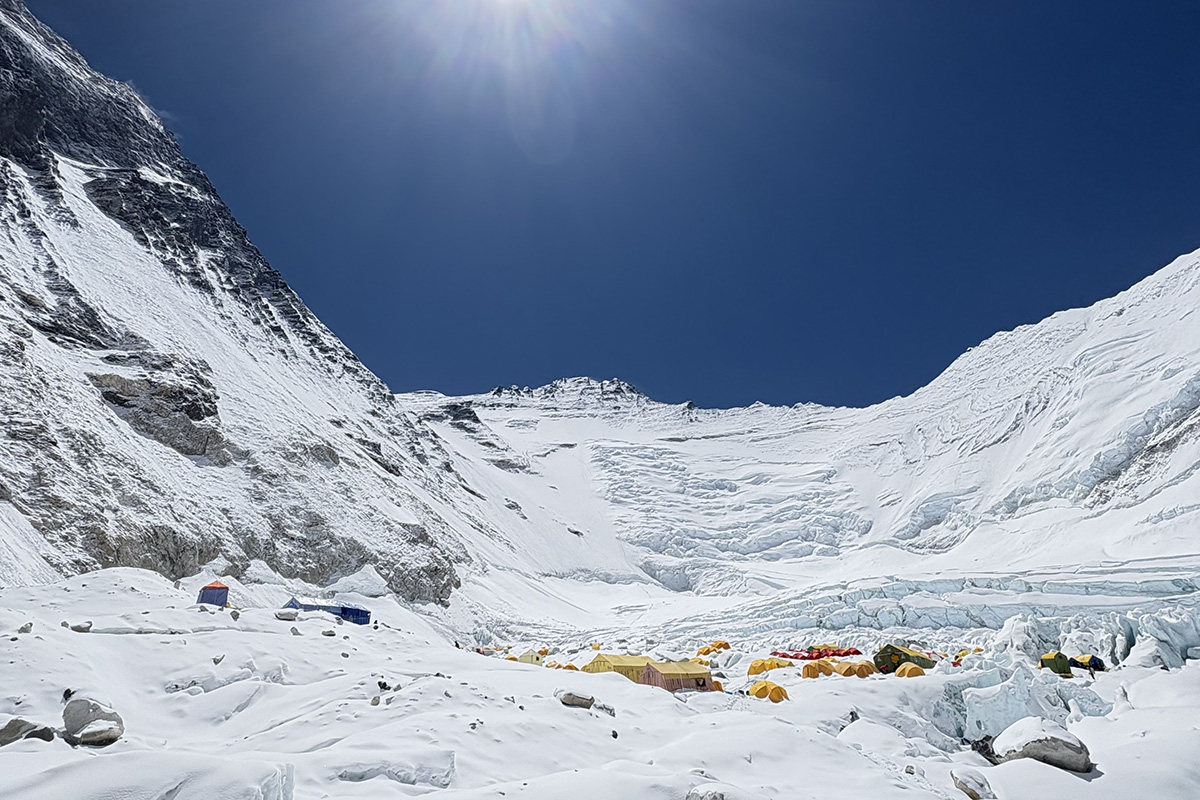
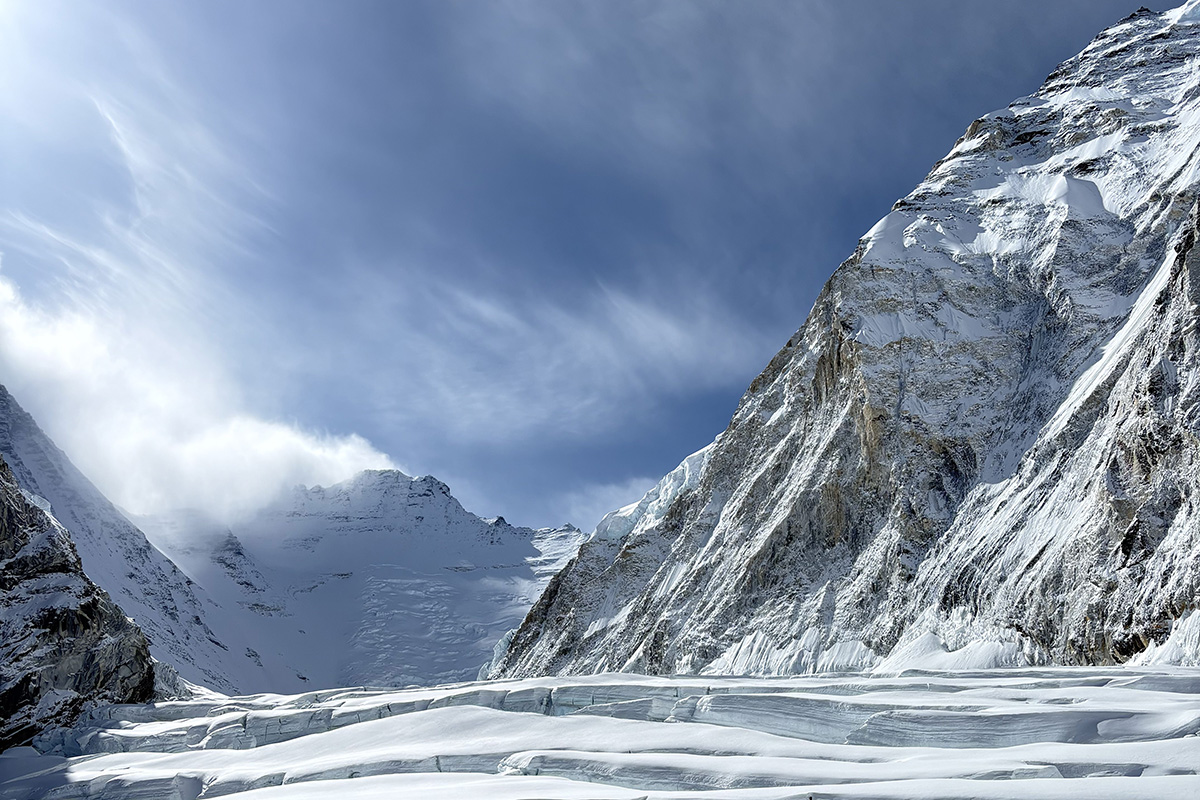
Morning health check and briefing on the Western Cwm section. Trek from Camp I to Camp II following the Western Cwm, a flat, gently ascending glacial valley known as the Valley of Silence. The Western Cwm is approximately 5 km long and is surrounded by the peaks of Everest, Lhotse, and Nuptse. Camp II at 6,500 m is also known as Advanced Base Camp (ABC), located on the glacial moraine at the head of the Western Cwm. This is the primary staging camp for rotations and the highest camp with luxury facilities including heated dining tent and communication systems. Evening health check with careful attention to oxygen saturation and hydration. Overnight at Camp II.
Morning health check and acclimatisation briefing at altitude. Rest day allowing the body to adapt to 6,500 m before the Lhotse Face climb. Short reconnaissance hike toward Camp III to assess route conditions. Medical monitoring continues with twice-daily checks. Normal oxygen saturation at 6,500 m ranges from 65% to 75%. Evening health check with oxygen saturation and pulse rate recorded. Overnight at Camp II.
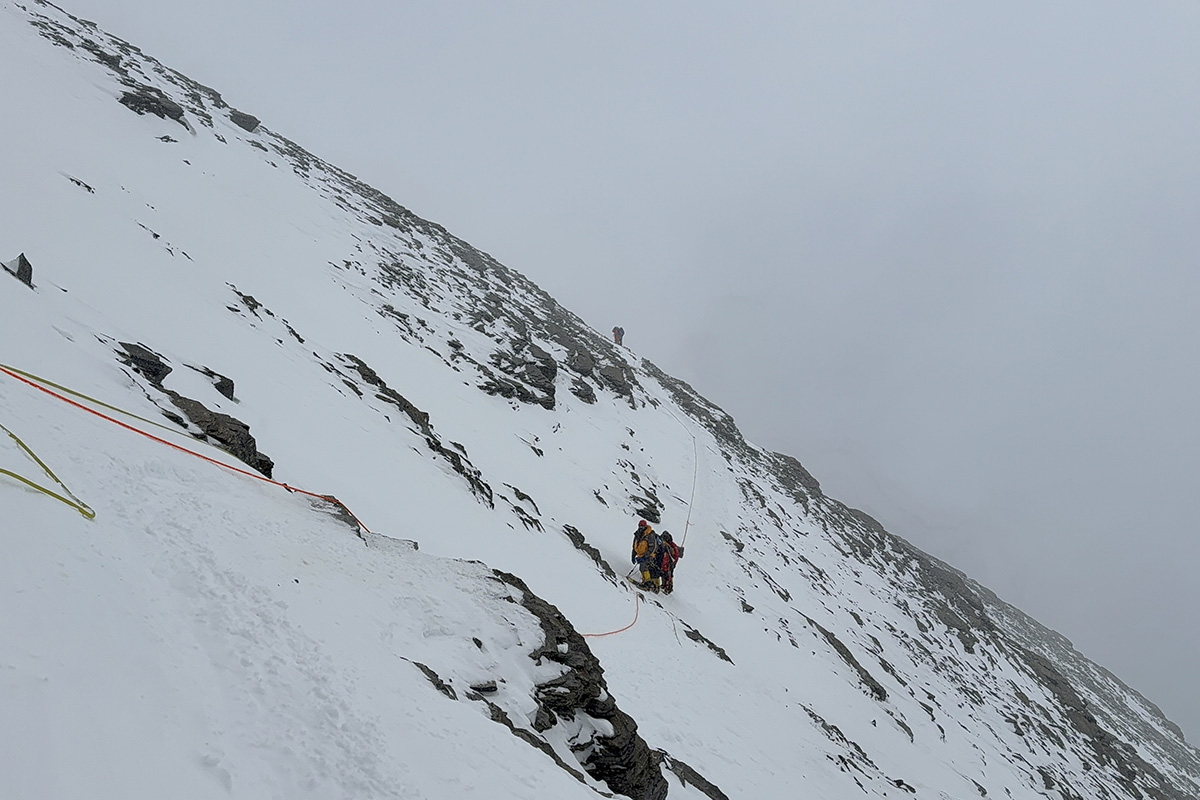
Morning health check and technical briefing for the Lhotse Face climb. Ascend the Lhotse Face, a steep 1,200 m ice slope at 40 to 50 degrees with fixed ropes in place throughout the season. The Lhotse Face is approximately 1.5 km wide and is the most sustained steep section of the South Col route. Touch Camp III at 7,200 m on the Lhotse Face, then descend back to Camp II. This rotation provides essential altitude exposure and technical practice on steep fixed ropes. Evening health check with careful attention to fatigue and oxygen saturation. Overnight at Camp II.
Morning health check and descent briefing. Complete the first rotation cycle by descending from Camp II back to Base Camp through the Western Cwm and Khumbu Icefall. The descent requires careful navigation of the icefall ladders and fixed ropes. Rest and recovery at Base Camp with hot meals and proper beds. Evening health check conducted after the rotation with careful attention to recovery markers. Overnight at Base Camp.
Morning health check and medical assessment after the first rotation. Medical team conducts thorough health assessments to monitor acclimatisation progress. Daily professional Himalayan weather forecasting service active. The first rotation typically improves oxygen saturation by 5% to 10% upon return to Base Camp. Evening health check with oxygen saturation and pulse rate recorded. Overnight at Base Camp.
Morning health check and briefing on the upcoming rest phase. Continue resting and hydrating while the medical team assesses climbers for the next phase. Gear review and equipment adjustments as needed. Evening health check with careful attention to any AMS indicators. Overnight at Base Camp.
Morning health check and helicopter departure briefing. Strategic helicopter transfer from Everest Base Camp (5,364 m) to Namche Bazaar (3,440 m). Helicopter weight limit is 100 kg per person, including personal gear; excess baggage will be carried by porters or yaks. The flight duration is approximately 20 to 25 minutes, compared to 2 to 3 days of trekking. Lower altitude allows enhanced physical recovery and improved oxygen saturation. Evening health check conducted at lower altitude with oxygen saturation recorded. Overnight at a quality teahouse in Namche Bazaar.
Morning health check and recovery briefing at lower altitude. Full rest day allowing the body to recover from demanding rotation climbs. Oxygen saturation at 3,440 m typically returns to 88% to 92%, significantly improving recovery. Short optional walk to maintain activity. Excellent food and proper rest prepare climbers for the summit push. Evening health check with oxygen saturation and pulse rate recorded. Overnight at teahouse.
Morning health check and medical assessment of recovery progress. Continue resting while monitoring oxygen saturation improvements at lower altitude. Medical team conducts regular health checks throughout the rest period. Evening health check with careful attention to recovery markers. Overnight at teahouse.
Morning health check and briefing on the return trek to Base Camp. Daily short walks to maintain activity levels, such as the 1-hour walk to Khumjung village (3,780 m). Proper nutrition and hydration continue as the body recovers. Evening health check with oxygen saturation recorded. Overnight at teahouse.
Morning health check and final recovery assessment before return trek. Medical team clears climbers for the return to Base Camp. Gear review and preparation for the summit rotation ahead. Evening health check with careful attention to any remaining fatigue. Overnight at teahouse.
Morning health check and pre-departure briefing for the return trek. Final rest day at lower altitude before heading back up. The medical team conducts final health assessments to ensure all climbers are ready. Evening health check and team meeting to review the summit rotation plan. Overnight at teahouse
Morning health check and trek briefing for the return to higher altitude. Begin the return trek from Namche Bazaar to Tengboche at 3,860 m. Take a steady pace to allow the body to re-acclimatise after the lower altitude rest. The ascent gain of 420 m is within safe daily limits. Evening health check with oxygen saturation recorded as altitude increases. Overnight at teahouse.
Morning health check and final approach briefing. Complete the return trek from Lobuche to Everest Base Camp, following the Khumbu Glacier moraine for the final section. Rejoin the expedition team at Base Camp for final preparations before the summit push. Evening health check conducted with careful attention to recovery after the return trek. Overnight at Base Camp.
Morning health check and medical assessment after the return trek. Medical team conducts final health assessments to clear climbers for the summit rotation. Daily professional Himalayan weather forecasting service active. Evening health check with oxygen saturation recorded. Overnight at Base Camp.
Morning health check and weather forecast briefing. Continue waiting for optimal weather window for the summit push. Final oxygen system checks ensure all masks, regulators, and bottles are functioning correctly. The standard summit window in May is typically 3 to 7 days when the jet stream moves north. Evening health check with careful attention to oxygen saturation. Overnight at Base Camp.
Morning health check and comprehensive summit briefing by the expedition leader. The briefing covers route details, timing, emergency procedures, weather forecast, and summit day protocols. Final gear check and oxygen system review completed. Each climber receives their oxygen system, including mask, regulator, and bottle allocation (5 to 6 bottles per climber). Evening health check with careful attention to climber readiness. Overnight at Base Camp.
Morning health check and Khumbu Icefall briefing before departure. First move of the summit rotation from Base Camp through the Khumbu Icefall to Camp I at 6,065 m. The icefall ladders and fixed ropes are checked and maintained by the Icefall Doctors team. This is the climber's 4th to 6th crossing of the icefall, depending on previous rotations. Evening health check with careful attention to oxygen saturation. Overnight at Camp I.
Morning health check and daily briefing on the Western Cwm crossing. Move from Camp I to Camp II across the Western Cwm, the Valley of Silence. Camp II at 6,500 m serves as the Advanced Base Camp for the summit rotation. This camp has heated dining facilities and communication systems. Evening health check with careful attention to oxygen saturation and hydration. Overnight at Camp II.
Morning health check and acclimatisation briefing at Camp II. Rest day allowing the body to adapt to 6,500 m before the Lhotse Face climb. Medical monitoring continues with twice-daily checks. Normal oxygen saturation at 6,500 m ranges from 65% to 75%. This rest day is critical for summit success. Evening health check with oxygen saturation and pulse rate recorded. Overnight at Camp II.
Morning health check and technical briefing for the Lhotse Face ascent. Ascend the Lhotse Face on fixed ropes at 40 to 50 degrees to reach Camp III at 7,200 m. The Lhotse Face section requires approximately 3 to 4 hours of sustained fixed rope climbing. Supplemental oxygen is strongly recommended for safe climbing at this altitude, typically started at 2 litres per minute. Evening health check with oxygen system monitoring and careful attention to any AMS indicators. Overnight at Camp III.
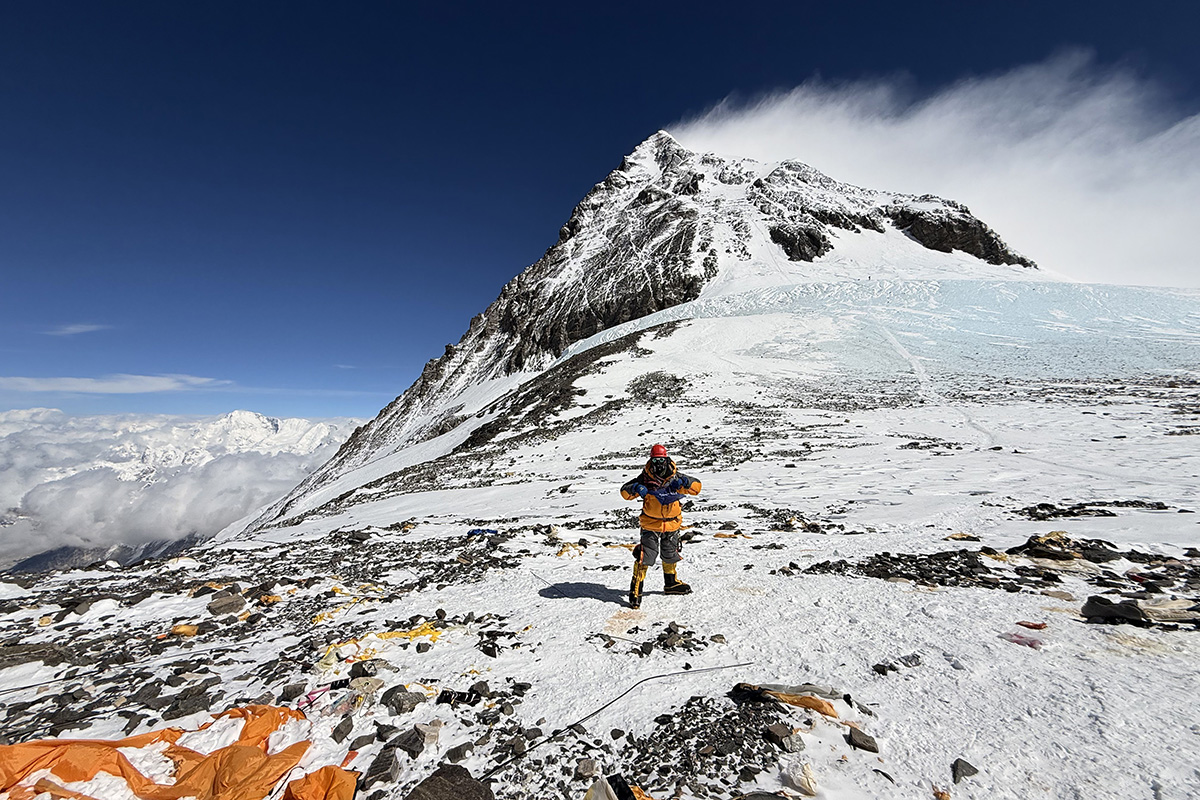
Morning health check and high-altitude briefing before the South Col climb. Continue climbing from Camp III to Camp IV on the South Col. This section passes through the Yellow Band (interlayered marble and schist requiring approximately 100 m of fixed rope) and Geneva Spur, crossing from the Lhotse Face onto the South Col. Camp IV at 7,920 m sits at the threshold of the death zone, where supplemental oxygen is mandatory for extended stays. Oxygen flow rate is increased to 3 to 4 litres per minute at this altitude. Evening health check with oxygen system verification and early rest for the summit push. Overnight at Camp IV.
Late evening health check and summit briefing before departure. Wake at 8 PM for light breakfast and final gear check. Start climbing at 10 PM under the stars with headlamps on. The route climbs along the southeast ridge past the Balcony (8,400 m), South Summit (8,750 m), and Hillary Step (8,790 m). The Hillary Step is a 12-metre granite wall originally named after Sir Edmund Hillary, modified by the 2015 earthquake but remains a key landmark. Reach the summit at approximately 6 AM to 8 AM with Makalu (8,485 m), Lhotse (8,516 m), Cho Oyu (8,188 m), and Kanchenjunga (8,586 m) visible in a 360-degree panorama. The summit of Everest offers the highest viewpoint on Earth at 8,848.86 m, with the entire Himalayan range visible on clear days. Spend 15 to 20 minutes on the summit before beginning the careful descent down the Hillary Step, past the South Summit, and back to Camp IV. Evening health check conducted after the demanding summit day with careful attention to frostbite and fatigue. Overnight at Camp IV.
Morning health check and descent briefing after the summit. Descend from Camp IV on the South Col to Camp II in the Western Cwm. The descent passes through Camp III on the Lhotse Face and requires careful navigation on fixed ropes. The body is significantly fatigued after summit day, so extra caution is required. Evening health check with careful attention to recovery after the summit descent. Overnight at Camp II.
Morning health check and final descent briefing. Complete the final descent from Camp II through the Western Cwm and Khumbu Icefall to Base Camp. The careful descent with safety checks ensures all climbers return safely from the mountain. The final crossing of the Khumbu Icefall is often emotional, marking the end of the climbing phase. An evening health check conducted with celebration briefing for the return to Kathmandu. Overnight at Base Camp.
Morning health check and departure briefing at Base Camp. Helicopter transfer from Everest Base Camp (5,364 m) to Lukla (2,840 m), taking approximately 20 to 25 minutes. From Lukla, connect to the domestic flight back to Kathmandu (1,400 m), taking approximately 35 minutes. Arrive in Kathmandu by mid-afternoon. Your Kalapatthar completion certificate is issued, and the expedition officially concludes with a hotel night included. Evening farewell meeting with the expedition leader. Overnight at a 5-star hotel.
Enjoy your last breakfast in Nepal at the 5-star hotel. Return your complimentary rental gear (high-altitude down suit and four-season sleeping bag) to the Kalapatthar representative. The Kalapatthar team arranges a private luxury Land Cruiser transfer to Tribhuvan International Airport. Your expedition leader accompanies you to the airport for a final farewell.
Check in for your international flight and clear immigration. Board your flight home with the memories of standing on the highest point on Earth, the summit of Mount Everest at 8,848.86 meters.
This Kalapatthar Trek & Expedition package runs for 46 days, including arrival and preparation in Kathmandu, the approach trek, pre-acclimatisation climb of Lobuche East, rotation climbs, rest period at Namche Bazaar, summit push, and return to Kathmandu with hotel nights at both ends.
The expedition is rated Extreme and requires prior high-altitude mountaineering experience above 7,000 m, as well as demonstrated proficiency with fixed rope climbing and oxygen systems. The route involves the Khumbu Icefall, Lhotse Face at 40 to 50 degrees, and climbing in the death zone above 8,000 m.
Prior high-altitude mountaineering experience above 7,000 m is mandatory for this expedition. Previous experience on peaks such as Manaslu (8,163 m) or Cho Oyu (8,188 m) significantly improves success probability, and from September 2025, a 7,000 m peak summit is legally required.
The highest point is the summit of Mount Everest at 8,848.86 m, the highest point on Earth. Camp IV at 7,920 m on the South Col is the highest overnight camp on the expedition.
Yes, altitude sickness, including AMS, HAPE, and HACE, is a serious risk at altitudes above 8,000 m in the death zone. Kalapatthar provides a certified high-altitude doctor at Base Camp throughout the expedition, and guides conduct twice-daily health monitoring with immediate descent protocols for any serious symptoms. Supplemental oxygen is mandatory above 7,200 m.
Five permits are required: the Mount Everest climbing royalty (USD 15,000 for spring), Sagarmatha National Park permit at NPR 3,000, Khumbu Municipality permit at NPR 2,000, and a garbage deposit of USD 4,000. A 7,000 m peak summit record may also be required from September 2025.
Yes, a licensed climbing guide with IFMGA or UIAGM certification is legally required for any Mount Everest summit attempt. Kalapatthar provides IFMGA/UIAGM certified expedition leaders as standard on this package.
Accommodation is a 5-star hotel in Kathmandu for six nights, quality teahouses on the approach trek, luxury dome tents with heated bedding at Base Camp, and fully equipped insulated expedition tents at Camp I, Camp II, Camp III, and Camp IV.
Three-course freshly prepared meals are served daily at Base Camp with unlimited snacks, fruits, tea, and coffee. Full hygienic kitchen service is provided at all high camps. Dal bhat, pasta, fried rice, noodle soups, and Tibetan bread are available at teahouses on the approach. Vegetarian requirements are accommodated with advance notice.
Yes, comprehensive travel insurance covering high-altitude mountaineering above 8,500 m and emergency helicopter evacuation is mandatory for this expedition. Proof of valid insurance must be presented to the expedition leader at the Day 1 briefing. Participation is not permitted without confirmed coverage that includes helicopter rescue to a minimum of 8,500 m elevation.
24-hour Wi-Fi is available at Base Camp throughout the expedition. Some teahouses on the approach offer Wi-Fi for a small fee, but connectivity is not available at Camp I, Camp II, Camp III, or Camp IV.
Himalayan tahr are commonly seen near Dingboche, musk deer live in mid-elevation forests, and snow leopards are documented but very rarely sighted in Sagarmatha National Park.
From September 2025, Nepal law requires climbers to first summit a 7,000 m peak in Nepal before applying for an Everest permit. Previous experience on peaks such as Manaslu or Cho Oyu is strongly recommended regardless of legal requirements.
Booking eight to twelve months in advance is strongly recommended for the spring peak season when permits, IFMGA guides, Sherpa teams, and logistics must be arranged well ahead of departure.
Based on Himalayan Database records from 1990 to 2025, the overall success rate for commercial expeditions on the South Col route is approximately 38 to 40 per cent for members above Base Camp. Proper acclimatisation, fitness level, weather conditions, and use of supplemental oxygen are the primary factors.
The expedition includes a standard allocation of 5 to 6 oxygen bottles per climber, used at a flow rate of 2 to 3 litres per minute from Camp III at 7,200 m to the summit and back.
Kalapatthar has a clear descent protocol where any climber showing signs of HAPE or HACE is immediately escorted down by a guide or Sherpa, with helicopter evacuation available from Base Camp if needed.
Climbers must be at least 18 years old with no upper age limit, but a comprehensive medical examination including ECG, chest X-ray, and blood tests is required before the expedition start date.
The 2-day Khumbu Icefall training provides real glacier experience on ladders, seracs, and vertical ice walls under expert Sherpa supervision, building technical confidence before the actual climb.
Contact Kalapatthar Trek & Expedition Pvt. Ltd. directly with your preferred travel dates, group size, and any special requirements to receive a personalised quote and full pre-departure support from the expedition team.
The Khumbu Icefall is a constantly shifting glacier between Base Camp at 5,364 m and Camp I at 6,065 m, featuring massive seracs, deep crevasses, and unpredictable ice collapses that require ladder crossings and fixed ropes for safe passage.
You will cross the Khumbu Icefall approximately 5 to 7 times during the expedition, including initial rotation climbs, the Lobuche Peak training phase return, and the final summit push.
The Icefall Doctors are a dedicated team of Sherpas who fix ropes, maintain ladders, and ensure safe passage through the Khumbu Icefall each season, managed by the Sagarmatha Pollution Control Committee (SPCC).
Kalapatthar provides a standardised oxygen system including masks, regulators, and Poisk cylinders that are tested and verified for high-altitude performance, and using the provided system is mandatory for safety and consistency.
All personal gear must be carried down from the mountain, and the USD 4,000 garbage deposit is refunded only after the Kalapatthar team verifies that all waste, including empty oxygen bottles, has been returned to Base Camp.

Member Since 2026















Leave a review