Insurance and Helicopter Evacuation for Trekking in Nepal 2027 Guide
Updated November 2026 by Mishek Limbu
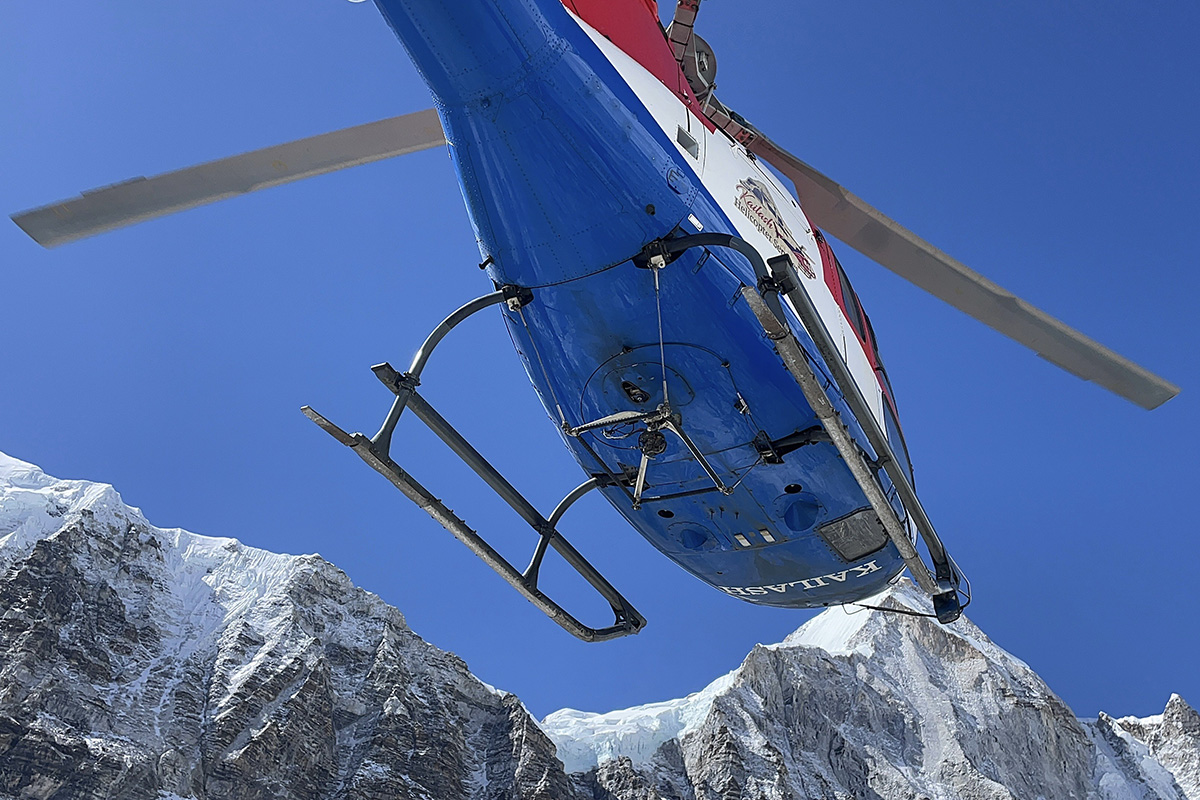
Helicopter evacuation insurance for Nepal is the policy feature that decides whether a medical emergency on the trail costs you a hospital stay or your savings. A rescue from the upper Khumbu commonly runs between $6,000 and $10,000, and helicopter operators usually want payment confirmed before the rotors turn. Our team coordinates evacuations from the mountain, and the pattern repeats: trekkers whose policy names helicopter evacuation at their altitude get an aircraft authorised quickly, while trekkers with vague wording lose time arguing about cover.
This guide explains what a rescue costs, how an evacuation runs from the first radio call to the hospital door, and the eight policy checks that separate the best travel insurance for trekking in Nepal from a cheap policy that fails at altitude. This guide explains what a rescue costs, how an evacuation runs from the first radio call to the hospital door, and the eight policy checks that separate the best travel insurance for trekking in Nepal from a cheap policy that fails at altitude.
If you are comparing the best travel insurance for Nepal trekking right now, the eight policy checks below show what to look for, and you can compare five options in The Ultimate Guide to Trekking & Mountaineering Insurance in Nepal.
Quick answer
- A helicopter evacuation in Nepal commonly costs $3,000 to $5,000 from around Namche Bazaar and $6,000 to $10,000 from Lobuche, Gorak Shep or Everest Base Camp.
- For standard treks, buy cover that lists helicopter evacuation and an altitude limit of at least 6,000 metres. For climbing peaks, you need a mountaineering policy set to your summit height.
- Look for an evacuation limit of $100,000 or more, and read any sub-limit placed on helicopter costs.
- Call your insurer’s emergency line before any helicopter is booked.
- Proof of insurance is increasingly requested for permits, so confirm the rules for your route before you fly.
What Helicopter Evacuation Insurance Covers in Nepal
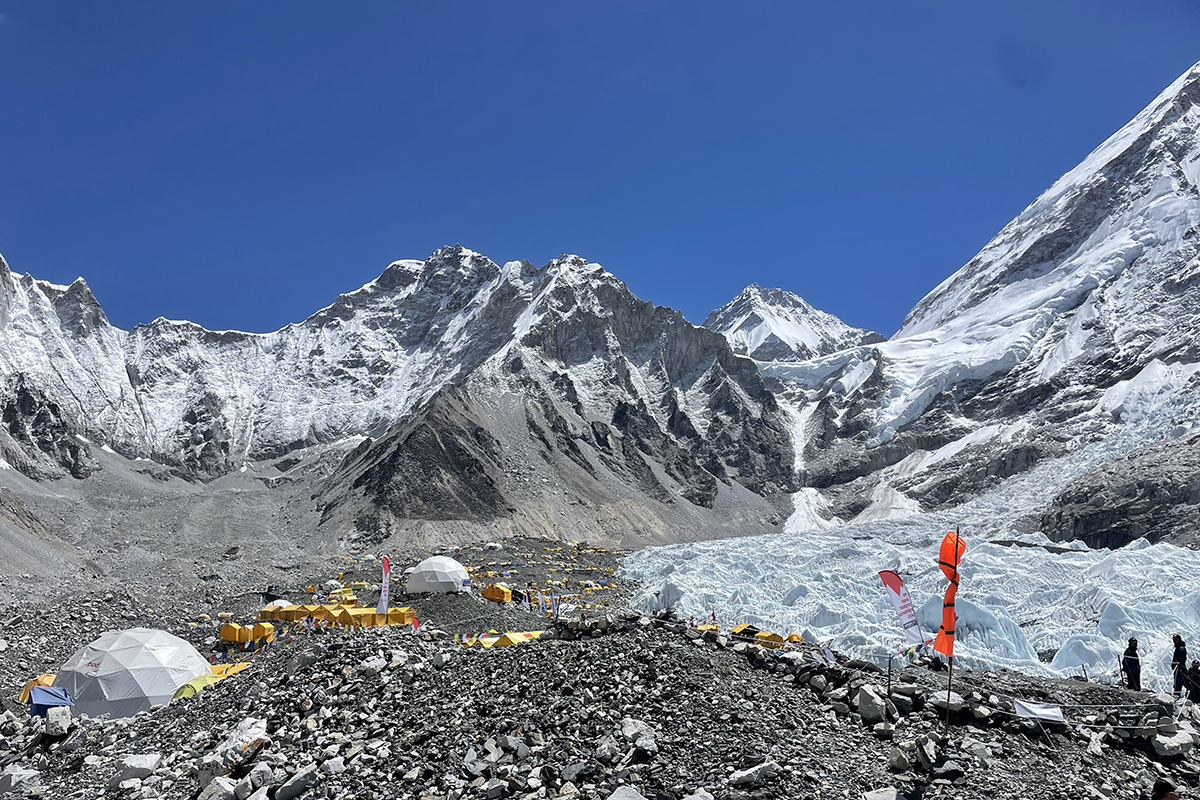
Above Namche Bazaar (3,440 m), there is no road. A trekker who falls ill at Gorak Shep faces several days of walking to reach Lukla, and Lukla itself is a mountain airstrip that closes in bad weather. A helicopter is the only way to reach a Kathmandu hospital within hours, which is why evacuation cover matters more in Nepal than almost any other benefit.
A strong policy covers three separate things, and each carries its own limit:
- Emergency evacuation: the flight from the trail, lodge or camp to a hospital, usually in Kathmandu.
- Search and rescue: locating a missing or injured trekker. Some policies exclude it.
- Emergency medical expenses: hospital treatment after the flight lands.
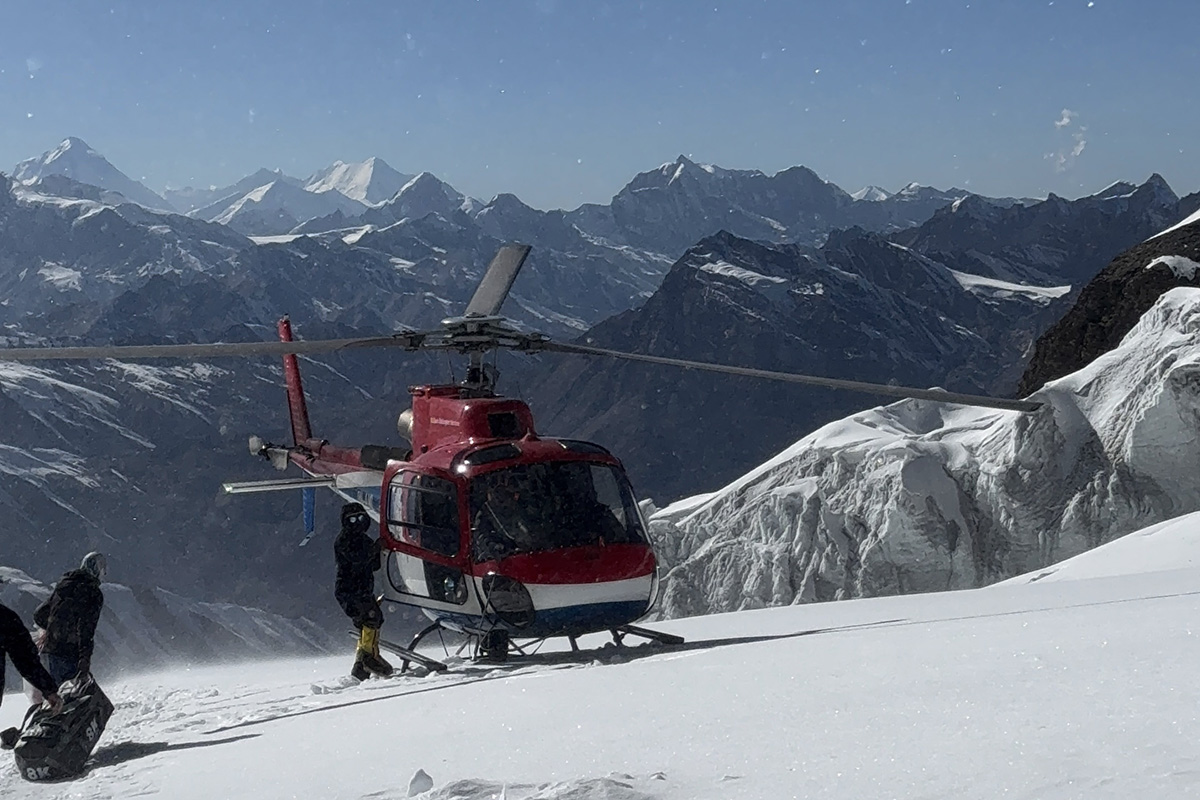
Some travellers choose a rescue membership instead of, or alongside, insurance. A membership such as Global Rescue provides the evacuation service itself, including field rescue from the point of injury, but the standard membership does not pay hospital bills. Many trekkers therefore pair a membership with a medical policy. Our provider reviews explain how each option works.
How Much Does a Helicopter Evacuation Cost in Nepal?
The ranges below are what operators and insurers commonly quote in 2026. The final invoice depends on altitude, distance, weather, the aircraft, and the number of flights needed, so treat them as planning figures.
| Pick-up point | Approximate cost to Kathmandu |
|---|---|
| Namche Bazaar area | $3,000 to $5,000 |
| Lobuche, Gorak Shep or Everest Base Camp | $6,000 to $10,000 |
| Above 6,000 m (climbing peaks) | $10,000 to $15,000 or more |
| Hospital admission and repatriation after the flight | Can add tens of thousands of dollars |
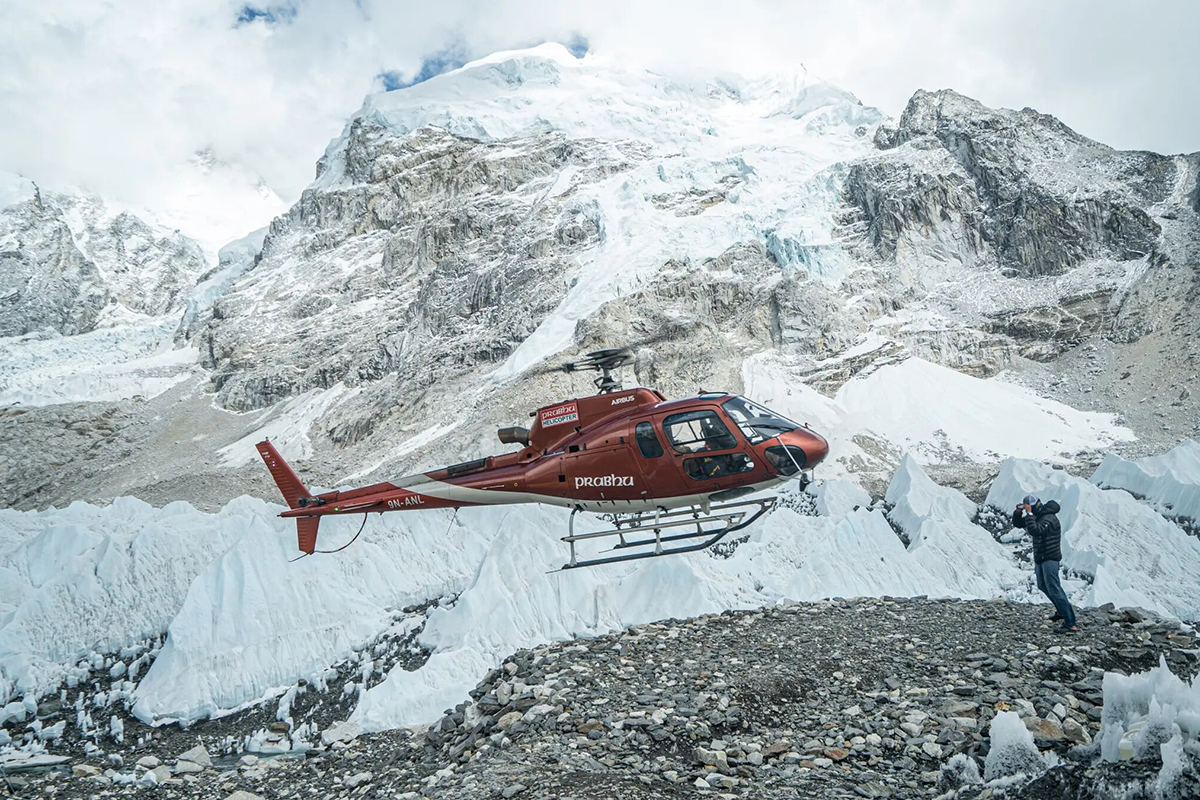
Quotes differ between sources, and rescues from lower Annapurna trails can come in cheaper. What does not differ is the payment rule: an uninsured trekker is personally liable, and operators usually want a guarantee of payment before they dispatch. A typical Nepal trek policy costs about $80 to $300 depending on age, trip length, and altitude, so the premium is a small fraction of one rescue bill.
How a Helicopter Evacuation Works, Step by Step
This is the sequence our guides follow on the trail.
- Assess and descend first. Descent is the first treatment for altitude illness, and dropping 300 to 500 metres often settles mild symptoms. A helicopter becomes the right call when a trekker cannot walk safely, shows signs of fluid in the lungs (HAPE) or swelling of the brain (HACE), or has an injury or illness that needs hospital care. Our altitude sickness guide lists the warning signs.
- Call the insurer first. The patient or the guide phones the 24-hour emergency line with the policy number, exact location, and symptoms. Save this number offline before you leave Kathmandu.
- Medical necessity and payment guarantee. The insurer’s doctors confirm the evacuation is justified, then issue a guarantee of payment to the helicopter operator. This is the step that releases the aircraft.
- Weather and daylight. Rescue flights need daylight and workable visibility. Cloud in the Khumbu usually builds through late morning, which is why we push for early decisions. Our Kathmandu operations team tracks weather in real time and stays in radio contact with the group.
- Flight and hospital. The patient is flown to a Kathmandu hospital, and the insurer then manages treatment and paperwork.
The most common claim mistake is arranging a helicopter yourself before calling the insurer. Insurers can treat that as an unauthorised decision and dispute the reimbursement.
Is Helicopter Evacuation Insurance Mandatory for Trekking in Nepal?
Nepal does not have one blanket national law that forces every trekker to show insurance on every trail, but the practical picture is stricter than the law suggests. Reports in 2026 indicate that restricted-area permits for Manaslu, Upper Mustang, Nar Phu and Tsum Valley now require proof of insurance that includes helicopter evacuation, and reputable operators ask for proof of cover before they take clients to altitude.

Requirements change between seasons, so we confirm the current rules for your route when you book. Our guides to trekking permits in Nepal and expedition permits list the documents each route needs.
Rescue Fraud in Nepal and What It Means for Your Claim
Genuine evacuations save lives every season, and a small number of operators have damaged trust in the system. In April 2026, AFP reported that Nepal Police had charged 32 people in an alleged $19.69 million scheme. Police said multiple insurance claims were filed for a single flight, and the charge sheet alleged that some trekkers were pressured into airlifts for minor illness. The government announced a zero-tolerance policy.
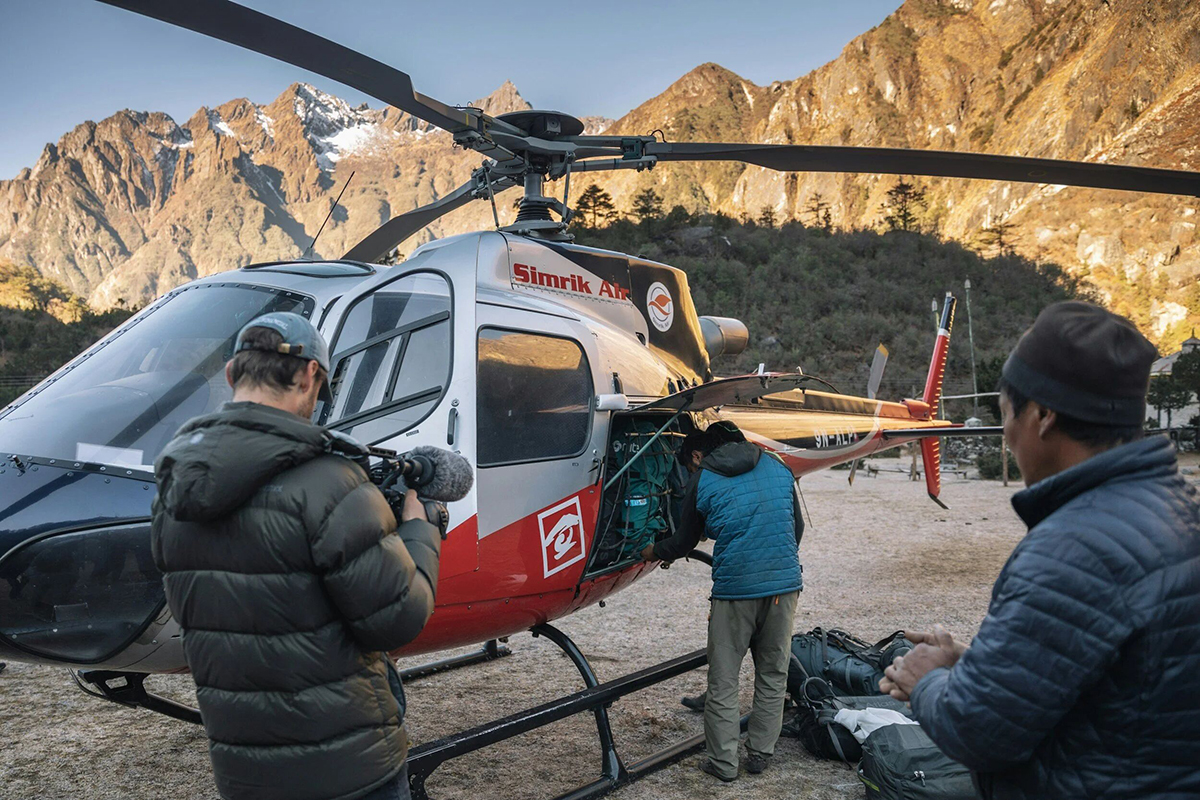
For trekkers, the practical effect is stricter verification. Insurers have tightened approval rules and expect your call before the flight. Protect yourself in three ways:
- Trek with a licensed operator registered with the Nepal Tourism Board and TAAN, as we are.
- Ask your guide to explain the symptoms and readings behind any evacuation advice, and speak to the insurer yourself.
- Keep every document: policy, flight details, medical notes and receipts.
8 Policy Checks for the Best Travel Insurance for Trekking in Nepal
No single provider is best for every trekker. The best travel insurance for trekking in Nepal is the policy that passes these eight checks for your route, age, and country of residence.
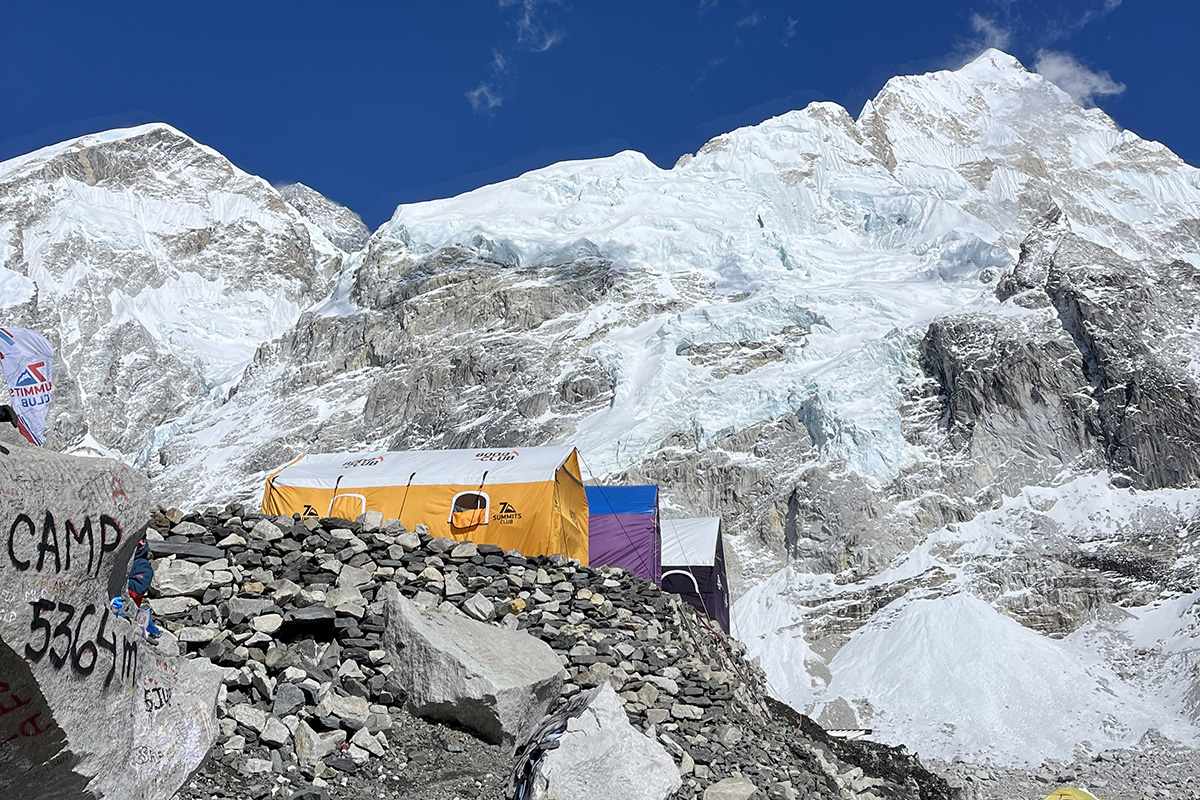
- Altitude limit above your highest point. Everest Base Camp is 5,364 m, Thorong La is 5,416 m, and the Everest Three Passes route crosses cols above 5,400 m. Standard policies often exclude trekking above 2,500 or 3,000 m, so choose a limit of at least 6,000 m.
- Helicopter evacuation is mentioned in the wording. It should be listed as a benefit, not implied.
- A high evacuation limit. Aim for $100,000 or more, ideally $200,000. Some policies list helicopter rescue but cap it at $20,000 to $30,000, which a complex high-altitude rescue can exceed.
- Medical expense coverage of $100,000 or more. Evacuation is followed by hospital treatment.
- Search and rescue included. If a trekker is lost rather than injured, the search itself is expensive.
- Direct payment or reimbursement. A cashless guarantee of payment gets the helicopter flying. Reimbursement means someone fronts the money first.
- Excess on helicopter claims. Some policies apply a fixed excess to helicopter rescue in Nepal, in some cases several hundred pounds or euros.
- Start date, age limits and pre-existing conditions. Buy before you fly, declare conditions accurately, and check that trip delay cover applies to Lukla weather closures.
Credit card insurance rarely meets these checks. Where it covers evacuation at all, the ceiling is often $2,000 to $5,000, well below a Khumbu rescue.
Match Your Policy to Your Route
Altitudes below are the figures on our trip pages.
| Route | Highest point | Cover to look for |
|---|---|---|
| Annapurna Base Camp Trek | 4,130 m | Trekking policy, 6,000 m limit |
| Upper Mustang Trek | 3,840 m | Trekking policy, 6,000 m limit, restricted-area permit |
| Manaslu Circuit Trek | 5,106 m | Trekking policy, 6,000 m limit, restricted-area permit |
| Nar Phu Valley Trek | 5,322 m | Trekking policy, 6,000 m limit, restricted-area permit |
| Annapurna Circuit Trek | 5,416 m | Trekking policy, 6,000 m limit |
| Everest Base Camp Trek | 5,545 m | Trekking policy, 6,000 m limit |
| Island Peak, Lobuche East, Mera Peak | 6,189 m, 6,119 m, 6,476 m | Mountaineering policy covering ropes, crampons and ice axes |
| Ama Dablam, Himlung Himal | 6,812 m, 7,126 m | High-altitude mountaineering policy covering 7,000 m or more |
Trekking policies with a 6,000 m limit stop at technical climbing. Once ropes and ice axes enter the plan, you need a mountaineering policy, and the premium rises with the summit height.
Best Travel Insurance for Nepal Trekking and the Providers Trekkers Ask Us About
The table summarises five providers that trekkers use for Nepal. Terms, prices and eligibility change, and the policy wording always overrides a summary, so read the current documents before you pay. Our full provider reviews give contact details and cost ranges.
| Provider | Altitude cover | Suits | Check before buying |
|---|---|---|---|
| ASC360 | Set by peak, no fixed limit | Nepal-specific cashless helicopter evacuation | Choose the plan that matches your peak |
| Global Rescue | Up to 8,848 m and above with the High-Altitude Package | Field rescue to the point of injury | Standard membership covers evacuation, not hospital bills |
| BMC Insurance | No limit on the High Altitude and Remote policy | Technical mountaineers | UK and Irish residents only |
| World Nomads | Explorer Plan to 6,000 m | Independent trekkers who buy on the road | Excludes specialised search operations and 7,000 m peaks |
| Tin Leg | Adventure Plan to 6,000 m | Trekking routes with a high evacuation limit | Excludes technical peaks |
How Our Team Supports You in an Emergency
Insurance pays for the evacuation. Your guide team decides when to call for it, and that judgment comes from time on the mountain. Our guides hold training and licences from bodies such as the Nepal Mountaineering Association and NATHM; our itineraries include acclimatisation days, and on expeditions we keep supplemental oxygen on standby. A 24/7 operations team in Kathmandu tracks weather and radio contact, and coordinates helicopter evacuation with your insurer from the mountain.
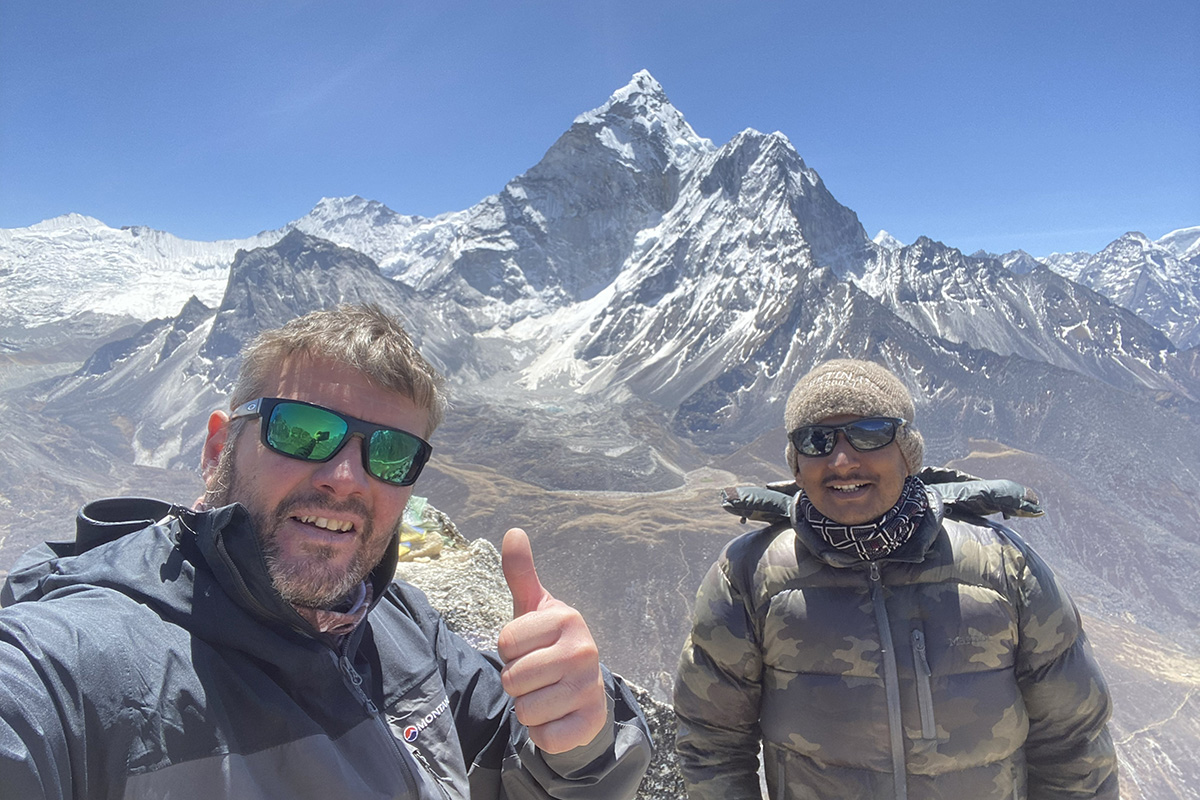
Led by our Founder & Managing Director, Prabhat Adhikari, we run our own logistics, so the people who plan your trek are the people who respond when something changes. You can meet them on our team page.
Before You Buy: A Pre-Trek Checklist
- Buy the policy when you book, so cancellation cover starts early.
- Match the altitude limit to the highest point on your itinerary, including side trips such as Kala Patthar or Gokyo Ri.
- Declare pre-existing conditions accurately.
- Email the policy wording and the emergency number to your guide and to us before you fly.
- Save the 24-hour number offline on your phone and write it inside your daypack.
- Ask the insurer in writing to confirm helicopter evacuation at your maximum altitude.
Plan Your Trek With Cover You Can Rely On
Choosing the right policy takes one conversation when you know what to ask. Our team will review your route, your highest altitude, and your insurer’s wording with you, then build an itinerary with the acclimatisation days that keep evacuation a last resort.
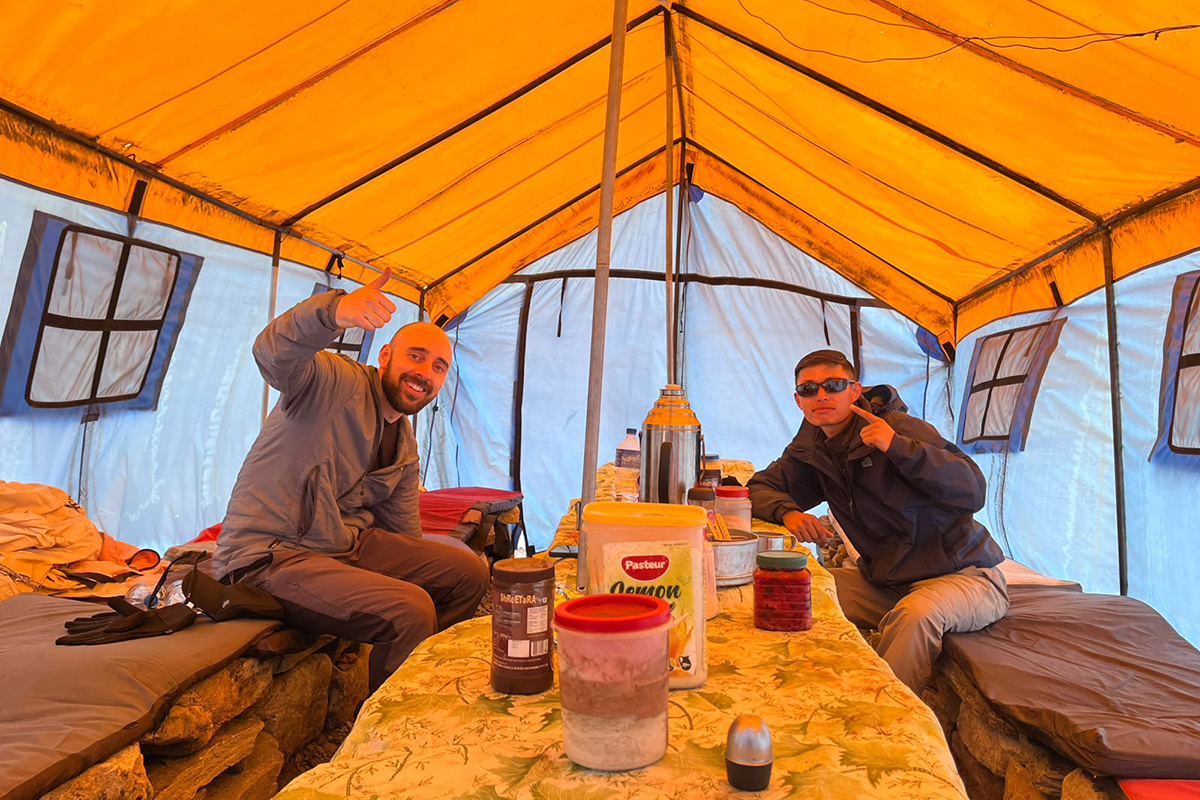
See our Everest Base Camp Trek, browse fixed departures, or book a free expedition call. You can also message us on WhatsApp, and we will reply with honest advice.
It commonly costs $3,000 to $5,000 from around Namche Bazaar and $6,000 to $10,000 from Lobuche, Gorak Shep or Everest Base Camp. Rescues above 6,000 m can reach $10,000 to $15,000 or more.
There is no single law covering every trail, but proof of cover is increasingly requested for restricted-area permits and by reputable operators. Confirm the current rule for your route when you book.
The best policy names helicopter evacuation, covers your highest altitude, carries an evacuation limit of $100,000 or more and includes search and rescue. ASC360, Global Rescue, BMC Insurance, World Nomads and Tin Leg suit different routes and residencies, and our provider reviews compare them.
Only if the policy lists helicopter evacuation and an altitude limit above your highest point. Many standard policies exclude high-altitude trekking, and credit card cover rarely matches the cost of a rescue.
Some providers sell to travellers already abroad, but most prefer purchase before departure, and you lose the cancellation benefits. Buy before you fly.
Usually not as a medical evacuation. A charter booked because of weather delays is a transport cost, and only policies with a trip delay or missed connection benefit may reimburse it. Check before you rely on it.
A typical trek policy costs about $80 to $300, depending on your age, trip length, and highest altitude. Policies for 7,000 m and 8,000 m peaks cost several hundred dollars and can pass $1,000 for Everest, so price depends on the mountain.
Usually yes, if the policy lists your maximum altitude and names altitude illness as covered. Treatment and evacuation are paid only up to the stated altitude limit, so a policy capped below your highest point can leave the claim unpaid.
No. Global Rescue is a membership that provides the evacuation service itself, including field rescue from the point of injury. The standard membership does not pay hospital bills, so many trekkers add a medical policy.
No. Insurers confirm medical necessity before they guarantee payment, and a flight taken for comfort or convenience is not covered. This is also why the insurer needs to be called before the aircraft is booked.
Yes. Trekking policies stop at about 6,000 m and exclude ropes, crampons and ice axes. Island Peak (6,189 m) and Mera Peak (6,476 m) need a mountaineering policy that covers technical climbing to the summit.
No one can promise a time. Flights need daylight and workable visibility, and the aircraft leaves only after the insurer issues its payment guarantee. Calling early, with your exact location and symptoms ready, saves the most time.